








KHAOS® Bungee Suspension Trainer: Strength & Stability Redefined
Impossible de charger la disponibilité de la réception
The Khaos® Bungee Suspension Trainer is an advanced suspension training system that replaces static straps with dynamic bungee cords to introduce unpredictable, chaotic resistance into bodyweight training. Where traditional suspension trainers maintain consistent tension throughout a movement, the Khaos® bungee system creates continuous perturbations that force the body to make real-time adjustments — increasing demands on core stability, neuromuscular control, and proprioception with every repetition.
Key Features & Benefits
✅ Dynamic Bungee Resistance – Bungee cords produce shifting, unpredictable loads that increase muscle activation demands beyond what static suspension straps can provide.
✅ Neuromuscular Control Development – Chaotic perturbations require continuous motor adjustments, developing reactive stability and movement efficiency.
✅ Core Stability Training – Non-repeating movement patterns challenge muscular co-contractions throughout the full range of each exercise.
✅ Multi-Directional Instability – Engages movement across sagittal, frontal, and transverse planes for functional strength and balance development.
✅ Adjustable Resistance – Bungee cord count and anchor height can be modified to match training phase and athlete level.
✅ Joint-Friendly Design – Low-impact resistance reduces joint stress relative to rigid training systems while maintaining meaningful load.
✅ Portable & Versatile – Anchors to any stable point; suited for home, gym, field, and rehabilitation environments.
How It Works
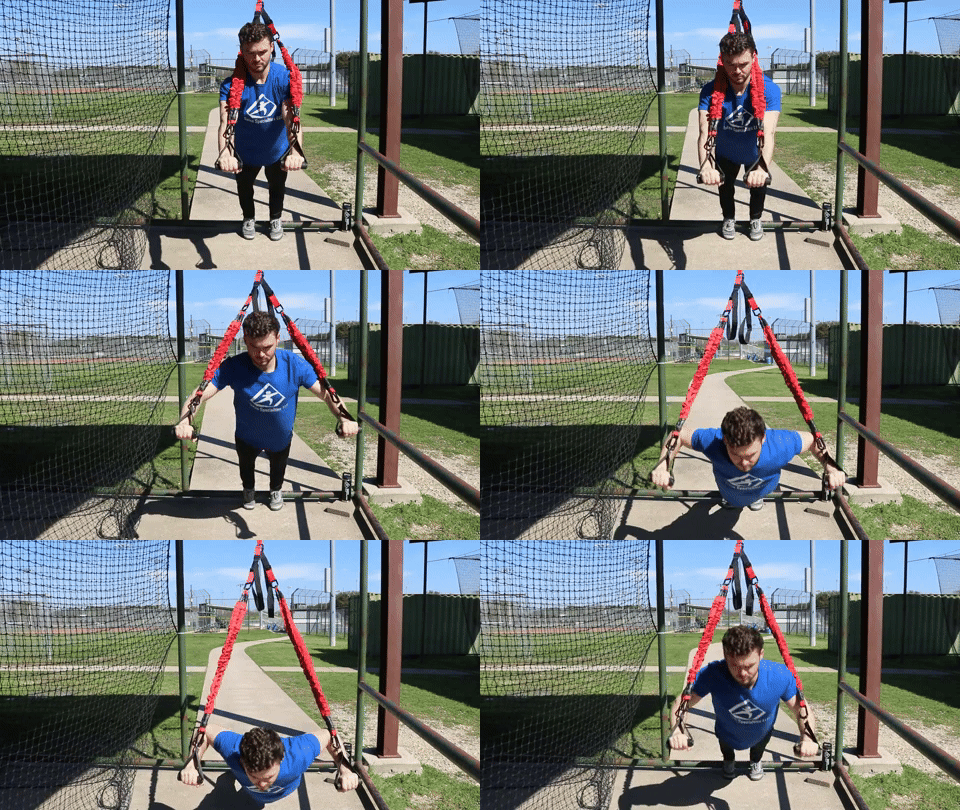
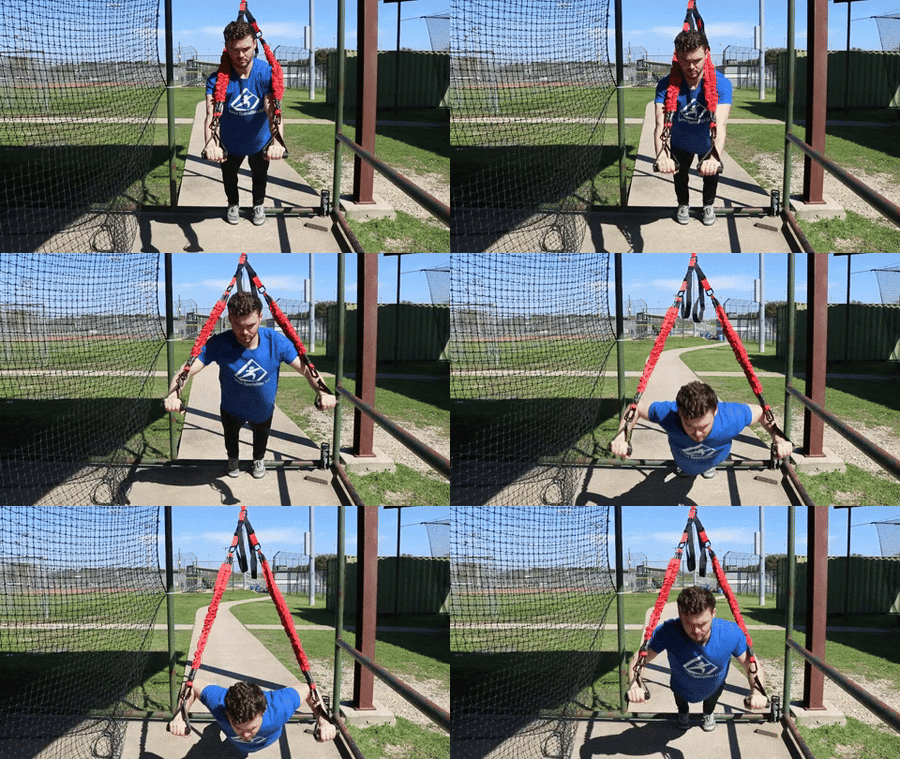
The Khaos® Bungee Suspension Trainer anchors to any stable overhead or fixed point and uses bungee cords — rather than static straps — to create resistance during bodyweight movements. As the athlete pushes, pulls, or stabilizes against the cords, the elastic nature of the bungees generates variable, non-repeating perturbations that change throughout each repetition. The body cannot predict or pre-program a response to these shifts, which forces reactive neuromuscular firing and continuous postural adjustment from the core outward.
Resistance is adjustable through two mechanisms: the number of bungee cords in use (adding cords increases resistance, removing them decreases it) and anchor point height (higher anchor increases challenge, lower reduces it). This makes the system scalable across training phases and athlete experience levels.
Training Applications
- Strength Training: Pressing, rowing, and hinge patterns performed under dynamic bungee resistance for full-body functional strength development.
- Core Stability: Plank variations, rotational holds, and anti-rotation patterns where chaotic perturbations increase stabilization demand throughout the movement.
- Balance & Agility: Single-leg and multi-directional movements that develop reactive balance and postural control under shifting load.
- Sport-Specific Conditioning: Suited for sports requiring dynamic balance and neuromuscular responsiveness — soccer, basketball, tennis, gymnastics, and overhead athletics.
- Rehabilitation Contexts: Low-impact design and adjustable resistance support progressive loading in supervised recovery settings.
Advanced Tool — Supervision Recommended for New Users
The unpredictable bungee resistance places neuromuscular control demands that are difficult to manage safely without prior suspension training experience. Athletes new to the system should begin with maximum bungee tension — which reduces instability — and simple movement patterns under qualified supervision before progressing to lower tension and more complex exercises.
Frequently Asked Questions
The Khaos® Bungee Suspension Trainer uses dynamic, unpredictable bungee resistance rather than static straps. The bungee cords create chaotic perturbations that force continuous neuromuscular adjustment — a demand that fixed suspension systems do not replicate.
- Dynamic Resistance: Bungee cords produce shifting loads that increase muscle activation demands compared with static straps.
- Neuromuscular Challenge: Unpredictable resistance increases motor control demand throughout each movement.
- Joint-Friendly: Reduces joint strain relative to rigid training systems while maintaining meaningful load.
Yes. The dynamic bungee resistance and multi-directional instability demands transfer across sports that require balance, core stability, and reactive neuromuscular control. The low-impact design supports athletes across disciplines without adding disproportionate joint stress.
- Versatile Application: Dynamic bungee resistance benefits sports requiring balance and reactive control — soccer, basketball, tennis, gymnastics.
- Neuromuscular Control: Unpredictable resistance develops motor control and reaction time applicable across athletic movements.
- Joint-Friendly: Low-impact design supports athletes across sports without added strain.
The Khaos® Bungee Suspension Trainer is primarily designed for athletes with prior suspension training experience. The unpredictable bungee resistance places neuromuscular control demands that beginners may find difficult to manage safely without a base of movement competency.
- Advanced Focus: Unpredictable resistance suits athletes familiar with suspension training principles.
- Beginner Adaptability: New users should start with maximum bungee tension and simple exercises under qualified supervision.
- Progressive Scaling: Cord count and anchor height adjustments allow difficulty to increase as movement competency develops.
Cleaning:
- Wipe bungee cords and straps with a damp cloth and mild soap, then air dry after each use.
Inspection & maintenance:
- Check cords and attachments for wear, fraying, or damage before each session.
- Test tension and verify secure anchor points periodically before use.
- Store in a cool, dry place away from direct sunlight and sharp objects.
- Do not expose to excessive heat or chemicals that could weaken the bungee material.
Yes. Resistance can be modified through two primary variables.
- Multiple Cords: Adding bungee cords increases overall resistance intensity; removing cords reduces it.
- Anchor Height: Higher anchor points increase challenge; lower anchor points reduce difficulty. These adjustments allow the trainer to be scaled across training phases and athlete levels.
Featured Products