

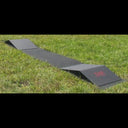
TAP® Lateral Plyo Angle – Lateral Power & Lead‑Leg Stability Trainer
$69.95
Ships from Huntsville, TX
In Stock
Ordering for a team or facility?
Get volume pricing and help choosing the right tools for your players.
Ask me anything about this product
Sizing · use cases · technique · shipping — instant answers
Ask about TAP® Lateral Plyo Angle – Lateral Power & Lead‑Leg Stability Trainer — how to use it, what athletes it fits, sizing, or how it compares to other tools we make. Answers are focused on this product.
Innovating since 2003
Family-owned, Huntsville TX
Talk to the team
Real specialists, not a call center
Made for daily program use
Designed for continuous reps, every day, every season
100+ implements, organized by goal
Arm care, velocity, strength, and recovery
About This Product
A two-sided steel angle that forces the hips, glutes, and lead leg to work — because the incline leaves them no flat ground to cheat on.
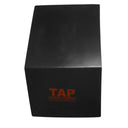
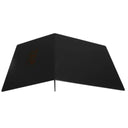
The TAP® Lateral Plyo Angle is a heavy-duty, two-sided metal angle that rises to roughly 4″ at its peak and slopes down from each side to create inclined training surfaces for side-to-side bounding and bracing drills. Instead of a flat surface where poor hip stability can go undetected, the Angle uses the "feed the mistake" principle — if an athlete leaks energy over the front side or lacks hip strength, the angled platform instantly amplifies that flaw, forcing the neuromuscular system to self-correct rather than waiting for a verbal cue.
- Two-Sided Platform: Steep and Gradual Faces — One steeper incline and one more gradual side in a single tool, giving coaches two difficulty options without switching equipment.
- Feed-the-Mistake Constraint Design — The angled surface amplifies mechanical flaws in real time, using the ground itself as a constraint rather than relying on verbal coaching repetition.
- Altered Ground Reaction Force Vector — The wedge keeps the foot perpendicular to the pushing force so athletes drive straight into the platform, maximizing lateral power transfer instead of leaking it through the ankle and knee.
- Lead-Leg Stability for Hitters and Pitchers — Blocks the front knee from spinning open early in a swing, and simulates mound slope for pitchers who need more time for pelvis and upper body to sync.
- Scalable System: Single, Pair, or Complete Lane — Works alone as a constraint tool or expands into a full 12′ side-to-side bounding lane with a paired set and rubber mat.
What Is It?
TAP® Lateral Plyo Angle is a side-to-side movement and stability trainer — a heavy, two-sided metal angle rising to about 4″ that creates inclined surfaces athletes step on, step over, or bound toward in pitching, hitting, and lower-body power drills. It is not a standard plyo box or step aerobics riser designed for vertical jumping, and it is not a slideboard or lateral sled system built for pure conditioning volume. It is a targeted constraint platform that sits inside a broader strength, conditioning, and skill plan.
How It Works
Three mechanisms behind the angled platform design
Gluteus Medius Co-Contraction
Bounding onto an angled wedge forces the gluteus medius — the deep hip muscle responsible for lateral stability — and the deep hip rotators to contract simultaneously to prevent the knee from collapsing inward (valgus collapse). This automatic co-contraction builds reactive hip stability that carries over to sudden direction changes in games.
Front-Side Hitting and Pitching Block
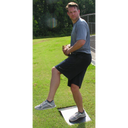
Placing the Angle under the lead foot physically prevents the front knee from shifting forward or spinning open early. This constraint forces the lead hip to anchor securely, clearing a path for the torso to rotate with maximum speed — the same principle behind mound slope giving pitchers time for pelvis and upper body to synchronize.
Neuromuscular Adaptability Through Variability
Varying the distance or angle between platforms prevents robotic, mindless repetitions by keeping the central nervous system actively engaged. That movement variability builds a more adaptable athlete who can maintain balance and power across unpredictable game environments, as opposed to an athlete who has only practiced on flat, identical surfaces.
Training Approach
Built on Dynamic Systems Theory & Constraint-Led Learning
There is no peer-reviewed study on this specific Angle; every mechanism described here applies established principles of lateral plyometrics — explosive side-to-side jump and bound training — hip strength, and movement specificity. The design applies Dynamic Systems Theory and the Constraint-Led Approach: rather than prescribing each position verbally, the angled platform changes how the athlete interacts with the ground and lets the nervous system find the solution itself.
4″
Peak incline height that alters ground reaction force direction without destabilizing the athlete
2 Faces
Steep and gradual inclines in one unit, covering early pattern-learning through advanced power work
GRF Vector
Altered ground reaction force keeps the foot perpendicular to the push, preventing energy leaks through the ankle and knee
Video Library
See It In Action
Click the thumbnail to play — click any timestamp to jump to that moment.
2026
TAP® Lateral Plyo Angle — Full Setup & Drill Integration
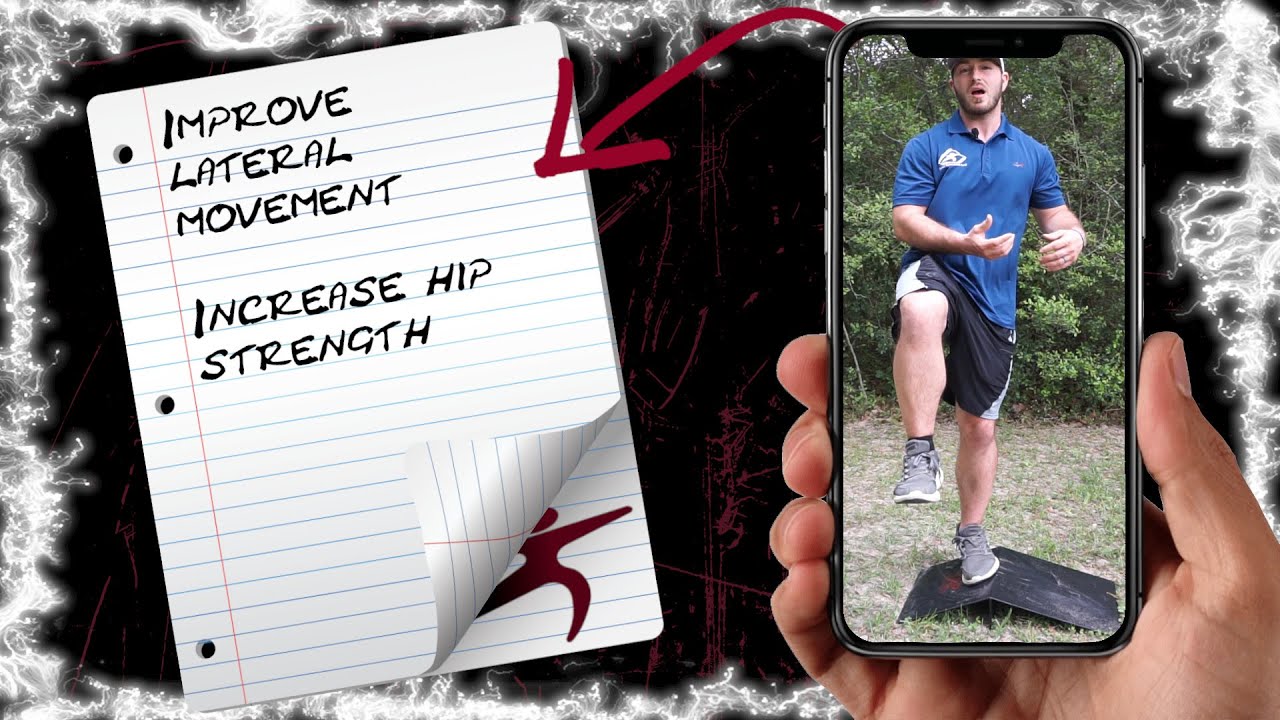
Chapter Guide — 6 Timestamps
| Introduction to the TAP™ Lateral Plyo Device. | |
| Physical design — two different angle/steepness sides. | |
| Benefits and uses for hitters — front and back leg drills. | |
| Benefits for pitchers — simulating mound timing on flat ground. | |
| Static uses for building a firm front side. | |
| Summary, contact info, and website details. |
Product Details
How to Use It
Warm-up / prep phase: Use the gradual face for low-amplitude step-overs and controlled holds, focusing on balance and feeling the incline. For hitters and pitchers, start with isometric posts — step onto the Angle, hold a firm front-leg or back-leg position, and feel the hips stack over the incline before progressing into full movement.
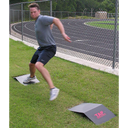
Training phase: Place one or two angles at a set distance for side-to-side bounding circuits, sticking landings with minimal ground-contact time. Use as a constraint — front-leg bracing for hitters to stop over-swinging, rear-hip loading for hitters who collapse the back side, or “Hookems” pitching drills. Adjust difficulty by switching faces, changing distance, or adding the rubber mat.
Light-day / recovery-adjacent use: Keep shorter sets of controlled step-overs and holds to maintain side-to-side awareness without high plyometric loads. Combine with mobility and low-impact drills to keep lateral coordination sharp.
Variant & Selection Guide
| Configuration | Components | SKU | UPC |
|---|---|---|---|
| Single Angle | One angled unit | LPA | 608938928931 |
| Pair of Angles | Two angled units | LPAP | 608938929280 |
| Complete Set | Pair of angles + 12′ rubber mat | LPD | 608938930477 |
| Rubber Mat Only | 12′ lateral plyo mat | LPM | 608938928924 |
Most teams start with single or paired angles and add the mat or complete set when ready to build a dedicated lateral-power lane.
Who This Is For
- Commonly used for baseball and softball hitters who want better front-leg firmness, rear-hip drive, and side-to-side quickness.
- Commonly used for pitchers who want drill environments that mimic mound slope and challenge hip movement and lead-leg bracing more than flat-ground work.
- Commonly used for multi-sport athletes who need crossover power, cutting ability, and hip strength beyond straight-ahead speed.
- Not recommended as a stand-alone fix for mechanical issues; it belongs inside broader strength, mobility, and skill programs.
What This Implement Does NOT Do
- It is not a vertical jump or generic plyo box; it is designed primarily for side-to-side and angled-leg work.
- It is not a slideboard or sled; it complements rather than replaces comprehensive lateral-conditioning systems.
- It is not a diagnostic or medical device; it does not evaluate injury status.
- It is not for unsupervised youth use in high-impact circuits; bounds and constraint drills should be coached appropriately.
Technical Specs
| Product Name | TAP® Lateral Plyo Angle |
|---|---|
| Also Known As | Lateral Plyo Device angle, Hookems angle platform, Lateral Strength Trainer, Metal Training Ramp |
| Product Type | Steel, two-sided angled platform for lateral plyometric and stability drills |
| Material | Steel frame with non-slip platform surface |
| Height | Approximately 4″ at the highest point, sloping down from each side |
| Faces | One steeper incline, one more gradual incline |
| Configurations | Single (LPA), Pair (LPAP), Complete Set with 12′ mat (LPD), Rubber Mat only (LPM) |
| Primary Uses | Lateral bounds, step-overs, “Hookems” pitching drills, hitting front/back-leg constraints |
| Use Environments | Indoor cages, weight rooms, turf surfaces, and stable outdoor training areas |
Safety, Compliance & Youth Guardrails
- Not a toy: Heavy metal implement for supervised environments only; misuse can lead to slips or falls.
- Not for impact use on people or structures: Do not bound into teammates, nets, or walls; designed for controlled movements in open space.
- Not a rehabilitation device: Any rehab or return-to-play use should follow a plan approved by qualified medical or performance professionals.
- Age guidance: Best suited to roughly ages 13 and up, when coordination and joint maturity make lateral plyometrics appropriate.
- Supervision: Younger athletes should use the gradual face under close supervision with conservative sets. Stop if pain, dizziness, or fatigue appears. We are not coaches.
Frequently Asked Questions
What does TAP® Lateral Plyo Angle actually do for athletes?
It creates an inclined platform that challenges side-to-side movement, hip strength, and lead-leg stability — letting hitters and pitchers train firm posting, rear-hip drive, and explosive bounds beyond flat ground.
Is it only for pitchers?
No; hitters use it under the front or back leg to feel stronger posting and reduce over-swinging, while pitchers use it to make drill work feel more mound-like.
How do I change difficulty?
Switch between the steeper and gradual faces, change the distance between angles, or add the rubber mat to adjust how far athletes must bound.
Do I need the full device set?
Many programs start with single or paired angles, then add the mat or full set when ready to build a dedicated lateral-power lane.
Is this a conditioning tool or a skill tool?
It is a hybrid: primarily a side-to-side power and hip-strength tool that can also act as a skill-drill constraint, but it does not replace full conditioning or hitting/pitching programs.
Can youth athletes use it?
Youth athletes can use the Angle under close supervision with conservative volumes; coaches should prioritize controlled step-overs before high-amplitude bounds.
Questions before you buy? Call or Text Our Team at (936) 295-4459
Customer Reviews
What Customers Are Saying
Loading reviews…
No reviews yet for this product.
Be the first to review