

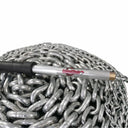
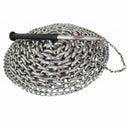
SpeedChain® Batting Chain – Variable‑Resistance Bat Speed & Power Trainer
$49.95
Ships from Huntsville, TX
In Stock
Ships by weight — rate at checkout
60-day limited warranty
Questions? 936-295-4459
Ordering for a team or facility?
Get volume pricing and help choosing the right tools for your players.
Ask me anything about this product
Sizing · use cases · technique · shipping — instant answers
Ask about SpeedChain® Batting Chain – Variable‑Resistance Bat Speed & Power Trainer — how to use it, what athletes it fits, sizing, or how it compares to other tools we make. Answers are focused on this product.
Innovating since 2003
Family-owned, Huntsville TX
Talk to the team
Real specialists, not a call center
Made for daily program use
Designed for continuous reps, every day, every season
100+ implements, organized by goal
Arm care, velocity, strength, and recovery
About This Product
Resistance that changes as you swing — lighter links near the hand, heavier links toward the free end, so the chain loads itself as the barrel accelerates.
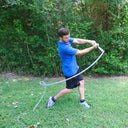
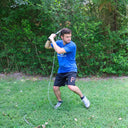
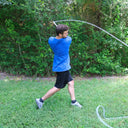
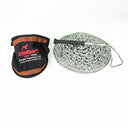
SpeedChain® Batting Chain is a bat-style handle attached to a length of chain whose links are light near the hand and grow heavier toward the free end, so resistance changes through a single swing. It is built to train bat speed and hitting power concurrently by loading the swing with resistance that rises as the barrel enters the hitting zone and then backs off into the finish — instead of staying uniform from start to stop the way fixed weighted bats, donuts, and band-loaded bats do.
- Graduated Chain Links That Match the Swing’s Phases — Light links near the hand let the hitter accelerate freely; heavier links engage only once the barrel is already moving fast through the zone.
- Resistance Curve Shaped Like a Swing — Light at launch, peak load through the zone, noticeable let-off as the chain slackens in deceleration — the swing’s own three-phase rhythm, loaded instead of opposed.
- Three-Dimensional Sensory Feedback Loop — Changing kinetic tension (feel), the chain’s observable path (visual), and the whipping snap at peak velocity (auditory) give simultaneous, non-tech feedback on swing quality.
- Implicit Hand-Path Enforcement — Casting hands away from the body prematurely shifts the chain off-axis and pulls the hitter off-balance, correcting the swing path without verbal coaching.
- Self-Scaling for Any Athlete — The chain’s metallic rattle rises and falls with swing speed; stronger hitters engage more and larger links, developing hitters fewer and smaller, so a single chain meets each athlete at their own output level.
What Is It?
SpeedChain® Batting Chain is a bat-speed and swing-quality tool that applies overload swing training through a variable, surface-coupled chain instead of a fixed heavy bat. It is not a simple weighted bat sleeve, donut, or fixed heavy bat that loads every phase of the swing the same — and it is not a band-loaded bat that peaks resistance at the slow-down phase instead of through the hitting zone.
How It Works
Three mechanisms behind the graduated chain design
Enforcing a Compact Hand Path
To rotate a flexible chain cleanly without losing balance, the hands must stay tight to the turning torso. This eliminates inefficient casting or dragging paths, teaching the hitter to turn their body with the implement and keep the hand path compact without verbal coaching.
Optimizing Core Power Transfer
Because resistance peaks in the hitting zone as the outer chain links fully lift and extend, the upper body cannot complete the motion alone. The core must brace forcefully, passing energy from the lower-body ground drive up through the hands — the same sequence a high-exit-velocity swing demands.
Targeting Fast-Twitch Fibers & Stretch-Shortening Cycle
Short, max-effort bursts (6–8 seconds) target the ATP-CP phosphagen system, recruiting high-threshold fast-twitch (Type II) fibers for raw exit velocity. The sudden chain load through the zone also triggers the stretch-shortening cycle — elastic recoil — of the obliques and deep hip rotators, training the torso to snap open faster.
Training Approach
Built on Overload Swing Training & Dynamic Correspondence
There is no peer-reviewed study on this specific SpeedChain® Batting Chain; every mechanism described here applies established ideas — overload swing training, variable resistance, moment of inertia, and dynamic correspondence — to this chain-based bat application. Dynamic correspondence means matching training to the skill: the closer the resistance profile and movement pattern resemble a real swing, the more likely training is to carry over to actual hitting.
±12%
Bat weight range research links to improved bat velocity in trained hitters using overload swing implements
6–8s
Per-burst duration that targets the ATP-CP phosphagen system and high-threshold fast-twitch fibers
Variable Load
Resistance rises with the hitter’s own acceleration — stronger, faster swings engage more chain
Video Library
See It In Action
Click the thumbnail to play — click any timestamp to jump to that moment.
2026
SpeedChain® Batting Chain — Full Execution Tutorial
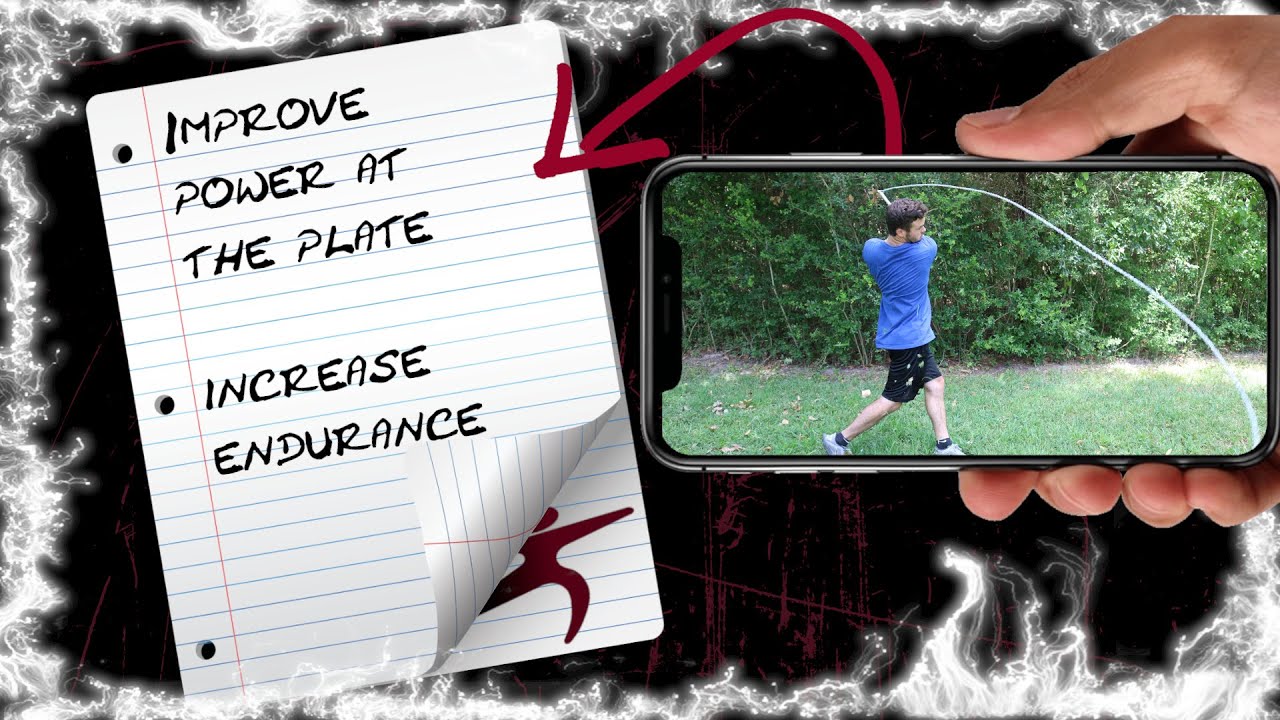
| Variable-Mass Physics & Setup Logic — introduction to the progressive chain-link design, explaining how traditional overload training causes hand-dragging while the SpeedChain’s variable mass matches the geometric velocity curve of a competitive live swing. | |
| The Pre-Stretch “Waggle” Protocol — close-up instruction on the small rhythmic waggle used right before launch, keeping the flexible trailing end mobile to prevent poor tracking or sudden friction at the start of the turn. | |
| High-Intent Rotational Launch Series — full-effort, high-velocity swings showing how lighter initial links support uninhibited acceleration while the thicker end links create a high power demand right through the extension zone. | |
| Mechanical Feedback & Casting Correction — how casting the hands away from the body or rolling the wrists too early shifts the chain off-axis and immediately pulls the athlete off-balance, acting as an automatic correction mechanism. | |
| Neuromuscular Sizing Framework — specific training packages (Strong, X-Strong, and PRO models) with sizing guidelines based on the athlete’s current bat speed and physical maturity. |
Product Details
How to Use It
Warm-up / prep phase: Use light-to-moderate-intensity swings at the front of a training block to wake up sequencing. Before each working swing, “waggle” the chain — a small back-and-forth — so the swing never breaks the full chain loose from a dead stop.
Training phase: Swing all-out for only as long as swings stay fast — often 4–8 seconds — then stop when speed drops. Train two patterns: a compact short-arc swing for speed and a full-arc swing for power. Count every rep and record it; personal bests become the next target.
Light-day / recovery-adjacent use: Keep bursts shorter and fewer, focused on feel and connection. Pair with tee or front-toss work with a regular bat to maintain swing quality without overloading the hands and forearms.
Variant & Selection Guide
| Variant | Typical User | Resistance | SKU |
|---|---|---|---|
| Strong | Pre-adolescent hitters | Light | BSS |
| X-Strong | High-school hitters | Moderate | BXS |
| Ultra | Advanced high-school hitters | High | BSU |
| PRO | Collegiate / muscularly mature | Very high | BBSP |
Do not buy heavier to “grow into” it — match the model to the athlete’s current strength and maturity. Hitters taller than roughly 6’4” should add chain extensions to keep the heavy free end grounded.
Who This Is For
- Commonly used for baseball and softball hitters 13 and up who want to develop bat speed and swing-specific power in short, explosive bouts.
- Commonly used for coaches who already value overload swing training and want a variable-resistance option that loads the swing where it is strongest.
- Commonly used for stronger, more mature hitters (X-Strong, Ultra, PRO) who have a strength base and are ready for explosive overload work.
- Not recommended as a stand-alone fix for mechanical problems or plate discipline; it belongs inside a broader hitting, strength, and approach plan.
What This Implement Does NOT Do
- It is not a magic bat-speed shortcut; any improvement depends on the overall hitting and strength program and the athlete’s consistency.
- It is not a bat you take into games or use to hit live pitching; it is a training device for swing-speed and swing-quality work.
- It is not a conditioning tool for endurance or stamina; it is built for short, hard, focused bouts — not long high-rep circuits.
- It is not a diagnostic or medical device; it does not prevent injury or protect any specific body part and does not replace medical assessment.
Technical Specs
| Product Name | SpeedChain® Batting Chain |
|---|---|
| Also Known As | SpeedChain bat trainer, bat speed and power chain, bat swing-speed chain |
| Product Type | Variable-resistance bat-speed and swing-power trainer |
| Core Components | Bat-style handle attachment and graduated chain links from lighter to heavier gauges |
| Resistance Profile | Lighter at early acceleration, concentrated load through the hitting zone, reduced as the swing decelerates |
| Available Models | Strong (BSS), X-Strong (BXS), Ultra (BSU), PRO (BBSP) |
| Use Environments | Cages, tunnels, and open training spaces with sufficient clearance and stable footing |
| Compatible Athletes | Baseball and softball hitters under appropriate supervision |
Safety, Compliance & Youth Guardrails
- Not a toy: Training tool for supervised environments only; misuse can lead to impacts, entanglement, or falls.
- Not for impact use on people or structures: Do not swing toward teammates, nets, or hard structures; designed for controlled swing drills in open space.
- Not a rehabilitation device: Any rehab or return-to-play use should follow a plan approved by qualified medical or performance professionals.
- Age guidance: Best suited to roughly ages 13 and up, when coordination, strength, and joint maturity make explosive swing training appropriate.
- Supervision: Younger or less-experienced hitters should use lighter models under close supervision with conservative volumes. Stop if pain, dizziness, or unusual fatigue appears. We are not coaches.
Frequently Asked Questions
What does SpeedChain® Batting Chain actually do for hitters?
It trains bat speed and swing power together: lighter links allow high acceleration, heavier links engage through the zone, so peak load lands where the swing is strongest.
Is it just a heavy bat or donut?
No; fixed weighted bats and donuts load all phases equally. SpeedChain® Batting Chain peaks resistance through the zone and eases at the finish.
How long should each set last?
Work in short bursts — often 6–8 seconds for conditioned hitters, shorter for others — and stop as soon as speed drops. Every swing should be fast, none tired.
How many bursts should I do?
A practical start is three bursts per swing pattern (speed arc and power arc), building toward six to eight as conditioning improves while keeping all swings fast.
Do I hit real baseballs or softballs with it?
No; it’s for swing-pattern and power work in dry-swing or non-contact drills, not hitting balls directly.
Does it replace weight-room work?
No; it adds a bat-specific, variable-resistance option that complements the weight room by matching the swing’s shape, but doesn’t replace general strength and conditioning.
Questions before you buy? Call or Text Our Team at (936) 295-4459
Customer Reviews
What Customers Are Saying
Loading reviews…
No reviews yet for this product.
Be the first to review