


सुपी-प्रो™
$74.95
Ships from Huntsville, TX
In Stock
60-day limited warranty
Questions? 936-295-4459
Ordering for a team or facility?
Get volume pricing and help choosing the right tools for your players.
Ask me anything about this product
Sizing · use cases · technique · shipping — instant answers
Ask about सुपी-प्रो™ — how to use it, what athletes it fits, sizing, or how it compares to other tools we make. Answers are focused on this product.
Innovating since 2003
Family-owned, Huntsville TX
Talk to the team
Real specialists, not a call center
Made for daily program use
Designed for continuous reps, every day, every season
100+ implements, organized by goal
Arm care, velocity, strength, and recovery
About This Product
The TAP® Supi-Pro™ is an adjustable lever-arm tool that loads forearm rotation — supination and pronation — with measurable, position-by-position torque.
The TAP® Supi-Pro™ trains the forearm muscles that rotate the wrist — the supinators and pronators — by sliding a weight along a threaded rod. Each engraved position changes the lever arm, so the turning force at the wrist rises in known steps from about 12.6 to 41.7 inch-pounds. It is a simple, portable way to add structured forearm work for athletes in throwing and hitting sports, with no batteries, bands, or guesswork about the load.
- Adjustable torque, not guesswork — Eight positions set the wrist moment from 12.6 to 31.6 in-lb on the Single, up to 41.7 in-lb on the Double.
- Trains rotation, not just grip — Loads supination and pronation, the forearm rotations behind wrist control in throwing and hitting.
- Two models, one progression — Start with the Single (2.55 lb total); move to the Double (4.19 lb) when the top positions get easy.
- Repeatable settings — The threaded rod and sliding weight hold their position rep after rep, and the laser-engraved markings make the load easy to log.
- Portable and simple — No power, no bands, no setup. Carry bag included.
What Is It?
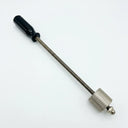
The Supi-Pro™ is a steel threaded rod with a knurled sliding weight (two weights on the Double) and a handle grip. Hold the handle and rotate the forearm — palm up to palm down and back — and the offset weight resists the rotation with a torque set by the weight’s position on the rod.
A dumbbell loads the forearm the same at every point in the movement. The Supi-Pro™’s sliding weight changes the lever arm instead: slide it outward and the turning force at the wrist climbs, from 12.6 in-lb at position A to 31.6 in-lb at position H on the Single, and up to 41.7 in-lb with both weights on the Double. The load is set by position, not by swapping plates.
Video Library
See It In Action
Click the thumbnail to play from the start — click any timestamp to jump to that moment.
2025
TAP® Supi-Pro™: Build Grip & Forearm Strength for Athletes Fast
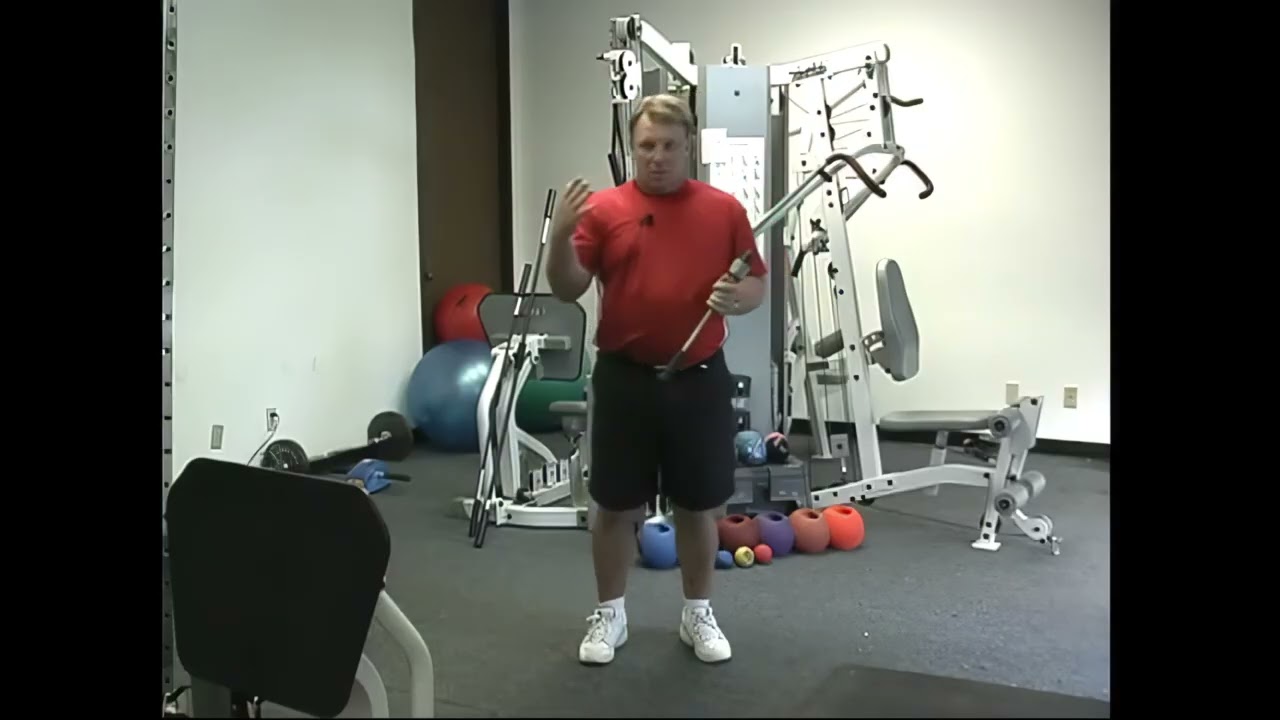
Chapter Guide — 11 Timestamps
| Introduction & Mechanics | |
| Tool Introduction & Fulcrum Adjustment — Adjusting leverage/torque along the shaft based on athlete training age and recovery needs. | |
| Mechanism & Philosophy — Training the small stabilizing structures (rotator cuff, elbow tendons, and forearm musculature). | |
| Standard Grip Progression | |
| Pronation & Supination — Elbow supported, focusing on controlled tempo and full range of motion (25 reps or 45–60 seconds). | |
| Flexion & Extension — Moving through linear wrist flexion and extension planes. | |
| Rotations (Clockwise & Counter-Clockwise) — Circular rotations targeting multi-planar forearm control. | |
| The Clock Drill — Navigating opposite clock dial points (12 to 6, 1 to 7, 2 to 8, etc.) for dynamic rotational control. | |
| Reverse Grip Progression & Programming Notes | |
| Flipping the Device (Reverse Orientation) — Transitioning to the reversed grip for increased leverage difficulty. | |
| Reverse Pronation & Supination — Performing rotation with reversed weight distribution. | |
| Reverse Flexion & Extension — Linear wrist tracking under reversed load. | |
| Reverse Rotations & Reverse Clock Drill — Circular and angular patterns in the reversed orientation. | |
| Programming & Progression Guidelines — Rest intervals between sets, starting positions for younger athletes, and mastering movement mechanics before increasing load. | |
How It Works
Three things the tool does to the training, in plain language.
Lever arm sets the load
Sliding the weight outward lengthens the lever, so the same weight produces more turning force at the wrist — from about 12.6 in-lb at position A to 41.7 in-lb at the farthest Double setting. Progression is a slide of the weight, not a new implement.
Rotation under load
Supination and pronation — turning the palm up and down — against that torque trains the forearm rotators through their range. Slow, controlled reps keep the work on the forearm instead of letting the shoulder take over.
Position-by-position progression
The engraved marks give eight repeatable settings per weight. Athletes move one position outward when the current one gets easy, and coaches can log exactly which position was used — no estimating.
Backed by Research
What the Evidence Actually Says
Research status, stated plainly: The Supi-Pro™'s support here is mechanism-level, not product-specific.
The closest relevant trial (Lopez et al. 2025, 14 collegiate pitchers) found that a forearm-strengthening program built forearm size and grip strength but did not change medial elbow gapping — strength gains don’t automatically mean joint changes. That is why this page talks about training the forearm muscles, not protecting the elbow joint.
A randomized trial comparing shoulder strengthening against stretching for arm-injury prevention (Shitara et al. 2022) used a non-inferiority design and found no significant between-group difference — strength work should not be described as superior to stretching, and no product should be sold on injury prevention.
Other trials show strengthening programs can move selected strength and endurance measures over 8–12 weeks (Moore 2013; Plummer 2022; Lambert 2023), with mixed results and no injury or velocity outcomes. Practitioner sources (Wolforth; Sullivan) discuss lower-recovery-cost in-season work and the coordination cost of adding capacity without throwing — practitioner perspective, not peer-reviewed evidence.
Bottom line: the Supi-Pro™ is designed to load forearm rotation with a known, adjustable torque. What the research can’t support — joint protection, injury prevention, velocity gains — isn’t claimed here.
12.6–41.7
in-lb of wrist torque across the engraved positions (engineering spec sheet)
Built
Forearm size and grip strength in collegiate pitchers after a forearm-strengthening program (Lopez et al. 2025)
Unchanged
Medial elbow gapping after that same program — the strength gains didn’t move the joint measurement (Lopez et al. 2025)
Product Details
How to Use It
Set the position: Start with the weight at position A — the lightest setting. Slide it outward one position at a time only as control allows, and log the position used each session.
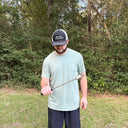
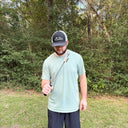
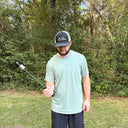
The movement: Grip the handle and rotate the forearm slowly — palm up (supination) to palm down (pronation) and back. Keep reps slow and controlled; if the shoulder starts taking over, the load is too far out.
Programming: Use it inside a planned forearm or arm-care block, after a warm-up. Stop the set if form breaks down or any pain appears.
Who This Is For
- Commonly used for baseball and softball players adding structured forearm-rotation work to a throwing or hitting program.
- Commonly used for golfers, tennis players, and athletes in other rotation-heavy sports.
- Commonly used for coaches who want a loggable, position-by-position progression instead of estimated loads.
- Commonly used for athletes who need portable forearm work with no setup — the tool and a carry bag are the whole kit.
Technical Specs
| Model | Single (SPP-1) — $74.95 |
|---|---|
| Total weight | 2.551 lb (rod 0.915 lb + weight 1.636 lb) |
| Wrist torque | 12.6–31.6 in-lb (positions A–H) |
| Model | Double (SPP-2) — $109.95 |
|---|---|
| Total weight | 4.187 lb (rod 0.915 lb + weights 3.272 lb) |
| Wrist torque | Up to 41.7 in-lb (double-weight positions) |
Torque figures from the engineering spec sheet (Paul E. Malek, PE, 2006). Start with the Single; move to the Double when position H gets easy.
What It Does Not Do
- Not injury prevention: no product can promise fewer injuries, and this one doesn’t. A forearm-strengthening trial built strength without changing the elbow-joint measurement used (Lopez et al. 2025), and strengthening showed no significant edge over stretching for arm-injury prevention (Shitara et al. 2022).
- Not joint protection: it trains the forearm muscles; it does not make the elbow joint itself more durable.
- Not a velocity program: nothing here claims throwing-velocity gains.
- Not rehabilitation: not for diagnosing, treating, or working around pain — arm pain means seeing a qualified medical professional.
- Not coaching: the tool supplies the load; the program, workload, and coaching decide the outcome.
Safety, Compliance, and Youth Guardrails
This is training equipment, not a toy. Keep out of reach of small children.
- Use only as intended: controlled forearm-rotation exercise. Not for impact use, throwing, or any misuse outside the intended movement patterns.
- Not a rehabilitation device: not for diagnosing, treating, or preventing injury — if an athlete has arm pain, see a qualified medical professional.
- Youth use: athletes in growth windows should use the lightest effective setting under hands-on coaching, with movement quality as the non-negotiable standard. Start at position A, progress one position at a time only as control allows, and stop the set if form breaks down or pain appears.
We are not coaches. We do not provide coaching. Training outcomes depend on the full program, workload, and coaching.
Frequently Asked Questions
What’s the difference between the Single and the Double?
The Single (SPP-1, $74.95) carries one 1.636 lb sliding weight on the 0.915 lb rod — 2.551 lb total — with eight engraved positions producing 12.6 to 31.6 in-lb of wrist torque. The Double (SPP-2, $109.95) carries two weights — 4.187 lb total — with double-weight position combinations reaching up to 41.7 in-lb. Start with the Single; move to the Double when position H gets easy.
What muscles does the Supi-Pro™ actually train?
The forearm rotators — the supinator and pronator muscles that turn the palm up and down — plus the grip musculature that holds the handle. The offset weight resists the rotation itself, so the work stays on forearm rotation rather than becoming a generic curl or wrist curl.
Will it prevent elbow injuries?
No product can promise that, and this one doesn’t. A 2025 trial of a forearm-strengthening program in collegiate pitchers built forearm size and grip strength but did not change the elbow-joint measurement used in the study (Lopez et al. 2025). And a randomized trial of strengthening versus stretching for arm-injury prevention found no significant between-group difference (Shitara et al. 2022). Train the forearm because forearm strength matters for the demands of the sport — not because a tool makes the joint bulletproof. The Supi-Pro™ is not a rehabilitation device.
How is this different from a wrist roller or dumbbells?
A dumbbell or wrist roller loads the forearm with a fixed resistance through the movement. The Supi-Pro™ changes the lever arm instead: the same weight produces more torque the farther out it sits on the rod. That gives you eight (or more, on the Double) repeatable, loggable load steps from one tool — progression without swapping implements.
Can youth athletes use it?
Yes, with the same guardrails as any loaded training: start at position A (the lightest setting), keep reps slow and controlled, progress one position at a time only as movement quality allows, and always under hands-on coaching. Stop the set if form breaks down or any pain appears.
Is the carry bag included?
Yes — each Supi-Pro™ ships with a carry bag.
Questions before you buy? Call or Text Our Team at (936) 295-4459
Customer Reviews
What Customers Are Saying
Loading reviews…
No reviews yet for this product.
Be the first to review