

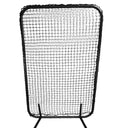
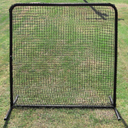
Schutzfeldabschirmungen (Netz und Rahmen)
$199.95
Ships from Huntsville, TX
In Stock
Ships by weight — rate at checkout
60-day limited warranty
Questions? 936-295-4459
Ordering for a team or facility?
Get volume pricing and help choosing the right tools for your players.
Ask me anything about this product
Sizing · use cases · technique · shipping — instant answers
Ask about Schutzfeldabschirmungen (Netz und Rahmen) — how to use it, what athletes it fits, sizing, or how it compares to other tools we make. Answers are focused on this product.
Innovating since 2003
Family-owned, Huntsville TX
Talk to the team
Real specialists, not a call center
Made for daily program use
Designed for continuous reps, every day, every season
100+ implements, organized by goal
Arm care, velocity, strength, and recovery
About This Product
A target that moves isn't a target anymore. This is the surface built to keep it exactly where the last rep left it.
The TAP® Target Backstop is a freestanding, steel-framed target support built to hold a TAP® target in the same position through repeated ball impact, so every repetition references the same location. Available in three sizes — 6' x 4', 7' x 7', and 8' x 8' — it lets coaches, athletes, and facilities build a dedicated target station on any field surface without relying on a batting cage or proprietary mounting hardware.
- Full-Face Load Engineering — Base geometry built for the load path a full-face target creates, not adapted from a general-purpose screen.
- One-Person Portability — Roughly 37 lb assembled with net, built to move storeroom to field and back in one trip.
- No Ground Hardware Required — Splayed four-leg stance carries the stability job; no stakes, sandbags, or ground prep in normal conditions.
- Sized for Weighted Implements — Engineered for the higher momentum weighted balls deliver, not just regulation-ball impact.
- Commercial-Grade Netting — #42 black polypropylene, hand knotted, built for deliberate impact on every rep rather than occasional contact.
What Is It?
The TAP® Target Backstop is a freestanding steel frame with netting, sized and specified to hold a TAP® target as its own training station. The 6' x 4' is manufactured to Oates specification for full-face target loading — most ball impacts land directly on the target rather than open netting, so force travels through the panel into the frame. The 7' x 7' was added specifically to accommodate the Hitting Target™, and the 8' x 8' adds extra containment netting for stations with no secondary net or fence behind them.
This is a training surface, not protective equipment. The Backstop holds the target and catches what misses it — it does not shield a person and is not sold or warranted for that purpose. It's built for field surfaces: dirt, grass, or turf. Not for gym floors, concrete, or asphalt, where there isn't enough friction to hold position against high-velocity impact.
How It Works
Three engineering decisions behind a stable target surface
Slip-Joint Construction
A male section seats inside a female receiver, and the overlapping tube walls carry bending and torsion through the joint itself. Snap buttons retain the joint — they don't carry structural load.
Rounded Corner Geometry
A sharp corner concentrates stress at the point of maximum bending under impact. Carrying the tube around a radius keeps the geometry smooth and moves any joint into the straight vertical spans.
Four-Point Splayed Base
Outward-splayed legs land load where the leg joints are built to carry it, not at an arbitrary mid-span point. The wider stance raises the force required to start the unit tipping.
Engineering Rationale
Built on Statics, Not a Study
No direct peer-reviewed research has tested this specific product, and none is needed to explain it — this is a structural engineering problem, not a training-physiology one. A target that holds still is a reference point; a target that moves is not. Holding that center still, rep after rep, under impact concentrated in one small area, is what the frame geometry below is built to solve.
~37 lb
Assembled weight with net on the 6' x 4' — built for one-person carry
16 Gauge
Steel wall thickness chosen to resist denting without adding carry weight
3 Sizes
6x4, 7x7, and 8x8 — each added for a specific target or containment need
Product Details
How to Use It
Assemble the frame once on level ground, seating each slip joint fully until the snap button clicks through. Attach the net, then mount the target using the supplied bungees or straps only — no substitute hardware. Rock the assembled unit gently to confirm all four feet are carrying load.
Before each practice, walk the frame and check every joint, inspect the net for cuts or separated knots, confirm the target hangs flat under tension, and clear the area of anything an errant ball can reach.
Variant Selection Guide
| Size | Best For | Key Difference |
|---|---|---|
| 6' x 4' | Pitching Pad™, Target Pad®, Advanced Command Trainer™ | Base engineered for full-face target loading. ~37 lb, no wheels. |
| 7' x 7' | Hitting Target™ minimum; other TAP® targets also fit | Commercial-grade frame with open netting around the target face. |
| 8' x 8' | Any TAP® target with no secondary net or fence behind the station | Extra containment netting beyond the target face. |
Note: the TAP® Batting Target™ mounts to batted-ball containment netting rather than a Target Backstop.
Who This Is For
Commonly used for programs building a repeatable command station where a fixed target surface gives every athlete the same reference across a season.
Commonly used for athletes training with weighted implements, since the frame is specified for the higher momentum those implements deliver.
Commonly used for facilities running parallel stations, since each Backstop stands alone and isn't limited by cage availability.
Commonly used for coaches and athletes who need to move equipment between a storeroom and the field, or a garage and the backyard, without tearing the frame down each time.
Technical Specs
| Material, 6' x 4' | 38mm galvanized steel pipe, 16 gauge, round section |
|---|---|
| Netting, 6' x 4' | #42 black polypropylene, pillowcase style, hand knotted 3mm twine, 1.75" mesh |
| Dimensions | 6' x 4', 7' x 7', or 8' x 8' |
| Assembled Weight, 6' x 4' | Approximately 37 lb with net, without target |
| Assembly | Slip joint with snap button retention — no tools required |
| Base | 6' x 4' uses four contact points on outward-splayed legs; 7' x 7' and 8' x 8' use standard commercial base structure |
| Use Surfaces | Field surfaces only — dirt, grass, or turf. Not for gym floors, concrete, or asphalt. |
Safety Guardrails
This is not personal protective equipment. No size is warranted for a person standing behind live batting practice or live pitching — do not position anyone behind a Backstop in use.
Steel frames can deflect a struck ball back toward the athlete; keep people clear of the frame line.
In sustained wind, the net and target present significant surface area and the unit can be pushed or tipped — add weight at the base, secure the unit, or move the session.
Use only on dirt, grass, or turf; hard surfaces don't provide enough friction to hold position against high-velocity impact.
Recommended for athletes 13+ under qualified adult supervision.
This is not a rehabilitation device and has no therapeutic function. We are not coaches. We do not provide coaching.
Frequently Asked Questions
How is this different from a protective screen?
Duty cycle. A protective screen is specified for incidental impact and does its job by not being needed. A target backstop is hit deliberately on every rep, in the same small area. Two products can be the same age and not have done the same amount of work.
Can I use it indoors?
Not on a gym floor, concrete, or asphalt — hard surfaces don't give the feet enough traction against high-velocity impact, and foot contact can mark a finished floor. Use it on dirt, grass, or turf.
Do I have to take it apart between sessions?
No. The frame assembles by slip joint and can stay assembled. At roughly 37 lb with the net, one person can carry it from storeroom to field, or garage to backyard, and back.
Is this appropriate for youth pitchers and hitters?
Yes, with qualified adult supervision and age-appropriate volume. Youth athletes should work at the same intent standard but at lower rep counts, with a coach controlling spacing and progression.
There are cheaper screens available. Why spend more?
Honest answer: simpler, less expensive screens exist, and for occasional use they can hold a target adequately. The difference is duty cycle — a target station absorbs deliberate impact on every rep in one small area, often from weighted implements delivering more momentum than a radar gun suggests. The 6' x 4' was designed for that condition, not adapted to it.
Questions before you buy? Call or Text Our Team at (936) 295-4459
Customer Reviews
What Customers Are Saying
Loading reviews…
No reviews yet for this product.
Be the first to review