

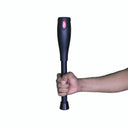
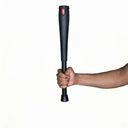
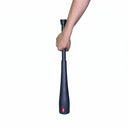
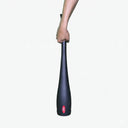
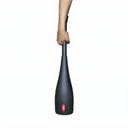
TAP® Bell Club – End‑Loaded Steel Club for Shoulder Mobility, Arm Strength, Grip, and Power
$29.95
Ships from Huntsville, TX
In Stock
60-day limited warranty
Questions? 936-295-4459
Ordering for a team or facility?
Get volume pricing and help choosing the right tools for your players.
Ask me anything about this product
Sizing · use cases · technique · shipping — instant answers
Ask about TAP® Bell Club – End‑Loaded Steel Club for Shoulder Mobility, Arm Strength, Grip, and Power — how to use it, what athletes it fits, sizing, or how it compares to other tools we make. Answers are focused on this product.
Innovating since 2003
Family-owned, Huntsville TX
Talk to the team
Real specialists, not a call center
Made for daily program use
Designed for continuous reps, every day, every season
100+ implements, organized by goal
Arm care, velocity, strength, and recovery
About This Product
Light sizes train the shoulder. Heavy sizes replace your kettlebell.
The TAP® Bell Club is a modern steel club inspired by traditional Indian clubs, with the weight shifted out on an elongated shaft so every swing trains the shoulder, arm, and grip through full-circle paths instead of simple up-down reps. By moving the center of mass away from your hand — and letting you slide your grip higher or lower on the handle — the club changes torque at the wrist, elbow, and shoulder, turning light sizes into precise shoulder-care tools and heavy sizes into leveraged kettlebell substitutes.
- Leverage-Based Resistance Instead of Palm-Centered Weight — Unlike dumbbells or kettlebells where mass sits in your palm, the Bell Club places most of its weight at the far end of the handle. That off-center mass multiplies torque demands on the wrist, elbow, and shoulder, teaching the upper body to stabilize against real leverage instead of just static load.
- Variable Leverage Based on Where You Grip the Shaft — Choking up shortens the lever arm, making the club feel lighter and more controllable for halos and mobility drills. Gripping lower lengthens the lever arm and dramatically increases perceived load — one tool covers warm-ups, main sets, and heavy swing work.
- Continuous Circular Patterns, Not Just Linear Lifts — Club patterns emphasize continuous halos, swings, and casts rather than isolated up-and-down lifts, building coordination, timing, and tissue resilience in the same looping paths where many sport stresses show up.
- Grip-to-Shoulder “Irradiation” for Cuff Stability — The club demands an active, continuous squeeze to keep the handle from slipping during high-velocity arcs. That hard grip creates a reflex called irradiation, where forearm tension automatically lights up the deep rotator-cuff stabilizers and helps keep the humeral head (the top of the upper arm bone) centered in the socket.
- Two-Handed Neutral-Grip Swings as a Kettlebell Alternative — With heavier clubs, take a neutral, two-handed grip and perform between-the-legs swings similar to heavy kettlebell work — easier on the wrists than a locked, offset kettlebell handle while still delivering serious hip-hinge power.
- Rubber-Coated Steel for Durability and Floor Protection — Steel with a rubber coating combines durability with a finish friendlier to floors and racks — suitable for daily warm-ups, shoulder-care circuits, and full conditioning sessions in facility or home-gym environments.
What Is It?
The TAP® Bell Club is a rubber-coated steel club with a narrow handle and a weighted head, designed for one-handed and two-handed swinging exercises that train the hand, wrist, arm, and shoulder through full ranges of motion. The weight distribution and handle length create leverage demands very different from kettlebells or dumbbells, even at similar listed weights, and your grip position lets you fine-tune that leverage on the fly.
Compared with traditional wooden Indian clubs, TAP® Bell Clubs keep the same basic swinging vocabulary while adding modern materials, a rubber coating, and a baseball-and-overhead-athlete focus. Compared with weighted bats or sticks, Bell Clubs are not meant to be hit against anything and are used strictly for off-body swings, halos, and casts that build capacity in the shoulder complex.
How It Works
Key mechanisms behind lever-loaded club training
Scapulothoracic “Smooth Tracking” for Shoulder Health
Moving the club around the head forces the shoulder blades to rotate and glide smoothly on the rib cage instead of staying locked down. The leverage makes muscles like the serratus anterior (a muscle along the side of the rib cage that rotates the shoulder blade) and lower trapezius (a muscle across the upper back that pulls the shoulder blade down and in) work to keep the shoulder moving cleanly.
Kinetic Synchronicity Between Lower Half and Upper Body
When you pair squats or hip hinges with forward swings, the lower body absorbs and then drives the club while the core transfers energy to the arms. That ground-to-hand flow trains the same full-chain connection throwing and hitting demand rather than isolating one joint at a time.
Neural Irradiation and Tissue Elasticity Under Load
The heavy squeeze needed to control the handle sends a neural signal up the arm that reflexively activates the rotator cuff and deep stabilizers. The looping, eccentric-heavy paths (where muscles lengthen under tension) stretch and strengthen connective tissues under control, improving mobility in positions where shoulders commonly get hurt.
Backed by Research
Leverage, Irradiation, and Multi-Planar Shoulder Capacity
The TAP® Bell Club changes how the upper body manages load by combining an off-center mass, continuous swinging patterns, variable leverage, and high grip demands. Irradiation means that a strong contraction in one area (like the forearms) helps turn on nearby stabilizing muscles (like the rotator cuff) without the athlete having to think about them consciously.
1–20 kg
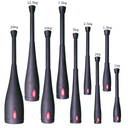
Nine sizes on one tool — light clubs for shoulder care and mobility, heavy clubs as a leveraged kettlebell substitute
3 Planes
Frontal halos, sagittal squat-swings, and transverse lever casts each stress the shoulder girdle differently for complete capacity
Variable Lever
Choke up to shorten the lever for control, slide down to lengthen it for load — one club covers the entire training arc
Video Library
See It In Action
Click the thumbnail to play from the start — open the Video Chapter Guide and click any timestamp to jump to that moment.
2022
TAP® Bell Clubs: Boost Strength, Flexibility & Coordination

Video Chapter Guide
| Functional Overview and Movement Misconceptions — defining the implement as built for whole-body coordination, mobility, and stability rather than a weighted bat or fighting stick, with initial frontal-plane hand-clears and halos. | |
| Light-Bell Applications (Deceleration and Overhead Athletes) — a lighter clubbell variation reinforces eccentric deceleration patterns through controlled over-the-shoulder loops, targeting mobility, flexibility, and stability across the shoulder complex. | |
| Heavy-Bell Applications (Full-Body Power Integration) — a heavier implement demonstrates multi-joint movements like cleans, continuous swings, and full squats, loading the lower half while keeping a stable core. | |
| Grip Mechanics and Hand Mobility Comparison — a close-up analysis of the handle system, highlighting how the design allows for greater range of motion and joint tracking compared to a standard barbell or kettlebell. | |
| Programming Context — framing the implement’s versatility as a standalone tool for warm-ups, main training sessions, or cool-downs. |
Product Details
How to Use It
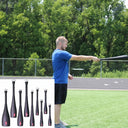
Halos for scapular motion: Light club, hands choked up, slow halos around the head. Reduce range if movement feels pinchy.
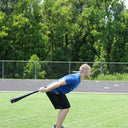
Squat-swing patterns: Soft squat as the club drops, strong extension as it swings forward.
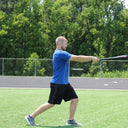
Lever casts: Extend the arm away from the body and perform horizontal lever casts, keeping the wrist neutral.
Two-handed swings: Neutral grip near the end of the handle, between-the-legs swings similar to a kettlebell swing.
Select weight and grip: Lighter, choked up for mobility; mid-to-heavy, gripped lower for conditioning.
Variant & Selection Guide
| Weight | ~lb | SKU | UPC |
|---|---|---|---|
| 1 kg | ~2.2 | BC1 | 608938928474 |
| 1.5 kg | ~3.3 | BC1.5 | 608938930873 |
| 2 kg | ~4.4 | BC2 | 608938930880 |
| 2.5 kg | ~5.5 | BC2.5 | 608938930903 |
| 5 kg | ~11 | BC5 | 608938930897 |
| 7.5 kg | ~16.5 | BC7.5 | 797734132281 |
| 10 kg | ~22 | BC10 | 797734132199 |
| 12.5 kg | ~27.5 | BC12.5 | 608938930910 |
| 20 kg | ~44 | BC20 | 797734132229 |
Heavier clubs are reserved for athletes with excellent technique and prior experience.
Who This Is For
- Commonly used for baseball/softball players needing shoulder durability.
- Commonly used for tennis and volleyball athletes wanting healthier shoulders and scapular control.
- Commonly used for S&C coaches running shoulder-care circuits and grip blocks.
- Commonly used for lifters wanting kettlebell-style conditioning.
What This Implement Does NOT Do
- It is not a weighted bat; not for striking balls or surfaces.
- It does not automatically increase velocity or exit speed; gains depend on programming alongside other training.
- It is not a substitute for medical treatment; shoulder/elbow pain needs a professional evaluation.
- It is not a toy; misuse can lead to dropped clubs or joint overload.
Technical Specs
| Product Name | TAP® Bell Club |
|---|---|
| Also Known As | Steel club, Indian club, club bell, kettlebell club |
| Construction | Steel club, rubber coated |
| Primary Use | One- and two-handed swinging exercises for hand, wrist, arm, shoulder, coordination |
| Training Qualities | Strength, mobility, flexibility, grip, deceleration, conditioning |
| Weight Range | 1, 1.5, 2, 2.5, 5, 7.5, 10, 12.5, 20 kg |
| Hand Use | Single-hand for light-to-mid sizes; two-hand neutral-grip for heavier clubs |
| Environment | Open space, overhead/lateral clearance |
Safety and Care
- Not a toy: Weighted implement only — not for play, sword-fighting games, or unsupervised youth training.
- Environment: Clear overhead and lateral space; never swing near people, windows, or fragile equipment.
- Progression: Start lighter and choked-up; progress leverage and load only when control is excellent.
- Joint feedback: Stop if swings cause shoulder, elbow, or wrist pain; discomfort should be mild, not sharp.
- Impact: Do not drop or slam clubs on hard surfaces; repeated impact can damage clubs and floor.
Frequently Asked Questions
How do I choose the right Bell Club weight?
Start with 1–2 kg for shoulder care; reserve mid-range and heavy clubs for experienced athletes.
How is a Bell Club different from a kettlebell or dumbbell?
The weight sits at the end of a lever, and sliding your grip up or down the shaft changes the leverage — uniquely demanding on grip and shoulder control.
Can I use TAP® Bell Clubs as weighted bats or striking tools?
No. Not for hitting balls, nets, or objects; doing so can damage the club or surface.
Are lighter clubs just for warm-ups?
Light clubs are great for warm-ups, but also powerful tools for ongoing shoulder-care and mobility drills.
Who should use the heaviest clubs (10–20 kg)?
Only athletes with strong grip and prior club experience, under qualified coaching supervision with two-hand swings.
Do I need a lot of space to train with Bell Clubs?
You need clearance for full halos and swings — most cages or gyms with a couple of open meters will work.
Questions before you buy? Call or Text Our Team at (936) 295-4459
Customer Reviews
What Customers Are Saying
Loading reviews…
No reviews yet for this product.
Be the first to review