

TAP® First Responder: UCL Protection & Forearm Strength Training
$24.95
Ships from Huntsville, TX
In Stock
60-day limited warranty
Questions? 936-295-4459
Ordering for a team or facility?
Get volume pricing and help choosing the right tools for your players.
Ask me anything about this product
Sizing · use cases · technique · shipping — instant answers
Ask about TAP® First Responder: UCL Protection & Forearm Strength Training — how to use it, what athletes it fits, sizing, or how it compares to other tools we make. Answers are focused on this product.
Innovating since 2003
Family-owned, Huntsville TX
Talk to the team
Real specialists, not a call center
Made for daily program use
Designed for continuous reps, every day, every season
100+ implements, organized by goal
Arm care, velocity, strength, and recovery
About This Product
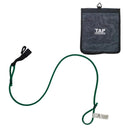
Dual finger-loop tubing for low-load forearm work — pronation and supination drills, finger and wrist flexor work, and controlled eccentric biceps work.
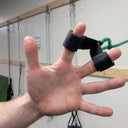
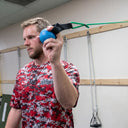
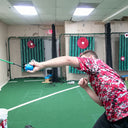
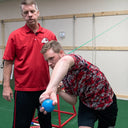
The TAP® First Responder is a resistance tubing tool with two finger loops. The athlete’s fingers go through the loops, and the tubing adds mild resistance while a ball is held — so the finger and wrist flexors work at the same time as the forearm rotates. Drills run from the connection position into pronation and internal rotation, and through controlled eccentric biceps work with active pronation. Start at low speed and low volume, under supervision.
- Dual Finger-Loop Design — Two loops hold the fingers so the tubing loads the hand and forearm together while the athlete holds a ball.
- Pronation & Supination Drills — Resisted rotation work in both directions, at controlled speed.
- Finger & Wrist Flexor Work — The loops load the fingers and wrist while the forearm moves.
- Controlled Eccentric Biceps Work — Slow lowering against extension with active pronation, progressed only when the movement stays clean.
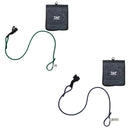
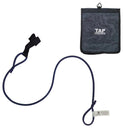
- Two Resistance Levels — Green (lighter) and Blue (heavier), $24.95 each.
What Is It?
The name comes from the forearm muscles near the inner elbow, often referred to as the “first responders” — the first link in the chain of activity around the ligament. This tool gives those muscles a repeatable, progressable load: finger-loop tubing that resists pronation, supination, and finger and wrist flexion, used with a ball.
How It Works
Three things the tool adds to a drill
Load the Fingers and Wrist
The finger loops hold the hand in the work while a weighted ball is held, so the finger and wrist flexors stay loaded through the whole drill instead of only at the grip.
Rotate Under Load
Pronation and supination drills work the forearm through its rotation in both directions, at controlled speed, from the connection position into internal rotation.
Lower Under Control
Eccentric biceps work means lowering slowly against extension with active pronation. Speed goes up only when the pattern stays clean — the drill is judged by the movement, not by the load.
What the Research Says
Forearm Work, Stated Plainly
The tool creates a repeatable, progressable load on muscles documented as restraints against the elbow being forced open. In one study of resisted forearm work, pronation produced about 73% of maximum activation in the pronator teres and about 64% in the flexor digitorum superficialis, while a different drill loaded the flexor carpi ulnaris most — which is the practical argument for using more than one drill rather than picking a single muscle.
One honest limit: no study has tested the First Responder itself, and no study supports the step from a stronger forearm to a protected ligament. The one trial that looked trained forearms for eight weeks, raised grip strength about 3%, and found no change in how far the inner elbow opened under load. Which forearm muscle matters most is unsettled, so no single muscle target is a basis for choosing one drill over another. Sullivan’s account — that pronation and internal rotation quiet the biceps through reciprocal inhibition — is a practitioner position stronger than the physiology supports. This tool does not protect the ligament, prevent injury, diagnose a problem, or clear an athlete to throw. Judge it by what you can observe: clean movement, a normal arm action, and how the arm responds the next day.
2 Loops
Finger-loop tubing loads the hand and forearm together
2 Levels
Green (lighter) and Blue (heavier)
Low Load
Mild resistance for supervised, low-speed drill work
Video Library
See It In Action
Click a thumbnail to play from the start — open the Chapter Guide and click any timestamp to jump to that moment.
2014
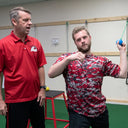
TAP™ First Responder Resistance Tubing | Protocol to Protect Ulnar Collateral Ligament (UCL)
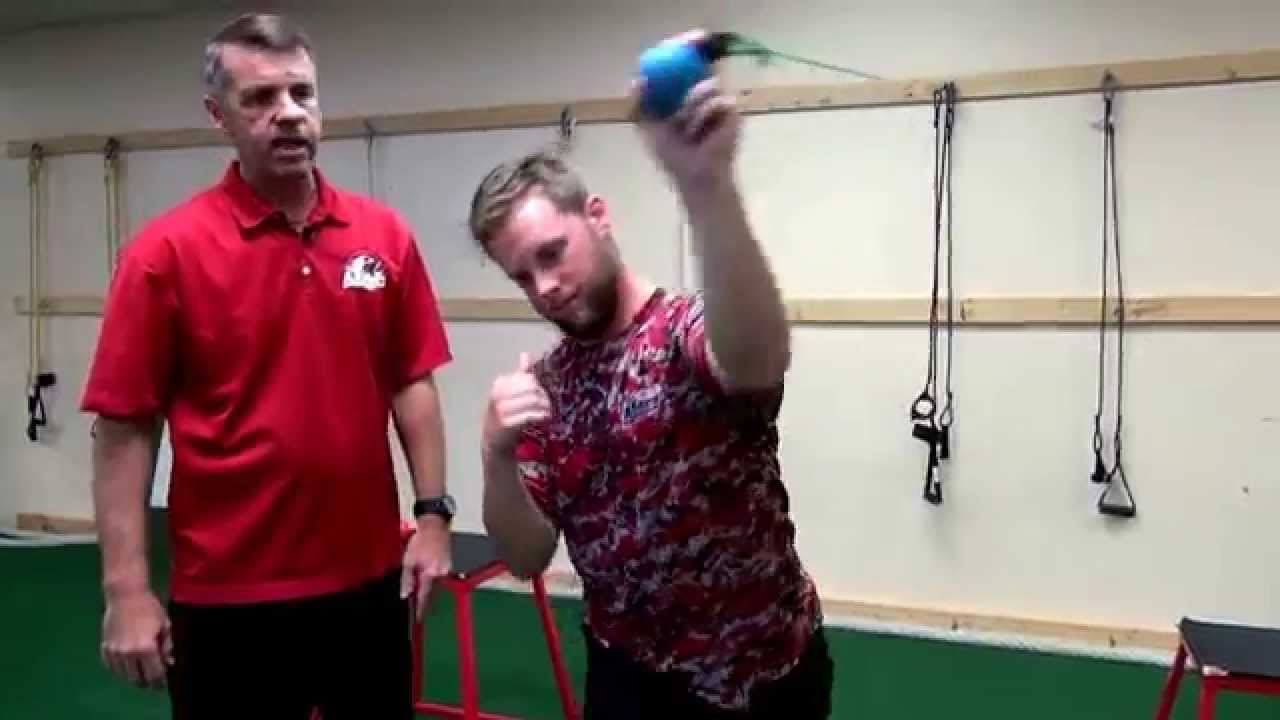
Chapter Guide — 8 Timestamps
| Introduction & Purpose: Randy Sullivan introduces the “First Responder” protocol designed to dynamically protect the ulnar collateral ligament (UCL). | |
| Grip & Finger Flexor Strengthening: Targeting the flexor digitorum superficialis and forearm stabilizers using the Power Web. | |
| Forearm Pronation & Supination: Loading pronation/supination mechanics using tools like the Bell Club and Super Pro. | |
| First Responder Band Overview: Introducing the dual finger-loop tubing design paired with a weighted ball to engage finger and wrist flexors simultaneously. | |
| Drill 1 (Pronation & Internal Rotation): Working from the connection position into active forearm pronation and shoulder internal rotation to reinforce dynamic medial elbow stability. | |
| Biceps Dynamic Stabilization Mechanics: Biomechanical breakdown of the biceps contracting eccentrically against extension without inducing forearm supination. | |
| Drill 2 (Eccentric Biceps Deceleration): Performing controlled eccentric biceps loading with active pronation, then progressing to game-speed deceleration. | |
| Conclusion & Summary: Final wrap-up of the First Responder protocol. |
Product Details
How to Use It
Start at low speed and low volume, under supervision. Run the drills from the connection position into pronation and internal rotation, and through controlled eccentric biceps work with active pronation. Progress speed only when the movement stays clean — the drill is judged by the movement, not by the load. Stop immediately if pain, dizziness, or unusual fatigue occurs.
Variant & Selection Guide
| Resistance Level | SKU | Price |
|---|---|---|
| Green (lighter) | FRTG | $24.95 |
| Blue (heavier) | FRTB | $24.95 |
Green is the lighter resistance and Blue is the heavier resistance. Younger or less-experienced athletes should use it only under close adult supervision, with conservative volume.
Who This Is For
- Commonly used for pitchers and overhead athletes adding low-load forearm and finger work to arm-care and throwing-pattern routines.
- Commonly used in supervised arm-care sessions, warm-ups, and low-speed drill blocks.
We are not coaches. We do not provide coaching.
What This Implement Does NOT Do
- It does not protect the ligament, prevent injury, or reduce elbow or shoulder load — no study has shown that step.
- It is not a rehabilitation device and not a substitute for medical care.
- It does not diagnose a problem or clear an athlete to throw.
- It is not a velocity tool; any performance gains depend on the broader program and athlete, not this tool alone.
Technical Specs
| Product Name | TAP® First Responder |
|---|---|
| Product Type | Dual finger-loop resistance tubing for forearm and finger drill work |
| Resistance Levels | Green (lighter) — SKU FRTG, $24.95; Blue (heavier) — SKU FRTB, $24.95 |
| Design | Two finger loops hold the fingers so the tubing loads the hand and forearm together |
| Use With | A weighted ball — the drills are done holding one while the loops load the flexors |
| Best Used For | Supervised arm-care sessions, warm-ups, and low-speed drill blocks |
Safety and Youth Guardrails
- Supervision: Start at low speed and low volume, under supervision. Progress speed only when the movement stays clean.
- Stop if pain occurs: Stop immediately if pain, dizziness, or unusual fatigue occurs.
- Not a rehabilitation device: Athletes dealing with elbow pain or returning from injury should use it only as directed by a qualified professional, and it is not a substitute for medical care.
- Youth use: Younger or less-experienced athletes should use it only under close adult supervision, with conservative volume.
Frequently Asked Questions
What does the First Responder actually do?
It adds mild, repeatable resistance to forearm work: the dual finger loops load the fingers and wrist while a weighted ball is held, and the drills run through pronation and supination and controlled eccentric biceps work with active pronation, at low speed and low volume under supervision.
Does it protect the UCL?
No study has shown that a device or drill protects the ligament. The one forearm-training trial that looked raised grip strength about 3% and found no change in how far the inner elbow opened under load. The First Responder loads the muscles around the joint; it does not shield the ligament.
Is it a rehabilitation device?
No. Athletes dealing with elbow pain or returning from injury should use it only as directed by a qualified professional, and it is not a substitute for medical care.
Green or Blue — which resistance level?
Green is the lighter resistance and Blue is the heavier resistance. Younger or less-experienced athletes should use it only under close adult supervision, with conservative volume.
Do I need a weighted ball to use it?
The drills are done holding a weighted ball, which works with the finger loops so the flexors stay loaded while the forearm rotates. Start at low speed and progress only when the movement stays clean.
Questions about the First Responder? Call or Text Our Team at (936) 295-4459
Customer Reviews
What Customers Are Saying
Loading reviews…
No reviews yet for this product.
Be the first to review