

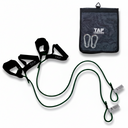
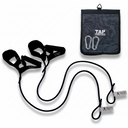
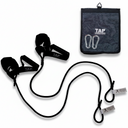
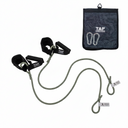
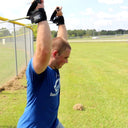

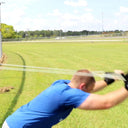
TAP® Ultimate Pitcher: Dual-Interface Cuffed and Handled Resistance
$59.95
Ships from Huntsville, TX
In Stock
60-day limited warranty
Questions? 936-295-4459
Ordering for a team or facility?
Get volume pricing and help choosing the right tools for your players.
Ask me anything about this product
Sizing · use cases · technique · shipping — instant answers
Ask about TAP® Ultimate Pitcher: Dual-Interface Cuffed and Handled Resistance — how to use it, what athletes it fits, sizing, or how it compares to other tools we make. Answers are focused on this product.
Innovating since 2003
Family-owned, Huntsville TX
Talk to the team
Real specialists, not a call center
Made for daily program use
Designed for continuous reps, every day, every season
100+ implements, organized by goal
Arm care, velocity, strength, and recovery
About This Product
One pair of tubes, two ways to attach. Handles when the grip is part of the work, cuffs when it is not.
The TAP® Ultimate Pitcher is a pair of elastic tubes that comes with both textured, easy-clean handles and padded, adjustable wrist cuffs, plus snap hooks. It gives baseball players and other overhead athletes a simple way to load controlled shoulder, rotator-cuff, shoulder-blade, and trunk patterns before throwing or within a strength-endurance session — using the handles when grip is part of the pattern and the cuffs when the coach wants the hand and wrist unloaded. The tool adds resistance; the coach still determines the exercise, range, volume, and place in the larger training plan.
- More Stretch Creates More Resistance — The load rises as the tube lengthens, so the same tube can feel different when the athlete moves farther from the anchor or uses a larger range. That makes setup part of the prescription.
- The Anchor Sets the Line of Pull — Move the anchor higher, lower, or to the side to match rows, presses, rotation work, or diagonal patterns without being limited to gravity’s downward pull.
- Four Resistance Levels Support Sensible Progression — Coaches can choose the lightest tube that lets the athlete keep the ribs, trunk, and shoulder organized, then progress only when that same pattern stays clean.
- Handles and Cuffs Cover Both Jobs — Use the textured handles for grip-involved work, or switch to the padded adjustable wrist cuffs to unload the hand and wrist and keep the loading on the shoulder and shoulder blade. Both interfaces wipe down between users.
- Snap Hooks Protect the Tube at the Anchor — The hooks keep the elastic from rubbing directly across a rough fence or post, which helps reduce avoidable nicks and abrasion.
What Is It?
Dual-interface resistance tubing sold as a pair. Each side uses an elastic tube that can be worked through either a rubberized thermoplastic handgrip or a padded adjustable wrist cuff (one interface at a time), with a looped end and a snap hook for connection to a suitable fixed anchor. Compared with a dumbbell, the resistance does not come only from gravity — the coach can change the pull direction by moving the anchor, while the tube becomes harder to stretch as it lengthens. Compared with a short flat band or mini-band, the dual-interface format is better suited to anchored rows, presses, shoulder-rotation exercises, and diagonal pulls, with the cuff option removing grip from the equation when the coach wants the hand and wrist unloaded. It is not a cable machine in a bag: cable machines provide a more standardized load and travel path; tubing is lighter and easier to carry, but its challenge changes with the tube selected, the starting distance, the movement range, and the anchor position.
How It Works
Three mechanisms behind elastic arm-care training
Progressive Elastic Load
Resistance rises as the tube stretches, so coaches can adjust challenge through the tube level, starting distance, exercise range, and anchor position — rather than relying on one fixed load. That variable setup gives a portable tool an unusual range of programming options.
Direction-Flexible Anchor Loading
Repositioning the anchor changes the line of pull, which loads different combinations of shoulder, shoulder-blade, and trunk muscles without depending on gravity’s downward direction. Rows, diagonal patterns, rotation exercises, and presses each pull from a distinct angle — one pair of tubes covers them all.
Controlled Movement in Both Directions
Strength endurance means holding movement quality across repeated submaximal efforts. The rotator cuff — the small group of muscles that helps guide and center the upper arm at the shoulder — and the shoulder-blade muscles must stay engaged on both the outward pull and the controlled return. That two-directional demand is the training stimulus.
Backed by Research
Research Context: What the Evidence Actually Shows
No peer-reviewed study has tested the TAP® Ultimate Pitcher itself. Its role is supported at the category level — elastic tubing supplies resistance that rises with stretch, and anchored tubing can load selected shoulder and shoulder-blade patterns from multiple directions. This description does not claim that the product prevents injury, guarantees strength gains, increases velocity, restores tissue, or establishes competitive readiness.
Moore, Uhl, and Kibler reported improvement in one posterior-shoulder endurance test after a multicomponent preseason program that included elastic resistance in high-school baseball players; the study was small, uncontrolled, and cannot be credited to one tube or exercise. Fredriksen and van den Tillaar found that some strength methods improved throwing velocity in reviewed studies, but no universal best method was established. Muscle activation during an exercise shows that a muscle is working — it does not, by itself, prove better velocity, readiness, or injury prevention.
4 Levels
Heavy through Super Heavy — progress only when every rep stays clean at the current tension
~5 ft
Per tube — enough length to support anchored rows, presses, rotations, and diagonal pulls across a full range
Any Anchor
Bullpen fence, dugout rail, locker-room post — snap hooks protect the tube and connect quickly
Product Details
How to Use It
Warm-up and pre-throwing: After a whole-body warm-up and before progressive catch or high-fatigue work. Choose controlled patterns already in the program — rows, external-rotation, presses, or diagonal pulls — and stop before the work creates a burn or changes posture.
Strength-endurance work: Inside a planned training block for the rotator cuff (the small group of muscles that guides and centers the upper arm at the shoulder), shoulder-blade muscles, arms, and trunk. Strength endurance means holding movement quality across repeated submaximal efforts.
Lower-intensity work: Less tension, a comfortable range, and short sets on lighter days. Tubing does not make a session restorative by itself and should not be used to work around pain or replace needed rest.
Coaching cues: Keep the neck long; if the shoulder climbs toward the ear, reduce tension. Keep the ribs organized; if the athlete leans or arches to finish the rep, reduce range. Control the return — do not let the tube snap the arm back. Stop before the elbow, shoulder, or trunk changes position to chase extra stretch.
Resistance Selection Guide
| Color | Name | SKU | UPC | Practical Starting Point |
|---|---|---|---|---|
| Green | Heavy | UPG | 608938930354 | Lowest; use when learning a pattern or with conservative load |
| Blue | Extra Heavy | UPE | 608938930347 | Next step when Green no longer challenges and control remains unchanged |
| Black | Special Heavy | UPB | 608938930330 | Middle option for established patterns without compensation |
| Silver | Super Heavy | UPS | 608938930361 | Highest; reserve for mature, well-trained athletes only |
Who This Is For
- Commonly used for baseball and softball throwers needing portable resistance work before throwing or in a strength-endurance block.
- Commonly used for overhead athletes in tennis, volleyball, swimming, and golf when the exercise and resistance match the program.
- Commonly used for teams and facilities that need handled and cuffed tubing that moves between anchor points and cleans easily between users.
- Commonly used for athletes age 13 and older under coach or qualified adult supervision.
Safety, Compliance, and Youth Guardrails
Designed for athletes age 13 and older. Adolescent athletes should train under qualified adult or coach supervision, with resistance, range, and volume matched to current size, strength, and training history. During rapid growth, keep loading conservative.
- Not a toy: Use only as a supervised training implement.
- Not for impact or release: Do not strike people or objects, and never let go of stretched tubing.
- Not a rehabilitation device: Do not use as a substitute for medical evaluation, physical therapy, or a return-to-throwing plan.
- Stable anchor: Confirm the anchor cannot move, cut the tubing, or release the hook. Keep faces and bystanders outside the recoil path.
- Inspect before every session: Check tubes, loops, handles, cuffs, and hooks for cracks, nicks, or loose parts. Replace damaged equipment.
- Limit the stretch: Do not exceed approximately three times the resting length; never use body momentum to force more stretch.
- Stop for symptoms: Stop immediately for sharp, pinching, or unusual discomfort and seek professional guidance.
⚠ Latex Allergy Warning: Product, components, or packaging may contain natural rubber latex, which can cause severe allergic reactions including anaphylaxis. Anyone with a known or suspected latex allergy should avoid use and select a confirmed latex-free alternative.
Frequently Asked Questions
Which resistance should I buy?
Start with the lightest option that challenges without changing posture or return speed. If the athlete shrugs, leans, or loses control, reduce resistance or adjust the setup.
Can I use the tubing before throwing?
Yes — after a whole-body warm-up and before progressive catch. The athlete should finish prepared, not fatigued.
Does it train deceleration?
Selected exercises can load muscles that help control the shoulder blade as the arm slows (deceleration — the body’s controlled slowing of the arm after release). Tubing may support that capacity but does not reproduce the timing or forces of an actual throw.
How is it different from dumbbells?
Dumbbells are gravity-loaded; anchored tubing pulls toward the anchor and gets harder to stretch as it lengthens. Both belong in a complete program.
Can I use it for shoulder or elbow rehabilitation?
Only when a licensed healthcare professional selects and supervises the exercise within an individualized plan. This product is not a rehabilitation device.
Will it prevent arm injuries or increase throwing velocity?
No such result is guaranteed. Research uses different athletes, methods, and workloads; results depend on the complete program and the athlete’s response.
When would I use the cuffs instead of the handles?
Use the cuffs when the coach wants the hand and wrist unloaded so the shoulder and shoulder blade do the work without grip fatigue cutting the set short. Use the handles when grip is part of the pattern being trained.
What is included?
A pair of five-foot tubing sections with rubberized handgrips, padded adjustable wrist cuffs, looped ends, and snap hooks. Instructions not included.
Questions before you buy? Call or Text Our Team at (936) 295-4459
Customer Reviews
What Customers Are Saying
Loading reviews…
No reviews yet for this product.
Be the first to review