

TAP® Weighted Forearm Sleeve – Distal Loading for Posterior Shoulder Strength, Deceleration, and In‑Season Recovery
$29.95
Ships from Huntsville, TX
In Stock
Ordering for a team or facility?
Get volume pricing and help choosing the right tools for your players.
Ask me anything about this product
Sizing · use cases · technique · shipping — instant answers
Ask about TAP® Weighted Forearm Sleeve – Distal Loading for Posterior Shoulder Strength, Deceleration, and In‑Season Recovery — how to use it, what athletes it fits, sizing, or how it compares to other tools we make. Answers are focused on this product.
Innovating since 2003
Family-owned, Huntsville TX
Talk to the team
Real specialists, not a call center
Made for daily program use
Designed for continuous reps, every day, every season
100+ implements, organized by goal
Arm care, velocity, strength, and recovery
About This Product
Distal forearm resistance that trains posterior shoulder strength, deceleration, and in-season recovery without more high-speed throws.
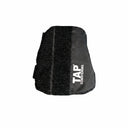
The TAP® Weighted Forearm Sleeve is a 16-ounce, adjustable training sleeve that straps securely on the forearm to place resistance at the end of the throwing arm instead of in the hand or on the ball. Because the sleeve stays on through the entire motion — unlike a weighted ball that releases at the top of the throw — it keeps the posterior shoulder working through the whole finish. That gives pitchers and other overhead athletes a way to train the shoulder complex and deceleration pattern, and to start in-season restore work, without immediately going back to full-speed throwing.
- 16-Ounce Distal Resistance — A fixed mass on the forearm increases the lever arm on the shoulder while keeping the hand free to grip a ball or bat.
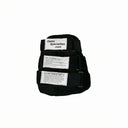
- Three-Strap, Secure Fit — Adjustable straps lock the weight in place so athletes focus on movement quality, not a shifting implement.
- Continuous Loading Through the Finish — Unlike a released weighted ball, the sleeve keeps resistance on the arm through the entire follow-through.
- Constraint-Based Shoulder Patterning — Added forearm mass changes how the athlete organizes shoulder, scapular, and trunk motion during arm-care drills.
- Recovery-Friendly Restore Entry — Gives in-season arms a conservative way to build resilience on recovery days without stacking on more high-stress pitches.
What Is It?
The TAP® Weighted Forearm Sleeve is a wearable synthetic forearm sleeve with a fixed 16-ounce weight and three straps that position resistance at the end of the throwing arm. It is not a velocity-chasing gadget like a weighted ball or heavy bat — its primary job is deceleration training, shoulder resilience, and recovery-adjacent loading, not adding raw miles per hour.
How It Works
Three mechanisms behind distal forearm resistance
Continuous Eccentric Loading
A released weighted ball unloads right at maximum external rotation; because the sleeve stays strapped on, it keeps the posterior shoulder working through the entire finish, building eccentric strength endurance in the exact tissues that protect the joint.
Soft-Elbow Finish Constraint
Aggressively locking the elbow straight on follow-through is a common mechanical stress point; the added forearm mass is designed to provide continuous sensory feedback that guides the arm into a safer, slightly bent deceleration path.
Whole-Body Deceleration Sharing
To safely decelerate the added mass, the body can’t rely on the arm alone — the resistance encourages the torso to rotate and finish over the front leg, sharing the deceleration workload with the core and hips.
Training Approach
Built on Arm-Care and Motor-Learning Principles
There is no peer-reviewed study on this specific product; every mechanism described here applies established arm-care and motor-learning principles to a distal-loading sleeve. The intent is to explain how the sleeve shapes resistance and movement, not to promise guaranteed performance outcomes.
16oz
Fixed distal resistance positioned at the end of the throwing arm
Soft-Elbow
Forearm mass is designed to guide the arm into a safer, slightly bent finish instead of an aggressive elbow lock
Full Finish
Resistance stays on through the entire follow-through, unlike a released weighted ball
Product Details
How to Use It
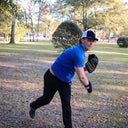
Warm-up / prep phase: Position the sleeve on the forearm and secure all three straps snugly so the weight sits stable and doesn’t rotate. Start with low-speed arm-circles, scap-movement drills, and torso-guided arm swings to let the shoulder feel the added resistance before any higher-speed work.
Training phase: Integrate the sleeve into arm-care and deceleration drills such as step-behind dry throws, controlled reverse throws, or torso-driven decel patterns where the arm is working but not yet at full mound intensity. Pair it with posterior cuff activation (the muscles on the back of the shoulder that help slow the arm) and scapular stabilizer work (muscles that control shoulder-blade position) so the added resistance reinforces good patterns.
Light-day / recovery-adjacent use: On in-season recovery days, use the sleeve to slow arm speed and let the shoulder work against modest resistance without adding more high-stress pitches. Keep volume and intensity conservative, focusing on smooth movement and comfort rather than maximal effort.
Variant & Selection Guide
| Weight | Fit / Straps | SKU | UPC |
|---|---|---|---|
| 16 oz | Three adjustable straps | WFS | 608938931313 |
Sold as a single, one-size product with fixed weight. Compatible with most forearm sizes seen in high school, college, and pro athletes, and can be used on either arm according to the program.
Who This Is For
- Commonly used for pitchers and overhead athletes who want to build shoulder resilience and deceleration capacity without adding more full-speed throwing volume.
- Commonly used for coaches managing in-season arms who need a conservative, restore-phase tool between complete rest and returning to mound intensity.
- Commonly used for performance staffs building comprehensive arm-care programs that include scapular work, posterior cuff loading, and deceleration training.
- Not recommended as a sole solution for significant shoulder or elbow injury; it should be integrated into care directed by qualified medical and performance professionals.
What This Implement Does NOT Do
- It is not a magic velocity tool; any performance gains depend on the broader program and athlete, not this sleeve alone.
- It is not a substitute for a full arm-care system that includes rest, strength, mobility, and pitching-volume management.
- It is not a diagnosis or treatment device; it does not evaluate injury status or replace medical assessment.
- It is not meant for unsupervised youth use at high volumes or intensities.
Technical Specs
| Product Name | TAP® Weighted Forearm Sleeve |
|---|---|
| Also Known As | Weighted Arm Sleeve, Deceleration Sleeve, Arm-Care Resistance Band Sleeve |
| Product Type | Wearable distal-loading forearm sleeve for arm care and shoulder training |
| Weight | 16 ounces |
| Fit | Three adjustable hook-and-loop straps for secure placement on the forearm |
| Materials | Durable synthetic outer shell with integrated weight element and nylon/elastic straps |
| Use Cases | Shoulder strength and endurance, deceleration training, in-season recovery, warm-ups |
| Cleaning | Surface clean only with mild, skin-safe solutions; do not machine-wash or submerge |
| Compatibility | Overhead and rotational athletes (baseball, softball, volleyball, tennis, etc.) under appropriate supervision |
Safety, Compliance & Youth Guardrails
- Not a toy: This product is intended for organized athletic training environments and should not be used as a toy; misuse can lead to falls, impacts, or other injuries.
- Not for impact use: Do not use the sleeve for striking or hitting other athletes or objects; it is designed as wearable resistance, not impact equipment.
- Not a rehabilitation device: Any use in rehabilitation or return-to-play settings should follow a plan written or approved by qualified medical or performance professionals.
- Age guidance: For most athletes, this tool is best suited to roughly ages 13 and up, when growth-related joint changes and neural adaptation make targeted shoulder loading appropriate.
- Supervision: Younger or less-experienced athletes should use it only under close adult supervision, with conservative resistance, volumes, and drill complexity. Stop immediately if pain, dizziness, or unusual fatigue appears. We are not coaches. We do not provide coaching.
Frequently Asked Questions
What does the TAP® Weighted Forearm Sleeve actually do for pitchers?
It adds 16 ounces of resistance to the forearm so the shoulder and deceleration muscles work harder to slow the arm, giving pitchers a way to train resilience and recovery without immediately returning to full-speed throwing.
When should I use it — off-season or in-season?
It can be used in both, but it’s especially valuable in-season as a restore-phase tool: it adds resistance and slows arm speed on days when you want the shoulder to work without piling on more game-speed pitches.
Do I wear it while I’m actually throwing?
Many programs start with dry-throws and controlled patterns under resistance, then progress to carefully monitored throwing segments as the athlete and coach deem appropriate.
Is it only for pitchers?
No; any overhead or rotational athlete working on shoulder strength, deceleration, or arm-care can integrate it, provided resistance and volume match their sport and level.
How should I start using it if I’m new to arm-care tools?
Begin with low-volume, low-speed arm-care drills under supervision, and increase intensity only once you’re comfortable with the feel and your coach or therapist signs off.
Can it replace my existing arm-care routine?
It’s designed to plug into arm-care, not replace it; you still need a structured plan for rest, strength, mobility, and throwing-volume management.
Questions before you buy? Call or Text Our Team at (936) 295-4459
Customer Reviews
What Customers Are Saying
Loading reviews…
No reviews yet for this product.
Be the first to review