What Actually Happens After You Pitch?
Preseason pitching preparation: what a throwing outing asks of the body, what research has measured afterward, and what a coach should build before the season.
Executive Summary: What Coaches Need to Know
Pitching is fun. It is also hard athletic work.
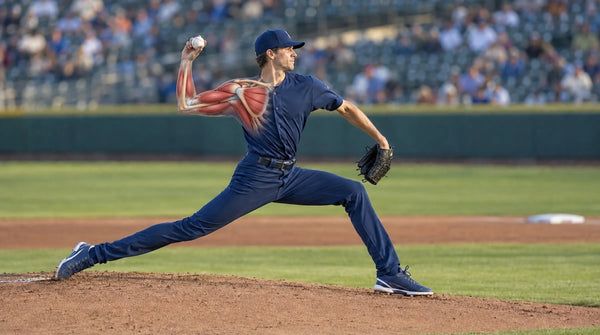
A pitcher does not throw with his arm alone. He uses his legs and trunk to create force, transfers that force through a moving body, stabilizes the shoulder and elbow, slows the arm down after release, and then does it repeatedly.
Researchers have measured short-term changes after pitchers throw. In high-school pitchers, a defined 100-pitch outing changed an ultrasound-derived UCL-related measurement immediately afterward. In a small study of collegiate club pitchers, a simulated game reduced shoulder internal rotation and external-rotation strength immediately after pitching. Those findings describe a short-term response to hard work, not an injury. They are one reason preparation exists.
A fall program should help a pitcher build:
- Whole-body force production and force transfer
- Throwing tolerance
- Shoulder and forearm repeatability
- Deceleration, or the ability to slow the arm down after release
- Repeat-effort capacity
The goal is not to remove all stress from pitching. Baseball does not work that way. The goal is to prepare the athlete to handle the stress the season will require.
Tools may help a coach create a controlled training stimulus. They do not replace a throwing progression, and no Oates Specialties tool is presented as proving injury prevention, tissue recovery, or a guaranteed performance result.
Find Your Coaching Answer
Answer the question closest to what you actually need right now, and jump straight there.
- “I don’t know what this pitcher can actually handle.” → Go to Section 3, Floor, Ceiling, and Time.
- “I want to know how experienced coaches think about this, not just researchers.” → Go to Section 4, Practitioner Lens.
- “I want the research behind what happens after a pitcher throws.” → Go to Section 5, Research Findings.
- “I need to know what to actually build this fall.” → Go to Section 7, Fall Training Targets.
- “I want to know how to move the work forward without overloading anyone.” → Go to Section 8, Progression.
- “I’m trying to figure out where a tool actually fits.” → Go to Section 9, Equipment Applications.
- “I need to know when this becomes a medical conversation instead of a coaching one.” → Go to Section 14, Safety Boundary.
If none of those match, start from the top. Sections 1 through 3 build the case for everything that follows.
🎧 Prefer to listen? Audio version of this article:
1. The Coaching Situation: Why a Good Bullpen Is Not the Whole Answer
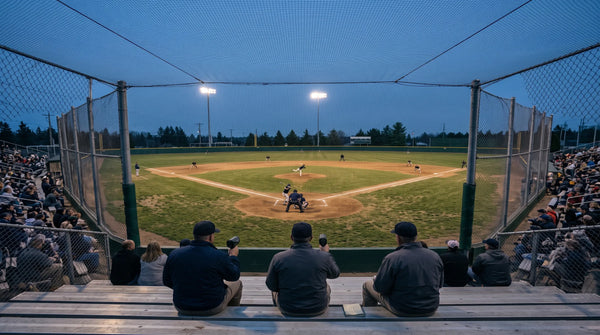
Your pitcher throws a good bullpen in the fall. The ball comes out clean. He finishes the work looking gassed, or maybe he barely breaks a sweat.
That is the point.
A fall bullpen is not only a chance to work on command or velocity. It is also a preview of what the season will eventually ask the athlete to do again and again.
The question for a coach is not only: “Did he throw well today?”
The better question is: “What will this athlete need to be prepared to do when the season asks him to repeat this work at full speed, against hitters, on a schedule he does not control?”
Two mistakes are common. The first is to treat throwing stress as proof that something is automatically wrong. The second is to treat a good bullpen as proof that the athlete is ready for whatever comes next. Neither is true.
Pitching creates stress because pitching is a demanding athletic act. The answer is not to avoid all stress. The answer is to prepare the athlete to handle more of the right stress, in the right order, before the games begin.
2. Pitching Demands: What the Athlete Must Be Prepared to Do
Pitching is not just an arm action. A pitcher has to do several jobs at once.
Produce force. The athlete uses the ground, moves down the mound, and creates enough force to throw a baseball with intent.
Transfer force. The legs, hips, trunk, shoulder, arm, hand, and fingers all have to work in sequence. The arm is part of the delivery, but it should not be asked to create every bit of force by itself.
Stabilize. The shoulder and elbow have to stay organized while the arm moves quickly. The forearm muscles, shoulder muscles, trunk, and the rest of the body all contribute to that job.
Decelerate. After ball release, the arm does not simply stop. It has to slow down quickly. The muscles around the back of the shoulder, the trunk, and the rest of the body help absorb and redirect force.
Repeat. A pitcher has to do it again. Then again. A good first inning is different from being able to repeat quality throws in the fourth, fifth, or sixth inning.
Adapt. The game changes the task. Catch play is not a bullpen. A bullpen is not live hitters. Live hitters are not an inning with a score, a long at-bat, a mound visit, and a short turnaround before the next outing.
A preseason program should prepare more than the throw itself. It should prepare the athlete for the full job.
3. Preseason Planning: Floor, Ceiling, and Time
Floor, Ceiling, and Time is a practical planning framework we use to organize preseason decisions. It is not a research-derived formula, a medical assessment, or a promise that every athlete will progress at the same rate.
Every preseason plan begins with three questions.
Floor: What can the athlete handle now?
What can this athlete handle and repeat right now? That is not what he did last spring. It is what he can actually handle today based on recent throwing, current capacity, and the response he gives you after work.
Ceiling: What will the role require?
What will his role eventually require when competition begins? A starter, reliever, swingman, position player who pitches, and developmental pitcher may not need identical preparation. The ceiling may involve more innings, a shorter turnaround, live hitters, repeated high-intent work, or a different kind of availability.
Time: How much runway is available?
How much runway do you have to close the gap? The fall and preseason are the bridge between the athlete’s current floor and the demand waiting at the ceiling. A large gap with little time does not disappear because the calendar says opening day is close.
It means the coach must build more deliberately, lower the first demand, or do both.
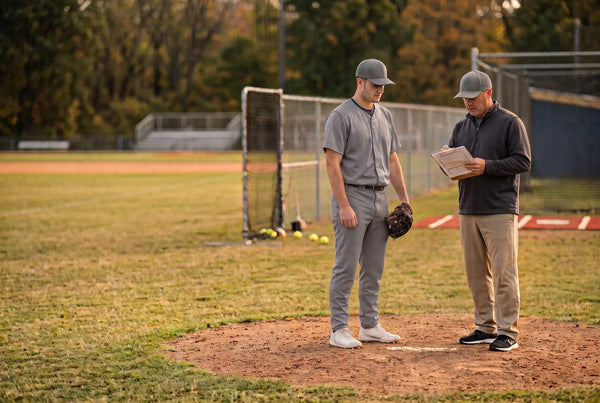
Start from the athlete in front of you, not the date on the schedule.
4. Practitioner Lens: How Wolforth and Sullivan Organize Preparation
Ron Wolforth and Randy Sullivan are experienced throwing practitioners with publicly stated training frameworks. Their work helps explain how coaches organize real preparation problems when research does not prescribe an exact Tuesday practice.
Commercial transparency. Like Oates Specialties, Wolforth and Sullivan operate commercial training businesses. That does not disqualify their experience or their published reasoning. It does mean that a commercial training method is not independent scientific validation, and we do not present it that way.
Ron Wolforth’s lens: preparation as its own category
Wolforth’s published framework sorts what drives arm health and durability into three types, in his own stated order of importance:
Type I — Structure: Physical misalignments, asymmetries, strength imbalances, and constraints in mobility or stability.
Type II — Mechanics: The movements, sequences, and coordination of the throw itself.
Type III — Preparation: Ramp up to season, ramp up to session or game, warm-up, pre-training, pre-game, post-game, and arm care.
That third category is the point. Wolforth treats the ramp up toward a season as its own distinct driver of arm health, not something that happens automatically once structure and mechanics are addressed. He cycles light, medium, and heavy days throughout his training generally, but he is specific that the ramp-up period is where that cycling matters most — the body needs a structured build, not a jump straight to full demand.
Randy Sullivan’s lens: something beats nothing
Sullivan’s public offseason work argues against treating the throwing break as a simple choice between total shutdown and normal throwing. His position is that doing something during that window, even at low volume, leaves an athlete better prepared for the ramp-up than doing nothing at all. The specific work matters less than the fact that the athlete never fully goes cold.
Where they align
Together, Wolforth and Sullivan make the same underlying case from two directions. Wolforth names the ramp-up as its own category of preparation that has to be built, not assumed. Sullivan argues that staying engaged, even minimally, during the time before that ramp-up is what makes the build-up possible in the first place. Neither treats the season as something an athlete simply arrives at.
Mapped onto this article’s framework: this is the Floor-to-Ceiling process in practice. Sullivan’s “something beats nothing” keeps the athlete from losing ground on Floor during the down period. Wolforth’s ramp-up cycling is how a coach deliberately closes the distance from that Floor toward the Ceiling the season will demand — using the Time available to build the bridge, rather than expecting the athlete to close that gap on his own.
What a coach can borrow
A coach can borrow the shape of the idea without copying a branded system:
- Know what the athlete has done recently.
- Build the climb instead of assuming it happens by itself.
- Do not let every day become a hard day.
- Pay attention to how the athlete repeats work, not only how he performs once.
What this section cannot establish
Neither practitioner framework establishes a universal ramp up length, safe pitch count, or guaranteed injury-prevention outcome. Their value is practical organization. Research still sets the boundary on what can be claimed as demonstrated.
5. Research Findings: What Changes After a Pitching Outing
Research cannot hand a coach the exact fall program for every athlete. It can help explain why preparation needs to be deliberate.
A defined throwing outing changes elbow measurements
Researchers studied 30 high-school pitchers with an average age of about 16.6 years. Each pitcher threw 100 pitches. The researchers used ultrasound-based measurements to examine the inside of the elbow before and after the outing.
One ultrasound-derived UCL-related measurement changed after the 100 pitches. A forearm-muscle measurement moved in the same general direction but did not reach statistical significance in that study.
What this helps a coach understand: a defined hard-throwing exposure can produce a measurable short-term elbow response in high-school pitchers. The study measured tissue behavior after 100 pitches; it was not an injury test or a prescription for every pitcher.
The shoulder responds too
A small study of 10 healthy collegiate club pitchers examined shoulder range of motion, strength, and muscle features after a simulated pitching game. Right after pitching, the group had less shoulder internal rotation and less external-rotation strength.
What this helps a coach understand: pitching is not only an elbow conversation. The shoulder has to help control and slow the arm down after release. That supports the preseason objective of building shoulder endurance, control, and deceleration capacity.
What it does not tell a coach to do: this small collegiate club-pitcher study does not create a recovery calendar for every pitcher or show that one exercise, tool, or routine changes the response.
What these studies say together
A hard throwing outing creates a response. That response may show up in different parts of the throwing system. The inside of the elbow, forearm, shoulder, and muscles around the shoulder all have jobs during pitching.
The useful coaching conclusion is: pitching is demanding enough that athletes should be prepared before the season asks them to repeat it.
6. Research Limits: What Studies Cannot Yet Tell a Coach
Research does not yet tell us:
- Exactly how many days a specific high-school pitcher needs before the next demanding session.
- One universal throwing progression for every role, history, and calendar.
A measurement describes a short-term response. A diagnosis describes a person. A return toward baseline tells a coach that one measure changed back. It does not answer every recovery question.
The small collegiate shoulder study does not supply a recovery calendar for a high-school pitcher. The high-school elbow study does not tell us how much a particular preparation program changes the measured response.
Randomized trials in youth and high-school baseball players have found fewer shoulder and elbow injuries among athletes who followed structured preparation programs. What no trial has shown is that a program changes the measured tissue response to a single outing. Those two lines of research have not been connected.
That is why this guide is organized around building capacity rather than chasing a measurement.
The coaching response is practical: build gradually, know what he has thrown, watch how he repeats the work, and adjust the next demand to the athlete in front of you.
7. Fall Training Targets: What a Coach Should Build
A throwing outing points a coach toward several fall training targets.
| What Pitching Asks | What a Coach Should Build in the Fall |
|---|---|
| Produce and transfer force | General strength, lower-body and trunk contribution, and controlled power |
| Stabilize the arm | Shoulder and forearm repeatability, controlled resistance, and movement quality |
| Slow the arm down | Posterior shoulder, trunk, and deceleration capacity |
| Repeat high-intent throws | Progressive throwing tolerance and repeat-effort capacity |
| Adapt to roles and game tasks | Gradual specificity, observation, and individual progression |
The fall does not need to build every quality at once. It should begin building the capacities the season will eventually require.
- Whole-body force production and transfer. Can this athlete create force without asking the arm to do all the work?
- Throwing tolerance. General strength does not automatically equal throwing readiness. Has this pitcher built toward the actual throwing work the season will require?
- Shoulder and forearm repeatability. Can the pitcher repeat controlled work without losing the positions and coordination he needs?
- Deceleration capacity. Can the pitcher absorb and redirect force after the throw instead of only focusing on producing force before it?
- Repeat-effort capacity. Can the pitcher throw with intent, recover briefly, and repeat the skill without an uncontrolled decline?
Coach’s Takeaway
- Build the demand before the calendar requires the athlete to express it.
- Train the whole pitcher, not only the throwing arm.
- Progress actual throwing tolerance; do not assume weight-room strength is mound readiness.
- Give high-intent work room around it.
- Use the athlete’s recent exposure and response to shape the next step.
The guides that follow explain how to build each part of the answer.
8. Progression: How to Move the Work Forward
Preseason work should move forward in steps, not all at once.
When the calendar allows, change one main demand at a time and watch how the athlete handles it.
A coach may increase volume, intent, specificity, density, resistance, distance, mound work, or task difficulty. The problem comes when several of those rise together before the coach knows how the athlete handles any one of them.
Start new movements, implements, or throwing tasks under control. Begin with a deliberately submaximal effort appropriate to the task and athlete, establish the pattern, then build deliberately.
That is a coaching convention, not a research-derived threshold.
The practical question is not “Did we do enough today?” It is “Did this athlete handle the next step well enough to earn another one?”
9. Equipment Applications: When Tools Help Create the Stimulus
Most preseason preparation does not begin with equipment. It begins with a clear sport demand, enough time, a realistic plan, and a coach who can observe the athlete.
Equipment may help when it makes a training objective more repeatable, visible, portable, scalable, or coachable.
| Training Objective | What the Coach Needs | Tool Category | What Evidence Supports | What Remains Unknown | Oates Example |
|---|---|---|---|---|---|
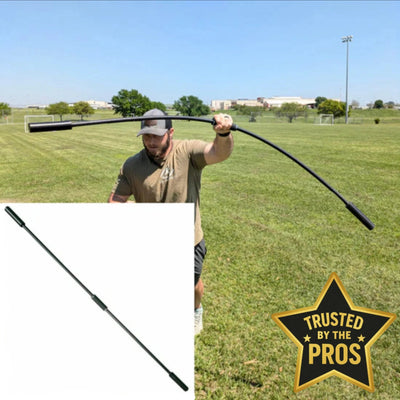
| Low-load shoulder preparation and controlled resistance | A repeatable, controllable preparation task | Oscillation tools, tubing, bands | These categories can be used to create controlled resistance or stabilization tasks | Product-specific recovery, prevention, or throwing-performance transfer is not established | TAP® Shoulder Tube® |
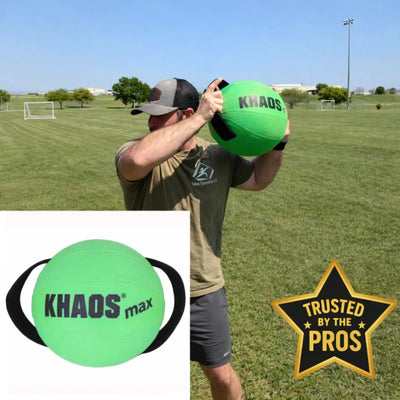
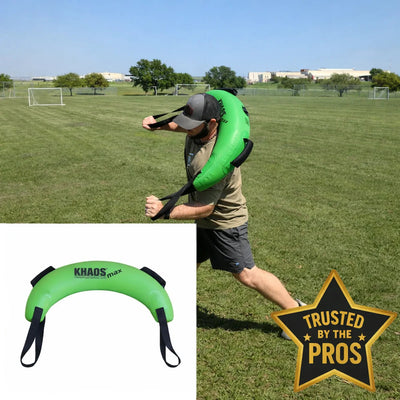
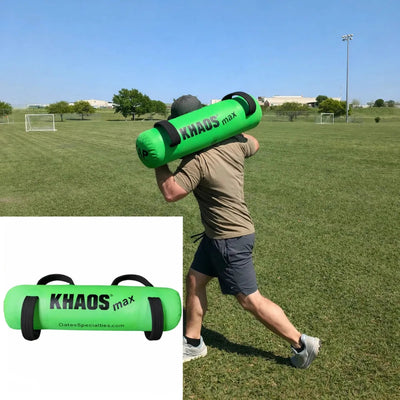
| Dynamic stabilization and whole-body coordination | A variable load that requires active control | Fluid-filled or turbulence tools | These tools can be used to create a variable coordination challenge during the task | Joint protection, long-term adaptation, or sport transfer is not established | KHAOS® implements |
| Rotational preparation | A controlled whole-body rotational task | Medicine-ball tools | Medicine balls can be used to create rotational training tasks | Automatic velocity increase or a specific product is not validated | Relevant Oates medicine-ball categories |
| Skill feedback and purposeful practice | A practice result the athlete and coach can see | Target and spin-feedback tools | External feedback can help organize purposeful practice | Mechanics diagnosis, injury prediction, or readiness clearance is not established | TAP® targets and SpinAid® feedback tools |
The tool belongs after the training objective is clear.
A tool may help create a useful training stimulus. It does not replace a gradual throwing progression.
10. What Equipment Cannot Claim
Equipment cannot tell a coach that an athlete is ready, diagnose a problem, or replace a gradual throwing progression. It cannot guarantee adaptation, recovery, protection, or performance improvement unless that specific outcome has been established for that actual product and population.
Low-load preparation work and new tools should be introduced under coach supervision and controlled intent. Coach use and practical value are reasons to explain a tool. They are not product-specific outcome evidence.
11. What to Notice as You Build
The first weeks of work test the plan. Watch whether the original estimate of the athlete’s floor appears accurate.
- Did the athlete handle the planned first exposure?
- Did outside throwing change the week?
- Did the athlete repeat the work with similar quality?
- Did the expected role or calendar change?
- Does the athlete’s response look normal for him, or meaningfully different?
These are observations, not diagnoses. A fuller review of how to reassess the plan is developed later in The Mid-Window Checkpoint.
12. Athlete Action
Pitchers should understand a few simple things:
- A hard throwing day is not automatically a bad throwing day.
- The body is expected to respond to hard work.
- The coach needs an honest picture of outside throwing, lessons, showcases, and extra work.
- Report meaningful changes early. Do not wait until a small issue becomes a bigger one.
- Do not decide for yourself that pain is normal or that a tool fixes a problem.
13. Parent Note
Parents do not need to coach the throwing plan. They can help by knowing about the athlete’s throwing outside the school program — lessons, showcases, travel ball, private training, and extra bullpens are all part of the athlete’s week.
Preparation cannot guarantee a healthy season. It can help an athlete arrive less surprised by the demands of the sport.
14. Safety Boundary: When Coaching Gives Way to Evaluation
This is preparation guidance, not medical diagnosis or injury clearance. It is not meant to tell a coach how to diagnose an elbow, clear an athlete to play, or treat an injury.
Persistent, sharp, unusual, worsening, or function-limiting pain is outside a training article’s scope and belongs with a qualified professional. No tool, pitch count, range-of-motion check, or athlete report replaces qualified evaluation when it is needed.
15. What We Have Already Said
Foundation guide
How to Build a Fall Pitching Program explains the larger preparation framework: one part of the year builds capacity, another expresses it, and a third helps the athlete recover from expression. It also introduces the four constraints that shape a season: maturity, exposure, recovery, and capacity. This article adds the next layer: what a throwing exposure asks the athlete to do and why a coach should build those capacities before competition.
Related coaching questions in this series
- The Audit: What Pitcher Is Actually in Front of Me?
- How Long Does It Take to Build Arm Strength?
- Does Lower-Body Strength Increase Velocity?
- What a Mobility Screen Actually Tells You
- Why Does Deceleration Matter?
- How Do Pitchers Safely Add Velocity?
- What Do the Hips Have to Do With the Elbow?
- The Leg Nobody Thinks About
- How Should Lifting and Throwing Fit Together?
- How Much Should a Pitcher Actually Throw?
Tool and application guides
For specific Oates Specialties tool categories, see the relevant product and education pages for TAP® Shoulder Tubes, KHAOS® implements, resistance tools, medicine-ball tools, target systems, and SpinAid® feedback tools. The tool belongs after the training objective is clear.
16. The Next Coaching Question
Why Can’t My Pitcher Stay Healthy?
When a pitcher has a history of shoulder or elbow trouble, the next step is not always finding one hidden flaw. A more useful starting point may be understanding recent throwing, recovery, athlete response, and what the next demand requires.
This guide helps coaches and parents decide when to hold, reduce, or progress throwing demand—and when the situation may need qualified evaluation.
How We Use Research in This Series
A study result applies most directly to the athletes who were actually studied. A measurement describes a short-term response, not a diagnosis. A short-term change is not the same as long-term adaptation. A study on a training objective does not automatically validate a product or brand. A practitioner framework may be useful even when it has not been tested in a trial, but it must be labeled as practitioner interpretation.
Key terms: Acute response — a short-term change after activity, not automatically injury or long-term adaptation. Ulnar collateral ligament (UCL) — the ligament on the inside of the elbow resisting the opening force created during throwing. Flexor-pronator muscles — the forearm muscles that provide dynamic support at the inside of the elbow. Internal rotation — turning the upper arm inward at the shoulder. External-rotation strength — the shoulder muscles’ ability to produce force while rotating the arm outward. Infraspinatus — a rotator cuff muscle on the back of the shoulder that helps with external rotation and shoulder control. Deceleration — the process of slowing the arm down after release.
Annotated Bibliography
Primary Research
Hattori H, Akasaka K, Otsudo T, Hall T, Sakaguchi K, Tachibana Y. Ulnar Collateral Ligament Laxity After Repetitive Pitching: Associated Factors in High School Baseball Pitchers. American Journal of Sports Medicine.
pubmed.ncbi.nlm.nih.gov
Mirabito NS, Topley M, Thomas SJ. Acute Effect of Pitching on Range of Motion, Strength, and Muscle Architecture. American Journal of Sports Medicine.
pubmed.ncbi.nlm.nih.gov
Intervention Research (Referenced Here, Developed Further Elsewhere)
Suzuki K, Mizoguchi Y, Kimura F, Sawada Y, Akasaka K. Efficacy of Injury Prevention Using Functional Movement Screen Training in High-School Baseball Players: Secondary Outcomes of a Randomized Controlled Trial. Healthcare (Basel).
pmc.ncbi.nlm.nih.gov
Shitara H, Tajika T, Kuboi T, et al. Shoulder stretching versus shoulder muscle strength training for the prevention of baseball-related arm injuries: a randomized, active-controlled, open-label, non-inferiority study. Scientific Reports.
nature.com
Sakata J, Nakamura E, Suzuki T, Suzukawa M, Akeda M, Yamazaki T, Ellenbecker TS, Hirose N. Throwing Injuries in Youth Baseball Players: Can a Prevention Program Help? A Randomized Controlled Trial. American Journal of Sports Medicine.
pubmed.ncbi.nlm.nih.gov
Mehta S, Tang S, Rajapakse C, Juzwak S, Dowling B. Chronic Workload, Subjective Arm Health, and Throwing Injury in High School Baseball Players: 3-Year Retrospective Pilot Study. Sports Health.
pmc.ncbi.nlm.nih.gov
Practitioner Sources
Ford J. Wolforth Thrower Mentorship: Article 11. Perfect Game (perfectgame.org). Accessed September 2026.
perfectgame.org
Kasdan M. Ron Wolforth of The Texas Baseball Ranch Is The Pitching Whisperer. The Good Men Project. Accessed September 2026.
goodmenproject.com
Sullivan R. Shut It Down Or Keep Throwing? Maybe There’s An Alternative. Florida Baseball ARMory. Accessed September 2026.
floridabaseballarmory.com
Research Reserved for Related Guides
Relevant research intentionally reserved for guides that own the specific question includes:
- Preseason Workload in Collegiate Baseball Pitchers: reserved for How Much Should a Pitcher Actually Throw?
- Within-outing medial elbow joint-space findings after 60 pitches in high-school pitchers and after four 15-pitch sets in collegiate pitchers: verified findings reserved for the workload and recovery guide.
- Varus Strength of the Medial Elbow Musculature for Stress Shielding of the UCL: reserved for Why Does Deceleration Matter? and related elbow-stability discussion.
- Recovery of the Medial Elbow Joint in the 24-Hour Period After Repetitive Pitching: reserved for the athlete-response and recovery-context guide.
- Growth, maturity, and multi-sport participation research: reserved for The Audit and age-specific development content.
- Forearm-strengthening intervention research: reserved for How Long Does It Take to Build Arm Strength?
About This Analysis
Created by the Oates Specialties team led by Robert Oates, M.Ed., Founder
Editorial oversight by Gunnar Thompson, BS, CSCS, General Manager
Certified Strength & Conditioning Specialist | Biomechanics Specialist
September 2026
Complete Credentials
ROBERT OATES, M.Ed., Founder: Founded Oates Specialties in 2003. Master of Education degree. Provides strategic direction for educational content and athlete development philosophy.
GUNNAR THOMPSON, General Manager: BS Kinesiology (Clinical Exercise Science). CSCS (NSCA), PES (NASM), CPPS certifications. Technical authority on biomechanics and performance science. Conducts review of all educational content for scientific accuracy.
Questions or corrections: gunnart@oatesspecialties.com
© 2026, Oates Specialties LLC