


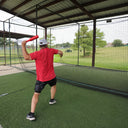
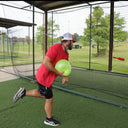
TAP® Connection Throwing Club – Distal‑Load Trainer for Connected, Efficient Overhand Throwing
$29.95
Ships from Huntsville, TX
In Stock
60-day limited warranty
Questions? 936-295-4459
Ordering for a team or facility?
Get volume pricing and help choosing the right tools for your players.
Ask me anything about this product
Sizing · use cases · technique · shipping — instant answers
Ask about TAP® Connection Throwing Club – Distal‑Load Trainer for Connected, Efficient Overhand Throwing — how to use it, what athletes it fits, sizing, or how it compares to other tools we make. Answers are focused on this product.
Innovating since 2003
Family-owned, Huntsville TX
Talk to the team
Real specialists, not a call center
Made for daily program use
Designed for continuous reps, every day, every season
100+ implements, organized by goal
Arm care, velocity, strength, and recovery
About This Product
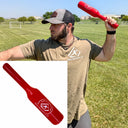
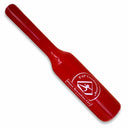
A 15″ solid-wood club built to make a connected throw feel obvious — and a disconnected one feel wrong.
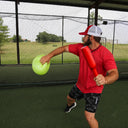
The TAP® Connection Throwing Club is a 15″ solid-wood throwing trainer with the barrel’s center of mass set well above the hand to change how the arm and torso organize the throw. It is built to help pitchers and overhead throwers feel a more connected, efficient pattern — where the shoulder rotates with the torso instead of flying open early — and to rehearse that pattern either in blended drills with a baseball and Connection Ball or in club-only constraint work.
- Engineered Distal Leverage Above the Hand — Center of mass set well above the grip changes how the arm feels the throw and encourages the shoulder to stay connected to torso rotation.
- Constraint-Based Kinetic-Chain Sequencing — The club’s weight makes out-of-sequence motion feel awkward, helping the kinetic chain — hips, torso, and arm sharing the work — do that job more efficiently.
- Designed for Overhand, Not Sidearm Patterns — Tuned specifically to overhand mechanics, where the shoulder rotates over a relatively upright torso.
- Flexible Use: Blended or Stand-Alone — Works alone or blended with a regulation baseball and TAP® Connection Ball™ for three ways to feel the same connected pattern.
- Simple Visual Cue: Keep Barrel Above Hand — A practical coaching cue that helps throwers avoid “dumping” the arm or losing connection to the torso.
What Is It?
TAP® Connection Throwing Club is a distal-loading throwing trainer that uses engineered leverage and a solid-wood build to change how the throwing arm and torso feel the motion. It is not a velocity-chasing gadget like a fungo bat swung for speed or a generic weighted club — its job is pattern quality and arm-friendly sequencing, not adding miles per hour on its own.
How It Works
Three mechanisms behind the distal-loaded lever
Preventing Forearm Flyout
When the arm gets too wide or flat during the flip phase, it creates valgus load — a sideways bending force — on the elbow. The extended mass of the club is designed to make that path feel heavy and awkward, encouraging the elbow to stay closer to a 90-degree angle to maintain balance.
Optimizing Trunk-Arm Timing
The weight of the club is intended to coax the arm into flipping upward as the chest opens toward the target, helping the larger muscles of the core and upper back drive the movement instead of the arm working in isolation.
Proprioceptive Feedback & Cuff Endurance
Shifting the center of mass away from the hand gives the nervous system clearer, real-time sensory data about the arm’s position in space, while safely decelerating the extended lever asks the posterior cuff muscles to build eccentric strength endurance over time.
Training Approach
Built on Constraint-Led Design Principles
There is no peer-reviewed study on this specific club; every mechanism described here applies general principles of constraint-led design, distal loading, and kinetic-chain coaching to the TAP® Connection Throwing Club. The aim is to explain how the club shapes the throwing environment, not to guarantee specific performance outcomes.
15″
Solid-wood barrel with center of mass set well above the hand for engineered leverage
Contained Throws
Engineered exclusively for net-based drills, minimizing joint stress while building coordination
Posterior Cuff
Safely decelerating the extended lever asks the infraspinatus and teres minor to build eccentric strength endurance over time
Video Library
See It In Action
Click a thumbnail to play — click any timestamp to jump to that moment.
2026
Baseball Pitching Training with the Connection Club
Chapter Guide — 6 Timestamps
| Structural Design & Purpose — the 16–18 oz club’s top-heavy mass keeps the barrel above the hand to prevent breakdowns. | |
| Origin Case Study — the tool’s origin with an MLB pitcher who had chronic post-surgical pain and needed a pain-free pattern. | |
| The Discovery — full-intent throws with a single-arm bat produced pain-free reps without a protective guard reflex. | |
| Hardware Evolution — how the raw concept was refined into the finalized, tapered wooden Connection Club. | |
| Adoption & Hybrid Training — most athletes report immediate comfort; modern protocols pair the club with the Connection Ball™. | |
| The Core Rule — looped footage: barrel head must stay above the hand to clean up sequencing and protect the joint. |
2026
Connection Throwing Club — Basic Field Instruction
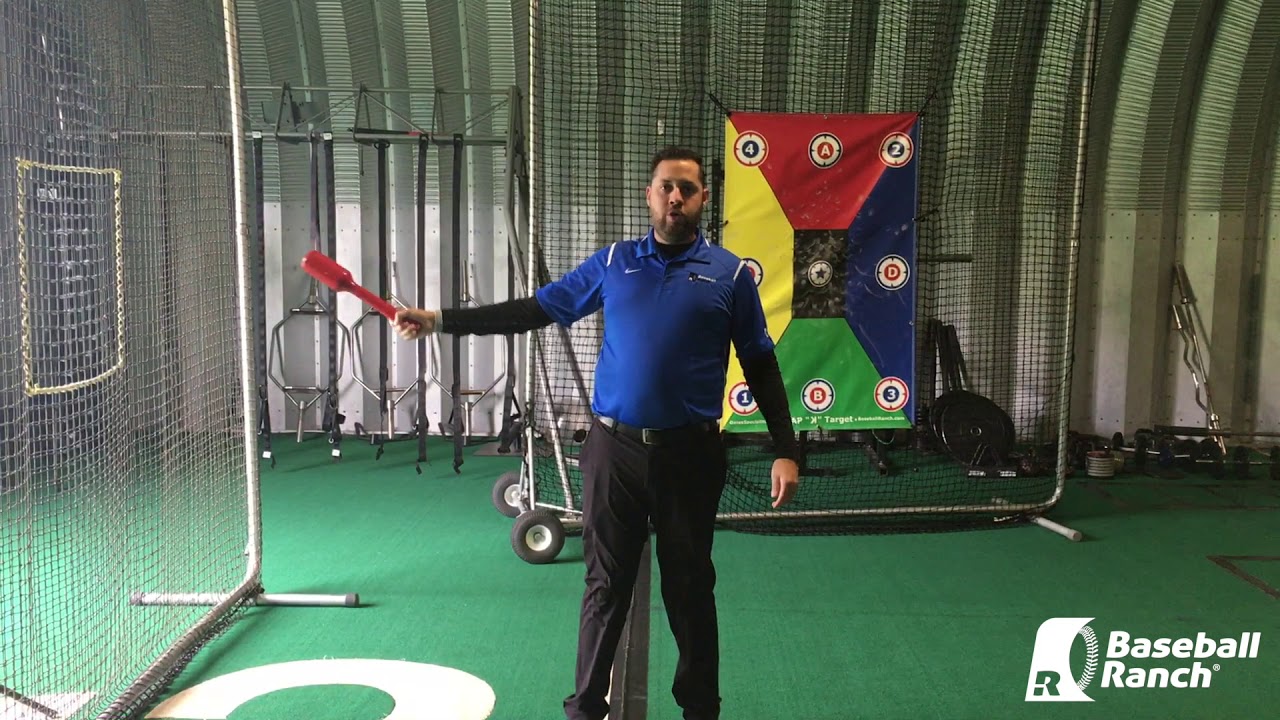
Chapter Guide — 5 Timestamps
| The Core Mechanical Cue — wrong way (head dropping under the wrist) versus correct path (barrel staying above the hand). | |
| Distance Setup — extend the club to touch the screen, then step back a half-step for safe training distance. | |
| Standard Mechanical Delivery — the club worked into a standard windup, showing the weight transition through a normal throw. | |
| Advanced Drill Integration — isolated torso-rotation drills and infield-style throws at full effort. | |
| Technical Summary — a final reinforcement of the core rule: never let the club head sag below the hand. |
Product Details
How to Use It
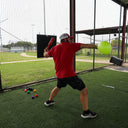
Warm-up / prep phase: Start with simple contained throws at a comfortable distance from a net or wall, focusing on posture, balance, and keeping the barrel above the hand. Use it at the end of general movement prep once tissue temperature and mobility are up.
Training phase: Integrate the club into constraint-based throwing drills — step-behind throws, pivot picks, or connection-focused drills where the goal is pattern quality, not velocity. When blended with a baseball and Connection Ball™, alternate short sets so the athlete carries the connected feel across implements.
Light-day / recovery-adjacent use: Use the club as a feel tool for organization — smooth, lower-intensity contained throws focused on timing and connection rather than max output.
Variant & Selection Guide
| Length | Material | Center of Mass | SKU | UPC |
|---|---|---|---|---|
| 15″ | Solid wood | Above the hand | TC | 6089389274152 |
Sold as a single, fixed-spec solid-wood unit. There are no size or weight variants; most age and level groups use the same club under appropriately scaled drill intensity and coaching supervision.
Who This Is For
- Commonly used for pitchers and overhead throwers who want to improve mechanical efficiency and feel a more connected, arm-friendly throwing pattern.
- Commonly used for coaches and performance staffs in development programs that value constraint-based pattern training and objective, feel-driven drills.
- Commonly used in connection-focused progressions that may include the TAP® Connection Ball™ and a regulation baseball, while still allowing athletes who prefer one tool to emphasize that implement.
- Not recommended as a stand-alone fix for significant pain or injury; it should be integrated into care directed by qualified medical and performance professionals.
What This Implement Does NOT Do
- It is not a magic velocity tool; any changes in velocity depend on the broader training plan and the athlete, not the club by itself.
- It is not a measuring device; it does not quantify mechanics, stress, or performance on its own.
- It is not a diagnosis or treatment device; it does not replace medical assessment or rehabilitation guidance.
- It is not meant for unsupervised youth use at high volumes or intensities; drill design and volume should be supervised by a knowledgeable coach.
Technical Specs
| Product Name | TAP® Connection Throwing Club |
|---|---|
| Also Known As | Connector Throwing Club, Throwing Connection Club, Distal-Load Throwing Club |
| Product Type | Distal-loading throwing pattern trainer for overhand mechanics |
| Length | 15″ |
| Material | Solid wood |
| Barrel Diameter | Approximately 2.75″ |
| Handle Diameter | Approximately 1″ |
| Center of Mass | Positioned above the hand for engineered leverage |
| Use Environments | Cages, bullpens, and open training spaces with sufficient clearance |
| Compatible Athletes | Overhand throwers (baseball, softball, other overhead sports) under appropriate supervision |
Safety, Compliance & Youth Guardrails
- Not a toy: Intended for organized throwing-training environments and should not be used as a casual bat or stick; misuse can lead to impacts or falls.
- Not for impact use on people or structures: Do not strike teammates, walls, or hard objects with the club; it is designed for controlled throwing drills in open space.
- Not a rehabilitation device: Any use in rehabilitation or return-to-play settings should follow a plan written or approved by qualified medical or performance professionals.
- Age guidance: For most athletes, this tool is best suited to roughly ages 13 and up, when coordination, strength, and joint maturity make distal-loading pattern work appropriate.
- Supervision: Younger or less-experienced throwers should use it only under close adult supervision with conservative drill complexity and volumes. Stop immediately if pain, dizziness, or unusual fatigue appears. We are not coaches. We do not provide coaching.
Frequently Asked Questions
What does the TAP® Connection Throwing Club actually do for pitchers?
It adds a leveraged, distal load above the hand so out-of-sequence motion feels awkward and connected hip-torso-arm sequencing feels smoother, helping pitchers rehearse a more efficient overhand pattern.
Is it only for overhand throwers?
Yes; the club is tuned to overhand mechanics and is not designed for sidearm or submarine patterns.
Do I throw it instead of a baseball?
It’s intended to replicate throwing drills as part of constraint-based and blended progressions; many programs use the club alongside a regulation baseball and TAP® Connection Ball™, while some prefer to emphasize one tool at a time.
Will this fix my mechanics by itself?
The club provides useful constraints and feedback, but real change comes from using it consistently inside a well-designed throwing and arm-care plan.
Can youth pitchers use it?
Youth athletes can use the club under close supervision with conservative volumes and drill intensities; coaches should focus on feel and organization, not velocity.
Does it replace strength and conditioning work?
No; it’s a skill-acquisition and patterning tool, not a strength device, and should be paired with age-appropriate strength, mobility, and recovery work.
Questions before you buy? Call or Text Our Team at (936) 295-4459
Customer Reviews
What Customers Are Saying
Loading reviews…
No reviews yet for this product.
Be the first to review