

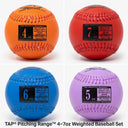
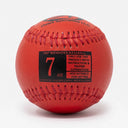
TAP® Pitching Range™ 4–7oz Weighted Baseball Set
$34.90
Ships from Huntsville, TX
In Stock
60-day limited warranty
Questions? 936-295-4459
Ordering for a team or facility?
Get volume pricing and help choosing the right tools for your players.
Ask me anything about this product
Sizing · use cases · technique · shipping — instant answers
Ask about TAP® Pitching Range™ 4–7oz Weighted Baseball Set — how to use it, what athletes it fits, sizing, or how it compares to other tools we make. Answers are focused on this product.
Innovating since 2003
Family-owned, Huntsville TX
Talk to the team
Real specialists, not a call center
Made for daily program use
Designed for continuous reps, every day, every season
100+ implements, organized by goal
Arm care, velocity, strength, and recovery
About This Product
Two overlapping research conventions, one weight range — where measured arm stress trends down, not up, as the ball gets heavier.
TAP® Pitching Range™ is a four-ball set spanning 4oz, 5oz, 6oz, and 7oz, built around the one slice of the weighted-ball literature that has actually been tested against a regulation baseball from a mound under controlled conditions. The set spans two separate research conventions that overlap here: a plus-or-minus-20%-of-regulation training band (4–6oz) and a mound biomechanics range (4–7oz) where measured stress and mechanics have both been directly studied. Each ball is finished in synthetic leather rather than traditional leather, which resists the moisture absorption that can gradually shift a leather ball's true weight over a season of outdoor use.
- Spans two research conventions — covers both the ±20% training band and the mound biomechanics range in one set.
- No measured stress increase within range — no significant rise at 4 or 6oz, and a significant decrease at 7oz.
- Mechanics hold together — body position varied by roughly a degree across all four weights in mound testing.
- Synthetic leather cover — resists moisture absorption so ball weight stays consistent season to season.
- Built for pitchers 13 and older — with an established, repeatable delivery and direct supervision.
What Is It?
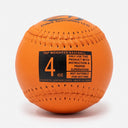
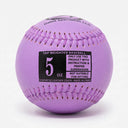
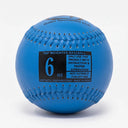
Four individual baseballs — 4oz, 5oz, 6oz, and 7oz — each weighted differently and finished in a durable synthetic leather cover. The 4oz ball sits under a regulation baseball; 5oz matches it; 6oz and 7oz sit above it. Thrown into a net or target from a mound or stationary flat-ground distance, this range is the specific slice of the weighted-ball literature with acute mound biomechanics data behind it.
This set does not include a written training program. It is intended for pitchers already working with a coach or a structured throwing plan.
How It Works
Why this range, specifically
Stress Trends Down, Not Up
A mound motion-capture study of pitchers throwing 4 to 7oz balls found no significant stress increase at 4 or 6oz and a significant decrease at 7oz relative to a standard ball (Fleisig et al., 2017).
Mechanics Stay Intact
Body position changed by roughly one degree across all four weights in the same study, small enough that pitchers can throw this range using their normal delivery (Fleisig et al., 2017).
Mound and Flat Ground Compare Closely
At matched regulation distance, wearable-sensor testing found no significant difference in elbow torque, arm speed, or shoulder rotation between mound and stationary flat-ground pitching (Dowling et al., 2020).
Backed by Research
The Range With Data Behind It
Weighted-ball training has a sixty-year velocity record, and the mechanism behind it is still not fully explained. The 4-to-7oz range is different: it is the one slice of that literature with acute mound biomechanics testing behind it, and daily throw volume — not any single ball's weight — is the variable most clearly linked to injury risk in the available research (Saito et al., 2026).
4
Target weights spanning two overlapping research conventions
~1°
Body position change measured across the full range from a mound
60+
Years weighted-ball training has been studied in baseball
Product Details
How to Use It
Throw from a mound or a stationary flat-ground distance matched to regulation.
- Avoid a crow-hop approach or long toss — both are linked to higher measured elbow and shoulder torque.
- Throw at a defined target rather than a blank net or tarp; a fixed focal point gives each throw a specific aim point and a readable result.
- Do not play catch with these balls — throw, then walk to retrieve.
- Use under a coach or trainer familiar with the athlete's throwing history. This set does not include a written program.
Weight Selection Guide
| Weight | Research Convention |
|---|---|
| 4oz | DeRenne ±20% training band & Fleisig mound range |
| 5oz | Regulation weight reference point |
| 6oz | DeRenne ±20% training band & Fleisig mound range |
| 7oz | Fleisig mound range only — roughly 40% above regulation |
Who This Is For
Built for pitchers 13 and older with an established, repeatable delivery, and for coaches who want a set grounded in the specific weight range with acute mound biomechanics data behind it.
Not a starting point for an athlete with an unresolved arm injury, inconsistent mechanics, or no prior weighted-ball experience.
Younger pitchers are a separate conversation: the one study specifically examining ages 9–14 found the opposite pattern from the mound data above, with elbow stress increasing rather than decreasing as ball weight increased. See the Safety section below for an important age-overlap caveat.
Technical Specs
| Set Contents | Four baseballs: 4oz, 5oz, 6oz, 7oz |
|---|---|
| Cover Material | Synthetic leather |
| Weight Tolerance | Approximate per ball, within normal factory tolerance |
| Intended Use | Thrown at a defined target from a mound or matched flat-ground distance |
| Not Intended For | Hitting drills, throwing against hard surfaces, or long-toss/crow-hop drills |
Safety and Supervision
There is a risk associated with throwing any weighted ball. Available research describes acute, single-throw comparisons against a regulation baseball — it does not confirm what a full training program produces over a season.
The one randomized trial to find an elbow-injury imbalance used 4 and 6oz implements that overlap with this set, thrown from flat ground with kneeling, rocker, and full-intent running positions and no mound throwing; it did not isolate which weight or drill caused the injuries. That trial's pitchers ranged 13–18, overlapping the age this set is marketed to — a real, unresolved caution calling for close supervision, not evidence this set is exempt from it.
Track daily throw count across every team an athlete plays for; in the largest available study, this predicted injury more clearly than any individual throw's stress. Stop immediately if pain or altered mechanics occur.
This set is not a rehabilitation device and does not replace a qualified medical professional. We are not coaches. We do not provide coaching.
Frequently Asked Questions
Why 4 to 7oz instead of a wider range?
This is where two separate lines of research overlap and hold up under scrutiny: a training convention set roughly 20% under and over regulation weight, and a mound biomechanics study testing this exact range. Within it, measured arm stress trends down rather than up as weight increases, and body position stays within about a degree of a normal delivery.
If arm stress goes down as the ball gets heavier, is heavier always safer?
No. That finding is specific to this range thrown from a mound and describes single-throw stress relative to a regulation baseball — not implements above 7oz or a full training block. Apply it conservatively and with supervision.
Is a mound more dangerous than flat-ground throwing?
Not as a blanket statement. Wearable-sensor testing on high school pitchers found no significant difference in elbow torque, arm speed, or shoulder rotation between mound and stationary flat-ground pitching at matched distance. The research flags specific conditions as higher-stress — a crow-hop approach and maximum-distance long toss — not the mound itself.
What's the single most important thing to track regardless of ball weight?
Daily throw count, across every team an athlete plays for. In the largest cohort study available, the variable that predicted elbow injury in young pitchers was not the stress of any individual throw — it was how many throws happened in a day.
Is this set appropriate for a pitcher younger than 13?
This set is designed and marketed for pitchers 13 and older. The one study specifically examining pitchers aged 9–14 found elbow stress increasing with ball weight — the opposite of the pattern seen in the older-adolescent and collegiate mound data above. That reversal is why younger athletes are a separate, more conservative conversation rather than smaller versions of the population this range was tested on.
Questions before you buy? Call or Text Our Team at (936) 295-4459
Customer Reviews
What Customers Are Saying
Loading reviews…
No reviews yet for this product.
Be the first to review