
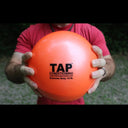
TAP® Pummel Ball: Sand-Filled Slam Ball for Ballistic Exercises
$19.95
Ships from Huntsville, TX
In Stock
60-day limited warranty
Questions? 936-295-4459
Ordering for a team or facility?
Get volume pricing and help choosing the right tools for your players.
Ask me anything about this product
Sizing · use cases · technique · shipping — instant answers
Ask about TAP® Pummel Ball: Sand-Filled Slam Ball for Ballistic Exercises — how to use it, what athletes it fits, sizing, or how it compares to other tools we make. Answers are focused on this product.
Innovating since 2003
Family-owned, Huntsville TX
Talk to the team
Real specialists, not a call center
Made for daily program use
Designed for continuous reps, every day, every season
100+ implements, organized by goal
Arm care, velocity, strength, and recovery
About This Product
A minimal-rebound slam ball for controlled throws, rotational work, and explosive training in properly cleared spaces.
The TAP® Pummel Ball is a durable sand-and-air-filled slam ball for coached ballistic and rotational training. Its minimal-rebound design helps athletes perform explosive slams and throws without relying on a large reactive bounce. Heavier sizes tend to drop close to where they land, while lighter, more air-filled sizes can give a short, controlled hop. Use it for overhead, diagonal, and rotational patterns on turf, rubber, or grass when athletes have adequate space, appropriate instruction, and a training plan that matches their experience.
- Minimal-Rebound Design — Sand-and-air fill limits bounce for more controlled slams, throws, and resets.
- Built for Projection — Throw or slam the load instead of holding and decelerating it through the full range.
- Simple Resets — Limited rebound can simplify resetting between repetitions in a clear training area.
- Pliable Reinforced Shell — Soft shell compresses on impact and returns to shape with appropriate use.
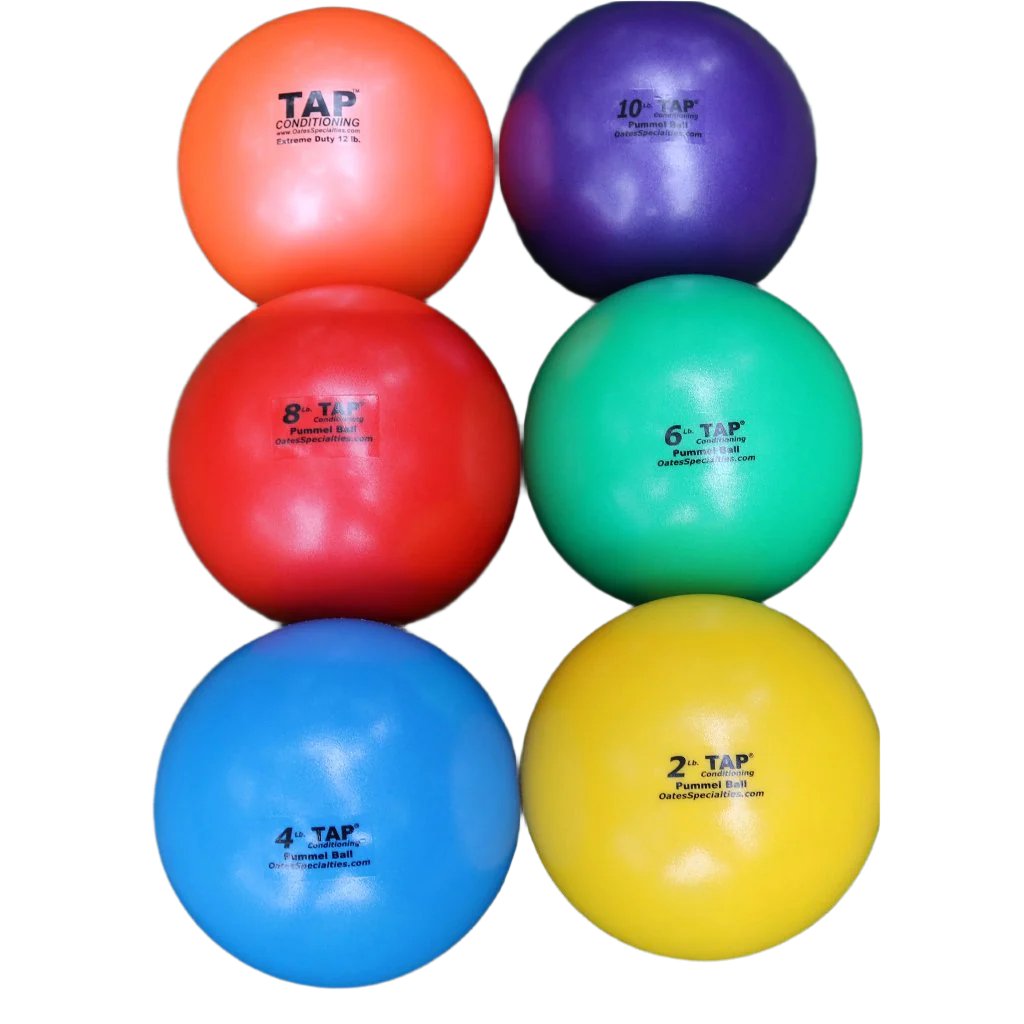
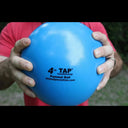
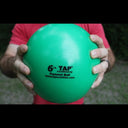
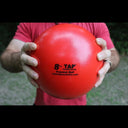
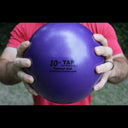
- Six Color-Coded Weights — Choose from 2 to 12 pounds based on movement, athlete, and training goal.
What Is It?
The TAP® Pummel Ball is a minimal-rebound slam ball filled with loose sand and air. The air helps the ball retain its round shape and lets the shell return to form after impact, while the sand helps limit rebound. Heavier models behave closer to a dead drop; lighter models can give a short, controlled hop.
Its uniform volleyball-like diameter supports two-handed slams, throws, and rotational patterns that involve the lower body, trunk, and upper body. It is not a traditional high-bounce medicine ball and is not intended for drills that require a large rebound off the wall or floor.
How It Works
Three practical features for coached ballistic training
Projection Instead of Catching
The ball can be thrown or slammed rather than held and slowed through the full range. That gives athletes a practical way to train explosive intent alongside foundational strength work.
Limited Rebound, Simple Resets
The sand-and-air fill is designed to limit rebound. Heavier balls tend to drop close to where they land, while lighter sizes may give a short hop that remains manageable.
Coached Whole-Body Rotation
Use rotational slams and throws as whole-body patterns: drive from the ground, rotate through the hips and trunk, and project force into the ball with balance and control.
Research Context
Ballistic and Rotational Training
The TAP® Pummel Ball's use is informed by broader work on ballistic training and rotational medicine-ball throws. Rotational medicine-ball throw performance has been associated with pitching velocity, bat-swing velocity, and batted-ball velocity, but those relationships do not show that one product, drill, or short training block automatically changes on-field performance.
Minimal Rebound
Sand-and-air fill limits bounce after slams and throws.
2–12 lb
Six color-coded loads for different athletes and movement patterns.
Controlled Resets
Limited rebound can simplify resets between coached repetitions.
Video Library
See It In Action
Click the thumbnail to play from the start. Open the chapters below to jump to a specific movement.
2022
TAP® Pummel Ball — Rotational Slam Training

Video Chapters
Product Details
How to Use It
Set up: Use on turf, rubber, or grass. Avoid concrete, asphalt, sharp surfaces, and abrasive contact points. Establish clear zones so athletes have room to throw or slam without crossing paths.
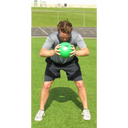
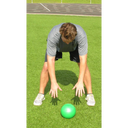
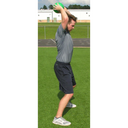
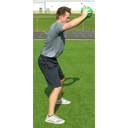
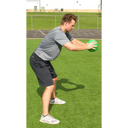
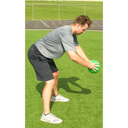
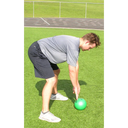
Overhead slams: Lift overhead and drive the ball into a clear landing area. Reset before the next repetition. Coach an athletic stance, controlled trunk position, and an appropriate load.
Rotational and diagonal slams: From a side-on or split stance, drive the ball to a designated landing area outside the front foot or knee. Use the ground, hips, and trunk together while maintaining balance.
Kneeling and seated patterns: Half- or tall-kneeling overhead slams change the lower-body contribution and place more emphasis on trunk and upper-body positioning. Use single-leg and seated patterns only when movement remains controlled.
Weight Selection Guide
| Weight | Color | Typical Use |
|---|---|---|
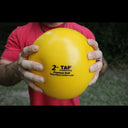
| 2 lb | Yellow | Youth, introductory patterns, and lighter-load slams or throws |
| 4 lb | Blue | General ballistic work and lighter rotational patterns |
| 6 lb | Green | Standard overhead and rotational slam patterns |
| 8 lb | Red | Higher-load work for appropriately prepared athletes |
| 10 lb | Purple | Slower, higher-force ballistic patterns for experienced athletes |
| 12 lb | Orange | Higher-load work selected and supervised by an experienced coach |
Lighter balls can show more visible rebound because air is a larger share of the fill; heavier balls behave closer to a dead drop. Match weight to the athlete, movement, surface, intended effort, and available space.
Who This Is For
- Baseball and softball athletes training coached slams and rotational throwing patterns.
- Athletes in golf, tennis, and other rotational sports using multi-planar ballistic movements.
- Strength-and-conditioning coaches pairing ballistic work with foundational strength training.
- Facilities that need a durable, minimal-rebound ball for structured group training.
We are not coaches. We do not provide coaching. Select exercises, load, volume, and progression with qualified guidance appropriate to the athlete.
Technical Specs
| Available weights | 2, 4, 6, 8, 10, and 12 lb |
|---|---|
| Fill | Loose sand and air |
| Ball profile | Uniform volleyball-like diameter across weights (approx. 7"-8" diameter) |
| Shell behavior | Pliable outer shell designed to compress and return to shape |
| Recommended surfaces | Turf, rubber, or grass; avoid concrete, asphalt, and abrasive surfaces |
Safety and Youth Guardrails
Not a toy — training implement only. Inspect the shell and filler plug before each session, and remove any damaged ball from use. Establish a clear landing and rebound zone before every throw or slam.
- Use appropriate surfaces: Turf, rubber, or grass are preferred. Avoid sharp edges, concrete, asphalt, and abrasive contact points.
- Clear the area: Keep other athletes, walls, equipment, and trip hazards outside the landing and rebound zone.
- Progress volume: Coordinate total slam and throw volume with the athlete’s experience, current plan, and total throwing workload.
- Use appropriate guidance: Athletes with shoulder, elbow, back, or other health concerns should follow qualified-professional guidance.
- Do not use as rehab: This product is not a medical device or substitute for a rehabilitation protocol.
Frequently Asked Questions
Does the TAP® Pummel Ball bounce?
It is designed for minimal rebound. Heavier balls tend to drop close to where they land, while lighter sizes can give a short, controlled hop.
What is it filled with?
The Pummel Ball contains loose sand and air. That combination helps it retain shape while limiting the rebound associated with many air-filled medicine balls.
How is it different from a traditional medicine ball?
Many traditional medicine balls are designed to rebound off a floor or wall. The TAP® Pummel Ball is designed to limit rebound, making it useful for controlled slams, throws, and resets when a large live bounce is not wanted.
Which weight should I choose?
Choose based on the athlete, exercise, technique, training goal, and available space. Lighter balls generally fit introductory and lower-load patterns; heavier balls fit higher-load work
Customer Reviews
What Customers Are Saying
Loading reviews…
No reviews yet for this product.
Be the first to review