

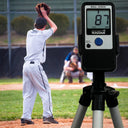
Pocket Radar – The Ball Coach™ Handheld Doppler Ball‑Speed Radar for Pitch and Exit Velocity Training
$15.00
Ships from Huntsville, TX
In Stock
60-day limited warranty
Questions? 936-295-4459
Ordering for a team or facility?
Get volume pricing and help choosing the right tools for your players.
Ask me anything about this product
Sizing · use cases · technique · shipping — instant answers
Ask about Pocket Radar – The Ball Coach™ Handheld Doppler Ball‑Speed Radar for Pitch and Exit Velocity Training — how to use it, what athletes it fits, sizing, or how it compares to other tools we make. Answers are focused on this product.
Innovating since 2003
Family-owned, Huntsville TX
Talk to the team
Real specialists, not a call center
Made for daily program use
Designed for continuous reps, every day, every season
100+ implements, organized by goal
Arm care, velocity, strength, and recovery
About This Product
Stop guessing if that pitch or batted ball was actually faster. See the number, every rep, automatically.
Pocket Radar – The Ball Coach™ is a compact Doppler radar gun designed to automatically track the fastest speed of a ball in flight so coaches and athletes see real velocity instead of throwing or hitting “by feel.” Doppler radar here means the unit sends out a signal and reads how its frequency shifts when it bounces off the moving ball, which is how it calculates accurate speed in baseball, softball, tennis, volleyball, lacrosse, hockey, and more.
- Designed to Track the Ball, Not Everything That Moves — Tuned specifically to find and display the fastest speed of a ball in flight instead of reading bats, arms, or background motion. That ball-first logic makes it easier to trust that the number on the screen is a true pitch or exit velocity, not noise.
- Automatic Triggering with Constant-On and Manual Modes — Hold the trigger down and release after the pitch or hit, or use Constant-On mode for hands-free auto-capture. Manual gives precise control in bullpens; Constant-On lets you coach, chart, or run stations without babysitting the gun.
- 25-Reading Memory for Full-Set Review — Stores the last 25 readings so you can scroll back and review a complete bullpen, exit-velo round, or velocity block as part of the larger session picture.
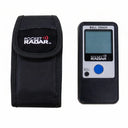
- Compact, Pocket-Size Form Factor — ~4.7″ x 2.3″ x 0.8″, ~4.5 oz with batteries. Rides easily in a pocket, belt holster, or bag — move quickly between mounds, cages, and drills without hauling a full-size gun and tripod.
- Pro-Level Accuracy and Range — Measures 25 to 130 mph with ~±1 mph accuracy and up to 120 feet of range on a baseball or softball. Independent comparisons show it matching larger professional radar guns closely enough for serious training and charting work.
- Simple Interface That Keeps Focus on Coaching — A large front button activates and captures speeds; a smaller side button recalls memory, switches modes, and adjusts units. No apps or extra menus — keep your eyes on the athlete.
What Is It?
Pocket Radar – The Ball Coach™ is a handheld Doppler radar gun engineered to automatically find the fastest speed of a ball in flight and display it on a bright, built-in screen. It is purpose-built for sports where ball speed matters — pitching velocity, exit velocity off the bat, serve speed, shot speed, and similar metrics across multiple sports.
Compared with all-purpose speed guns or classic police-style radars, the Ball Coach™ is tuned for ball-tracking and sized for everyday field use, with ±1 mph accuracy and 25-reading recall in a pocket-sized housing. Compared with training by eye or feel, it replaces debates and guesswork with objective ball-speed data that either rises, holds, or drops as you change drills, cues, or implements.
How It Works
Key mechanisms behind objective velocity feedback
Strengthening the External Focus of Attention
Watching the number on the gun gives athletes an external target to chase — “beat that last velo” — instead of over-focusing internally on limb positions. Research on attentional focus in skill learning suggests this kind of external focus can speed up motor learning and help athletes self-organize more efficient movement patterns.
Documenting Ball-Speed Changes
A change in ball speed gives the coach one objective output to review. It does not identify why the number changed, but it can be considered alongside video, command, athlete feedback, workload, and the specific drill or cue being tested.
Flagging Changes Across a Session
Ball speed can be useful session feedback, especially when setup and intent are consistent. But velocity alone does not identify fatigue, readiness, or when an athlete should continue or stop. Interpret it alongside command, athlete feedback, workload, and the session plan.
Backed by Research
Objective Feedback for Velocity Training
Pocket Radar – The Ball Coach™ is a measurement tool, not a training implement; its value comes from pairing accurate ball-speed data with good programming so athletes and coaches can separate what feels powerful from what actually moves the ball faster. Without a radar, small changes in effort, adrenaline, or fatigue can make a slow rep feel explosive or a fast one feel routine.
25–130 mph
Full ball-speed range with ~±1 mph accuracy and up to 120 feet of detection range on a baseball or softball
25 Readings
Built-in memory recall lets coaches review a full bullpen or velocity block alongside the rest of the session context
Every Rep
Manual trigger or hands-free Constant-On mode for immediate ball-speed feedback on pitches, swings, serves, or shots
Video Library
See It In Action
Click a thumbnail to play from the start. The second video includes chapter timestamps for accuracy and range details.
2021
Pocket Radar Ball Coach™ — Constant-On Training in Action

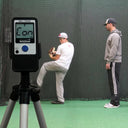
A montage of athletes using the Ball Coach™ in Constant-On mode during throwing and hitting work. The radar captures ball-speed readings while the athlete continues through the drill.
2022
Pocket Radar Ball Coach™ — Accuracy Validation and Range Limitations

Chapter Guide — 2 Timestamps
| Head-to-head radar comparisons — side-by-side field comparison with larger traditional radar guns. | |
| Recording distances and range limitations — setup distance and range considerations when tracking a small object such as a baseball or softball. |
Product Details
How to Use It
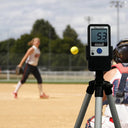
Set up to avoid cosine error: Position directly in line with the ball's flight path — behind the catcher or target, or in front of the hitter or thrower. Large angles create cosine error that makes readings falsely low, so “down the line” beats “off to the side.”
Choose trigger mode or Constant-On: For focused bullpens, hold the front button down before the pitch and release once speed appears. For stations or camps, use Constant-On so the radar automatically triggers while you coach or chart.
Integrate radar feedback into skill work: Establish a comparable setup, then record ball-speed readings as you test a cue, drill, or training change. Look for patterns across repeated, comparable sessions before drawing conclusions about what changed the result.
Use memory to review the session: Scroll through the last 25 readings to see whether ball speed held, rose, or declined across the set. A sustained change can be useful information, but velocity alone does not establish fatigue or provide a universal stopping rule. Consider it alongside command, athlete feedback, workload, and the session plan.
Variant & Selection Guide
| Variant | Weight | SKU | UPC |
|---|---|---|---|
| Pocket Radar – The Ball Coach™ radar | 7 oz | TBC | 608938928023 |
Single pro-level ball-speed radar model. Used for pitching, hitting, serves, shots, and more across baseball, softball, tennis, volleyball, lacrosse, hockey, and cricket.
Who This Is For
- Commonly used for baseball and softball pitchers and hitters who want pitch velo and exit velo in bullpens, cages, and live sessions.
- Commonly used for coaches running velocity-development or weighted-ball programs who need portable ball-speed tracking across multiple environments.
- Commonly used for multisport facilities and academies that train serve speed, shot speed, and ball exit speed.
- Commonly used for parents and athletes who want an at-home ball-speed measurement tool without the cost or complexity of a full launch monitor.
What This Implement Does NOT Do
- It does not measure spin rate, movement profile, launch angle, or location; it measures the fastest detected ball speed in flight.
- It is not a swing-speed radar for bats or clubs; it may pick up bat or club speed in some positions, but it is optimized and marketed specifically for ball speed.
- It is not a coaching replacement; it provides a ball-speed measurement, while coaches and athletes still decide how to approach mechanics, workload, and drills.
- It does not diagnose a mechanical problem, identify the cause of a velocity change, measure tissue status, or predict injury risk.
- It does not establish readiness, fatigue, or a universal stopping point from one reading or one velocity drop.
- It does not make velocity training risk-free; volume, rest, and throwing or hitting mechanics still require thoughtful management.
Technical Specs
| Product Name | Pocket Radar – The Ball Coach™ |
|---|---|
| SKU | TBC |
| UPC | 608938928023 |
| Also Known As | Compact velocity radar, at-home velocity tool, portable radar gun |
| Measurement Technology | Handheld Doppler radar |
| Speed Range | 25–130 mph (~40–209 kph), accurate to ±1 mph |
| Measurement Range | Up to 120 feet on a baseball or softball |
| Memory | Recall of last 25 speed readings with memory-clear function |
| Modes | Manual trigger and Constant-On hands-free operation |
| Size | ~4.7" x 2.3" x 0.8" |
| Weight | ~4.5 oz with batteries |
| Power | 2 AAA batteries — >2,000 readings manual mode, >1 hour Constant-On with fresh alkaline batteries |
| Included | Radar unit, soft-shell belt holster case, wrist strap, 2 AAA alkaline batteries, illustrated quick start guide, 2-year warranty |
Safety and Care
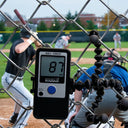
Not a toy — the Ball Coach™ is an electronic training device and should not be struck by balls, bats, sticks, or racquets. Always place the radar behind a screen, catcher, or target line so a miss-hit ball cannot impact the device.
- Not a toy: Electronic training device only — should not be struck by balls, bats, sticks, or racquets.
- Protect the unit: Always place behind a screen, catcher, or target line.
- Interpret velocity in context: A drop in ball speed can be useful information, but it is not a universal fatigue threshold or a stand-alone reason to continue, stop, clear, or restrict an athlete.
- Battery handling: Use only recommended AAA batteries, insert with correct polarity, and do not mix old and new batteries or different battery types.
- Medical considerations: Any velocity-focused work with injured or returning athletes should be supervised by qualified medical or performance professionals.
Frequently Asked Questions
What does the Ball Coach™ measure?
It measures the fastest detected speed of a ball in flight — pitch velocity or ball speed off the bat, racquet, or stick — depending on how you aim it.
How accurate is it compared to big radar guns?
It is rated at ±1 mph accuracy with up to 120 feet of range on a baseball. Comparison tests show it tracking closely with larger professional baseball radar guns when setup and alignment are appropriate.
Can it be used indoors and in cages?
Yes. As long as you can aim it straight down the ball's flight path and keep it out of the impact zone, it can be used in cages, tunnels, and indoor gyms.
What’s the difference between manual and Constant-On mode?
In manual mode, hold the trigger down and release after the pitch or hit. In Constant-On mode, the radar runs hands-free and automatically captures ball speeds for settings such as camps and stations.
Do I need a tripod or can I hand-hold it?
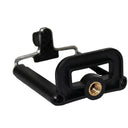
You can hand-hold it behind the catcher, behind a screen, or near a target, or mount it on a tripod, sold separately, when you want a fixed reference point.
Will it help me throw or hit harder?
The radar does not change mechanics by itself. It helps coaches and athletes document ball-speed responses across comparable repetitions and sessions, then consider those readings alongside the drill, cue, workload, command, and athlete feedback.
Questions before you buy? Call or Text Our Team at (936) 295-4459
Customer Reviews
What Customers Are Saying
Loading reviews…
No reviews yet for this product.
Be the first to review