

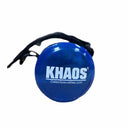
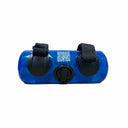
KHAOS® Waterboy Junior – Forearm Water Instability Trainer for Arm Efficiency & Glove Connection
$39.95
Ships from Huntsville, TX
In Stock
60-day limited warranty
Questions? 936-295-4459
Ordering for a team or facility?
Get volume pricing and help choosing the right tools for your players.
Ask me anything about this product
Sizing · use cases · technique · shipping — instant answers
Ask about KHAOS® Waterboy Junior – Forearm Water Instability Trainer for Arm Efficiency & Glove Connection — how to use it, what athletes it fits, sizing, or how it compares to other tools we make. Answers are focused on this product.
Innovating since 2003
Family-owned, Huntsville TX
Talk to the team
Real specialists, not a call center
Made for daily program use
Designed for continuous reps, every day, every season
100+ implements, organized by goal
Arm care, velocity, strength, and recovery
About This Product
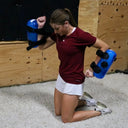
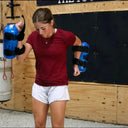
A forearm water tube that moves fluid instability directly onto the glove arm, mitt arm, or both — so athletes feel when their movement is clean versus noisy.
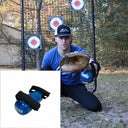
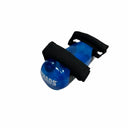
The KHAOS® Waterboy Junior is a compact, blue, see-through forearm water tube worn on the arm or lower leg to bring water-based limb instability directly to baseball and softball athletes instead of only the core. By adding a light, shifting load to the glove arm, mitt arm, or both arms for running drills, it turns quiet hands, organized receiving, and efficient arm swing into self-correcting skills without relying on heavy resistance.
- Instability Moves from Trunk to Limb — While larger KHAOS® tools challenge the hips and torso, the Waterboy Junior straps directly to the forearm or shin, targeting glove-side organization and arm-swing mechanics with very low absolute weight.
- Self-Correcting Constraint — Any choppy, late, or disconnected glove path makes the water shift visibly inside the clear shell. A connected torso turn keeps the load quiet — instant feedback without constant verbal cues.
- Dual Neoprene Strap Design — Two adjustable neoprene straps (soft, flexible sleeve material) cinch above and below where the limb narrows, keeping the tube stable during higher-tempo drills without sliding or pinching.
- Low-Mass Load for In-Season Use — Max 3 lb per tube with an empty weight of ~10 oz. Meaningful feedback with minimal added stress — suitable for in-season warm-ups, recovery-day pattern work, and youth athletes.
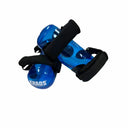
- Running-Form Organizer — Worn as a pair, the tubes highlight arm-swing imbalances during sprints; extra twist or chopping creates mismatched water movement that guides the nervous system toward a cleaner, more symmetrical rhythm.
- Single or Pair Configuration — Single tube (WBJ1) for targeted glove-side or mitt-side work; matched pair (WBJ2) for bilateral arm-swing and sprint mechanic drills.
What Is It?
The KHAOS® Waterboy Junior is a blue, see-through cylindrical water tube with dual neoprene straps designed to wrap around the forearm or lower leg. Coaches fill it with a small amount of water (up to about 3 lb), then secure it so the tube sits where the limb narrows — such as just below the elbow on the forearm. The water never fully settles, so every movement produces real-time feedback about path quality.
Compared to larger water implements that sit in the hands or across the shoulders, the Waterboy Junior moves the shifting load directly onto the limb, so the athlete feels instability exactly where the glove, mitt, or arm-swing path lives. Compared to simple wrist weights or static forearm cuffs, the internal fluid’s movement provides active feedback about quality of motion rather than just extra mass.
How It Works
Three mechanisms behind limb-mounted water feedback
Extremity-Driven Perturbation
Because the tube is strapped directly to the forearm, any hitch or sudden change in direction causes the fluid to tug lightly on the limb. This shifting mass teaches the athlete to refine their path to keep the load quiet — using constraint-led coaching (a physical device that guides movement quality instead of verbal cues) rather than conscious corrections.
Reducing Noisy Glove & Mitt Movement
Extra or jerky hand movements waste energy and can disrupt timing in throwing and catching. The low-mass water load encourages steady tension in the forearm muscles so the arm tracks cleanly with the torso — improving glove-side organization without heavier resistance tools.
Symmetry & Position-Sense Training
Worn as a pair during running drills, differences in arm movement show up as mismatched water displacement. The continuous feedback guides the nervous system to balance arm action, and the water’s erratic feedback sharpens proprioception (position-sense) in the wrist, elbow, and shoulder on every rep.
Backed by Research
The Science of Limb-Mounted Fluid Feedback
There is no single peer-reviewed trial on the KHAOS® Waterboy Junior itself; support comes from broader work on constraint-led coaching, limb-mounted perturbation training, and proprioceptive (position-sense) tools for coordination. Research supports perturbation-based and unstable-resistance training for improving neuromuscular control and coordination in athletic populations.
~3lb
Max capacity per tube — meaningful fluid feedback at a load that fits in-season, recovery-day, and youth training without adding joint stress
Glove & Mitt
Two sport-specific use cases in one tool — pitchers target glove-side connection; catchers use it for framing and transfer stability
“Quiet Water”
Smooth, connected movement keeps the load quiet; choppy or disconnected paths cause immediate slosh — the athlete’s own mechanics control the feedback, no coach input required
Product Details
How to Use It
Glove-side connection for pitchers: Strap a Waterboy Junior on the glove-side forearm and run dry-throwing drills where the focus is a connected glove that turns with the torso. Athletes aim to keep the water as quiet as possible — it signals that the glove is working with the body instead of dragging or flaring away.
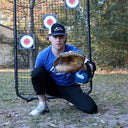
Mitt-side stability for catchers: Place the tube on the forearm above the mitt so the straps sit clear of the mitt cuff, then run normal receiving and framing drills. Catchers look for calm, controlled mitt paths; if the water splashes aggressively, it indicates they are too tense or snappy with their hands.
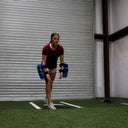
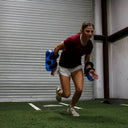
Arm-swing drills for running mechanics: Use a pair on both forearms during sprint drills, buildups, or tempo runs to cue balanced forward-back arm action. Any side-to-side chopping or twisting shows up as uneven water motion, encouraging a more organized rhythm.
Warm-up and in-season pattern work: Add with light fills to pre-practice or pre-game routines to wake up position sense and limb control without fatiguing the arm. Use in short bouts between higher-intensity throwing or receiving work as a reminder tool for clean movement.
Variant & Fill Guide
| Configuration | Best For |
|---|---|
| Single — WBJ1 | Pitchers (glove-side), catchers (mitt-side), any one-limb targeted drill |
| Pair — WBJ2 | Arm-swing drills, sprint mechanics, bilateral pattern work |
Fill guidance: Start well under the 3 lb max — especially for youth and in-season athletes. Top up only after the athlete shows quiet water movement and good next-day response. A locking valve lets coaches seal the tube quickly between athletes after adjusting fill level.
Who This Is For
- Commonly used for baseball pitchers who need better glove-side connection and more consistent lead-arm paths during dry throws and early throwing progressions.
- Commonly used for catchers who want more stable receiving, cleaner framing, and quicker transfers without overly rigid mitt movements.
- Commonly used for position players and multi-sport athletes who need improved arm-swing mechanics and upper-body stability while running.
- Commonly used for youth and in-season athletes where the goal is better coordination and awareness with minimal added load.
We are not coaches. We do not provide coaching.
What This Implement Does NOT Do
- It does not replace foundational strength or throwing programs; it is one limb-based feedback tool inside a larger development plan.
- It does not guarantee velocity or framing gains on its own; outcomes depend on how it is integrated into coaching and practice volume.
- It does not teach full throwing or catching mechanics by itself; athletes still need technical instruction on sequencing and positioning.
- It is not designed for impact use or to be thrown; the tubes are meant to be worn on the body, not tossed or slammed.
Technical Specs
| Product Name | KHAOS® Waterboy Junior |
|---|---|
| Single SKU | WBJ1 — UPC: 608938931337 |
| Also Known As | Forearm Water Weight, Glove-Side Stability Trainer, Catcher Receiving Stability Trainer |
| Max Capacity | ~3 lb of water per tube |
| Empty Weight | ~10 oz per tube |
| Dimensions | Sized to sit above a standard baseball or softball mitt; confirm exact length and diameter before publication |
| Materials | Blue, see-through cylindrical body; dual neoprene straps (soft sleeve material); locking fill valve |
| Training Focus | Glove/mitt-side path quality, limb-level perturbation control, running-form symmetry, position-sense awareness |
| Environment | Clear spaces with no nearby obstacles or teammates in the movement path |
Safety and Youth Guardrails
Oates Specialties training tools, including the KHAOS® Waterboy Junior, are designed for athletes roughly 13 and older training under coach or qualified adult supervision. For younger or growth-window athletes, emphasis should be on light fills, short drill bouts, and clean movement quality. Stop immediately on sharp pain, unusual discomfort, or loss of control.
Growth-window guidance: Athletes experiencing rapid growth should use conservative volumes and watch for soreness at growth plates or tendon attachment sites, as bone adaptation can outpace soft-tissue adaptation.
- Not a toy: A training implement for supervised athlete and coach use only.
- Not for impact or throwing: Tubes are not designed to be thrown, kicked, or slammed against hard surfaces.
- Rehabilitation use only under supervision: In rehab contexts, fill level and drill selection should be guided by a qualified medical or rehab professional.
Frequently Asked Questions
How much water should I start with?
Most coaches start well under the 3 lb maximum, especially for youth and in-season athletes, then add small amounts only if the athlete maintains quiet water movement and good next-day response.
Should pitchers wear it on the throwing arm or glove arm?
The Waterboy Junior is primarily intended for the glove arm to organize glove-side movement. Some coaches may experiment carefully with throwing-arm use under low loads and supervision, but the glove arm is the standard starting point.
How do catchers use it without interfering with the mitt?
Fit the tube on the forearm above the mitt so the straps sit clear of the mitt cuff, then run normal receiving and framing drills while aiming to keep the water as quiet as possible.
Is a pair necessary for running mechanics?
For sprint mechanics and arm-swing drills, a pair provides the best feedback — differences between sides show up clearly in how each tube’s water moves. A single tube is sufficient for targeted glove-side or mitt-side work.
Is this appropriate for youth athletes?
Yes, when used with light fills, simple drills, and close supervision. The tool is designed to sharpen movement quality and awareness without adding much load, which fits well for youth and growth-window athletes.
Questions before you buy? Call or Text Our Team at (936) 295-4459
Customer Reviews
What Customers Are Saying
Loading reviews…
No reviews yet for this product.
Be the first to review