🎧 PREFER TO LISTEN? Experience this blog on the go, during your commute, or while training. Perfect for coaches, athletes, and parents who are always moving.
📚 Table of Contents
-
The Pressure Situation
Understand why traditional low-variation training fails in high-pressure game scenarios and what's actually needed to perform when it matters most.
-
What Research Shows About Adaptation
Explore the brain activity studies and performance data proving that differential learning creates superior adjustment ability under pressure.
-
Why Different Ball Weights Build Adjustment Ability
Learn the biomechanical research behind weighted ball training and the critical safety requirements for advanced pitchers.
-
The Multi-Dimensional Advantage
Discover how varying both weight AND size creates more robust motor schemas than traditional single-parameter training.
-
The Visual-Motor Challenge
See how multi-zone targets force visual-spatial adaptation that replicates game-day adjustment demands.
-
The 4-Week Advanced Pitcher Protocol
Get the complete week-by-week progression for building adjustment ability in advanced pitchers with limited time before competition.
-
In-Season Maintenance
Learn the modified approach for maintaining differential training benefits during the competitive season without compromising performance.
-
Why the Target System Matters
Understand how multi-zone visual targets create transfer capability that traditional single-target training cannot achieve.
-
What This Training Actually Builds
Explore the specific performance outcomes you'll develop: command under pressure, faster adjustments, enhanced feel, and confidence.
-
The Bottom Line
Consolidate the complete approach and understand why advanced pitchers need immediate high variation to prepare for competition.
Training to Get Outs Under Pressure: The 4-Week Differential Learning Protocol for Advanced Pitchers
How advanced pitchers use differential training to build game-day adjustment ability when time is limited
Bottom of the sixth. Bases loaded. Two outs.
Your coach just left you in, and he hopes you are the guy he needs you to be.
You're closing in on 100 pitches. Fatigue is real. Your fastball's lost a tick. You've lost the feel for your curveball.
And the three-hole hitter—who's already 3-for-3 off you today—digs into the box.
Can you make the adjustment and execute the pitches you need—right now?
Or are you about to find out that all those bullpens where you threw at 60-80%, hitting the same spot with very low variation and low intensity, didn't actually prepare you for this moment?
Most pitchers train with minimal variation and consequence-free conditions. They wonder why they can't execute when it matters most.
If you're four weeks away from your season and you're still training this way, you might want to rethink your approach before you end up in that bases-loaded jam.
Let us show you how to train for the ability to make critical adjustments under pressure—in the middle of games, when fatigue sets in, when you need one pitch.
There's a better approach—and the science proves it works.
What Research Shows About Adaptation
For over two decades, motor learning scientists have studied something called "differential learning"—training with intentional variation to force your brain to adapt rather than just memorize one pattern.
The results are striking:
Brain Activity Studies: When athletes trained with high variation, EEG scans showed increased theta and alpha wave activity—patterns associated with better learning, memory formation, and attention compared to repetitive practice (Henz et al. 2018).
Performance Under Pressure: A 2021 meta-analysis of dozens of studies found athletes who trained with variation performed significantly better than those who repeated the same pattern—especially when tested under changing conditions (Tassignon et al. 2021). They'd built adjustment ability, not just one memorized pattern.
Translation for pitchers: Your brain needs a thick "adjustment playbook," not just one really detailed page.
Why Different Ball Weights Build Adjustment Ability
The American Sports Medicine Institute (ASMI) conducted extensive biomechanical research on weighted baseball training. Here's what matters:
The Safety Data: When pitchers throw baseballs in the 4-7oz range:
- Lighter balls (3-4oz) increase arm speed
- Heavier balls (6-7oz) produce LESS elbow stress than standard baseballs
The Learning Mechanism: When ball weight varies, your neuromuscular system must constantly recalibrate. You can't rely on "muscle memory" because the weight keeps changing. This forces active problem-solving on every throw (Reinold et al. 2018).
Critical Safety Note: This training is appropriate ONLY for pitchers with:
- No current arm soreness or injury
- Established shoulder strength and stability
- Efficient movement patterns
- Previous weighted ball experience (Diffendaffer et al. 2023)
The Multi-Dimensional Advantage
Traditional weighted ball programs vary weight while keeping size constant (9" circumference). But research shows the more dimensions of variation you introduce, the more robust your movement schemas become.
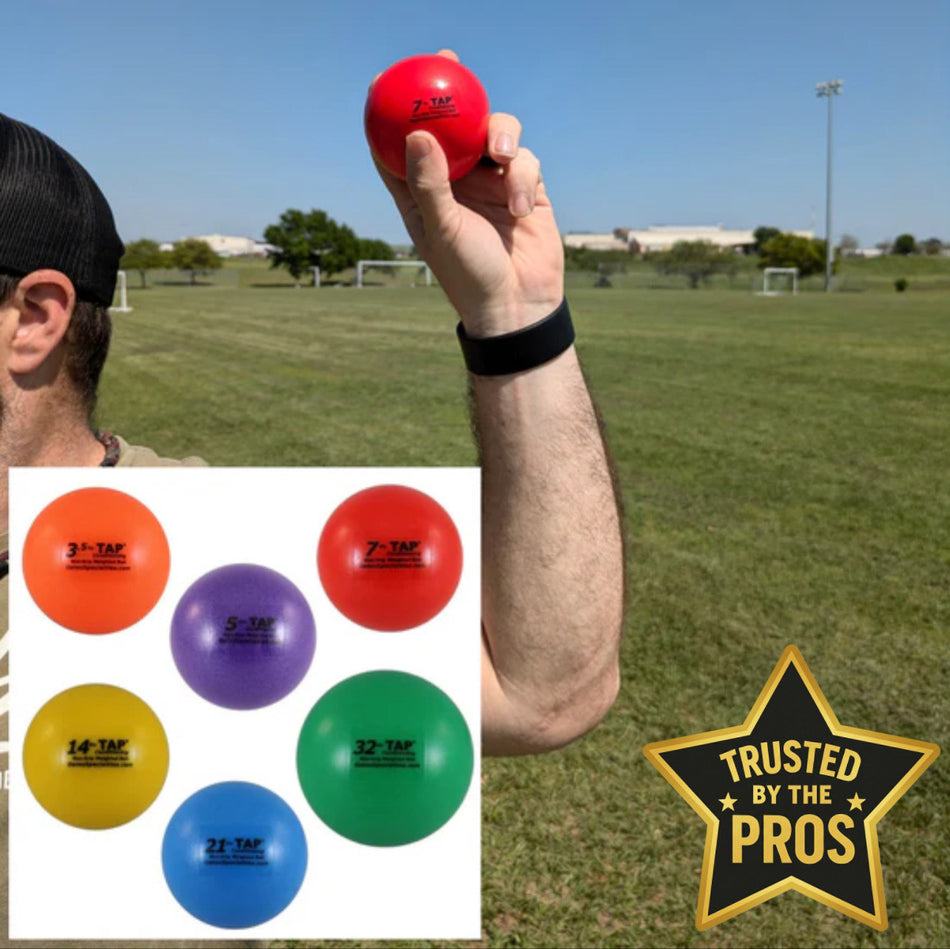
The Khaos® Differential Training System (DTS) adds size variation:
- 3oz at 7.5" diameter (small, light)
- 4oz at 12" diameter (extra-large, light)
- 7oz at 9" diameter (standard size, heavy)
- 8oz at 11" diameter (large, heavy)

Why Size Matters: Your grip, proprioceptive feedback, and release all change based on ball size. This forces your nervous system to adapt across multiple dimensions simultaneously—exactly what games demand (Ranganathan and Newell 2013).
Professional Recognition: The American Baseball Coaches Association, representing over 14,000 coaches, awarded this system their 2019 "Best of Show" honor, recognizing how it operationalized motor learning research into practical training methodology.
The Visual-Motor Challenge
But weight and size aren't the only dimensions that matter. Your brain also processes visual information—target location, distance perception, depth cues—to calibrate each throw.
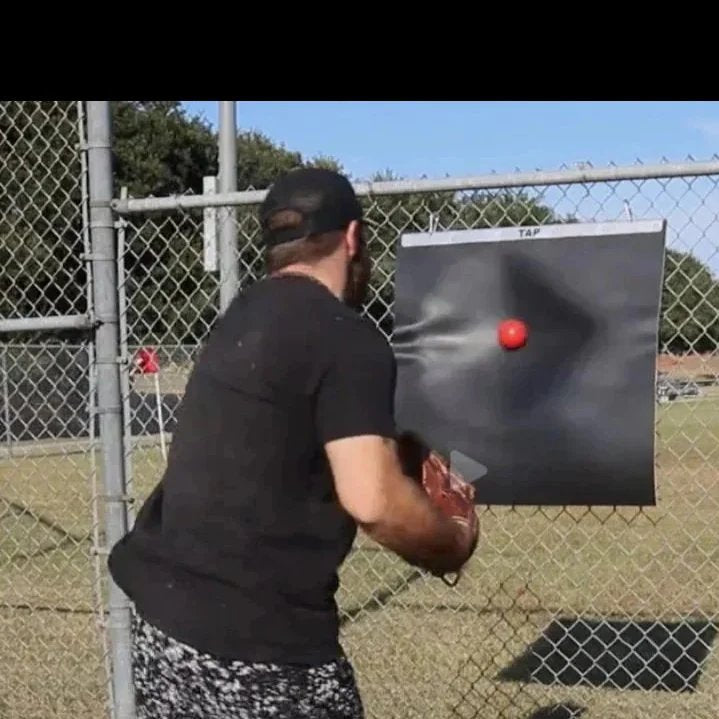
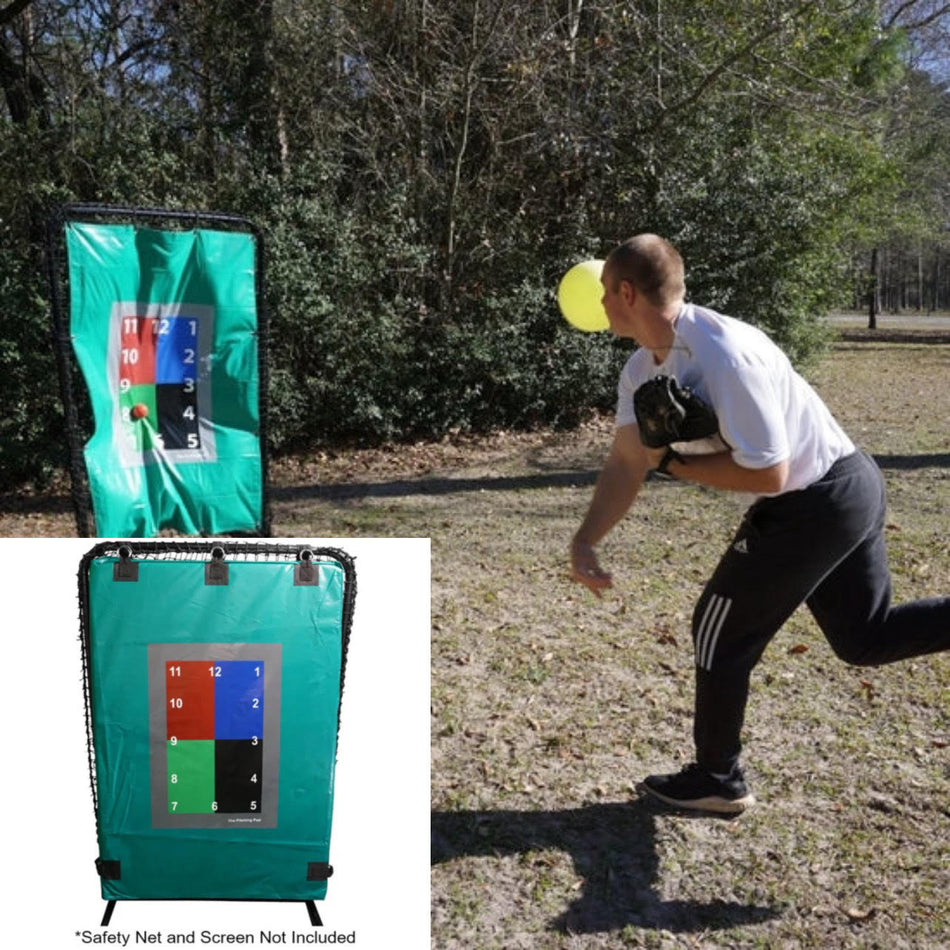
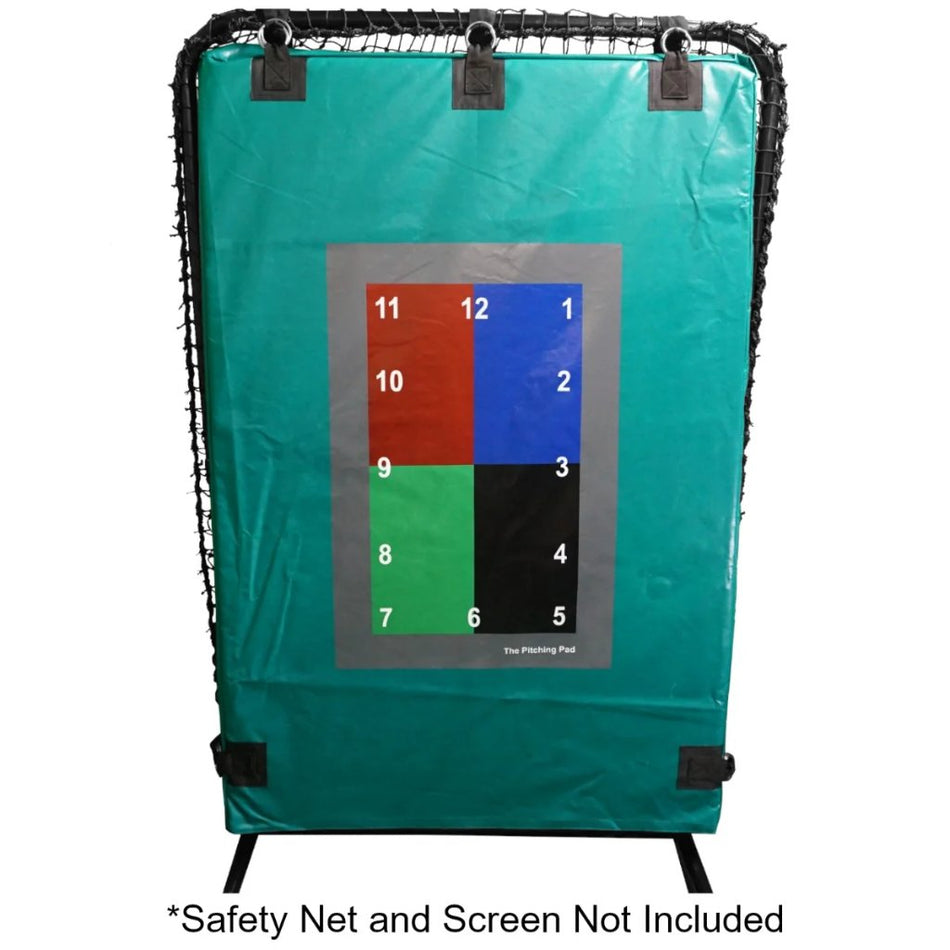
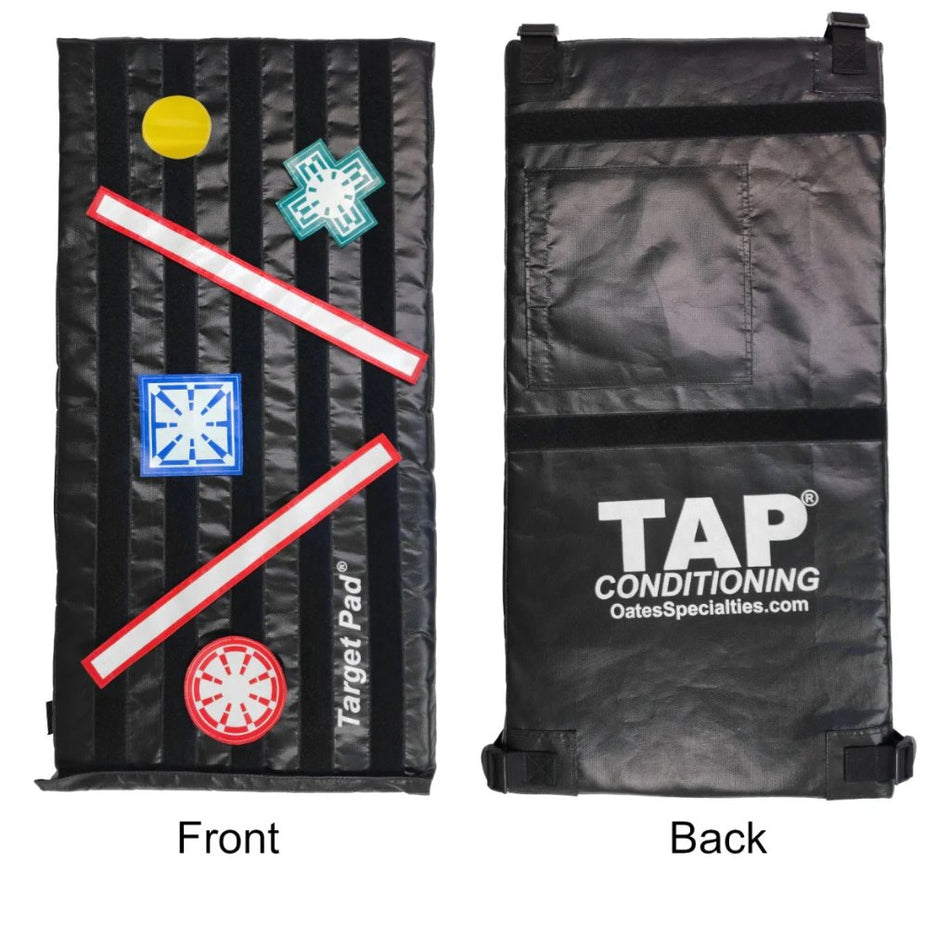
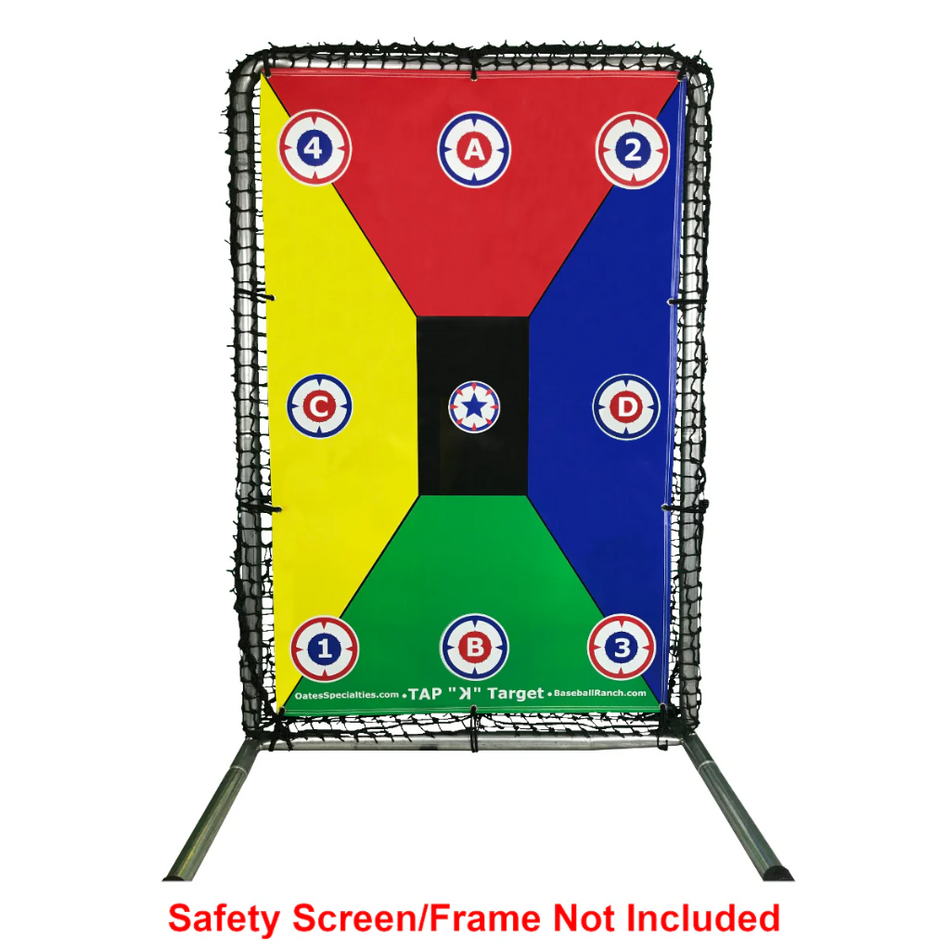
The TAP® K Target (66" x 42") provides four distinct color zones (red, yellow, blue, green) with a black center and smaller "star" target. This isn't just decoration—it's strategic sensory overload.

High-contrast colors force your visual system to process multiple cues simultaneously. The black center creates depth perception challenges. Random zone selection means your brain can't pre-program the movement pattern.
Combined with varying ball weights and sizes, you're forcing adaptation across three dimensions:
- Proprioceptive (what the ball feels like in your hand)
- Kinesthetic (how it releases from different grips)
- Visual-spatial (where you're aiming under different conditions)
This replicates game reality: you need to make adjustments and throw the pitch where it needs to be when it matters most.
The 4-Week Advanced Pitcher Protocol
You're an advanced pitcher if you have:
- Efficient delivery patterns
- 3+ years competitive pitching experience
- Ability to hit general zones reliably
- History of successful in-game adjustments
- Clean injury history
Your Challenge: Your delivery is second nature—meaning you have LOW internal noise. Without external variation, your brain has nothing new to learn (Porter and Magill 2010).
Why High Variation From Day One
Most differential learning protocols start with minimal variation and gradually build complexity over time. That approach works well for novice and intermediate athletes.
But you're not a novice.
As an advanced pitcher, you can handle—and need—immediate high variation. The research is clear: athletes with low internal noise (efficient, automatic movement patterns) require external complexity to drive adaptation (Schöllhorn et al. 2009).
The Success Rate Target: You should achieve roughly 60-70% success hitting your intended zones with varied implements. This is the sweet spot—challenging enough to force adaptation, successful enough to learn from the activity.
If you're below 60% success: The variation is too high for your current capability. Reduce complexity by:
- Limiting ball selection to three implements: standard baseball (5oz), heavy ball (7oz), and one smaller ball (3oz)
- Simplifying target selection to just the middle zone of the K Target
- Maintaining these modifications until success rate improves to 60-70%, then gradually add complexity back
The goal is a robust, adaptable athlete—but the path must match individual capability. Modification isn't failure; it's intelligent programming.
Week 1-2: Immediate High Variation
Equipment: Khaos® DTS Set (full weight + size variation) + TAP® K Target
Location: Mix 50' and 60'6" mound
Schedule: Random selection from Day 1
- 2-3 sessions per week
- 30-35 throws per session
- Target Protocol: Random zone selection on K Target
Here's the critical part: every throw should be different. Grab a ball without looking. Call out a color zone randomly. Execute.
One throw might be the 7.5" (3oz) ball to the red zone. Next throw: 12" (4oz) ball to the blue zone. Then 9" (7oz) ball to the black center star.
Your brain has no chance to memorize a pattern. The combination of unpredictable ball characteristics and random target selection forces genuine problem-solving on every single throw.
Distance Considerations: You don't need to throw full distance for command work with varied implements. Many pitchers find working at 50-60' allows better focus on hitting specific zones while the neuromuscular system adapts to the different balls. Full distance is optional based on your training phase and goals.
Monitor Your Success Rate: Track what percentage of throws hit your intended zone. If you're consistently below 60%, reduce variation as described above.
Why This Works: The dramatic size changes (7.5" to 12" diameter) combined with weight variation AND multi-zone targeting creates what researchers call "desirable difficulty." Your automatic delivery patterns face complexity they can't resolve with stored patterns—exactly what advanced pitchers need (Schöllhorn et al. 2009).
Week 3: Peak Complexity
Equipment: Full DTS set + TAP® K Target with added constraints
Location: Primarily 60'6" mound
Target Variations:
- Mix K Target zones with height variations (call "top third" or "bottom third" of selected color)
- Combine zones: "Red zone, knee high" or "Blue zone, letters"
- Add depth perception challenge: Alternate between star target (depth focus) and outer zones (peripheral focus)
Movement Variations: Change positions, timing, release points
- Wind-up, stretch, quick tempo
- Varied arm angles
- Different tempos
Volume: 35-40 throws with maximum unpredictability
The combination is what matters. You're not just throwing different balls—you're throwing them to different targets, from different positions, at different tempos.
The K Target's multi-zone design becomes essential here. Instead of "inside corner" or "outside corner," you're processing "yellow zone, top third" or "green zone, black center." Your brain builds a richer catalog of adjustment patterns.
Success Rate Check: Even with peak complexity, you should maintain roughly 60-70% success. If not, scale back to Week 1-2 protocols.
The Goal: Force novel neural adaptations across multiple variables simultaneously. Research shows this multi-dimensional approach creates more robust motor schemas than varying single parameters (Ranganathan and Newell 2013).
Week 4: Competition Preparation
Equipment: Reduce variation, primarily 4-6oz range
Location: 60'6" mound exclusively
Focus: Game-specific command
- Pitch sequences
- Working counts
- Hitter scenarios
- Volume: Significantly reduced (1 session, 20-25 pitches)
Why the Shift: Research shows specificity should increase as competition approaches. You've built adaptability—now refine task-specific execution (Czyż et al. 2024).
In-Season Maintenance
Can you continue differential training during the season?
Yes—with strict modifications.
Guidelines:
- Frequency: 1-2 sessions per week maximum
- Volume: 50% reduction (15-20 throws)
- Timing: Day after starts OR off-days, (Intensity can be lowered in-season while still challenging the athlete)
- Equipment: Primarily 4-6oz, occasional 3oz/7oz
- Location: Adjust distance based on training goals and arm recovery needs
Critical Rule: In-season training must NEVER compromise game performance.
Why the Target System Matters
Traditional bullpens often use a single strike zone box or no visual target at all. This trains your brain to execute one well-practiced pattern to one familiar target.
Games don't work that way.
You need to adjust and execute the critical pitch when it matters most. The count changes. The hitter adjusts. Fatigue affects your feel. You need to make the pitch—now.
The TAP® K Target's multi-zone design teaches your visual-motor system to recalibrate rapidly:
- Four distinct color zones create different visual anchors
- The black center with star target challenges depth perception (critical for front-door/back-door breaking pitches)
- Random zone selection prevents pattern memorization
- High-contrast colors train focus under visual fatigue
When combined with differential ball weights and sizes, you're building what sports scientists call "transfer capability"—the ability to adapt learned skills to novel conditions. That's exactly what the Tassignon meta-analysis showed: athletes who trained with high variation performed significantly better when tested under novel conditions.
Your bullpen throws transfer better to game situations because you've practiced constant adjustment, not low-variation repetition.
What This Training Actually Builds
Better Command Under Pressure: When you need to make that one pitch in a critical situation, you can adjust and execute because you've trained adjustment ability across multiple dimensions.
Faster In-Game Adjustments: Your brain has practiced solving problems across weight, size, distance, and target variations. When the strike zone changes or you lose feel for a pitch, you adapt quickly.
Enhanced Feel: Constant adjustment builds superior proprioception—your internal sense of body position and movement.
Greater Confidence: When you've succeeded handling 7.5" to 12" balls, light to heavy weights, close to far distances, multiple target zones, game-day challenges feel manageable.
Reduced Pressure Vulnerability: Research shows differential learning creates brain states "stable against disturbances"—exactly what you need in high-leverage situations (Serrien et al. 2020).
The Bottom Line
With four weeks until competition, you don't have time for gradual progressions. As an advanced pitcher, you can handle immediate high variation—and you need it.
Your delivery is automatic. That's your strength and your limitation. Without external challenge, there's nothing new to learn.
The Khaos® DTS system provides multi-dimensional variation (weight + size) across 7.5" to 12" balls, 3oz to 8oz weights. The TAP® K Target adds visual-spatial complexity with four color zones, depth perception challenges, and multiple aiming points. Together, they force genuine adaptation across proprioceptive, kinesthetic, and visual-motor dimensions—building the adjustment ability that separates practice performers from game-day dominators.
You can't control fatigue or pressure situations. But you can train your ability to adjust to all of them.
That's what differential training builds. That's what elite pitchers do. And with four weeks before competition, now is exactly when advanced pitchers should be doing it.
Now ask yourself. Are you prepared to get that 3 hole hitter out? If not, get to work.
About This Analysis
Created by the Oates Specialties team led by Robert Oates, M.Ed., Founder
Editorial oversight by Gunnar Thompson, BS, CSCS, General Manager
Certified Strength & Conditioning Specialist | Biomechanics Specialist
January 2026
COMPLETE CREDENTIALS
ROBERT OATES, M.Ed., Founder: Founded Oates Specialties in 2003. Master of Education degree. Provides strategic direction for educational content and athlete development philosophy.
GUNNAR THOMPSON, General Manager: BS Kinesiology (Clinical Exercise Science). CSCS (NSCA), PES (NASM), CPPS certifications. Technical authority on biomechanics and performance science. Conducts review of all educational content for scientific accuracy.
Questions or corrections: gunnar@oatesspecialties.com
Disclaimer: This article is for educational purposes only. The training methods discussed—including weighted ball and high-variation throwing protocols—may not be appropriate for every athlete and should only be performed by healthy, properly prepared pitchers under qualified coaching supervision. This protocol is intended for advanced pitchers with efficient movement patterns and a clean injury history; novice and intermediate pitchers should follow more gradual progressions with reduced variation. Athletes should consult a qualified sports medicine professional before beginning any new throwing, strength, or performance program—especially if they have a history of arm pain, injury, or surgery. Weighted ball training carries inherent risk and requires adequate preparation, arm health, and supervision.
Continue Exploring Athlete Development
Related Articles: