The TAP® Pitching Target System
Seven Tools, Seven Jobs
Executive Summary
Every pitcher who throws into a blank net faces the same problem. The rep happened. The ball went somewhere. But nothing came back with a useful answer.
A physical target changes that. It gives every rep a specific place to aim before it begins, and a readable result when it ends. That is a practice design principle, not a product promise.
The TAP® Pitching Target System is a set of command training and catcherless training environments built around distinct pitching problems — location habits, portable focal-point work, differential variability, zone configuration, command proving at game intent, release feel development, and batter-present visual context. Each tool addresses one or more of those jobs. Not every pitcher needs every tool. The right tool depends on which problem the session is trying to solve.
The Problems Pitching Coaches Actually Have
Most coaches do not begin with a research term. They begin with a practical problem. Here are the most common ones this system addresses.
- My pitcher throws into a blank net and gets no useful command feedback.
- I need more bullpen reps without depending on catchers.
- I need a portable target for travel, away games, or individual warm-ups.
- I want better command work, but I do not want the session to become vague throwing volume.
- I need to know whether command holds at real game effort, not just at comfortable effort.
- My advanced pitcher needs to know what the release that hits the spot actually feels like.
- I need batter-present visual context without putting a live hitter in danger.
Why Targets Work — The Three Principles
The full science behind target-based training sits in the companion research page, Why Targets Work. What follows here is the plain-language version, applied specifically to pitching.
Principle 1: Give the Rep a Goal
When a pitcher directs attention toward an intended outcome in space — a corner, a zone — rather than toward the body producing the movement, performance and learning tend to be better. That finding has been replicated across 143 studies covering more than 3,000 participants. A target makes this happen automatically. The pitcher aims at a corner. Attention goes outward before he thinks to direct it. No cue required.
Principle 2: Give the Rep a Result
After each pitch, an athlete needs to know whether the outcome matched the goal. A blank net fails this test. A target restores that information. Did the pitch hit the intended zone? That verdict is available on every rep, whether anyone is watching or not.
Principle 3: Build It Into the Environment
A verbal cue arrives when someone delivers it. A physical target is present on every rep. No coach needs to speak. The practice environment does the coaching work on its own, rep after rep, session after session.
Pitching Session Map
Match the coaching problem to the right tool. A single program may use different tools across the same week because the training question changes from session to session.
| Session Type | Primary Tool | What It Does | Best Fit |
|---|---|---|---|
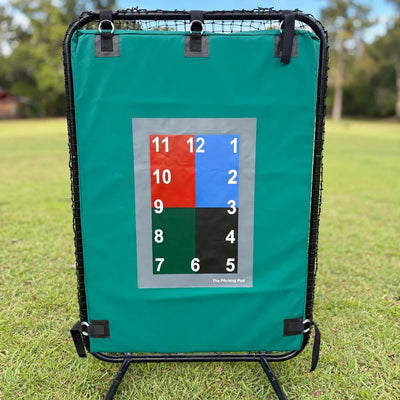
| Location work / command building | Pitching Pad® | Quartered strike-zone layout with color references and impact feedback. Gives a clear target and immediate readable result on every throw. | All levels. Best starting point for coaches who need honest location feedback. |
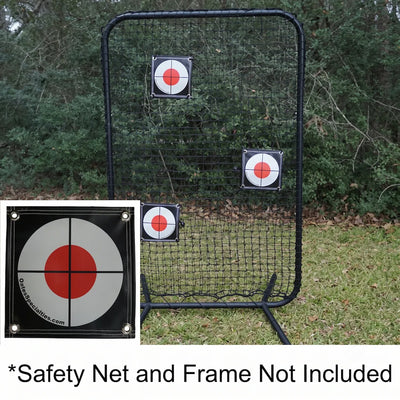
| Portable focal-point work | TAP® Precision Target™ | Lightweight target that clips to almost any net. Turns any appropriate surface into a command station for travel, away games, or solo warm-up work. | All levels. Travel, away setups, solo sessions. |
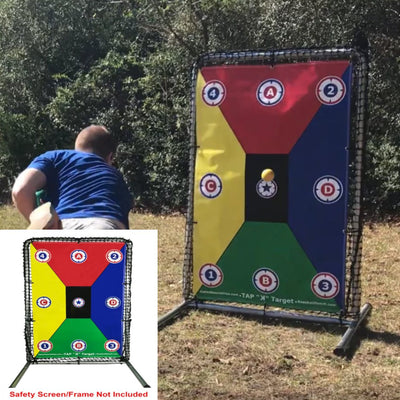
| Differential practice / variability | TAP® K-Target™ | Nine labeled points and five color zones for variable call sequences and location variability without reconfiguring the target. | All levels; differential training, and deliberate practice. |
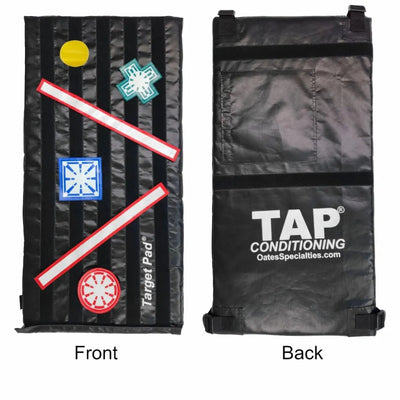
| Configurable zone training | Target Pad® | Moveable bars and detachable targets for Effective Velocity® patterns, zone fractions, and changing session structure without a different product. | Intermediate to advanced. |
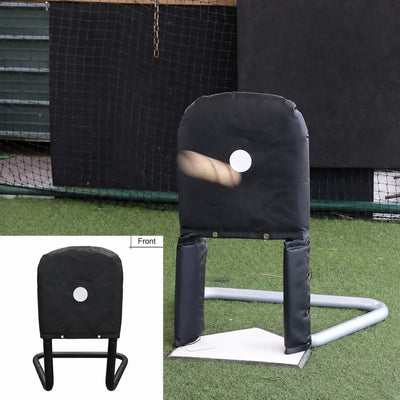
| Intent work / command proving | TAP® Advanced Command Trainer™ (ACT) | A defined bottom-half target in the strike zone for proving command at real game effort. Hit-or-miss accountability for advanced pitchers. | Advanced; stable delivery required. |
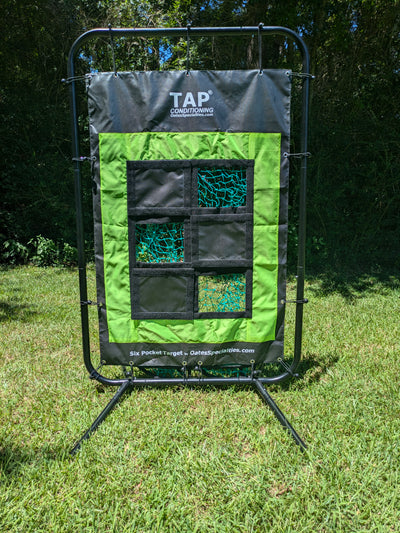
| Feel work / release development | TAP® Six Pocket Target™ | Advanced target separating outcomes into a quiet successful entry and a salient miss. Develops release-point feel alongside location accountability. | Advanced to elite. |
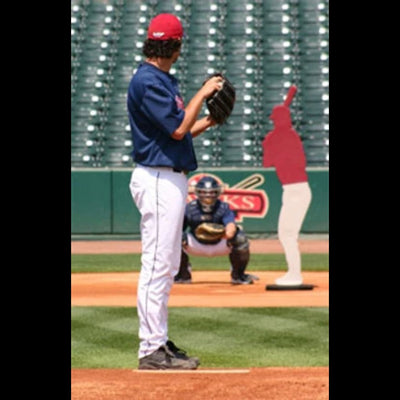
| Live-look / batter-present work | The Designated Hitter® | Restores batter-relative visual context — inside, outside, high, low — to catcherless bullpen work without replacing the target session itself. | Any level; pairs with any pitching target. |
Why These Tools Are Not Redundant
Seven pitching tools sounds like a product catalog. It is not. Each tool answers a different question and creates a different practice environment.
Pitching Pad®: the broad command foundation. Large, clear, readable. For coaches who need consistent location feedback across a full bullpen session at any level.
K-Target™: the variability tool. Its nine labeled points and five color zones allow variable call sequences without resetting the target between throws. For programs that use differential training logic or Effective Velocity location work.
Precision Target™: the go-anywhere tool. Same focal-point principle as the Pitching Pad® and K-Target™, built to travel. Not a replacement for either in a fixed facility. A companion for everywhere else.
Target Pad®: the configurable zone tool. Adjustable bars and targets for programs that already have a command foundation and now want to vary the training problem without switching to a different product entirely.
Advanced Command Trainer™ (ACT): the accountability tool. One question: can the pitcher hit a defined bottom-half target at game intent? Yes or no. Most useful when misses are consistent enough to reveal a readable pattern.
Six Pocket Target™: the feel-development tool. Its dual outcome signal — quiet entry through a pocket, salient miss off a panel — gives advanced pitchers information about what the release that hits the spot actually feels like. Not for early-stage development.
Designated Hitter®: not a target at all. It is the visual context layer. It restores the spatial meaning of inside and outside relative to a batter’s presence. Pairs with any pitching target; does not replace one.
Product selection should be framed around the job of the session. A single program may use different tools across the same week. That is not indecision. That is good practice design.
Each Pitching Tool — Job, Use, Best Fit
Pitching Pad®
The foundational command tool. Its quartered strike-zone layout, color references, and impact feedback give pitchers a clear target and a readable result on every throw. The most natural starting point for any coach whose first question is “where is every pitch going?”
Best for: command building at any level, high-frequency bullpen sessions, programs new to target-based training.
TAP® K-Target™
The variability and sequence tool. Nine labeled call points and five color zones let coaches design variable pitch sequences without stopping to reconfigure the target between throws. Supports differential training approaches and Effective Velocity® location work.
The honest framing: differential training and Effective Velocity® are practitioner frameworks, not peer-reviewed interventions. The K-Target™ supports their practical application. It does not validate every claim attached to either framework.
Best for: intermediate to advanced pitchers, programs using deliberate sequence design, coaches who want variable location accountability in a single session.
TAP® Precision Target™
The portable companion to the Pitching Pad® and the K-Target™. It clips to almost any net and turns any surface into a focal-point command station. Same principle, different form factor.
Best for: travel, away games, individual warm-up work, solo catcherless sessions away from the home facility.
Target Pad®
The configurable zone tool. Moveable bars and detachable targets create Effective Velocity® diagonals, high-zone work, and adjustable zone fractions without needing a different product for each variation.
Best for: programs with an existing command foundation that now want to vary the training problem. The bars and target shapes set the structure; the session design determines the value.
TAP® Advanced Command Trainer™ (ACT)
The clearest single-purpose tool in the pitching branch. It answers one question: can the pitcher hit a defined bottom-half strike-zone target at real game intent?
Its value comes from that narrowness. It is not a general-purpose command tool and not for every pitcher at every stage. It belongs in advanced programs where misses are consistent enough to reveal a readable error pattern. The coaching question at that stage has shifted. It is no longer “can he hit the zone?” It is “does he hit it when it counts?”
Best for: advanced pitchers with a stable delivery, intent-based command proving, programs measuring command under game-effort conditions.
TAP® Six Pocket Target™
The feel-development tool. Its six pockets and six covered panels return one of two results: a quiet entry through a pocket or a salient audible miss off a panel. That dual signal gives advanced pitchers information beyond location — information about what the release that produces an accurate throw actually feels like.
This is not a beginner tool. It belongs in advanced programs where the coaching question has moved past location and into feel and release consistency.
Best for: advanced to elite pitchers, programs where command is established and release-point consistency is the next development layer.
The Designated Hitter®
Not a location target. A visual context tool. The Designated Hitter® restores batter-relative spatial meaning to catcherless bullpen work. Inside and outside become meaningful relative to a batter’s presence, not just relative to a strike-zone rectangle.
Its best use is as a wrapper around another target-based session. The pitcher throws to a target. The Designated Hitter® makes the environment look and feel like pitching to a hitter, not like throwing into an empty net.
Best for: any level; inside-corner work, handedness changes, reducing the visual gap between bullpen sessions and game-condition pitching. Pairs with any pitching target in the line.
Best Pairings — Pitching
Pitching Pad® + Precision Target™: home facility command station plus travel companion. Same focal-point principle in two form factors.
K-Target™ + Precision Target™: primary differential and sequence station at home, plus portable follow-up for away work.
K-Target™ + Target Pad®: variable sequence work plus configurable zone work. Two tools, two different session types, in the same program week.
ACT + Pocket Radar®: location accountability and intent measurement on the same throw. For advanced programs proving command under real game effort.
Any pitching target + Designated Hitter®: location feedback plus batter-present visual context. The most complete catcherless bullpen setup in the line.
Pitching Objections and Answers
“Why not just throw into a net?” A blank net accepts every throw almost the same way. It allows volume. It does not automatically create a specific goal, a readable result, or a way to distinguish a quality rep from a non-quality rep. A target does all three.
“Is this proven by product-specific studies?” No. The accurate claim is not that each product has been validated in a controlled trial. The accurate claim is that each design applies established motor-learning principles to a specific training problem. The mechanisms are documented. The limits are stated openly in the product reports.
“Why not put the catcher back and skip the targets?” For the sessions where a catcher is available, that is the right answer. For every session where no catcher is available, the pitcher either throws into a blank net or trains with a target. A target gives the catcherless session structure a blank net cannot.
“Does every pitcher need every tool?” No. Each tool solves a distinct problem. A coach with one pitcher who needs basic command feedback needs a Pitching Pad®, not the entire line. The session map above helps match the tool to the actual problem.
The Honest Limits of This Page
No controlled intervention study has tested any specific Oates product as a training tool. That is stated plainly here and everywhere else in this system.
What This Page Claims
- Every pitcher who throws into a blank net faces a practice design problem: no specific goal, no readable result.
- A physical target gives every rep a goal before it begins and a readable result when it ends.
- This principle is supported by peer-reviewed motor learning research going back thirty years.
- Each tool in the TAP® pitching system serves a distinct training job and is designed around that job.
- The session map above helps coaches match the right tool to the right problem.
What This Page Does Not Claim
- Any specific Oates product has been tested in a controlled study. None has.
- One tool is best for every pitcher or every program.
- Differential training or Effective Velocity® claims made by practitioner frameworks are validated by the K-Target™ or Target Pad® design. These tools support those approaches. They do not prove those frameworks.
- Targets develop good mechanics. They provide the structure for a pitcher to express mechanics he has already developed.
For the full peer-reviewed research foundation behind these principles — attentional focus, knowledge of results, the constraints-led approach, quiet eye research, and the honest counter-evidence — see Why Targets Work.
Frequently Asked Questions
A blank net accepts every throw almost the same way. It allows volume. It does not automatically create a specific goal, a readable result, or a way to distinguish a quality rep from a non-quality rep. A target does all three.
No. The accurate claim is not that each product has been validated in a controlled trial. The accurate claim is that each design applies established motor-learning principles to a specific training problem. The mechanisms are documented. The limits are stated openly in the product reports.
For the sessions where a catcher is available, that is the right answer. For every session where no catcher is available, the pitcher either throws into a blank net or trains with a target. A target gives the catcherless session structure a blank net cannot.
No. Each tool solves a distinct problem. A coach with one pitcher who needs basic command feedback needs a Pitching Pad®, not the entire line. Match the tool to the actual problem the session is trying to solve.
© 2026, Oates Specialties LLC