The coaches saw the results decades before science could explain them. What a lab in Ontario finally confirmed — and why the best practitioners were already living it.
🎧 Prefer to listen? Audio version of this article:
Executive Summary
Every few years, something happens in baseball that looks like a discovery but is actually a confirmation. The University of Waterloo’s 2026 pitching simulation was one of those moments.
Led by biomechanist Cedric Attias, the Waterloo team built a forward-dynamic computer model of the pitching delivery — bones, muscles, ligaments, running forward in time — and asked a question that laboratories had never been able to answer with this precision: for a target velocity, which movement solutions cost the elbow more, and which cost it less?
The results confirmed what a generation of unconventional coaches had been teaching since the late 1990s. Two pitchers can throw the same speed and load the UCL very differently. Movement efficiency changes the cost of velocity. The elbow often pays for what the rest of the body failed to do. When the study’s lead researcher described his findings, he reached for a specific verb: confirmed. Not discovered. Not revealed. Confirmed.
This is the story of that gap — roughly thirty years between visible results and their proof. It runs from a University of Washington clinic in the early 2000s through a corrugated-steel barn in Montgomery, Texas, a Florida physical therapy practice, a hotel lobby in Texas, and finally a computer model in Ontario that began, carefully, to close the distance.
The science lagged. The coaching didn’t.

Scott Kazmir’s Comeback and the Question It Raised
In June 2011, the Los Angeles Angels released Scott Kazmir. He was twenty-seven years old. His fastball had bled off for years, and his final stretch in the organization — zero wins, a 17.02 ERA at Triple-A — left almost no one in baseball expecting to see him on a major league mound again.
About four months after that release, his trainer reached out to Ron Wolforth. What followed was almost a year of work in a Cypress, Texas driveway — a coach with a bag full of strange tools and stranger ideas, and a pitcher tearing his delivery down to the studs and rebuilding it around feel. Looser. More connected. Less like fighting his own body on every pitch. Friends said he looked different. The ball sounded different. He felt different.
Then someone clicked on the radar gun.
Eighty.
Not eighty-nine. Not even eighty-five. Eighty. The kind of number that ends careers, not restarts them. His coach tried to soften it: “Well, that was 85.” It was a generous rounding, but the number on the display was still the number on the display.
Within two months, Kazmir was back above 90. By the summer of 2012 he was throwing for an independent league team in Sugar Land, Texas — the only mound available to him. The Cleveland Indians were the only organization paying attention. They signed him to a minor league deal in January 2013, and he won a rotation spot that spring. Within a few years he was starting playoff games and throwing seven scoreless innings in his Astros debut.
The easy way to tell that story is as a miracle of willpower. Or a triumph of the latest gimmick. Or a coach with secret sauce. The harder — and more interesting — way is to ask a simple question.
How does a pitcher go from eighty in a driveway to retiring big-league hitters again, when the goal was never to throw harder at all, but to move better? Ron Wolforth had an answer. It took twenty more years, and a lab in Ontario, for the science to catch up to it.
Why One Pitcher’s Story Isn’t Proof — And Why That Matters
If you are a scientist, a biomechanist, or simply a skeptical coach, your answer to that story is probably the right one.
One comeback is an anecdote, not evidence.
A single rebuilt pitcher proves nothing about a method, a tool, or a philosophy. For every Scott Kazmir who found his way back, there are players who changed everything and never made it out of the driveway. For years, this kind of story looked exactly like what its skeptics said it was: dramatic before-and-after clips, radar readings with no control group, and a lot of feel with very little measured joint-load data behind it.
That skepticism is not the enemy of this article. It is the starting point.
The honest truth is that for a long time, coaches who trained toward the idea of move better to throw better were operating ahead of the available proof. The results were visible. The mechanism — the hard math explaining why moving differently changes both velocity and stress — was missing.
This is not the story of how intuition beat science. It is the story of the gap between them. Roughly three decades, from the mid-1990s to the mid-2020s, during which visible change ran ahead of confirmatory data. And how, in one lab in Ontario, the proof finally began to catch up.
ASMI and the 1995 Biomechanics Research That Mapped Elbow Load
The skepticism had teeth because the people studying pitching most rigorously were the first to say how much remained unknown.
The foundational work belongs to the American Sports Medicine Institute. Starting in the mid-1990s — the landmark paper, Kinetics of Baseball Pitching with Implications About Injury Mechanisms, was published by Glenn Fleisig, James Andrews, and colleagues in 1995 — ASMI used high-speed, three-dimensional motion analysis to put hard numbers on what a pitch actually does to a body. That database eventually grew to more than two thousand pitchers, including an elite subset of professionals throwing above 87 miles per hour. They computed both kinematics — the motions — and kinetics — the forces and torques — at the shoulder and elbow.
Their central finding pointed at danger. The inside of a pitcher’s elbow endures an enormous valgus torque during the cocking phase, just before the arm reaches maximum external rotation. It is the load the ulnar collateral ligament exists to resist. Repeated tens of thousands of times, it is what sends pitchers to Tommy John surgery. ASMI named the villain. They quantified it, dated it within the pitch, and tied it to the epidemic of arm injuries at every level of the game.
But naming the force is not the same as solving for the movement.
A motion-capture lab cannot measure tension inside a living ligament. The best it can do, as Fleisig himself has acknowledged, is establish a correlation between calculated joint torque and injury risk — strong and useful, but a proxy, not a direct measurement. And the early correlations showed where the load appeared without resolving which whole-body movement solutions would reduce it at game velocity. A 2002 analysis found that shoulder abduction torque and internal-rotation torque together accounted for roughly 85 percent of the variance in elbow valgus load, once height and weight were controlled. That is a profound clue. The elbow, it says, is often paying for what the rest of the body failed to do.
But a clue pointing upstream into fog. If the proximal joints are loading the elbow, what does an efficient delivery look like? How would you train one?
The forces were mapped. The elbow was flagged. The specific movement solutions that lower the cost at competitive velocity had not yet been built.
So the coaches built toward them without a map.
How Paul Nyman Changed the Way Coaches Think About Pitching Mechanics
In the early 2000s, Ken Knutson was in his tenth year building one of the most successful baseball programs in the Pacific Northwest. His University of Washington Huskies had won two Pac-10 championships. He would finish his tenure with 584 wins — the most in UW history — before going on to develop pitchers at Arizona State and in the Cleveland Indians organization. Knutson was a respected presence in collegiate coaching circles, and the clinic he hosted at Washington drew coaches who took pitching seriously.
Two of them were Ron Wolforth and Brent Strom.
Wolforth had spent roughly a decade teaching pitching the way it had been taught for a hundred years: make this shape on the windup, this shape at landing, this shape at follow-through. Look like the picture. The trouble, he would later realize, is that ten Hall of Fame pitchers don’t look like the same picture. They look like ten different ones. He arrived at the UW clinic a traditional coach. He left it something else.
Strom had been coaching pitchers since the early 1980s — a former big-league pitcher turned instructor who worked his way through minor-league organizations, hunting a better way to develop arms. He was, as he would later say, thinking about pitching as a series of positions: get to a balance point, lift your leg, do this, do that. The idea that you might be ruining a pitcher by coaching him was not yet in his vocabulary.
Both men heard it that day from Paul Nyman.
Nyman was not a baseball man. He was a Connecticut engineer and former track athlete who had spent the better part of a decade applying physics and biomechanics to throwing mechanics through a company called SETPRO. His ideas circulated in early-internet forums and coaching seminars — dense, specific, and largely dismissed by mainstream professional baseball. What he argued was straightforward, and it cut against everything the men in that room had been taught to teach.
The body’s positions were not the point. The body’s movement was — the interlocking, sequenced, connected actions that build and transfer energy up the kinetic chain. Pitching was not a series of poses. It was a rotational athletic movement to be organized.
Nyman had a way of saying it that carried.
“The best way to ruin a pitcher is to make him a pitcher.”Paul Nyman — Connecticut engineer, SETPRO founder, and architect of the movement-first coaching revolution
By this he meant: rob an athlete of his natural athleticism by turning a dynamic, connected movement into a sequence of conscious checkpoints.
Strom’s account of what happened next has not changed across the years he has retold it. Nyman, he said, “kind of transformed how all of us thought about pitching motion. A group of us started to see pitching in a different light. We started to understand how the body moves differently with really elite pitchers.” Before that clinic, Strom measured a good delivery in positions. After it, he measured one in movement.
Wolforth called his version of the same conversion a Reformation. Not a tweak. Not a recalibration. A conversion. “Paul Nyman,” he wrote years later in a public acknowledgment of the people who shaped him, “forever changed the way I view movement and training. His influence in 2003 through 2006 remains among the most significant in my professional career.”
Two coaches. One engineer. One afternoon in Seattle. The phrase did not appear in any peer-reviewed journal. It was not validated by a force plate or a motion-capture system. It was simply true — and the men in that room knew it the moment they heard it.
The proof would take another twenty years to arrive.
How Randy Sullivan Arrived at Movement-First Pitching from Physical Therapy
The most persuasive thing about the movement-first idea is not that two coaches in Seattle were converted by the same engineer on the same afternoon. It is that someone else arrived at the identical destination from an entirely different direction, years later, without having been in that room.
Randy Sullivan was a physical therapist before he was a pitching coach. A Citadel-trained athlete who later served as an Air Force officer before earning his physical therapy degree through the Army-Baylor program, Sullivan spent more than two decades treating injured throwers in a private clinic. His instinct ran through tissue and load. Break the cycle of injury, play, re-injury — and you had to understand the body as a connected system, not a checklist of arm angles.
He thought he had it figured out. Then, in 2008, he drove to the Texas Baseball Ranch in Montgomery, Texas — the facility Ron Wolforth had built on 20 acres of pine forest north of Houston — and attended a July training camp. Sullivan later described what happened with striking plainness: “I just hadn’t really applied the physical therapy part to the baseball player. I was treating it as two different worlds.” The Ranch broke down the wall between them. The physical therapist and the pitching coach became, in Sullivan’s practice, the same person.
Six years after that first Ranch visit, Sullivan attended an Ultimate Pitching Coaches Boot Camp, also at the Ranch, where a Dutch movement scientist named Frans Bosch presented to a room full of coaches.
“The body shows very little interest in what the coach has to say.”Frans Bosch — Dutch movement scientist, whose framework of implicit learning and self-organization reshaped how coaches understood athlete development
His framework — implicit learning, self-organization, variability, the idea that efficient movement is discovered by the athlete rather than installed by instruction — landed on Sullivan like the second disruption in a long education.
Sullivan went home, read Bosch’s book six times, and spent three months tracking down its two hundred references. Out of that came his training system. Bosch later wrote the foreword to Sullivan’s own book.
Wolforth had named Bosch in his published list of intellectual debts alongside Nyman, calling him the coach who “inspired me to think differently and gave me the motor learning insight to train my athletes far more intelligently and effectively.” The Ranch had hosted Bosch’s presentation. Both Wolforth and Sullivan, independently, named the same Dutch movement scientist as the theoretical backbone beneath their methods.
Nyman arrived through engineering. Wolforth arrived through a conversion in Seattle and years of barn-floor iteration. Sullivan arrived through the clinic, the Ranch, and a room where Bosch spoke. Three doors. One destination. That how a pitcher moves changes what that movement costs.
None of them could prove it the way a journal demands. They could only keep measuring on their own terms — and wait.
What the 2026 University of Waterloo Pitching Simulation Actually Found
For roughly two decades the results were visible and the mechanism was missing. Then researchers at the University of Waterloo built a model that could do something a radar gun never could: estimate the cost.
The work came from Waterloo’s mechanical engineering program, led by a graduate student named Cedric Attias — who now works as a biomechanist for the Seattle Mariners alongside fellow Waterloo alumnus Dr. Keaton Inkol — and published in early 2026 in the journal Multibody System Dynamics. The paper’s full title belongs to the engineering world: “Musculoskeletal modelling and predictive simulation of baseball pitching to improve performance and mitigate injury using forward dynamics and optimal control.” What that means in plain language: the team built a digital skeleton — bones, muscles, ligaments — and ran it forward in time using optimal-control methods. Rather than recording what a real pitcher did, the model could ask a harder question. For a target velocity, what combinations of movement would the body select, and what would each of them demand of the elbow?
Attias’s own word for the result is the one that matters most in this story.
“We confirmed,” he said, “that mechanics matters tremendously.” Not discovered. Confirmed. He went on to say that within the simulation, a pitcher throwing 93 miles per hour with controlled, upright mechanics puts meaningfully less stress on the UCL than one using a more extreme technique to reach the same speed.
Within the model, two variables emerged as the highest-demand factors on the UCL: a higher arm slot, and contralateral trunk tilt — leaning the torso away from the throwing arm. Push both, and the simulated elbow load climbs. But the finding that matters most is not about villains. It is about a curve.
Velocity and arm stress do not sit on opposite ends of a single lever. The simulation did not say that the only way to protect the elbow is to throw softer. What it described was a trade-off: for a given velocity, some movement solutions are more efficient than others, and within the simulation the more efficient ones extracted a lower price from the elbow. Two pitchers can reach the same number on the radar gun through very different routes. Those routes carry very different costs.
The model illustrated this at its extremes. In one simulation output, the lowest-stress, lowest-velocity delivery produced looked almost exactly like Tyler Rogers — the submarine reliever whose arm travels up from near the dirt. At the other end, a hypothetical pitcher capable of 110 miles per hour, faster than any human has thrown, would need to look less like a baseball pitcher and more like a cricket bowler: enormous trunk tilt, a nearly vertical arm. The further you push toward raw speed, the more the modeled body is driven toward exactly the high-cost positions the study flagged. In the simulation, velocity had a price. The model could show you the receipt.
That is, almost word for word, the thing the coaches in that Seattle room had been working toward. It is also, almost word for word, the upstream clue ASMI flagged in 2002, when shoulder torques explained most of the elbow’s load. Waterloo did not overturn that early science. It extended it — moving from the elbow is paying for the body’s inefficiency to here is a model of which efficiencies lower the bill.
What the study did not do is equally important. It did not invent these principles. It did not prove causation at the level of a sensor inside a living ligament. It validated themes, not every claim any coach has ever made. It remains a model — a sophisticated estimate of load, built on the best available science, but still a proxy rather than a direct measurement. The honest headline is not science has proven the gurus right. It is: science has begun, carefully, to confirm a principle that was visible long before it was provable.
That is a smaller claim than the hype version. It is also a far more durable one.
How Training Tools Align With the Biomechanics Research
It would be convenient to claim that the Waterloo study validated a specific product line. It did not. No simulation tested a training implement, a connection tool, or a water-filled bag, and any honest reading has to say so plainly.
What the research validated were principles. Connected sequencing, trunk control, organized rotation, and a natural arm path tend to lower the cost of a given velocity. Tools earn their place only insofar as they help an athlete build those qualities inside a coaching system.
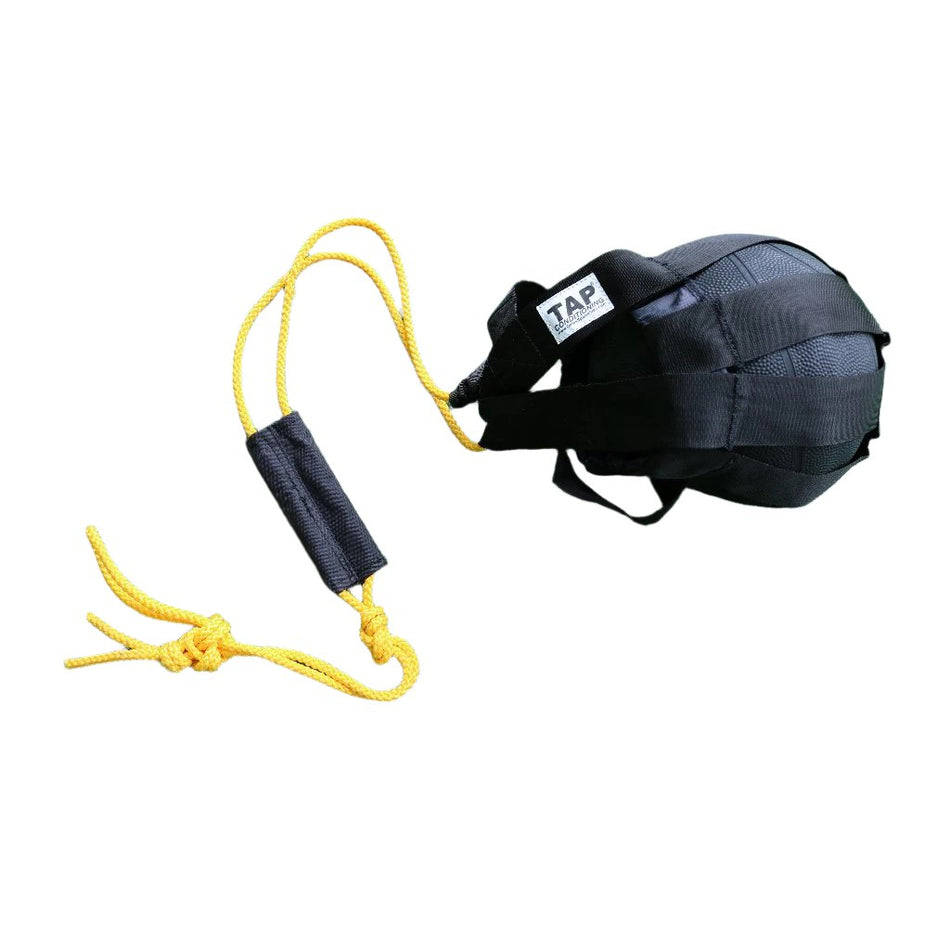
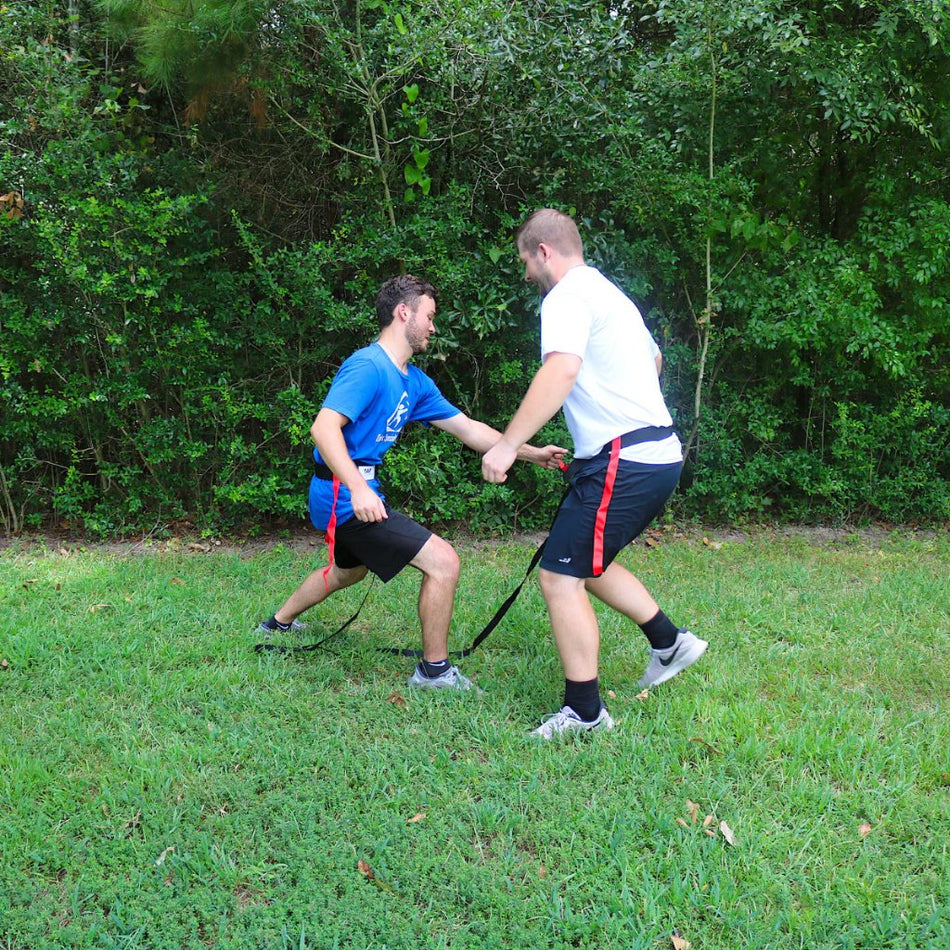
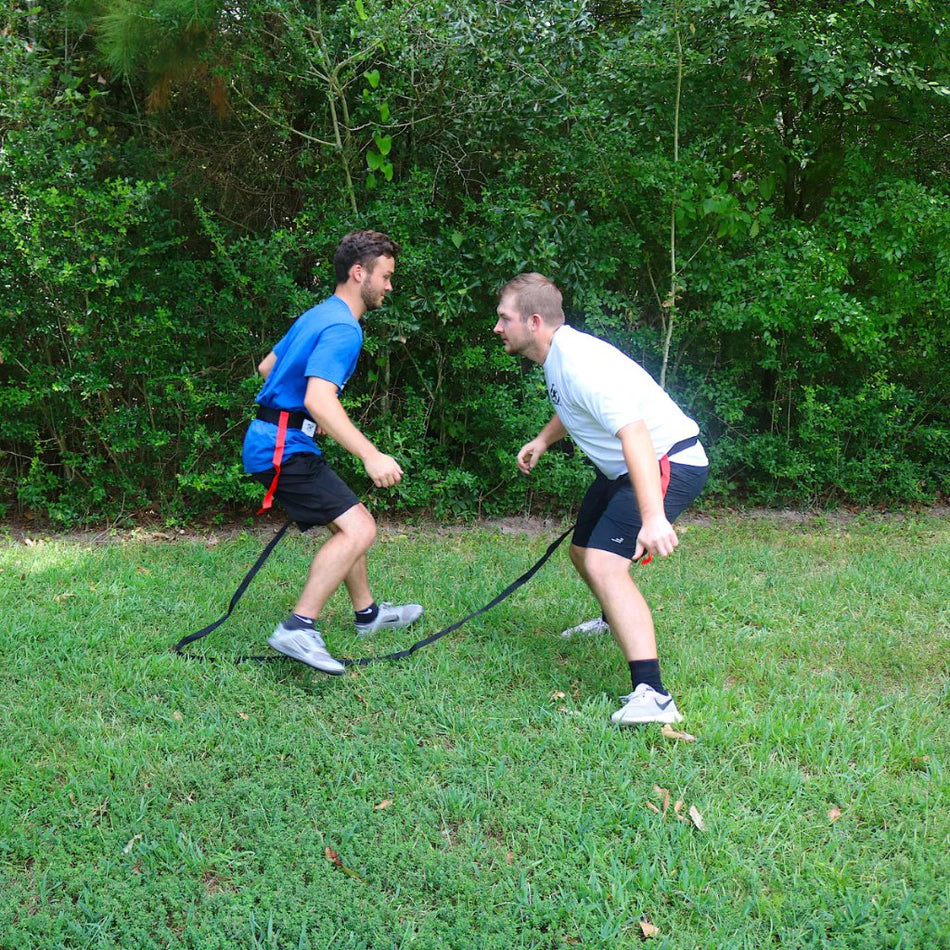
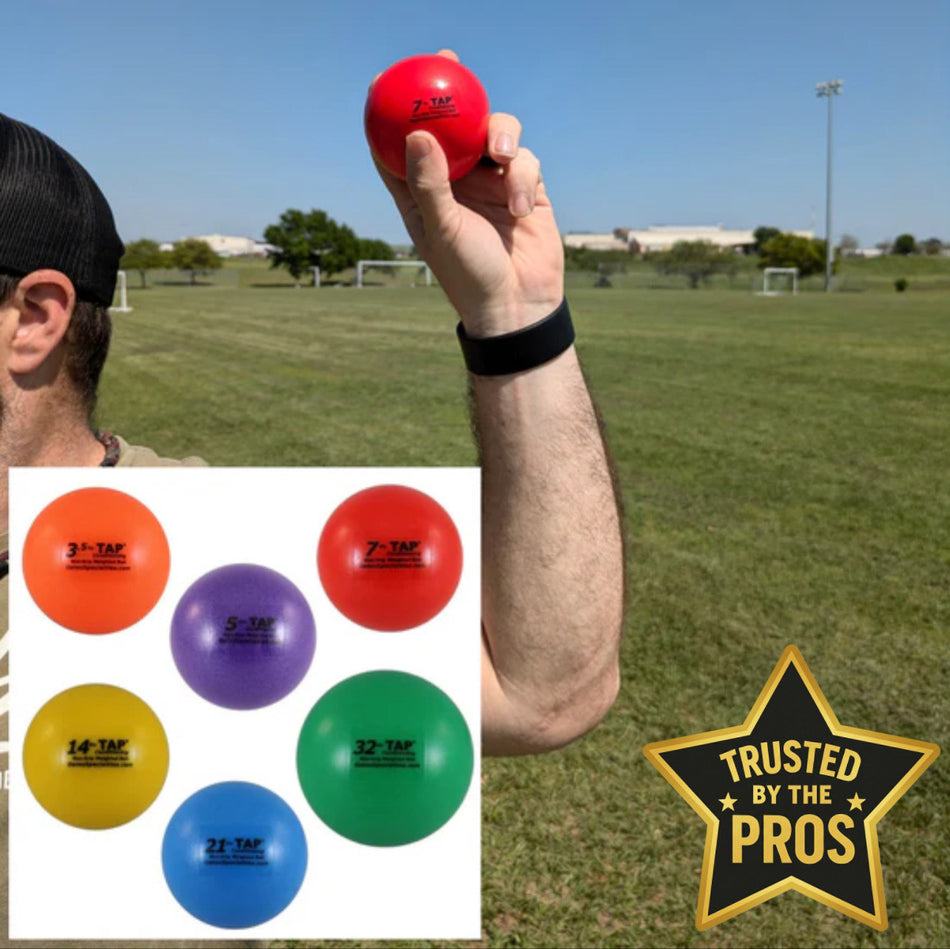
Oates Specialties was founded in 2003 — the same year the coaching community described in this article was beginning to crystallize around the principles Waterloo would later model. The company grew out of one father’s attempt to build better tools for his son’s training, in direct response to what the coaches in that ecosystem needed and couldn’t find. Over twenty-plus years, those tools were developed in collaboration with many of the coaches and practitioners whose work this article describes. Their credibility rests on the principles they express, not on the study that confirmed those principles. A connection implement that rewards linked, sequenced movement is useful because connected sequencing is sound. A variable-load tool that forces the trunk to organize around an unstable mass is useful because trunk control and adaptability are the qualities the science keeps pointing to.
The tool is an expression of the principle. It is not a substitute for coaching. And it is not, itself, the thing the simulation confirmed.
There is a line that has to hold in both directions. Overclaim toward one side and you are selling miracle devices the data never tested. Lean too far toward the other and you imply that good training is intuition the science hasn’t caught up to yet — which quietly devalues the very evidence base that gives the approach its credibility. The accurate position is narrower and stronger than either: the methods are aligned with the evidence, informed by the early science that first mapped the forces, and confirmed by the modeling that began to map the solutions. They were ahead of the proof. They were never ahead of science itself.
What It Means When the Science Finally Catches Up to the Coaching
There is a version of this story that flatters coaches and dismisses scientists. It is the wrong version.
The researcher who declined to endorse weighted balls without data was being responsible, not timid. The biomechanist who said one comeback proves nothing was right. And the coaches who kept training toward efficiency before anyone could model it were not oracles defying the establishment. They were curious people making the oldest bet in applied work — that something visible and repeatable is probably real, even before you can show your math.
What is worth celebrating is the moment the two postures meet. Not one side beating the other. The handshake. The slow, unglamorous process by which a why not becomes a here’s why, and a result you could see becomes a mechanism you can explain.
The Waterloo team has said they hope the same modeling that describes a professional’s elbow load can one day be used to teach more efficient deliveries to children — so that the next generation learns to organize movement well before the bill for inefficiency comes due. That is the quietly hopeful turn beneath all of this.
Think of the kid who gets the explanation first. Twelve years old, learning to sequence through his delivery and stay connected — not because a screen told him to copy a big-leaguer’s pose, but because someone built him a training environment grounded in what the science now confirms. He won’t know he’s standing on thirty years of argument between the field and the lab. He’ll just know the ball is jumping, and his elbow feels fine.
That is what the proof catching up actually looks like.
Every source below was retrieved and reviewed during the research and development of this article. URLs are provided for independent verification. Where a primary journal article sits behind a paywall, an accessible secondary source is also listed.
The Waterloo Study — Primary Research
1. Attias, C. E., Uchida, T. K., Inkol, K., McPhee, J. (2026). “Musculoskeletal modelling and predictive simulation of baseball pitching to improve performance and mitigate injury using forward dynamics and optimal control.” Multibody System Dynamics.
https://link.springer.com/article/10.1007/s11044-026-10143-y
The primary peer-reviewed source. Describes the OpenSim forward-dynamic model, the optimal-control framework, and the key finding that faster pitches in the simulation exhibited greater contralateral trunk tilt and higher arm slot. Also discloses that Attias and Inkol were employed by the Seattle Mariners at time of publication and that the Mariners work was unrelated to the study.
2. University of Waterloo News. “Throwing smarter, not softer: How baseball pitchers can protect their elbows.” (2026)
https://uwaterloo.ca/news/media/throwing-smarter-not-softer-how-baseball-pitchers-can
Institutional summary. Source for the Attias “confirmed” quote, the arm-slot and torso-tilt findings, the Mariners affiliation, the Tyler Rogers comparison, the 110-mph cricket-bowler extreme, and the researchers’ stated hope of applying the model to youth development.
3. University of Waterloo Faculty of Engineering. “Modelling aims to save pitchers from common elbow injury.” (2026)
https://uwaterloo.ca/engineering/news/modelling-aims-save-pitchers-common-elbow-injury
Engineering-faculty summary. Source for the “digital skeleton” description and the two highest-demand variables: high arm slot and torso tilt away from the throwing arm.
4. EurekAlert! (AAAS). “Throwing smarter, not softer: How baseball pitchers can protect their elbows.” (2026)
https://www.eurekalert.org/news-releases/1129676
Press distribution of the institutional release. Source for the “untapped efficiency” framing and corroboration of the Rogers and 110-mph extremes.
5. Attias, C. E. (study author). ZoomInfo professional profile.
https://www.zoominfo.com/p/Cedric-Attias/4189040230
Corroborates Attias’s role as Biomechanist (Data Science) at the Seattle Mariners and his UW graduate research background.
Early Biomechanics — The Science That Pointed the Way
6. Fleisig, G. S., Andrews, J. R., Dillman, C. J., Escamilla, R. F. (1995). “Kinetics of baseball pitching with implications about injury mechanisms.” American Journal of Sports Medicine, 23(2), 233–239.
https://doi.org/10.1177/036354659502300218
The foundational ASMI paper quantifying forces and torques in the pitching delivery. Establishes the valgus-torque baseline and ties elbow load to injury risk. The “forces were mapped, elbow was flagged” foundation for this article.
7. Journal of Shoulder and Elbow Surgery (2002). Relationship between throwing mechanics and elbow valgus.
https://www.sciencedirect.com/science/article/abs/pii/S1058274602464774
Source for the finding that shoulder abduction and internal-rotation torques together account for roughly 85 percent of elbow valgus load variance, controlling for height and weight. The “upstream clue” connecting Waterloo’s findings to ASMI’s prior work. Readers are directed to the original source for cohort and population details.
8. Driveline Baseball. “Young Arms and Curveballs: The Real Story Behind It All.” (2012)
https://www.drivelinebaseball.com/2012/03/young-arms-and-curveballs-the-real-story-behind-it-all/
Supports the key epistemic caveat: a motion-capture lab cannot measure UCL tension directly and can establish only a correlation between computed joint torque and injury risk.
The Intellectual Lineage — Nyman, Wolforth, Strom, Sullivan, Bosch
9. Rosenthal, Ken. “Outsiders turned insiders are bringing a fresh, unconventional approach to pitching.” The Athletic, March 5, 2019.
https://www.nytimes.com/athletic/851106/2019/03/05/rosenthal-outsiders-turned-insiders-are-bringing-a-fresh-unconventional-approach-to-pitching/ (Subscription required. Excerpts verified from subscriber access.)
Primary source for Strom’s account of first meeting Nyman at a clinic at the University of Washington. Source for the Strom quotes and the Nyman aphorism. Also confirms Derek Johnson, Ron Wolforth, and others in the Nyman coaching tree.
10. Keown, Tim. “A Texas ranch is leading a pitching revolution — just ask the Astros / How the Texas Baseball Ranch saved Scott Kazmir.” ESPN The Magazine, September 2015.
https://www.espn.com/mlb/story/_/id/13519176/how-texas-baseball-ranch-saved-scott-kazmir-started-pitching-revolution
Primary narrative source for the Kazmir driveway scene, the “Well, that was 85” exchange, Wolforth’s biography, the corrugated-steel barn, and the early professional disdain.
11. Wolforth, Ron. “Give Credit.” Texas Baseball Ranch Blog. Originally published March 9, 2017; updated July 30, 2023.
https://www.texasbaseballranch.com/blog/give-credit/
Wolforth’s own published acknowledgment of his intellectual debts. Source for the exact language about Nyman, Bosch, Sullivan, and Strom. The definitive primary source for the intellectual lineage connecting all principals named in this article.
12. Baseball America. “The Man Who Started The Pitching Revolution: A Discussion With Paul Nyman.” April 2020.
https://www.baseballamerica.com/stories/the-man-who-started-the-pitching-revolution-a-discussion-with-paul-nyman/
Documents Nyman’s late-1990s introduction of key concepts and lists the coaches who studied under him and changed their perspectives.
13. Crowley, John. “The Perfect Strom.” Painting Corners Baseball, December 23, 2024.
https://painting-corners.com/painting-corners-mlb-baseball-all-articles/the-perfect-strom
Documents that Strom credits Nyman for his foundational view of pelvic loading and pitching-as-movement. Corroborates the Nyman-to-Strom intellectual transfer.
14. Eisenmann, Joe. “The Rotational Revolution: How Paul Nyman Re-Engineered Pitching.” Substack, April 2025.
https://joeeisenmann.substack.com/p/the-rotational-revolution-how-paul
Frames Nyman as the “architect of the Matrix” in pitching development. Corroborates the Nyman lineage and its reach into modern pitching culture.
15. University of Washington Athletics. “Ken Knutson Head Coaching Record.”
https://gohuskies.com/news/2013/4/18/208217890.aspx
Documents Ken Knutson’s tenure as University of Washington head baseball coach from 1993 through 2009, confirming he was active during the period when the UW clinic took place.
16. Sullivan, Randy. “Serendipity: The Birth of SAVAGE Training.” Florida Baseball ARMory Blog.
https://floridabaseballarmory.com/serendipity-the-birth-of-savage-training/
Sullivan’s first-person account of his 2014 Frans Bosch encounter, the opening line, and the intellectual disruption that followed. Source for the Bosch hotel-lobby scene and the six-times-read book detail.
17. Sullivan, Randy. “Sullivan! Get Off The Field!” Florida Baseball ARMory Blog.
https://floridabaseballarmory.com/sullivan-get-off-the-field/
Sullivan’s personal genesis: The Citadel, Air Force service, Army-Baylor physical therapy degree, private practice, and coaching his sons to the collegiate level. Establishes the PT-first foundation of his approach.
18. Overhead Athletics Podcast. “Ep5: Randy Sullivan MPT, CSCS — Motor Learning, Coaching Pitching, and Developing High Level Athletes.” September 10, 2020.
https://youtu.be/Fz6Smj69sq0
Primary audio source for the 2008 Sullivan conversion scene. Contains Sullivan’s account of attending a Texas Baseball Ranch camp and his reaction: “I just hadn’t really applied the physical therapy part to the baseball player. I was treating it as two different worlds.”
19. Perfect Game USA. Wolforth Throwing Mentorship series.
https://www.perfectgame.org/articles/View.aspx?article=23523
Documents Wolforth’s constraint-based, anti-positional-cue coaching method in his own published voice. Corroborates the post-Nyman coaching philosophy described in this article.
The Kazmir Comeback — Additional Sourcing
20. MLB.com. “Kazmir falters against former team as slide continues.” 2013.
https://www.mlb.com/news/indians-starter-scott-kazmir-falters-against-angels-as-slide-continues/c-56449760
Confirms Kazmir’s June 15, 2011 release date from the Angels and corroborates his return to MLB with Cleveland as part of the post-Ranch comeback arc.
21. Tampa Bay Times. “Kazmir makes Indians’ rotation.” March 26, 2013.
https://www.tampabay.com/archive/2013/03/26/kazmir-makes-indians-rotation/
Corroborates Kazmir’s return to MLB with Cleveland as part of the post-Ranch comeback arc.
22. Oates Specialties LLC. “About Us.”
https://oatesspecialties.com/pages/about-us
The company’s published account of its founding: Brian Oates’s 2001 introduction to Ron Wolforth, Robert Oates’s recognition of the training philosophy’s value, and the 2003 founding of Oates Specialties in direct response to the equipment needs of the coaching ecosystem described in this article.
About This Analysis
Created by the Oates Specialties team led by Robert Oates, M.Ed., Founder
Editorial oversight by Gunnar Thompson, BS, CSCS, General Manager
Certified Strength & Conditioning Specialist | Biomechanics Specialist
June 2026
Complete Credentials
ROBERT OATES, M.Ed., Founder: Founded Oates Specialties in 2003. Master of Education degree. Provides strategic direction for educational content and athlete development philosophy.
GUNNAR THOMPSON, General Manager: BS Kinesiology (Clinical Exercise Science). CSCS (NSCA), PES (NASM), CPPS certifications. Technical authority on biomechanics and performance science. Conducts review of all educational content for scientific accuracy.
Questions or corrections: gunnart@oatesspecialties.com
© 2026, Oates Specialties LLC