The Mid-Window Checkpoint
A practical guide to re-running the audit, staying on plan through the holidays, and choosing the next step.
From Fall to Opening Day | Oates Specialties
November 25, 2026
Executive Summary
The audit chose a starting point and named one priority gap. The checkpoint asks whether the athlete is on track.
It comes after fall ball, as the work moves into winter. It asks about results, not about how much he threw. Did his command improve? Is he throwing harder for longer? Can he bounce back across multiple days? Did the priority gap shrink?
If those answers are on track, stick with the plan. If they are not, alter the plan. The staff may also find that the athlete changed or that his role did, and the plan has to follow.
The clock is shorter now. Most seasons start in January. An altered plan has fewer weeks to work, so make the call at the checkpoint. The holidays are not time off from the plan. They are weeks of planned work.
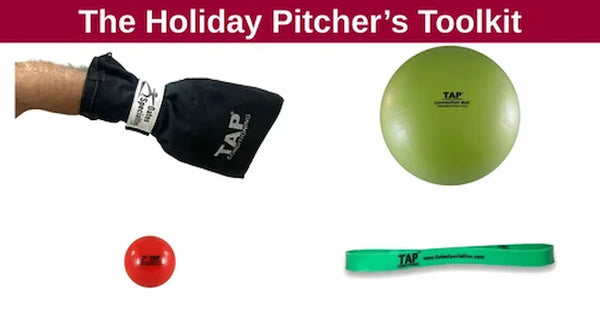
That is why Oates Specialties put together the Holiday Pitcher’s Toolkit. It gathers portable tools for throwing and warming up at home, in a hotel room, or in a garage. The tools do not shorten the body’s timeline. They keep planned work within reach.
The checkpoint is not a pass-or-fail test, a diagnosis, or clearance to throw.
Find Your Answer
Answer the question closest to what you need right now, and jump straight there.
- “What is the checkpoint, and when does it happen?” → Jump to: 1. What the Checkpoint Is
- “How much time is really left before the season?” → Jump to: 2. The Clock Is Shorter Now
- “How do I keep throwing through the holidays?” → Jump to: 3. Throwing Through the Holidays
- “What do I re-check at the checkpoint?” → Jump to: 4. Re-Running the Audit’s Tests
- “How do I decide whether to stay the course or alter the plan?” → Jump to: 5. Stay the Course or Alter the Plan
🎧 Prefer to listen? Audio version of this article:
Scope and Safety
This guide is for team coaches, private instructors, academies, and development staffs working with high-school-age and college baseball players. Athletes and parents can use it to prepare for the conversation. The sample block remains an example, not a prescription. The athlete’s staff makes the actual assignment.
Follow the rules that apply to the player, including his league’s and program’s policies. Honor any restriction from a qualified health professional. This guide is not rehabilitation, diagnosis, or medical clearance. Stop throwing for concerning symptoms and refer the athlete.
1. What the Checkpoint Is
The Audit started the plan. The checkpoint keeps the plan honest.
Here is the path so far. The audit set where each pitcher began and named one priority gap. Fall work followed. How Much Should a Pitcher Actually Throw? gave sample plans for building back up.
The checkpoint comes after fall ball and marks the move into winter. It asks about results, not about how much he threw. Did his command improve? Is he throwing harder for longer? Can he bounce back across multiple days? Did the priority gap get smaller?
If the answers are on track, stick with the plan. If they are not, it is time to alter the plan. Time is shorter now, so the change should happen at the checkpoint.
Things change over a fall. The athlete may have changed. He may have grown, thrown more than recorded, or finished the fall tired. His role may have changed. He may now be expected to start, to relieve, or to pitch for the first time. Each change moves the target.
A pitcher with a light fall has little data. The checkpoint is his first real read. It shows where he still needs to improve, and he starts building right after it.
The checkpoint is not a pause. It takes one conversation and one page of notes.
2. The Clock Is Shorter Now
Count the weeks between today and the first tryout or game. For most high school and college teams, that date falls in January.
Many pitchers have fewer weeks than they think. The holidays take a large share of them. There is little room for time off from the plan.
That makes the holidays part of the plan. A holiday week is a planned work week. It may have a different space, a different schedule, and different tools. It still has a job. Section 3 covers it.
Building takes time for a mechanical reason. Each step up asks the body to adapt to a new demand. Muscle responds to throwing sooner than connective tissue does. A gradual build gives tissue time to adapt before the next demand arrives.
Changing one thing at a time is a useful habit, not a rule. It keeps the work moving. It also shows the staff what likely caused a problem if one appears. Suppose days, distance, and bullpen pitches all rise in one week. That clue is lost. Sometimes two things must change together, and judgment decides.
A short runway calls for clear choices. The staff can lower the first competitive expectation. It can simplify the plan. It can do both. It should not move faster than the results support.
Waiting is the other mistake. A pitcher who starts building a few weeks before the first game has no room to hold a week. Every week then carries more weight.
3. Throwing Through the Holidays
The holidays close facilities, scatter teammates, and move families across the country. They also fall in the window where the plan matters most. They are weeks of planned work, not time off. The athlete still gets his work in and follows the plan he built with his coach.
The answer is to write the holiday weeks into the plan now. At the checkpoint, write one page for each holiday week. For each day, name the job, the space, and the tool. A day on the road then does not depend on a field, a partner, or a facility.
Rest days stay rest days. A tool in the bag does not change a day the plan calls for no throwing.
Oates Specialties put together the Holiday Pitcher’s Toolkit for this situation. It brings practical options for home and travel into one package:
- TAP® Baseball Training Sock. The athlete throws the ball and lets go of it. The ball travels a short way and hits the end of a canvas bag attached at his wrist. He needs room for the full motion and for the sock to move freely. A hallway, bedroom, garage, or yard can work. The sock does not train command, because the ball does not fly to a target.
- TAP® Max-Grip Weighted Ball, 7 oz. A companion for sock tasks that call for added weight. The coach chooses the weight, the effort, and the number of throws.
- TAP® Connection Ball. A physical cue for a movement the coach has assigned. The athlete blends throws with it into throws without it. It deflates for packing.
- TAP® Exercise Band, green. A flat loop that packs easily. It supports warm-up and activation work before throwing.
- KHAOS® Shoulder Shaker (optional upgrade). A handheld, water-filled tool whose load shifts as the athlete moves. It fits a warm-up before throwing and a recovery routine afterward. Empty and deflate it to pack.
The Toolkit costs $44.90. It includes the TAP® Baseball Training Sock and TAP® Connection Ball. A 7 oz Max-Grip ball and a green band come at no added cost. The next-level kit costs $114.85. It adds the KHAOS® Shoulder Shaker and the other five TAP® Exercise Bands. Prices exclude tax and shipping.
The tools do not shorten the body’s timeline. They make planned work reachable on days when the usual setup is not. Count sock throws as throwing work. Keep the arm-care routine from the companion guide going through the holidays, and pack what travels.
| On the holiday schedule | A practical option |
|---|---|
| A planned throwing day with no partner or field | A sock session in a clear area, with the same job and count as planned |
| A coach assigned a movement cue | The Connection Ball as taught, then throws without it |
| Travel limits equipment | Pack the band and a deflated ball. The sock fits a small bag |
| The plan calls for rest | Keep it a rest day |
4. Re-Running the Audit’s Tests
The audit ran three tests. Run each one again. This time, ask about results.
Test 1: The four questions. The first-day answers were estimates. Now the staff can compare.
| Audit question | The checkpoint's version |
|---|---|
| What has he done? | Did the planned work get done, including outside throwing and the holiday weeks? |
| What can he repeat now? | Is he throwing harder for longer? Does he bounce back across multiple days? Did his command improve? |
| What will he need later? | Has his role changed? Does his progress match what that role demands? |
| How much time do we have? | Recount the weeks to the first tryout or game. Count the holiday weeks as planned work weeks. |
Here is what on track looks like for each result:
- Command. On the same task as the audit, he hits his intended spot more often.
- Harder for longer. He holds high intent deeper into a session than he did at the audit. If the staff measured velocity or other output then, compare it the same way.
- Bouncing back. He repeats quality on later days in the same week. Next-day reports match what the staff expected.
- The priority gap. The one gap the audit named is smaller.
Test 2: Known, unknown, changed. Name three things for each athlete.
- Known. What the staff can rely on now. After a fall of logged work, this list should be longer.
- Unknown. What still needs an answer. A tournament weekend with no log entry is an unknown.
- Changed. What differs from the audit. Growth, a new role, a new lesson, a trip, or an arm that feels different all count.
Do not invent an explanation for a change. Name it, and do not pretend the original plan is unaffected.
Test 3: Did the plan hold up? The audit asked four questions of the first week. Ask them of the whole fall.
- Did he complete the planned work without a meaningful change from normal?
- Did he repeat the assigned task with similar quality, not a sharp decline?
- Did his next-day report match what the staff expected?
- Did outside throwing, travel, lessons, or schedule changes make the original plan inaccurate?
If one changed meaningfully, do not assume the plan is still right.
Here is Oates Specialties’ example of a completed checkpoint.
| Question | At the audit | At the checkpoint |
|---|---|---|
| Command | 5 of 10 to the intended spot | 7 of 10 on the same task |
| Harder for longer | High-intent throws faded after about 15 | He holds them through about 25 |
| Bouncing back | Tired the day after bullpens | Normal reports across several days in a week |
| Outside work | Unknown | One Saturday showcase, now recorded |
| Role | Reliever | The coach now expects him to start |
| Time | Eight weeks to the first game when the plan was written | Six weeks remain |
Command and recovery are on track, and holding intent is improving. The plan stays on those. The showcase moves from unknown to known once the staff learns how many pitches he threw. The role change moves the target. The staff keeps the plan and points the later weeks toward longer outings.
5. Stay the Course or Alter the Plan
If the athlete is on track, stick with the plan. If he is off track, find out why and change what needs to change.
Time is shorter now. An altered plan has fewer weeks to work. Decide at the checkpoint, not a few weeks later.
| If the answer is | What to do |
|---|---|
| On track across the questions | Stick with the plan and keep the work moving |
| Command did not improve | Give command work a larger share of the plan. The command guide explains the practice order |
| Not throwing harder for longer | Build what he can sustain first. Check recovery and outside work before adding intent |
| Not bouncing back | Lower the density of hard days. Check sleep, school stress, travel, and outside throwing. Hold until reports settle |
| The work is not getting done | Fix the cause, such as schedule, space, or equipment. Rewrite the holiday weeks |
| The role changed | Change the destination. Starter, reliever, and swingman builds differ |
| Pain or other concerning symptoms | Stop throwing and refer to a qualified professional |
When the athlete changed. Growth, illness, school stress, a new lesson, travel, or a different feel can change what he can repeat. The record shows it. A pitcher who is ahead of plan still builds in steps. Faster progress comes from a better starting point, not from stacking changes.
When the role changed. The audit’s ceiling is the demand of the role. A starter builds outing length and repeatability across innings. A reliever builds availability, quick readiness, and shorter intervals between appearances. A swingman needs parts of both. When the ceiling moves, the destination of the build moves with it. Staged live work comes later, in the ramp-up guides.
When time is short. A pitcher with few weeks left can set a lower first competitive target. Piling on changes to catch up makes the record harder to read.
When the fall was light. He has little data, so the answers set his baseline. He starts building right after the checkpoint. If he has barely thrown, he first holds at three easy days for a short time.
6. Practitioner Views: Wolforth and Sullivan
Practitioner perspective: not peer-reviewed proof. These views illustrate how experienced practitioners plan. They do not validate the tests above.
Ron Wolforth of the Texas Baseball Ranch describes planning with the end in mind. He cycles the work, fits it to the athlete, and sets priorities. That gives the checkpoint its shape. The plan has a destination, and each stage is checked against it.
Randy Sullivan of the Florida Baseball ARMory argues for an individualized offseason. He rejects the choice between shutting down and throwing as usual. His public work includes selected sub-maximal throwing as one option inside that plan.
The two agree on the core idea. Start from the athlete in front of you, keep a clear destination, and revise when new information arrives. Neither supplies a universal checkpoint test. The tests above are Oates Specialties’ own framework.
7. Notes for Athletes and Parents
Athletes.
- Count everything you throw during the holidays, including sock throws.
- Tell your coach if your role, schedule, or arm feel has changed.
- Keep rest days as rest days.
- Bring your log to the checkpoint.
Parents. You do not need to run the plan. Share what the staff may not see: lessons, showcases, travel, and recent growth. If you are choosing the Toolkit as a gift, ask the athlete or coach one question first. Would these tools help carry out work already in the plan? A gift does not need to promise velocity or a shortcut to opening day.
8. Safety Boundary
Persistent, sharp, unusual, worsening, or function-limiting pain belongs with a qualified professional. Existing restrictions lead the plan. A checkpoint is not clearance to throw, and no tool clears an athlete.
Where This Guide Fits
The audit chose the starting point. How Much Should a Pitcher Actually Throw? gave sample plans for building back up. This guide checks whether the athlete is on track as fall ends and winter begins. The ramp-up guides that follow bring the work closer to hitters, innings, and role-specific demands.
The larger framework is in How to Build a Fall Pitching Program.
Commercial Transparency
Oates Specialties sells baseball-training equipment, including the TAP® Baseball Training Sock, TAP® Connection Ball, TAP® Max-Grip Weighted Ball, TAP® Exercise Bands, and KHAOS® Shoulder Shaker. Texas Baseball Ranch and Florida Baseball ARMory run commercial training businesses and have business relationships with Oates Specialties.
Their guidance is included as attributed practitioner experience. It is not independent proof that Oates Specialties products or any system produces a result.
No product is required to run a checkpoint. The cited sources do not establish that an Oates Specialties product selects a workload, prevents injury, or clears an athlete to throw. Prices are from the Toolkit page at the time of writing and may change.
Appendix A. What the Research Does and Does Not Support
This is a focused, evidence-informed guide, not a systematic review. Nothing here guarantees a result. Only qualified health professionals diagnose injuries or clear a pitcher to throw.
| Topic | What the sources say |
|---|---|
| Re-checking the plan | Practitioners describe individualized planning that is revised as information arrives. No study tests a checkpoint like this in pitchers. |
| Counting all throws | In one study of 115 high-school starting pitchers, 42.4 percent of mound pitches fell outside the live-game count. Warm-ups and bullpens add up. |
| Home and travel tools | Product pages describe how each tool works. No study tests the Toolkit in pitchers. |
Where the evidence is thin. The three tests, the on-track questions, the one-change-at-a-time suggestion, and the decision table are Oates Specialties’ framework. They combine the audit and practitioner reasoning. Command, intent, and recovery are practical coaching measures. No study validates them as a set. They are not tested protocols. The claim that muscle responds sooner than connective tissue comes from the series framework, not from a study of pitchers.
Appendix B. Annotated Bibliography
1. Oates Specialties. The Audit: What Pitcher Is Actually in Front of Me? (v1.3). From Fall to Opening Day.
Why it matters: source of the four audit questions, known, unknown, and changed, and the first-week checks re-run here. Use with care: Oates Specialties’ planning framework. The guide itself states it is not a research-derived formula, medical examination, or clearance test.
2. Oates Specialties. How Much Should a Pitcher Actually Throw? (Edition 2.0). https://oatesspecialties.com/blogs/education-hub/how-much-should-a-pitcher-throw
Why it matters: source of the sample plans and the light-fall path. Use with care: examples, not tested universal prescriptions.
3. Oates Specialties. How to Build a Fall Pitching Program. https://oatesspecialties.com/blogs/education-hub/how-to-build-a-fall-pitching-program
Review level: search excerpt of the page reviewed. The muscle and connective-tissue timing point comes from the Holiday Pitcher’s Toolkit’s description of this page. Why it matters: frames the preparation window as building capacity before competition. Use with care: a working framework, not a formula or a fixed adaptation deadline.
4. Zaremski JL, et al. Unaccounted Workload Factor: Game-Day Pitch Counts in High School Baseball Pitchers: An Observational Study. Orthopaedic Journal of Sports Medicine. 2018. DOI: 10.1177/2325967118765255. https://pmc.ncbi.nlm.nih.gov/articles/PMC5894908
Review level: abstract and university summaries reviewed. Why it matters: shows that warm-up and bullpen pitches add substantially to game pitches. This supports counting all throws. Use with care: North and Central Florida starters in the 2017 season. It gives no individual limit.
5. Wolforth R. Six Elite Performance Training Concepts. Perfect Game. https://www.perfectgame.org/Articles/View.aspx?article=22560
Review level: carried from the Holiday Pitcher’s Toolkit’s source review. Why it matters: practitioner source for planning with the end in mind, cycling, customization, and prioritization. Use with care: practitioner interpretation with no outcome data.
6. Sullivan R. Shut It Down Or Keep Throwing? Maybe There’s an Alternative. Florida Baseball ARMory. https://floridabaseballarmory.com/?p=3674
Review level: page text reviewed in the previous edition’s review. Why it matters: practitioner source for an individualized offseason that can include selected sub-maximal throwing. Use with care: an essay with no outcome data. It is not a universal direction.
7. Oates Specialties. Holiday Pitcher’s Toolkit, with product pages for the TAP® Baseball Training Sock, TAP® Connection Ball, TAP® Max-Grip Weighted Ball, TAP® Exercise Bands, and KHAOS® Shoulder Shaker. https://oatesspecialties.com/pages/holiday-pitchers-toolkit, https://oatesspecialties.com/products/baseball-training-sock, https://oatesspecialties.com/products/connection-ball, https://oatesspecialties.com/products/max-grip-weighted-ball, https://oatesspecialties.com/products/exercise-band, https://oatesspecialties.com/products/shoulder-shaker
Review level: the Toolkit Word draft reviewed. Why it matters: describes how each tool works, its travel features, and the campaign prices. Use with care: manufacturer descriptions and promotional pricing, not research.
About This Analysis
Created by the Oates Specialties team led by Robert Oates, M.Ed., Founder
Editorial oversight by Gunnar Thompson, BS, CSCS, General Manager
Certified Strength & Conditioning Specialist | Biomechanics Specialist
November 2026
Complete Credentials
ROBERT OATES, M.Ed., Founder: Founded Oates Specialties in 2003. Master of Education degree. Provides strategic direction for educational content and athlete development philosophy.
GUNNAR THOMPSON, General Manager: BS Kinesiology (Clinical Exercise Science). CSCS (NSCA), PES (NASM), CPPS certifications. Technical authority on biomechanics and performance science. Conducts review of all educational content for scientific accuracy.
Questions or corrections: gunnart@oatesspecialties.com
© 2026, Oates Specialties LLC