


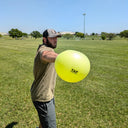
TAP® Connection Ball® – Inflatable Training Aid for Improved Arm Care & Movement Efficiency
$8.95
Ships from Huntsville, TX
In Stock
60-day limited warranty
Questions? 936-295-4459
Ordering for a team or facility?
Get volume pricing and help choosing the right tools for your players.
Ask me anything about this product
Sizing · use cases · technique · shipping — instant answers
Ask about TAP® Connection Ball® – Inflatable Training Aid for Improved Arm Care & Movement Efficiency — how to use it, what athletes it fits, sizing, or how it compares to other tools we make. Answers are focused on this product.
Innovating since 2003
Family-owned, Huntsville TX
Talk to the team
Real specialists, not a call center
Made for daily program use
Designed for continuous reps, every day, every season
100+ implements, organized by goal
Arm care, velocity, strength, and recovery
About This Product
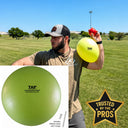
A 12-inch inflatable ball placed between body segments to expose disconnections in real time — if the sequence breaks, the ball drops. If it stays, the movement was connected.
The TAP® Connection Ball is an inflatable constraint trainer that sits between key body segments to expose disconnections in throwing, hitting, and rotational movement as they happen. A textured outer finish helps it stay in place even when arms or hands are sweaty, while soft, constant pressure gives athletes instant tactile feedback on whether they are staying connected and efficient — or leaking energy through early casting (an arm path that swings wide or extends too early before the throw) or off-line arm paths.
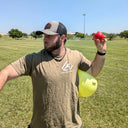
- Inflatable 12-Inch Constraint That Monitors Connection — Tucked between the arm and torso or into the throwing-elbow crease, the ball stays in place if movement stays connected. If the athlete separates too early, opens the elbow too wide, or lets the arm path wander, the ball drops — making the disconnection impossible to miss.
- Textured Surface for Reliable Contact Under Sweat — A textured finish instead of a slick skin makes loss of contact reflect a real change in movement, not just moisture.
- Coach-Adjustable Size for Any Athlete — Add or remove air to change effective diameter within roughly a 9–12 inch range — one tool fits youth through professional body types without separate implements for each level.
- Targets the “Feel vs. Real” Gap — Many athletes believe they are staying connected even when video shows otherwise. The ball’s soft pressure gives the nervous system a clear signal on every rep — no camera required.
- Constraint-Led Design That Lets Movement Self-Organize — A constraints-led approach means shaping training by adjusting simple boundaries so the body discovers better movement solutions instead of being micromanaged with verbal cues. The Connection Ball sets that boundary and lets the athlete find the solution.
- Cross-Positional for Pitchers, Hitters, and Catchers — Pitchers feel a more connected arm action; hitters stabilize their trunk; catchers trim long, looping arm paths on exchanges. One tool, three positions.
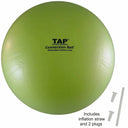
- Lightweight and Portable — ~5 oz, ships deflated with two plugs and an inflation straw. Fits in pen bags, bullpen bags, cages, and travel kits without adding bulk.
What Is It?
The TAP® Connection Ball is a small, neon-yellow inflatable training ball used as a physical constraint to teach connected, efficient movement in throwing and other rotational skills. When placed between specific body segments, it acts as a live monitor: if the athlete stays synchronized, the ball remains tucked; if the sequence breaks, the ball falls or shoots forward.
Compared with using only video or verbal cues, the Connection Ball gives athletes a simple physical task — keep the ball in place until it is time to release — that they can feel on every repetition, even without a camera. Compared with rigid tools that add heavy load, it uses light pressure and body-position constraints to promote healthier joint angles and smoother sequencing without significant stress.
How It Works
Three mechanisms behind constraint-led connection training
Managing Elbow Angles & Arm Paths
Holding the ball in the throwing-elbow crease encourages a roughly 90-degree bend during acceleration. This shorter lever reduces stress on the inner elbow while supporting a more direct arm path toward the plate rather than a long, looping cast that bleeds energy.
Front-Side Organization & Trunk Rotation
When used on the glove side or along the torso, the ball discourages the front half from yanking open or dropping early. Keeping that side quiet allows the hips and trunk to rotate against a firmer base — supporting better hip-to-torso separation (the timing gap where hips rotate before the trunk follows) and more directional energy into the throw.
Aligning Feel With Real
Athletes often think their motion is connected because it feels that way — even when video shows otherwise. The ball’s constant contact signal ties the athlete’s internal sense to what is actually happening, giving the brain more accurate information to build durable, high-quality movement patterns without relying on external cues.
Backed by Research
The Science of Constraint-Led Training
The TAP® Connection Ball itself has not been studied as a stand-alone device; its role is supported by broader work on constraints-led coaching and external-focus or tactile-feedback strategies, which can encourage more efficient patterns without overloading athletes with internal mechanical cues. Research supports constraint-based and perturbation-based training for improving movement quality and neuromuscular coordination.
Feel vs. Real
Tactile feedback on every rep closes the gap between what athletes think they are doing and what is actually happening — no camera or coach cue needed
3 Positions
Pitchers, hitters, and catchers all use the same tool in different joint pockets — one implement addresses connection across every skill in the lineup
Self-Organize
The constraint-led design lets the nervous system find a more efficient pattern without step-by-step instruction — fewer cues, more durable learning
Video Library
See It In Action
Click any thumbnail to play from the start — click any timestamp to jump to that moment.
2022
TAP® Connection Ball® — Promote Arm Health, Improve Movement Efficiency
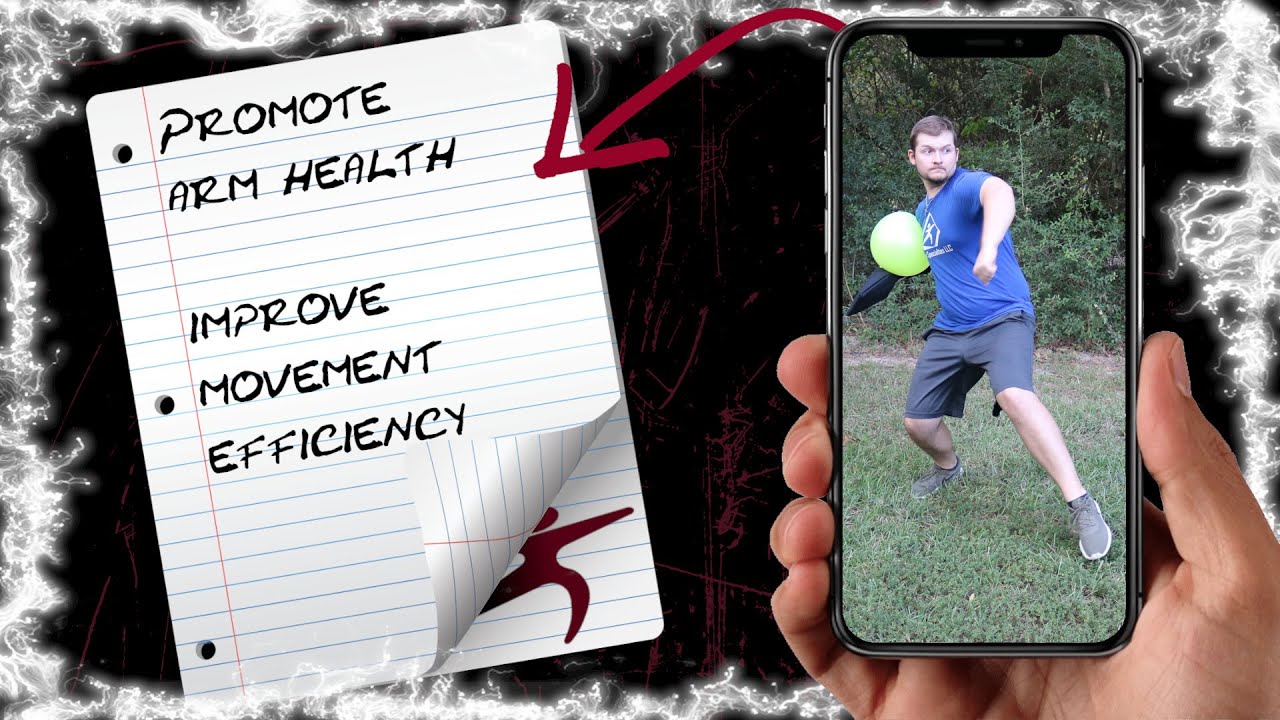
| Introduction — identifying the Connection Ball as a popular movement tool within athletic development. | |
| Primary design origins — engineered for throwing programs so athletes physically feel synchronization with the rest of their body. | |
| Tool evolution — expansion from throwing into hitting frameworks and then into catching routines. | |
| Sizing and modification — adding or removing air to fit any athlete’s body size or specific joint space. | |
| Dual inflation plugs — keeping the backup plug secure for high-volume travel and bullpen bags. | |
| Portability summary — low-tech, affordable training staple that fits in any bag. |
2020
Ron Wolforth — “Connection: A Critical but Overlooked Link to Improved Pitching Performance”

| Defining the Connection Paradigm — mechanical efficiency means maximizing velocity while reducing joint stress; data supporting a connected arm path. | |
| Anatomical Traps of Disconnection — forearm flyout and inverted W; high-speed video showing early arm separation forces isolated shoulder and elbow stress. | |
| Constraint-Led Approach — why verbal cues like “get your elbow up” create rigid movement; the 12-inch ball forces the brain to self-correct naturally. | |
| Glove-Side Integration — how a loose or dragging glove arm pulls the chest open too early, leaking power and causing throws to miss high and arm-side. | |
| Building a Daily Routine — blending constraint work with standard baseball throws; program mapping for youth vs. advanced athletes. |
2022
TAP® Connection Ball® — How We Have Seen It Utilized in Pitching, Hitting, and Catching
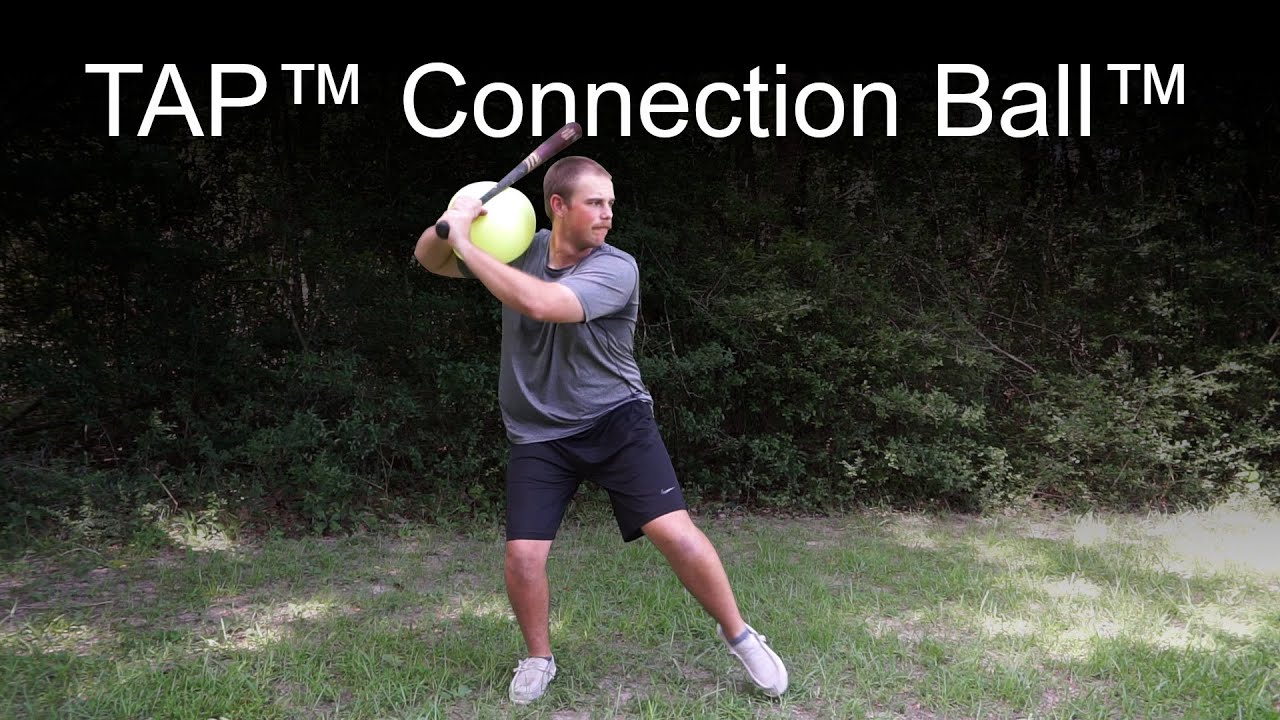
| Versatility opening — cross-positional application across multiple positions. | |
| Pitching origins — letting pitchers feel the throwing motion staying synchronized with torso rotation. | |
| Hitting Variation 1 (Hand/Shoulder Pocket) — ball between the rear shoulder and bat handle to keep the upper-body turn tight and compact. | |
| Hitting mechanics reward — natural palm-up/palm-down position at contact with both arms at a strong 90-degree angle. | |
| Hitting Variation 2 (Between the Thighs) — ball between the legs above the knees to help hitters shift weight cleanly and transfer it forward. | |
| Lower-body mechanics — ball forces weight into the back hip during the load, then rewards a firm front-side brace at contact. | |
| Catching Variation 1 (Glove-Side Deflection) — ball on the glove side to practice smooth extension, flexion, and pulling pitches back to center mass. | |
| Catching Variation 2 (Throwing-Arm Exchange) — ball in the throwing-arm crease during machine-fed drills to tighten the transfer path and lower pop times. |
Product Details
How to Use It
Pitching — throwing-arm: Ball in the throwing-elbow crease, elbow at roughly 90 degrees, held lightly. Low-to-moderate-intensity throws — a connected throw sends the ball forward; early push or cast sends it off-line.
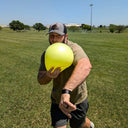
Pitching — glove-side bracing: Ball between the glove-side forearm and ribs. Keep gentle contact until front-foot strike — discourages the glove side from swinging wide or dropping and helps create a solid front side to rotate against.
Catchers — exchange work: Ball in the throwing arm during receiving drills, moving from glove to ear. If the path sweeps long, the ball shifts or drops — teaching a shorter route for quicker pop times (time from pitch hitting the mitt to ball reaching the fielder).
Hitters — trunk organization: Ball along the rear arm or between arm and torso during rehearsal movements. Gives a simple boundary encouraging a more stable base and synced upper–lower-body rotation without forcing a rigid pattern.
Variant & Selection Guide
| Variant | SKU | UPC | Includes |
|---|---|---|---|
| TAP® Connection Ball | MEB12 | 608938928962 | 1 coach-adjustable inflatable PVC ball with straw and two plugs |
~5 oz, neon yellow, ships deflated. Coaches running larger programs often keep multiple balls on hand for parallel pitcher, position player, and catcher stations. Diameter adjustable from roughly 9–12 inches via inflation.
Who This Is For
- Commonly used for pitchers who need to feel a more connected arm action and front side while protecting the elbow and shoulder from isolated, high-stress patterns.
- Commonly used for position players and catchers who want cleaner arm paths, quicker exchanges, and better trunk organization during throws.
- Commonly used for hitters and rotational athletes who benefit from simple connection constraints that keep the upper body and lower half working together.
- Commonly used for strength and skill coaches who prefer constraint-based, feel-driven drills over long lists of verbal mechanical cues.
We are not coaches. We do not provide coaching.
What This Implement Does NOT Do
- It does not replace a full throwing or hitting program; it adds a connection and movement-efficiency layer on top of existing skill and strength work.
- It is not a weighted ball or primary resistance tool; its purpose is feedback and organization, not adding significant load.
- It does not automatically correct mechanics; athletes still need quality drill selection, appropriate volumes, and clear intent for changes to stick.
- It is not designed to support body weight — should not be used as a stability ball or for standing, kneeling, or planking on top of the ball.
Technical Specs
| Product Name | TAP® Connection Ball |
|---|---|
| SKU | MEB12 |
| UPC | 608938928962 |
| Also Known As | Connect Ball, Inflatable Training Ball, Yellow Connect Ball, 12″ Movement Efficiency Ball |
| Nominal Diameter | ~9–12 inches, coach-adjustable via inflation |
| Material | Pliable PVC with textured surface |
| Inflation | Ships deflated; includes straw and two plugs |
| Weight | ~5 oz |
| Color | Neon yellow (color may vary by batch) |
| Training Focus | Arm health, front-side stability, kinetic sequencing, limb-trunk connection, movement-efficiency awareness |
| Environment | Bullpen, cage, field, or indoor facility — any space with room for low-to-moderate-intensity throwing or hitting rehearsal movements |
Safety and Youth Guardrails
Not a toy — not for games or recreational play. Not a load-bearing device — do not stand, kneel, or place weight on the ball.
Youth and growth-window guidance: Conservative volumes under supervision for rapid-growth athletes — bone growth can outpace tendon adaptation. Start with slow, low-intensity feel drills before more dynamic throws or swings.
- Not a toy: Training implement only — not for recreational use.
- Not a load-bearing device: Not designed to support body weight in any exercise.
- Rehabilitation use only under supervision: Drill selection and intensity must be directed by a licensed medical or rehab professional when used with injured athletes.
Frequently Asked Questions
How is the Connection Ball different from a regular ball?
It is a soft, inflatable constraint tool used between body segments to teach connection — not a ball for throwing or hitting by itself. Its job is to signal when an athlete stays linked or separates too early, on every rep without a camera.
Can the size be adjusted for different athletes?
Yes. Designed around a 12-inch class, it can be made smaller or larger within roughly a 9–12 inch range by adding or removing air — one ball fits youth through professional body types and different joint pockets.
Is this only for pitchers?
No. It began as a pitching tool but is now commonly used with hitters, catchers, and general rotational athletes to address front-side stability, trunk organization, and arm-path efficiency.
How hard should athletes throw when using the Connection Ball?
Most drills start at low to moderate intensity so athletes can feel connection and control first, then gradually progress toward higher effort only after patterns look and feel solid.
Does it replace video analysis?
It does not replace video, but it complements it by giving the athlete a constant physical signal on every rep — so the “feel vs. real” gap is smaller when they do review footage.
What is a simple starting drill for pitchers?
Place the ball in the throwing-elbow crease during short-distance throws and watch where the ball flies when released — forward toward the target indicates a more direct, connected arm path. Stay at low intensity until that pattern is consistent.
Questions before you buy? Call or Text Our Team at (936) 295-4459
Customer Reviews
What Customers Are Saying
Loading reviews…
No reviews yet for this product.
Be the first to review