

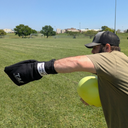


TAP® Baseball Training Sock – Wearable Throwing Aid for Arm Health & Velocity
$34.95
Ships from Huntsville, TX
In Stock
60-day limited warranty
Questions? 936-295-4459
Ordering for a team or facility?
Get volume pricing and help choosing the right tools for your players.
Ask me anything about this product
Sizing · use cases · technique · shipping — instant answers
Ask about TAP® Baseball Training Sock – Wearable Throwing Aid for Arm Health & Velocity — how to use it, what athletes it fits, sizing, or how it compares to other tools we make. Answers are focused on this product.
Innovating since 2003
Family-owned, Huntsville TX
Talk to the team
Real specialists, not a call center
Made for daily program use
Designed for continuous reps, every day, every season
100+ implements, organized by goal
Arm care, velocity, strength, and recovery
About This Product
Train arm deceleration and build a healthier throwing finish anywhere — no partner, no open field required.
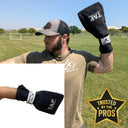
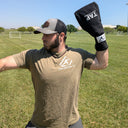
The TAP® Baseball Training Sock is a wearable baseball throwing sock that cinches around the wrist and holds a baseball or weighted ball inside the sleeve, so athletes can perform full-motion throws in small spaces without needing a partner or long throwing lane. As the ball reaches the end of the sleeve, it creates a controlled pull on the back of the shoulder, giving the decelerator muscles a repeatable, motion-specific challenge at the end of every throw.
- Partner-Free Throwing — Full-motion throws in any bullpen, cage, or indoor space when field time is not available.
- Deceleration Training — The closed sleeve loads the posterior shoulder on every rep, training the muscles that slow the arm after release.
- Short, Refined Sleeve — Keeps the ball close to the wrist so forces transfer into a rotational arc, not a straight-back shoulder tug.
- Comfort-Lined Interior — Soft inner liner prevents wrist and hand abrasion so athletes can train consistently without skin irritation cutting sessions short.
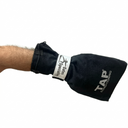
- Secure Loop-Through Strap — Cinches around the narrowest part of the wrist; internal finger loop acts as a true fail-safe backup.
What Is It?
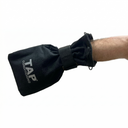
The TAP® Baseball Training Sock is a heavy-duty fabric sleeve with a soft comfort liner, an external cinching strap, an internal safety finger loop, and a closed end designed to catch the ball after release. The athlete slides a hand in, places a baseball or weighted ball at the far end, cinches the strap around the wrist, and makes a normal throw — the ball travels forward inside the sock and stops when it hits the closed end, creating a controlled deceleration load on the posterior shoulder with every rep.
Unlike hold drills where the athlete grips tightly to prevent the ball from leaving the hand, the TAP® Baseball Training Sock allows a true release while the fabric handles the catch — preserving more of the natural arm path and wrist action of a real throw.
How It Works
Three mechanisms that make every rep count
Grip-Free Release
Manual hold drills cause the forearm to tighten early and cut off the arm path. The TAP® sock lets the hand release naturally while the sleeve stops the ball, keeping the throwing pattern cleaner through the finish.
Rotational Load Path
The shorter sleeve keeps the ball close to the wrist at impact so momentum transfers into the body’s natural rotational arc — not a straight-back pull that stresses the shoulder in the wrong direction.
Posterior Shoulder Demand
At end-of-sleeve impact, the muscles on the back of the shoulder and around the shoulder blade must keep the upper arm centered in the socket while absorbing the ball’s momentum — a repeatable demand with every throw.
Backed by Research
The Science of Throwing Deceleration
Deceleration — the phase where the arm slows down after release — places significant demand on the posterior shoulder. Research on pitching biomechanics confirms that the deceleration phase places significant eccentric demand on the posterior shoulder structures, and broader upper-body training literature supports constraint-led and eccentric methods for developing those muscles. The TAP® Baseball Training Sock creates a repeatable, motion-specific environment for this training phase on every throw.
2
Named elite programs with confirmed long-term use — Florida Baseball ARMory and Texas Baseball Ranch®
~15″
Sleeve length — intentionally short to redirect ball momentum into a rotational arc rather than a straight-back shoulder pull
~10yrs
Of field use in high-level throwing programs, informing the refined sleeve length, strap system, and comfort lining in the current design
Video Library
See It In Action
Click a thumbnail to play from the start — or click any timestamp to jump to that moment.
2014
TAP™ Baseball Training Sock | The Pitching Sleeve
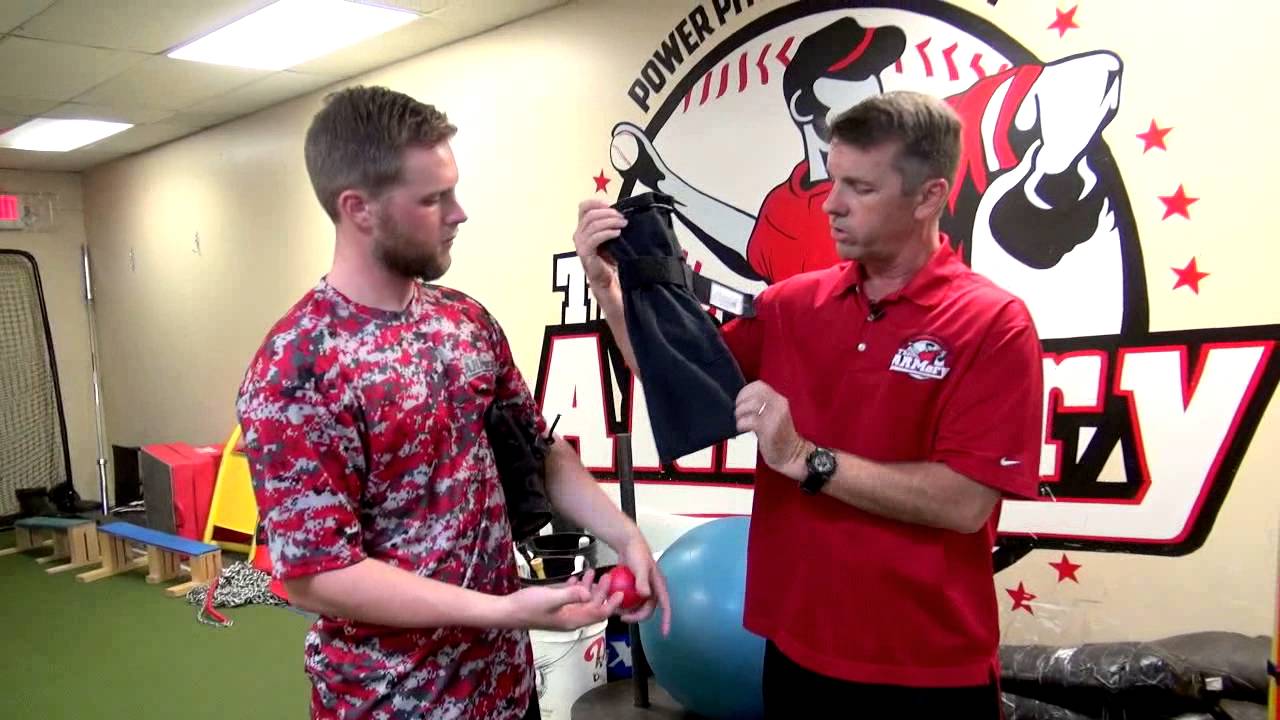
Chapter Guide — 6 Timestamps
| Randy Sullivan introduces the original Armory weighted ball hold program. | |
| Why manual ball holds fail — athletes grip too hard and alter natural movement patterns. | |
| Collaborative design solution engineered by Robert Oates. | |
| Visual demo — inserting the hand and using the internal finger loop. | |
| Comparison showing a more natural release and dynamic finish. | |
| Prehab, rehab, and building balance between accelerators and decelerators. |
2021
TAP™ Baseball Training Sock | How To Extend Product Life
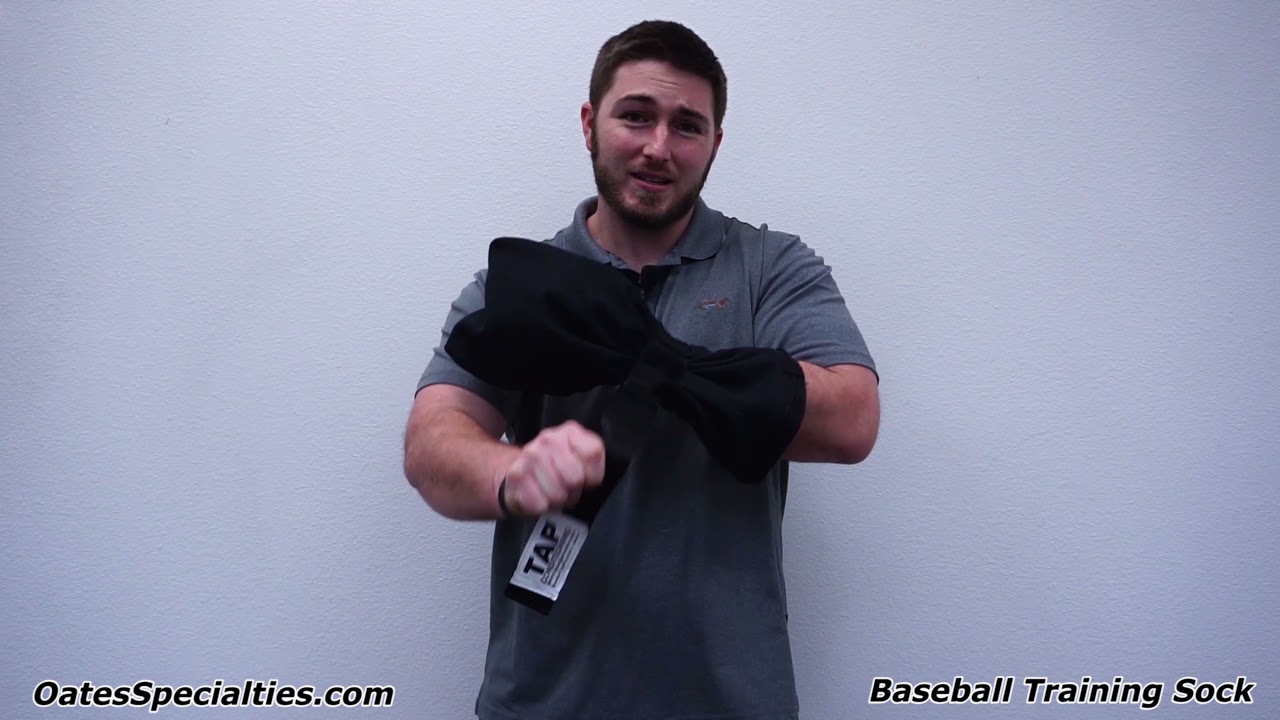
Chapter Guide — 5 Timestamps
| Authentic product ID — integrated label on the wrist strap. | |
| Internal loop adjustment — keep it slack, never under tension. | |
| Cinching technique to protect stitching near the attachment point. | |
| Ideal placement — narrowest part of the wrist. | |
| Comfort and youth adjustments — sweatbands, sleeves, or tape. |
2022
TAP™ Baseball Training Sock | Increase Velocity, Promote Good ‘Finish’
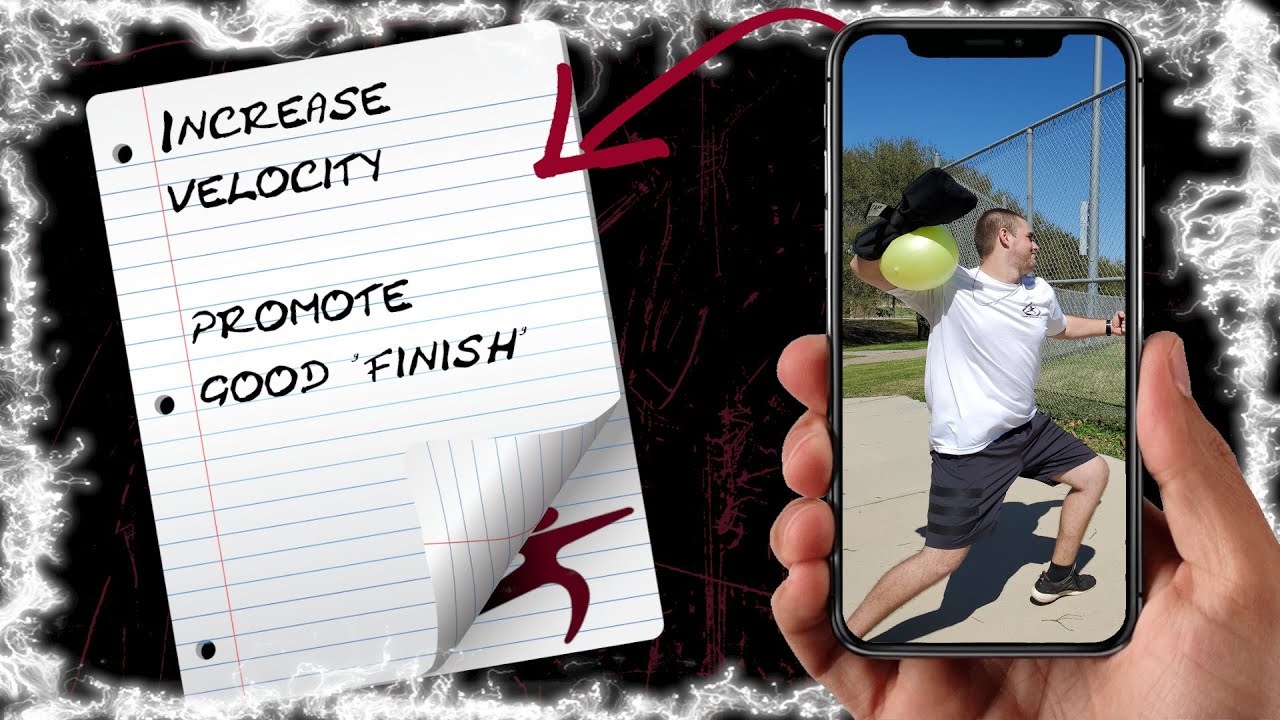
Chapter Guide — 6 Timestamps
| Environmental flexibility — indoor, cold weather, or tight spaces. | |
| Autonomy — no catch partner needed for high-rep drill work. | |
| Mechanical feedback: ball hitting sleeve end forces posterior cuff activation. | |
| Structural warning — overly long sleeves force linear deceleration and risk distraction injuries. | |
| Real-world scenarios — youth warm-ups, bullpen prep, between-innings transitions. | |
| Recovery cool-down science — enough stress to guide healing without micro-trauma. |
2023
NEW AND IMPROVED TAP® Baseball Training Sock
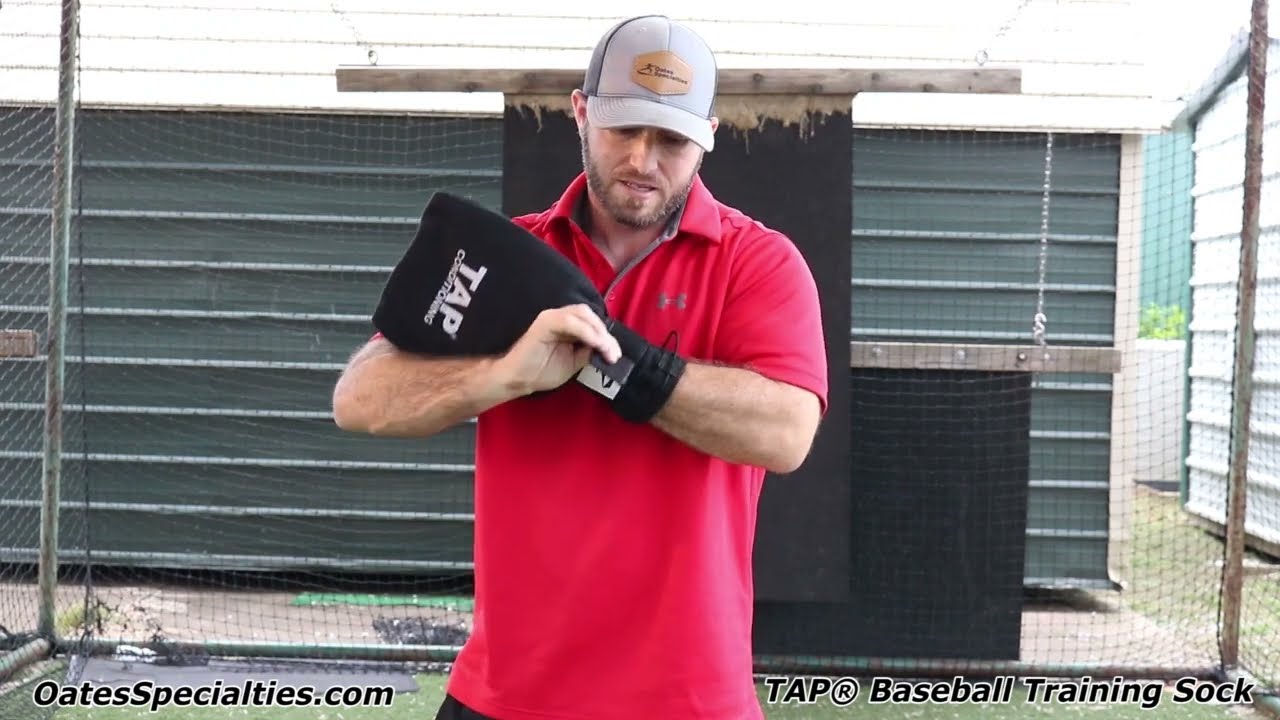
Chapter Guide — 5 Timestamps
| A decade of user feedback — wrist and hand abrasion from the original material. | |
| Redesign 1 — soft lining underneath the hook-and-loop closure. | |
| Redesign 2 — sleeve length reduction to eliminate sliding and forearm friction. | |
| Redesign 3 — loop-through directional tension system for a more secure fit. | |
| Internal finger loop is now optional due to enhanced strap security. |
Product Details
What It Is
The TAP® Baseball Training Sock is a heavy-duty fabric sleeve with a soft comfort liner, an external cinching strap, an internal safety finger loop, and a closed end designed to catch the ball after release. The athlete slides a hand in, grabs a baseball or weighted ball inside the sleeve, cinches the strap around the wrist, and makes a normal throw — the ball travels forward and stops at the closed end.
Unlike hold drills where the athlete grips tightly to prevent release, the sock allows a true release while the fabric catches the ball — preserving more of the natural arm path of a real throw. Unlike generic bag-style sleeves, it is built specifically for baseball-sized balls and baseball throwing mechanics.
How to Use It
Warm-up: 1–2 sets of 8–10 easy to moderate throws after a general warm-up. Smooth tempo, relaxed hands, no max effort.
Main block: 1–3 sets of 5–10 throws focused on arm action and how the shoulder slows the arm down, not pitch speed. Use 5–7 oz for most work; 9–16 oz only inside a structured, coach-designed weighted-ball program.
Light-day / post-outing: Lower-intensity throws to keep the arm moving and support blood flow without full-distance stress. Stop if mechanics change or any discomfort appears.
Variant & Ball Weight Selection
The current TAP® Baseball Training Sock is a single updated model. The outer strap cinches securely and fits most wrist sizes without requiring separate size options.
| Weight | Use & Supervision |
|---|---|
| 5 oz (regulation) | Pattern work, warm-up, youth — coach recommended |
| 7 oz | General deceleration training — coach recommended |
| 9–16 oz | Structured programs only — expert coach required |
| Up to 21 oz | Advanced use — heavier implements not recommended |
Who This Is For
- Commonly used for pitchers who need to keep throwing work going when space, weather, or partner availability make regular catch play difficult.
- Commonly used for position players who need a quick throwing option in bullpens, down the foul line, or between innings.
- Commonly used for high-school, college, and professional programs that integrate structured constraint tools into their throwing systems.
- Commonly used for older youth athletes with light ball weights and low volumes under direct coach or qualified adult supervision.
We are not coaches. We do not provide coaching.
What This Implement Does NOT Do
- It does not replace a complete throwing program, progressive distance work, or well-managed weekly workload.
- It does not guarantee velocity gains or injury prevention; outcomes depend on full-program design, total volume, and recovery habits.
- It does not train lower-body force production, mound command, or decision-making on its own.
- It is not a medical or rehabilitation device and should not be used as a stand-alone injury solution.
Technical Specs
| Product Name | TAP® Baseball Training Sock (Durathro® Sock) |
|---|---|
| SKU | BTS-2 |
| UPC | 608938929723 |
| Material | Heavy-duty fabric sleeve; soft inner comfort liner; external cinching strap; internal safety finger loop |
| Sleeve Length | ~15 inches |
| Product Weight | ~8 oz (empty) |
| Compatible Balls | 5 oz to ~21 oz baseball-sized |
| Variants | Single updated model; one size fits most |
| Environment | Indoor or outdoor — bullpens, cages, gyms, practice fields |
Safety and Youth Guardrails
Oates Specialties training tools are designed for athletes roughly 13 and older under coach or qualified adult supervision. Growth-window athletes should use conservative loading and monitor soreness at growth plates and tendon sites — bones can adapt faster than soft tissue during rapid growth. Stop immediately on sharp pain, numbness, or any change in normal arm action.
- Not a toy: A training implement for supervised athlete and coach use only.
- Not a rehabilitation device: Does not replace medical evaluation, treatment, or formal physical therapy.
Frequently Asked Questions
What ball weight should most athletes start with?
Most athletes start with a 5 oz baseball or a 7 oz training ball. Heavier balls (9–16 oz) should only be used inside a structured, coach-guided program; implements above roughly 21 oz are not recommended.
How does this differ from a resistance tubing or J-band routine?
Resistance tubing provides low-load, joint-friendly strength work in place. The TAP® Baseball Training Sock trains deceleration under actual throwing motion where the ball is moving and the arm must slow down under load. Complementary tools, not direct substitutes.
Can I use the sock every day?
Frequency depends on overall throwing volume and recovery. Many athletes use it several times per week for warm-up blocks, drill periods, or post-throw work — always inside a broader plan, not stacked on top of every throwing day by default.
Does it replace a long-toss or open-field throwing program?
No. The sock fills a specific gap — quality throwing work when space, partners, or weather make normal catch play unavailable. It does not replace a complete throwing program, progressive distance work, or well-managed weekly workload.
Questions before you buy? Call or Text Our Team at (936) 295-4459
Customer Reviews
What Customers Are Saying
Loading reviews…
No reviews yet for this product.
Be the first to review