Weighted Baseball Training: What the Research Actually Shows
The velocity findings have held up since 1960. Every explanation put to the test has come back unsupported. That gap is not a footnote — it is the reason this has to be an individual decision.
For coaches, athletes, and the families supporting them · With a technical appendix
The Story Behind Weighted Balls in Baseball
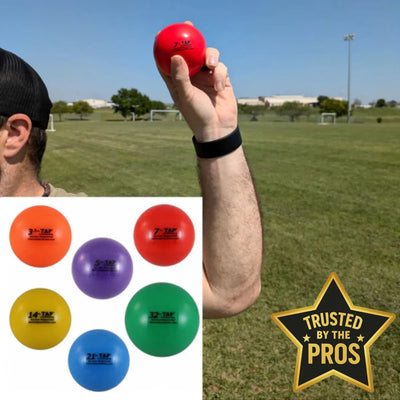
Athletes have been throwing weighted baseballs since at least 1960. Across six decades, study after study found the same thing: pitchers who train with balls lighter and heavier than regulation throw the regulation ball harder afterward. A peer-reviewed review in Sports Medicine in 2000, written by the research group at the American Sports Medicine Institute with Duke, gathered eleven training studies on the question and concluded that the data strongly supported the practice for increasing velocity with a regulation ball.
The explanation everyone gave was straightforward. A lighter ball lets the arm move faster, so it builds arm speed. A heavier ball makes the arm work harder, so it builds arm strength. That was the rationale behind sixty years of practice.
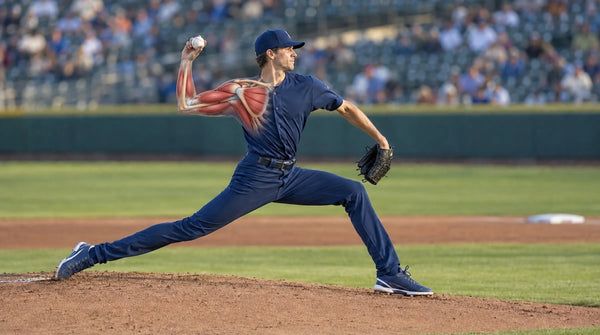
In 2017 a research team put it under motion capture, and both halves failed. The lighter ball did not move the arm faster — arm and trunk speeds were statistically identical to a regulation baseball. The heavier ball did not make the arm work harder — measured forces went down as ball weight went up.
Since then, the other candidate explanations have fared no better. So the practice carries decades of velocity findings and no working account of why.
We sell these, so here is where that leaves us.
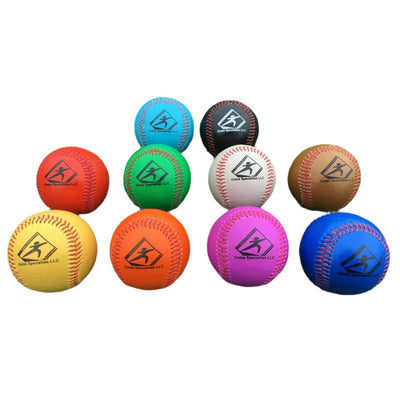
We can tell you how our weighted baseballs are made, because we have been to the factory and watched them being made. We know the construction, the materials, and how the weights are set. Those are the things a manufacturer should be able to answer, and we can answer them.
What we cannot tell you is what they will do for your athlete.
If we told you our weighted baseballs would make your athlete throw harder, we would be guessing. If we told you they carry no risk, we would be overstating what anyone actually knows.
What we can tell you is that weighted-ball training has produced velocity gains in study after study for more than sixty years, that nobody has yet explained why, and that the gap is exactly why this has to be an individual decision made with someone watching. We think the evidence supports careful, individualized use in the right hands — not blanket caution and not blanket enthusiasm — which is also where the two practitioners we work with have independently landed.
Everything below follows from that.
🎧 Prefer to listen? Audio version of this article:
01. Why an Unexplained Effect Changes What Anyone Can Promise
Medicine lives with this more often than people assume. Acetaminophen has been in medicine cabinets for generations, and its effect on pain and fever has been measured in study after study. There is still no settled account of how it produces that effect. Reviews describe several competing pathways and conclude that no single mechanism explains all of the drug’s actions.
Nobody concludes from that gap that the drug is useless. Nobody concludes it is harmless either. What they do is respect the dose — because when you cannot explain why something works, the dose is the thing you can still control.
The analogy only goes so far — a characterized drug and a training method are different things, and acetaminophen has decades of dosing research behind it that weighted balls do not. But the epistemic point holds: an effect can be real while its mechanism stays unsettled, and that uncertainty limits what can responsibly be promised rather than what can be used.
What Can’t Be Said
If someone understood why weighted balls raise velocity, the protocol could be written once and handed out: this weight, this many throws, this progression. That is exactly what does not exist. Without a mechanism, there is no general rule — which is why nobody can honestly tell you:
- Whether your athlete specifically will gain velocity
- How much is optimal, or which drill produces the benefit
- Whether a given protocol is safe for a given athlete
What Can Be Said
The velocity effect has been observed consistently across six decades, at the group level. In the range the biomechanics has actually measured — roughly 4 to 7 ounces — modest loads do not increase measured arm stress, and mechanics hold to within about a degree of a regulation delivery. And daily throw volume — not per-throw stress — is what predicted elbow injury in young pitchers.
Those three facts point to the same conclusion. When the mechanism is unknown, you manage what you can measure: volume, maturity, progression rate, and how the athlete responds. That is not a fallback position. It is the correct response to an unexplained effect, and it is where two of the most experienced practitioners in this field have also landed.
02. Where the Idea Came From
Weighted-implement training did not begin with baseball. The practice traces back to Soviet track and field decades earlier, where athletes threw lighter and heavier implements to train the throwing motion itself.
The baseball literature starts around 1960 and builds steadily: Egstrom, Logan and Wallis in 1960; Logan and colleagues in 1966; Brose and Hanson in 1967; Straub in 1968; Litwhiler and Hamm in 1973. Coop DeRenne, then at the University of Hawaii, became the field’s most prolific investigator through the 1980s and 1990s and remains its most-cited author. Both major modern studies open by citing him.
The 2000 Sports Medicine review pulled that work together. Its structure: the authors examined eleven training studies of six to twelve weeks — seven using overweight baseballs and four using underweight — and concluded that training with altered-weight baseballs can significantly increase throwing velocity with a regulation ball. They described that training data as strongly supporting the practice.
Two other findings from the same review matter as much. Accuracy did not improve: across three training studies examining it, no significant differences were found. And warming up with heavier balls is a separate question with weaker evidence — of two studies, one found velocity and accuracy gains and the other found nothing, which the authors called inconclusive. Whatever the effect is, it appears to come from weeks of training rather than from the last few throws before an outing.
What That Literature Did Not Do
It measured velocity and accuracy. It did not track injuries. A later systematic review characterized the evidence base as low quality and insufficient to determine injury risk — small samples, dated methods, several unpublished theses, and outlets that were not peer-reviewed by current standards. Finding no injury effect in studies not designed to detect injuries is not evidence of safety.
03. Why Two Experienced Coaches Say the Same Thing
A disclosure first. Ron Wolforth and Randy Sullivan are not neutral parties here, and neither are we. Both have long-standing working relationships with Oates Specialties — they have contributed to our product development, and our products appear in their facilities. We are quoting people we do business with, which is a reason to weigh what follows carefully rather than take it as independent corroboration.
We include them anyway for a specific reason: both have published their positions under their own names, at addresses you can check, and both say things that are commercially inconvenient — that most athletes do not need these tools, that many gain velocity without them, and that the programs built around them are often the problem. You can read the originals and judge for yourself. Every link is in the bibliography.
Wolforth and Sullivan have both used weighted balls for decades, and both have published warnings about how they are commonly used. Read alongside the research, their positions are not caution by temperament. They are what you do when the mechanism is unknown: individualize, and monitor.
Ron Wolforth, Texas Baseball Ranch
In an August 2025 article for Perfect Game titled The Case Against Weighted Balls?, Wolforth is direct that the title is not a reversal. He remains a strong advocate for weighted balls used intelligently and appropriately, and says the distinction is the whole point. The Ranch began using them in 2002–2003, well before they were popular, and took criticism for it at the time.
His objection is to imitation without understanding — programs that copied the tools while skipping the ramp-up protocols, the dosage, the frequency, and above all the judgment about when not to use them. He names the marketing patterns he considers the problem: buy the balls and receive a program by email; come for six weeks and throw harder immediately.
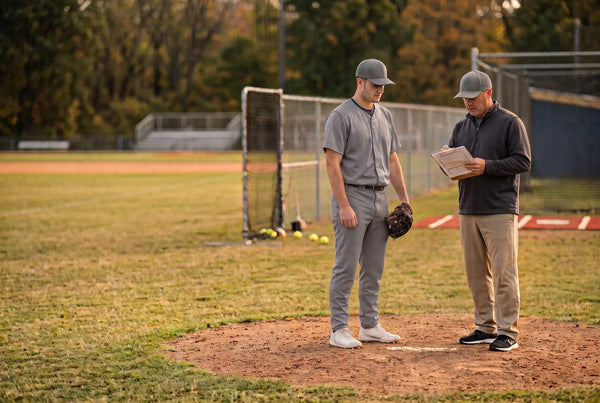
Before altered-ball work he asks whether anyone has evaluated structural integrity and asymmetries, baseline strength and stability, mobility and flexibility, mechanical efficiency, prior injury history and soreness, developmental age and throwing experience, and where the athlete sits in the competitive year. He calls the failure mode fire, aim, ready.
That list rewards a second read as a to-do rather than a checklist. Most of the items on it are things a program can work on directly, and most of them are unfinished in the athletes who go looking for a weighted ball in the first place. An athlete who cannot get into position, cannot repeat a delivery, or is carrying an unresolved workload from last season has a problem that no implement addresses.
His conclusion is that weighted balls are not inherently dangerous in themselves; the way they are used makes the difference.
Randy Sullivan, MPT, CSCS, Florida Baseball ARMory
Sullivan’s published position has sharpened over time. In 2023 he argued that the value of weighted-ball training is not in developing arm strength or arm speed but in giving the athlete repeated chances to rehearse adjustments.
In 2025 he was more pointed. He grants these programs can produce impressive velocity gains, then argues that velocity without movement literacy is a loaded gun, and notes that many ARMory pitchers, including major leaguers, made large gains without ever using a weighted ball. His concern is that such programs can create artificial layback, raising both velocity and risk, and deliver short-term gains that mask longer-term consequences.
He also publishes selection criteria: only a small share of ARMory clients use weighted balls at all, and he does not start athletes until they are physically mature, moving well, and past an on-ramp period.
The Common Thread
Neither treats the implement as the variable. Both treat the program, the athlete, and the supervision as the variables — because without a mechanism there is no general protocol to hand out, only this athlete’s response to watch. That they agree with each other, and with us, is worth less than the fact that the research points the same way; two practitioners who know each other and both work with us are not three independent confirmations.
Their frameworks reduce to five questions worth asking before any session:
- What is this tool intended to do today?
- Is this athlete prepared for this task today?
- What other throwing stress is already in this week?
- Is the athlete responding normally?
- What would tell us to reduce, pause, or change the task?
These are practitioner frameworks, not clinical protocols or substitutes for peer-reviewed evidence. With that context, here is what the research itself has actually tested.
04. What the Proposed Explanations Show
People have looked for the mechanism repeatedly. Here is what the studies conducted so far show for each candidate explanation — not a final verdict, but where the evidence currently stands. Three of these are proposed explanations for the velocity effect. The fourth is a different question entirely: not why velocity increases, but what causes injury.
Arm speed and arm strength. The original rationale. Tested under motion capture in 2017 with twenty-five high school and collegiate pitchers. At an ounce under regulation, arm and trunk speeds were statistically indistinguishable from a standard baseball — only the ball moved faster. As ball weight rose across the 4-to-7-ounce range, measured arm forces fell rather than rose, because a heavier ball moves slower and the arm accelerates less. Neither half of the original rationale was supported in this study.
Layback. After the randomized trial in adolescents found shoulder range of motion increasing by about four degrees, the investigators proposed that as the pathway — more layback producing more velocity, and more risk with it. A six-week study in collegiate and professional pitchers found no change in external rotation at all, in the whole group or in the subgroup that gained velocity. This remains a live hypothesis in adolescents, where it was proposed and where the range-of-motion change was actually observed. Based on the studies conducted so far, it has not held up as a general explanation across age groups.
A full, bundled program. A study of seventeen older pitchers combined weighted implements with mobility work, lifting, manual therapy, soft-tissue work, and structured recovery. It found no velocity change at all. Because everything was bundled, the study could not isolate what the implements themselves contributed.
Per-throw arm stress. Not a proposed explanation for velocity — this is the assumption underneath most of the safety argument instead. A one-year prospective study of 202 Japanese pitchers aged nine to twelve tested whether elbow valgus torque during pitching predicts who gets hurt. It did not. Daily pitch count did.
None of the three velocity explanations has been confirmed by the research conducted to date, and the fourth — the injury-stress assumption — was not supported either. The velocity finding itself remains consistent across six decades regardless.
The most plausible surviving candidate comes from the coaching side rather than the laboratory: that the benefit lies in rehearsing adjustment. No delivery repeats exactly, and a ball of unfamiliar weight forces the athlete to reorganize on the fly. That is a hypothesis, not a finding. It has not been tested, and it should not be presented as though it has.
It is worth noticing what that hypothesis implies, though. If the mechanism is adjustment rather than load, then ball weight is one way to vary the task but not the only one. Changing the distance, the target, the stance, the tempo, or what the athlete is asked to attend to all vary the problem too, and none of them add weight to the arm. That observation does not come from a study. It follows from taking the surviving hypothesis seriously.
05. What the Research Does Establish
Three terms appear throughout this work and do not travel well into a dugout, so here they are plainly.
Arm stress is how hard a throw pulls on the elbow and shoulder, measured in a laboratory with cameras and markers. It describes one throw, not a season. Layback is how far the throwing arm rotates back at the shoulder before coming forward; more layback is associated with more velocity and more stress. Randomized study means athletes were assigned by chance, which is the strongest way to tell whether a program caused what followed.
Modest Loads Do Not Raise Arm Stress
This is the article’s clearest and best-supported finding, and it deserves to be stated in full. Throwing across the range from 4 to 7 ounces — roughly an ounce either side of regulation — measured arm stress trended downward as the ball got heavier, not upward. At 7 ounces, elbow varus torque, shoulder internal rotation torque, and shoulder proximal force were all significantly lower than at regulation weight.
Mechanics Hold Across That Same Range
Across four to seven ounces, differences in body position averaged about one degree. The researchers concluded pitchers can throw in this range using their normal delivery. That is what makes the range usable: the task varies, the movement does not distort. This is the only range in this entire body of research where both findings hold together — stress trending down, mechanics staying intact — and it is the range every other claim in this article should be measured against.
The One Randomized Trial Found Injuries
Thirty-eight pitchers were randomly assigned either to ordinary throwing and lifting or to a six-week program that ramped through kneeling, rocker, and running throws with implements from very light to two pounds — a considerably wider range than the 4-to-7-ounce zone described above. The group averaged just over fifteen years old and ranged from thirteen to eighteen — a span that covers everything from a still-growing elbow to a fully mature one, which the study did not separate out.
Velocity rose about three percent, and shoulder range of motion increased about four degrees. On that protocol, in that mixed-maturity adolescent group, four of the seventeen assigned to weighted ball work — roughly a quarter — sustained elbow injuries requiring medical attention. Two occurred during the program and two in the following season. No pitcher in the comparison group was injured at any point.
The control group is worth pausing on before the injuries are. Those pitchers threw normally and lifted, and most of them gained velocity too. Whatever weighted balls add, they add it on top of something that was already working.
Two things that number does not tell you. It does not identify which implements or which drills produced the injuries, because the study did not track that. And it does not tell you what happens on a different protocol in a different population, because no comparable trial exists. The injury result belongs to a protocol, not to a category, and it currently stands alone.
06. What Predicted Injury, and What Did Not
A one-year prospective study followed 202 Japanese pitchers aged nine to twelve to see whether the stress of an individual throw predicts who gets hurt. Each threw three fastballs while a wearable sensor recorded elbow valgus torque; a year later, new medial elbow injuries were identified by pain and ultrasound. Greater torque at baseline was not a significant risk factor for injury.
What was associated with injury: older age within that nine-to-twelve range, and higher daily pitch count.
That deserves weight, because nearly every argument about weighted balls — for and against — has been conducted in the language of per-throw arm stress. If per-throw stress does not predict injury, measuring it tells you less than assumed in both directions. It weakens the case against weighted balls built on stress measurements, and it equally weakens any defense of them built on low stress measurements.
What replaces it is a volume finding. In that cohort, how many pitches were thrown each day was associated with injury while per-throw stress was not. That makes workload the variable most worth managing in that population, though it does not establish that workload outranks ball weight in weighted-ball training specifically.
There is a plain consequence here that costs nothing. The best-supported thing a coach can do for a young arm is count the throws — all of them, across every team the athlete plays for — and keep the number honest. That single habit carries more evidence behind it than anything else in this article, and it recurs throughout the guidance below.
Where This Stops
This cohort was Japanese players aged nine to twelve — younger than most weighted-ball users, and an age at which the growth plate rather than the ligament is usually the vulnerable structure. Torque was measured by a wearable sensor rather than laboratory motion capture, so its values are not directly comparable to the figures in the biomechanics studies above. And other work in older, higher-level pitchers has found torque more predictive than it was here. Read this as one careful finding in one young population, not as a general verdict on whether mechanics matter.
07. Start With the Whole Athlete
A baseball is a physical load. A regulation ball has a defined legal weight range, and a lighter or heavier ball changes the task further. But ball weight is only one part of a throwing exposure, and in our reading of the evidence it is not the part that matters most.
Before adding altered-ball work, consider the whole picture:
- Age, physical maturity, and training history
- Current throwing tolerance and recent workload
- Any shoulder or elbow symptoms, prior injury, or unusual recovery pattern
- Whether the athlete throws a regulation ball comfortably and repeatedly
- The quality of supervision, and the available space, schedule, and recovery time
- The purpose of the session — preparation, skill work, competition, or restoration
For youth athletes the default is conservative: low volume, low intensity, high supervision. Youth athletes should not self-prescribe altered-ball work or make independent decisions about throwing load. The available youth findings differ from the adult and older-adolescent findings rather than confirming them, and a developing elbow is not a mature one — which is reason enough not to assume young athletes respond like mature pitchers.
08. Variations and Distinctions
Modest over- and underload, 4 to 7 ounces. This is the narrow range the biomechanical research directly covers, and it is the best-supported zone in this entire article. Within it, the task varies, mechanics hold to within about a degree, and measured arm stress trends down rather than up. Outside it, you are working where the biomechanics has not looked.
Extreme loads, a pound and up. Tested as held throws rather than released throws, and in that form they produced very low arm stress while increasing demand on the elbow flexors. Researchers described them as a hybrid between throwing and resistance training — reasonable for building strength, not for improving pitching mechanics. Nothing in the biomechanical literature examines throwing an implement that heavy at full intent.
Delivery context. Throwing from a mound, throwing on flat ground, running into a throw, and holding without release are four different exercises. They differ more in body position than in measured stress, which makes this a mechanics decision before a safety one.
Constrained target work. Keeping an athlete at short distance, throwing into a fixed target, lets a coach watch every throw closely and step in early — particularly useful with heavier implements, where reducing distance is a simple way to reduce overall intensity. No study has tested this format directly; it’s a reasoned practice, not a demonstrated result.
09. Safety, Load, and the Alternative
Standard guardrails apply, and they matter more here than in most tool categories because the clearest injury signal in this literature appeared after the training ended.
The Guardrails
- Youth athletes: low volume, low intensity, high supervision. Adult findings should not be extended down.
- Stop well before fatigue. Every throw should look like the first one. When the movement changes, the session is over.
- Smooth, not straining. Intent belongs in the delivery, not in muscling the implement.
- If anything feels sharp or odd, stop immediately. This is not a category to push through.
- Watch what carries forward. A program that finishes without incident has not proven itself safe. Track how the arm feels weeks later, not only during.
- Clear space and a stable target. Short-distance work needs room behind the athlete and a target that will not shift on contact.
If an athlete has sharp pain, unusual soreness, loss of normal function, altered throwing because of discomfort, or symptoms that do not settle as expected, stop and involve an appropriate coach, parent or guardian, athletic trainer, or medical professional.
Choosing Load and Volume
Start with the athlete, not the implement. Physical maturity comes first. An athlete still growing belongs at the conservative end of everything below, if this work is appropriate at all. A mature athlete with a stable delivery and consistent throwing history has more room.
Stay in the 4-to-7-ounce range the research covers. Working outside it is a different exercise requiring different justification. Volume is the variable with the clearest evidence behind it — daily throw count, honestly recorded, across every team the athlete plays for. Fewer throws, more attention, longer ramp. A six-week ramp in the randomized trial produced injuries that surfaced months later; connective tissue adapts on a timeline the athlete cannot feel. Constrain the delivery before adding load — short-distance target work first, then running throws and maximal-effort flat-ground work only if warranted. Have an exit plan: decide before starting how the work tapers into the season.
If Weighted Balls Are Not the Answer for This Athlete
A fair reading of everything above is that weighted balls are optional. The control group in the randomized trial gained velocity by throwing and lifting. The collegiate study found no velocity change at all. One of the two practitioners quoted here says plainly that many of his pitchers, major leaguers among them, never used one.
So the honest question is not whether to buy weighted balls. It is what an athlete who wants to throw harder should actually work on — and the research points at three things beyond the throw count already established above, none of which is an implement.
Fix what the assessment finds. Wolforth’s screening list is a to-do list. Structural asymmetry, baseline strength and stability, mobility, mechanical efficiency, unresolved soreness — each is workable, and each is more likely to be the actual limiter than ball weight is. An athlete who cannot hold a position or repeat a delivery does not have an implement problem.
Vary the task, not only the load. If the surviving hypothesis is right and the benefit comes from rehearsing adjustment, then ball weight is one way to vary the problem among many. Distance, target, stance, tempo, and attentional focus all change what the athlete has to solve, and none of them add load to the arm.
Constrain before you load. Short-distance work into a target — described above — removes the running momentum, the distance, and the maximal-effort release that the injury data cannot separate from the ball. Whatever tool is eventually used, this is the setting in which to learn it.
None of that requires buying anything from us, and we would rather say so here than have you discover it later. If a program has those things handled and still wants to add a weighted implement, the guidance above applies. If it does not, the implement is not the missing piece.
10. Where This Fits: Prepare, Compete, Restore
Prepare. This is where weighted work belongs — off-season and pre-season, when there is room to ramp gradually and monitor across weeks. Modest loads, low throw counts, full supervision. The priority is not novelty; it is helping the athlete arrive ready to move well, throw comfortably, and notice when something is off. The athlete should not be chasing fatigue, pain, or a radar number.
Compete. Competition and high-demand practice already create substantial throwing stress. In-season use is maintenance, not loading. This is not the time to introduce weighted work or add high-intensity novelty. Games, bullpens, showcases, travel, weather, and multi-team participation should determine the plan. If weighted balls have an in-season role, it is small, familiar, low-volume, and established well before the season began.
Restore. We do not position weighted-ball work as a recovery-day tool. No study has tested that use either way; our reasoning is simply that recovery work should reduce demand on the throwing arm rather than add to it. That is our judgment rather than a research finding, and we would revise it if evidence appeared.
11. Where We Stand
A tool is not inherently good or bad. What determines whether it helps or hurts is the application: the athlete’s readiness, the coach’s judgment, the volume and progression around it, and how it fits into everything else that athlete is already doing. That is true of a weighted baseball. It is true of a barbell, a resistance band, or a bullpen.
We make training tools because we believe, based on the evidence in this article and the practitioners we work with, that they can help the right athlete in the right hands. We do not believe any tool replaces judgment, supervision, or an honest accounting of how much throwing an athlete is already doing.
That is the position this entire article is built on, and it is why the guidance above focuses on the athlete and the program before it ever gets to the ball.
12. Questions Families Can Ask
Families do not need to evaluate biomechanics or become pitching coaches. They need clear answers to a few questions.
- What is the purpose of this tool in my athlete’s plan?
- Who is supervising its use, session by session?
- How many throws, at what weights, and how does that fit with games, practices, bullpens, and other throwing?
- How does the workload step down when the season starts?
- What symptoms or recovery changes would mean we should pause?
- Who do we contact if shoulder or elbow discomfort appears?
If a program cannot answer those questions, that is the concern — not the ball. Clear answers are worth more than any promise about a training tool.
13. A Next Step
If weighted work is already in your program, you might start by writing down three things: daily throw counts, load range, and how the work tapers into the season. Only the first has prospective evidence behind it as a risk variable; the other two are our judgment. All three are things a program should be able to state on paper. If those are clear on paper, you are ahead of most programs. If they are not, that is a more useful place to spend attention than debating ball weights.
If you are starting from zero, the conservative version is a short-distance target setup, a narrow load range near regulation — the 4 to 7 ounce zone the research directly supports — a deliberately slow ramp, and someone watching.
Frequently Asked Questions
No tool is universally safe. Appropriateness depends on the athlete and the full training exposure. The research identifies both performance effects and meaningful safety questions, and the two controlled studies of six-week programs reached different conclusions.
At the group level, the historical record is consistent. For an individual athlete, nobody can say. In the randomized adolescent trial the gain was modest and most of the comparison group also gained from ordinary throwing and lifting. In the collegiate and professional study there was no velocity change at all.
Because the mechanism is unknown. A protocol that could be written once and handed to everyone would require knowing what produces the effect. That knowledge does not exist, which is why experienced practitioners assess the athlete instead of prescribing a program.
That number is real, and it comes from a study we cite and take seriously — but it describes one protocol, not the category. The pitchers were 13 to 18, pooled without regard to physical maturity, and the program ran implements from very light to two pounds, including throws taken with a running start. The study did not record which weights or drills the injured athletes were doing. No comparable trial exists for a different protocol.
No. It is the strongest study design in this field, and we would rather you read it than take our summary of it. The disagreement is not with the finding — it is with how often the number travels alone, without the age range, the protocol, or the fact that injuries were never traced to specific drills. Cited with those attached, it is one of the better arguments for exactly the approach we recommend.
This should be a conservative, coach- and parent-supervised decision. Youth athletes should not self-prescribe. Physical maturity, throwing history, symptoms, total workload, and qualified supervision all matter, and the research in younger athletes points in a less favorable direction than the adult work.
Yes. Regulation throwing is still throwing load, and daily throw count is the variable most clearly linked to injury in young pitchers. Pitch counts, frequency, recovery, multi-team participation, and gradual progression matter whether the ball is light, regulation, or heavy.
Appendix A — Technical Study Details
This appendix uses technical terminology throughout. Nothing here is required to act on the guidance above.
Reading the Measurements
Elbow varus torque is the rotational load resisted at the medial elbow during arm cocking, in newton-meters — the standard proxy for stress on the ulnar collateral ligament. Shoulder internal rotation velocity is peak humeral rotation speed in degrees per second, correlated with ball velocity. Shoulder proximal force is glenohumeral distraction force near release. Passive range of motion is joint travel measured by an examiner rather than generated by the athlete.
One caution governs everything below: these are acute, per-throw laboratory measurements. Their relationship to season-long injury outcomes is assumed rather than demonstrated, and the Saito cohort challenges that assumption directly.
Fleisig et al. (2017) — Design
Twenty-five pitchers (18 high school, 7 collegiate), 18.3 ± 1.5 years, 1.85 ± 0.08 m, 85.4 ± 15.1 kg. All had prior weighted-ball experience; anyone with a throwing-arm injury in the preceding twelve months was excluded. Thirty-eight reflective markers, twelve-camera system at 240 Hz, twenty-six parameters per trial, three trials of each of ten exercises in randomized order at maximal effort. Mound pitching at 4, 5, 6, 7 oz to a strike zone 18.4 m away; flat-ground crow-hop throws at the same weights; flat-ground holds with 14 oz and 32 oz rubber balls. Two-way repeated-measures ANOVA with post hoc paired t tests against standard pitching, alpha 0.05, within-subject ICCs 0.8–0.99.
Joint Kinetics, Mean ± SD (Fleisig 2017, Table 2)
| Parameter | Mound 4 oz | Mound 5 oz | Mound 7 oz | Flat 5 oz | Hold 32 oz |
|---|---|---|---|---|---|
| Elbow varus torque (N·m) | 89.7 ± 27.0 | 90.2 ± 27.6 | 78.6 ± 24.5* | 91.7 ± 27.1 | 38.6 ± 11.7* |
| Shoulder IR torque (N·m) | 91.3 ± 27.6 | 91.4 ± 28.2 | 80.0 ± 25.1* | 92.8 ± 27.9 | 37.1 ± 11.0* |
| Shoulder horiz. add. torque (N·m) | 106.2 ± 30.8 | 106.7 ± 32.1 | 92.7 ± 29.9* | 104.2 ± 28.9 | 38.1 ± 12.7* |
| Elbow flexion torque (N·m) | 36.1 ± 9.9* | 37.7 ± 9.2 | 34.6 ± 8.3* | 36.1 ± 7.8* | 51.3 ± 16.2* |
| Shoulder proximal force (N) | 1089 ± 218 | 1078 ± 217 | 972 ± 202* | 1084 ± 200 | 524 ± 154* |
Selected Kinematics, Mean ± SD (Fleisig 2017, Table 1)
| Parameter | Mound 4 oz | Mound 5 oz | Mound 7 oz | Flat 5 oz | Hold 32 oz |
|---|---|---|---|---|---|
| Shoulder IR velocity (°/s) | 6579 ± 824 | 6594 ± 743 | 6111 ± 641* | 6705 ± 869 | 2055 ± 569* |
* Significantly different from standard pitching (5 oz, mound), P < 0.05.
Annotated Bibliography
Escamilla RF, Speer KP, Fleisig GS, Barrentine SW, Andrews JR (2000). Effects of Throwing Overweight and Underweight Baseballs on Throwing Velocity and Accuracy. Sports Med 29(4):259–272.
Peer-reviewed synthesis of the 1960–1994 literature by the American Sports Medicine Institute group with Duke University. The gateway source for the historical velocity findings. Structure: two warm-up studies (one positive, one null, judged inconclusive); three training studies examining accuracy, none significant; and eleven training studies of six to twelve weeks examining velocity — seven overweight, four underweight — from which the authors concluded that training with altered-weight baseballs can significantly increase regulation-ball velocity and that the data strongly support the practice. Note that a widely circulated “four of five studies” figure originates in secondary summaries, not in this paper; the numbers above are from the published abstract. PMID 10783901
Fleisig GS, Diffendaffer AZ, Aune KT, Ivey B, Laughlin WA (2017). Biomechanical Analysis of Weighted-Ball Exercises for Baseball Pitchers. Sports Health 9(3):210–215.
Motion-capture study of twenty-five high school and collegiate pitchers across ten exercises. Source of the finding that the arm-speed and arm-strength rationale was not supported under the conditions tested, the finding that arm stress decreases as ball weight rises within four to seven ounces, the negligible positional change across that range, and the low stress of heavy held throws. Primary source for the 4-to-7-ounce range emphasized throughout this article. The authors note the sample excluded youth, professional, and position players, and that this is not a season-long safety study. PMC5435148
Reinold MM, Macrina LC, Fleisig GS, Aune K, Andrews JR (2018). Effect of a 6-Week Weighted Baseball Throwing Program on Pitch Velocity, Pitching Arm Biomechanics, Passive Range of Motion, and Injury Rates. Sports Health 10(4):327–333.
The only randomized controlled trial in this area. Thirty-eight adolescent pitchers, mean age 15.3, range 13–18, on a six-week protocol spanning 2–32 oz implements including run-and-gun throws. Source of the 3.3% velocity gain, the 4.3° external rotation increase, and four elbow injuries — half appearing in the season after the program. Critically, the study did not stratify by physical maturity and did not attribute injuries to specific loads or drills, so its injury finding applies to that protocol as delivered rather than to weighted-ball training generally. PMID 29882722
Marsh JA, Wagshol MI, Boddy KJ, O’Connell ME, Briend SJ, Lindley KE, Caravan A (2018). Effects of a six-week weighted-implement throwing program on baseball pitching velocity, kinematics, arm stress, and arm range of motion. PeerJ 6:e6003.
Seventeen collegiate and professional pitchers, ages 18–23. No change in pitching velocity, no significant change in shoulder external rotation, no change in elbow varus torque — contradicting the investigators’ own hypothesis and the layback explanation. Two limits: the program bundled weighted work with mobility, strength, manual therapy, and recovery modalities, so the implements cannot be isolated; and the authors disclose that one investigator owns the company whose equipment and published program were used. Open access. peerj.com/articles/6003
Saito A, Kikuchi T, Shibata K, Sato H, Namiki Y, Terui Y, Hongo M, et al. (2026). Increased Elbow Valgus Torque During Pitching Is Not a Risk Factor for Medial Elbow Injuries in Young Baseball Pitchers: A Prospective Cohort Study. Arthroscopy 42:e70068.
One-year prospective cohort. Of 361 Japanese pitchers aged 9–12 enrolled 2019–2023, 202 remained after exclusions. Elbow valgus torque was recorded by inertial measurement unit during three fastballs, with new medial elbow injuries identified at one year by pain and ultrasonographic abnormality. Baseline torque did not predict injury; older age within the cohort and higher daily pitch count did. Note that IMU-derived torque values are not directly comparable to laboratory motion-capture figures, and that findings in older, higher-level pitchers have differed. Supports workload management as the more actionable variable in this population without settling whether mechanics matter generally. doi:10.1002/arj.70068
Caldwell JME, Alexander FJ, Ahmad CS (2019). Weighted-Ball Velocity Enhancement Programs for Baseball Pitchers: A Systematic Review. Orthop J Sports Med 7(2).
Reported velocity gains across studies but characterized the evidence base as low quality and insufficient to determine injury risk reliably. The basis for treating the historical literature as directionally consistent but methodologically weak.
Okoroha KR, Meldau JE, Jildeh TR, Stephens JP, Moutzouros V, Makhni EC (2019). Impact of ball weight on medial elbow torque in youth baseball pitchers. J Shoulder Elbow Surg 28(8):1484–1489.
Nineteen youth pitchers aged 9–14 throwing three to six ounces from ground level. Elbow stress rose with ball weight — the reverse of the adult pattern — though by a small margin per added ounce. Basis for treating youth guidance separately. PMID 31053389
Shanley E, et al. (2025). Professional Baseball Pitchers’ Use of Weighted Ball Training, Injury Incidence, and Time Loss: A Preliminary Study. Int J Sports Phys Ther 20(7):995–1005.
Observational comparison among professional pitchers. Injury rates trended higher and days lost were roughly double in weighted-ball users, but differences did not reach statistical significance and the authors state the analysis was underpowered. Athletes selected their own programs, so causation cannot be established — consistent with this article’s central point that programming, not the tool itself, drives outcomes.
Reinold MM, Macrina LC, Fleisig GS, Drogosz M, Andrews JR (2020). Acute Effects of Weighted Baseball Throwing Programs on Shoulder Range of Motion. Sports Health 12(5):488–494.
Follow-up examining range-of-motion response immediately after a single session, with external rotation increasing modestly at standard overload and more substantially at extreme overload — evidence that dose matters acutely, pursuing the layback mechanism suggested by the 2018 trial.
Toussaint K, et al. What do we (not) know about how paracetamol (acetaminophen) works? J Clin Pharm Ther. See also Graham GG, Scott KF (2005), Am J Ther 12(1):46–55.
Source for the acetaminophen comparison. Reviews conclude that no single proposed mechanism satisfactorily explains all of the drug’s analgesic actions, and note that this gap impedes assessment of its benefit-risk ratio — the same structural problem this article describes in weighted-ball training.
Wolforth R (2025). Wolforth Throwing Mentorship: Article 55 — The Case Against Weighted Balls? Perfect Game, August 25, 2025.
Self-authored practitioner article. Source of the assessment framework and the position that weighted balls are not inherently dangerous but that the manner of use determines the outcome. Field-use framework, not peer-reviewed evidence. Disclosure: Wolforth has a long-standing working relationship with Oates Specialties. perfectgame.org
Sullivan R (2023, updated 2026). Are Weighted Baseballs the Secret to Gaining Velocity? Florida Baseball ARMory.
Self-authored practitioner article arguing the value lies in rehearsing adjustment rather than building arm strength or speed, and describing the ARMory’s selection criteria. Practitioner framework, not clinical protocol. Disclosure: Sullivan has a long-standing working relationship with Oates Specialties. floridabaseballarmory.com
Sullivan R (2025). Weighted Ball Programs Without Movement Literacy Are a Liability. Florida Baseball ARMory.
Self-authored practitioner article. Source of the artificial-layback concern and the observation that many athletes achieve large gains without weighted balls. Practitioner framework, not clinical protocol. Disclosure: Sullivan has a long-standing working relationship with Oates Specialties. floridabaseballarmory.com
Wolforth R (2020). Disappointing Results from Training? Texas Baseball Ranch.
Self-authored practitioner article outlining an assessment-and-customization philosophy. Supporting context. texasbaseballranch.com
National Collegiate Athletic Association. Baseball Rules, Rule 1-11: The Ball.
Defines the legal baseball weight range, supporting the point that regulation throwing is itself a managed physical workload.
About This Analysis
Created by the Oates Specialties team led by Robert Oates, M.Ed., Founder
Editorial oversight by Gunnar Thompson, BS, CSCS, General Manager
Certified Strength & Conditioning Specialist | Biomechanics Specialist
August 2026
Complete Credentials
ROBERT OATES, M.Ed., Founder: Founded Oates Specialties in 2003. Master of Education degree. Provides strategic direction for educational content and athlete development philosophy.
GUNNAR THOMPSON, General Manager: BS Kinesiology (Clinical Exercise Science). CSCS (NSCA), PES (NASM), CPPS certifications. Technical authority on biomechanics and performance science. Conducts review of all educational content for scientific accuracy.
Questions or corrections: gunnart@oatesspecialties.com
© 2026, Oates Specialties LLC