Applying the System Across the Season: Pregame, In-Game, On-Deck, and Post-Game Readiness for Hitters
Executive Summary
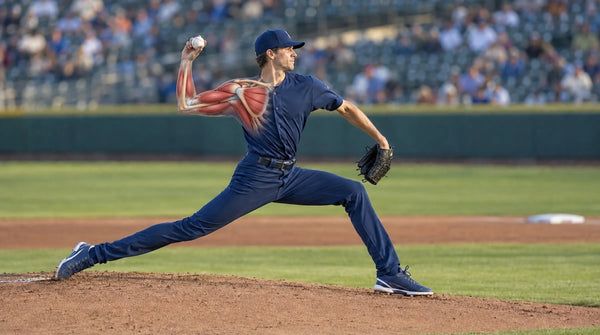
Competition-day readiness for baseball hitters is not a single event checked off before first pitch — it is a condition actively built and rebuilt across four windows: the pregame warm-up, the gaps between at-bats, the on-deck circle, and the day after competition, each governed by its own physiology and research base that most programs never fully apply. The strength, mobility, and rotational power that give a swing its ceiling are covered at length elsewhere in this series and only summarized here. This article covers what a hitter’s body needs in the hours before first pitch, how to stay sharp across a long night in the dugout, what actually belongs in the on-deck circle, and what the day after a game demands of a body that just took a competitive beating.
🎧 Prefer to listen? Audio version of this article:
Why This Article Exists
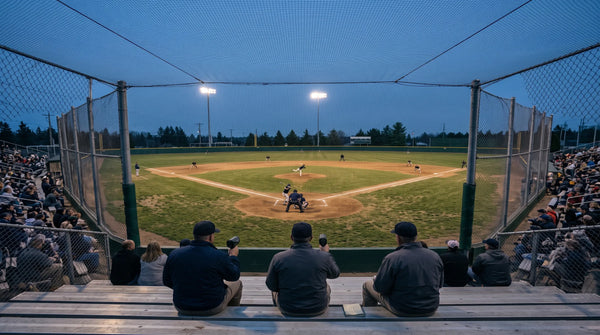
Coaches and hitters pour enormous effort into swing mechanics and almost none into the windows around the swing. There is the twenty minutes before first pitch, the minutes sitting in the dugout between at-bats, the seconds in the on-deck circle before stepping in, and the day after a hard game, when the body is doing its most important work. Each window runs on its own physical demands, and each has real research behind it — even if that research rarely makes it into a dugout conversation.
This article treats those windows as one connected system rather than four separate habits. It covers physical readiness before hitting, staying ready between at-bats, what belongs in the on-deck circle, recovery the day after, and how heat and cold change all of it — plus why the growth-spurt years, roughly ages 13 to 15, change some of this math. It does not cover swing mechanics, pitch recognition, the mental game, nutrition, or a season-long strength program.
What the Body Needs Before Hitting
The deep version of this topic — strength progressions, rotational power development, and how the growth years change a training plan — is covered at length elsewhere in this series. What belongs here is the short version: the readiness principles that connect directly to what follows in the between-at-bats, on-deck, and recovery sections.
Taking the slack out of the system. Before a muscle and tendon can move fast, they need to be pre-tensioned. Coaches have a name for this that predates the science: taking the slack out. Researchers call the same property the toe region of the muscle-tendon unit — the small bit of give in a relaxed muscle that has to be taken up before force can transfer efficiently into a fast swing. Different vocabulary, same measurable property.
That is the physiological reason a hitter needs more than a few stretches before hitting. A short, hard effort a few minutes before a big swing can genuinely boost power output — post-activation performance enhancement, or PAPE. A recent review pooling thirteen studies found band and chain resistance work gave athletes a real, moderate power boost immediately after use.
Eric Cressey, strength and conditioning coach for two decades of professional hitters and now the New York Yankees’ Director of Player Health and Performance, builds in-season programming around short sessions — rarely more than thirty-five to forty minutes — with less-is-more as the guiding rule once the season starts.

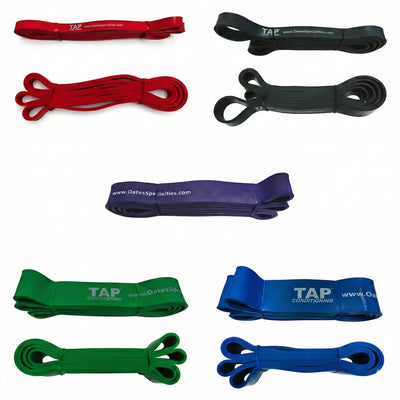
A large loop resistance band is one simple way to load the whole body in this window — the TAP® Giant Flat Band is one option, a 41-inch loop built for full-body work rather than a single joint.
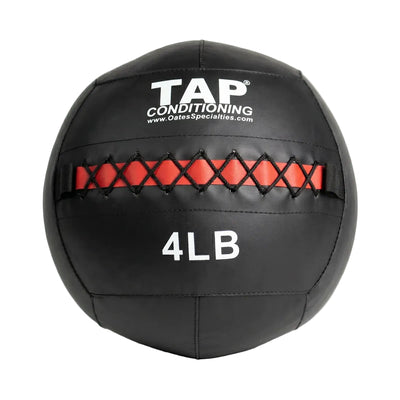
Rotational throws and slams belong here too. Research has linked rotational medicine-ball throw speed directly to bat speed, and a separate study found real gains in bat speed and exit velocity right after a set of medicine ball throws against a wall. Cressey’s own programming has hitters throw the medicine ball opposite their natural swing direction, keeping rotational power working through a fuller range without adding load to the exact pattern the player already repeats hundreds of times a week.
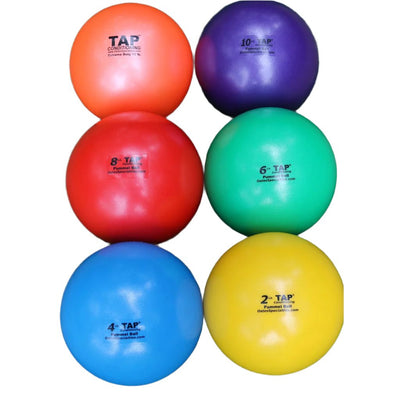
A compact, no-bounce ball, sized like a volleyball and filled with sand, fits this role. The TAP® Pummel Ball is one such option, sized so it cannot be gripped fingertip-style, forcing the two-handed, whole-body control this work is meant to train. The key is one hard set rather than a long circuit — research favors one to three short, near-maximal efforts over extended conditioning work.
Staying Ready Between At-Bats
Derek Shelton, a Major League hitting coach, was once asked how to keep hitters sharp between long stretches of inactivity. His answer was candid: at home, his team had a tennis-ball machine, an eye-tracking machine, and a velocity machine. On the road, without that equipment, the approach shifted to simply making sure players got enough reps in whatever space was available.
A hitter’s first at-bat might come twenty minutes after warming up. The third might come two hours later. Other sports have studied this exact gap under the name re-warm-up, and the findings apply directly.
A review in a top sports medicine journal looked at breaks longer than about fifteen minutes and found that two minutes of light movement brought back readiness that sitting still did not preserve. A second review confirmed it: sitting still measurably lowers readiness during a break in competition, while a short burst of movement keeps that readiness in place.
That is the evidence behind using a short, compact band between at-bats instead of sitting. The TAP® Exercise Bands come in a compact nine-inch format built for tight dugout or tunnel space. One honest limit: the re-warm-up studies measured breaks of fifteen minutes or more, not the shorter, unpredictable gaps between single at-bats, so applying the idea here is a reasonable extension of the research rather than an exact match.
A single, short ballistic set also fits this window, but as a one-time trigger used once at high effort rather than a repeated circuit, matching the low-volume approach the research supports.
On-Deck: What the Research Actually Supports
Walk past any on-deck circle and the same ritual appears: a bat with a donut, or a 40-ounce piece of steel, swung in big, slow arcs. The idea feels right — make the heavy thing feel heavy so the game bat feels light. The research complicates that story.
A 2009 study compared light, standard, and heavy on-deck implements. The light implement significantly improved bat velocity. The heavy one did not. A separate study found that a 57-ounce bat before stepping in actually lowered swing speed afterward. A larger study tested ten implements, 22 to 96 ounces, on Division I hitters and found no significant difference between any of them. The honest read is mixed: heavy implements show no clear advantage and may cost speed, while light-to-standard implements have real, if not universal, support.
There is a second cost separate from bat speed: after swinging something heavy, it can take up to ten swings with a normal bat before sweet-spot contact comes back — not a small detail for a hitter about to get one live look at a pitcher.
So what actually belongs in the on-deck circle? The question is not which weighted bat to buy — it is what gives useful resistance without dragging timing and contact quality down. A flywheel device would technically fit the physics, but flywheel units are bulky and have no place in a cramped on-deck circle. Good physics, wrong context.

A pendulum-style implement is more practical: something light at rest that loads up naturally through the swing. The SpeedChain® NOS® Bat Speed Trainer is one option, roughly 14 to 17.6 ounces at rest — inside the lighter-implement category the research favors. Its resistance is not fixed: as the chain and end weight swing outward under the force of the cut, the load rises through the hitting zone, then lightens on the finish, following directly from the physics of a chain-suspended mass in rotation.
What earns the SpeedChain® NOS® a specific mention is that its own instructions build in a safeguard against the contact-consistency cost above: start light, build to full effort, then blend back into swings with a normal bat before stepping into the box.
There is also a teaching layer separate from the physics. Perry Husband, a hitting instructor tied to the tool’s development, uses it as a dry-swing timing drill — holding the hands back for a beat before releasing at full extension, so the rod and end line up as a self-correcting cue for keeping the hands inside the ball. That is a coaching method from one practitioner, not a lab finding.
The broader idea is not just marketing language. A tool that gives its own built-in feedback, letting a hitter’s body organize a solution rather than being told one, is a real area of academic research called the constraints-led approach. Research from Arizona State University found training built around constraints produced greater gains — in decision-making and performance — than drill-based instruction alone. The category has real support. Whether this specific implement produces that exact effect has not itself been tested.
All exercises and training applications described in this article are general educational examples. They are not prescriptive training programs. Oates Specialties does not provide individual training instruction.
The Day After
What happens after a hard game or a heavy round of batting practice is not downtime. This is when tissue actually rebuilds. What a hitter does, or does not do, in this window makes a real difference.
Why doing nothing is the wrong default. The common picture of recovery is that the body gets damaged, then heals, the way a cut seals itself. Tissue does not quite work that way. Physical therapists describe fresh, disorganized repair tissue as a plate of cooked spaghetti — strands running in every direction. Mature, organized tissue looks like spaghetti straight out of the box, every strand aligned in the direction the muscle actually pulls.
Which version a hitter ends up with depends on what happens after the damage occurs, not just that time passes. Cells sense mechanical load and use it to decide how to rebuild — mechanotransduction. A foundational paper in a leading sports medicine journal puts it plainly: movement, not stillness, tells the body to lay down the aligned version instead of the tangled one.
Randy Sullivan, a physical therapist and longtime pitching coach who has trained hitters and pitchers up through MLB, has used this same spaghetti image: a body left completely still for months does not heal into better tissue — it heals into disorganized tissue that has to be reorganized once training starts again.
A recent review found active recovery worked better than passive rest for bringing back explosive power in the hours after hard exercise. This does not mean rest is dangerous — the body simply does not organize its own repair without a signal to build around, and movement provides that signal better than sitting still.
A hitter coming out of a long game needs something that circulates blood through fatigued tissue in a short window without turning into another workout. Light band work is one answer. Compression floss — a technique that briefly restricts and then rapidly restores blood flow — is another.
A 2024 systematic review pooling eighteen studies found a single two-to-ten-minute session of this technique, paired with active movement, produced real gains in short-term strength lasting up to about an hour. Wrap tightness matters: lighter pressure showed real benefit, while wraps tighter than roughly 200 mmHg — tourniquet territory — showed no benefit or a dulled response. The TAP® Rocket Wrap is one option: keep it brief, wrap snug rather than crushing tight, and never use it as a substitute for real judgment about pain or swelling that does not resolve on its own.
There is a specific reason this matters for hitters. League-level injury tracking across MLB and MiLB found thousands of hand and wrist injuries over five seasons, with batting the most common cause — often extensor carpi ulnaris tendon irritation from swing wrist position, exactly the localized profile compression-floss research is strongest for.
Sleep, Travel, and the Following Day
Sleep and travel belong in this window too, with evidence straight from baseball. A 2017 study followed professional hitters over five nights of adding about one extra hour of sleep. Afterward, they reacted faster to visual targets and felt less fatigue — mapping directly onto picking up a pitch.
A major study using twenty years of MLB data found flying east clearly lowered home-team hitting output, especially slugging percentage. A separate study tracked plate discipline and found it worsened steadily across the season for most teams studied, linked to built-up fatigue. No training tool fixes this — the fix is treating sleep as a real part of the recovery plan.
Extreme Conditions: Heat and Cold
Most readers of this article deal with heat or cold as a regular part of their season, not an occasional inconvenience. Major sports-medicine bodies treat both as requirements for safe competition.
Heat. An international expert consensus statement lays out three phases: heat acclimatization over one to two weeks beforehand; starting competition already hydrated and limiting fluid loss during play; and aggressive rehydration afterward, on the order of 100 to 150 percent of the measured deficit — mapping directly onto the readiness, competition, and recovery windows this article covers. A separate position statement adds that fluid loss above roughly two percent of body weight measurably hurts thinking, skill, and physical output, worsening as heat rises.
Cold. Cold is a distinct problem with its own expert consensus statement. Cold tissue contracts more slowly and produces less force for the same effort — slower bat speed from identical intent. Blood flow shifts away from the fingers and hands, affecting grip and bat feel. Muscles cool between bouts of activity faster than expected — one clinical source notes it can take fifteen to twenty throwing reps to fully rewarm a cold arm, more than a half-inning allows. A companion position statement notes cold blunts the thirst response, meaning an athlete can become measurably dehydrated in cold weather without ever feeling thirsty.
Neither direction changes the mechanics discussed elsewhere in this piece — they change the pattern. In cold, the pregame ramp-up likely needs more patience, and re-warm-up work between at-bats likely needs to happen more often in shorter bursts, since cold tissue loses readiness faster.
The Growth Spurt Years: Why 13 to 15 Needs Its Own Rules
The strength and rotational power progression for younger hitters is covered at length elsewhere in this series. This section picks up where the between-at-bats and recovery guidance in this article intersects with the growth spurt, since the tools discussed here load a body that is changing in ways worth understanding.
Boys tend to hit peak height velocity between about 13 and 15. Three things happen at once. Coordination dips — adolescent awkwardness, starting about six months before the growth spurt and lasting through it, with injury risk higher in this window. Bone strength lags behind bone length: bones grow fast, but the mineral that makes them strong does not keep pace, so bone is relatively weaker exactly when hard, ballistic work often increases. And the core rotational muscles attach to a growth plate at the top of the hip bone that is still maturing — appearing around age 15 in boys and taking one to three more years to fully close.
None of this means holding back from game-speed training. At-bats and batting practice already load this tissue at this intensity, and research on growth-plate injury is clear: strength and conditioning work lowers this risk, not raises it. The fix is tracking total rotational load across games, practice, and any tool together, with extra recovery time during this window. Research also suggests plyometric work pays off more before this growth window, while strength work pays off more around and after it — a 13-year-old and a 15-year-old may need different tools even inside this same age range.
Where to Go Next
This article is the competition-day counterpart to the rest of the bat speed development series. Measurement, strength, mobility, rotational power, overload and underload training, and instability and chaos training all build the physical qualities this article is built to protect and express on game day. How to Increase Bat Speed: A Strength-First System for Power and Transfer maps the full development chain this article completes.
The Evidence in Summary
Competition-day readiness runs on four connected windows, not one. Pre-tensioning the muscle-tendon system before hitting produces a real, measurable power boost. Short bursts of movement between at-bats preserve readiness that sitting still allows to fade. The traditional heavy on-deck implement shows no clear advantage and may cost bat speed and contact consistency — light-to-standard implements have stronger support. The day after competition is active tissue-building time, not downtime. Sleep, travel, and temperature all shape readiness through mechanisms independent of swing mechanics. The growth-spurt years require tracking total rotational load rather than avoiding training altogether.
Frequently Asked Questions
The research does not support it. A light on-deck implement significantly improved bat velocity in controlled research, while a heavy implement showed no benefit or reduced swing speed afterward. There is also a contact-consistency cost: it can take up to ten swings with a normal bat to recover sweet-spot contact after swinging something heavy. A lighter, pendulum-style implement fits the research better than a heavy donut.
Two minutes of light movement preserves readiness that sitting still allows to fade during breaks longer than about fifteen minutes. A compact resistance band that fits a dugout or tunnel space is a practical tool for this. A single, high-effort ballistic rep can also serve as a one-time trigger between at-bats.
Movement, within reason. Tissue repair responds to mechanical signals — mechanotransduction — and research shows active recovery restores explosive power more effectively than passive rest in the hours after strenuous exercise. Light band work or brief compression floss sessions are research-supported ways to move blood through fatigued tissue without adding new training load.
This window brings temporarily reduced coordination, bone strength that lags behind bone length, and a still-maturing hip growth plate that anchors the core rotational muscles. This does not mean reducing game-speed training — at-bats and batting practice already load this tissue at full intensity, and research confirms strength and conditioning work lowers injury risk in this population rather than raising it. The practical adjustment is tracking total rotational load across games, practice, and training tools together, with additional recovery time during this window.
Annotated Bibliography
Wilson G. J., Murphy A. J., & Pryor J. F. Musculotendinous stiffness and stretch-shortening cycle performance. Journal of Strength and Conditioning Research.
https://www.scienceforsport.com/stretch-shortening-cycle/
Secondary synthesis of the toe-region and pre-tension mechanism underlying muscular pre-activity before a stretch-shortening cycle movement. Foundational to the “taking the slack out” framing in this article.
Kubo K., et al. Evidence for muscle cell-based mechanisms of enhanced performance in stretch-shortening cycle. Physiological Reports, 9(3), e14741.
https://pmc.ncbi.nlm.nih.gov/articles/PMC7820781/
Reviews the mechanisms of pre-activation and stiffness contributing to the stretch-shortening cycle effect. Supports the pre-tensioning mechanism described in the pregame readiness section.
Systematic review and three-level meta-analysis: The effect of variable resistance training on post-activation performance enhancement. Sports Medicine – Open, 2026.
https://link.springer.com/article/10.1186/s40798-026-01028-7
Thirteen studies, ninety-five effect sizes. Found a significant, moderate PAPE effect from band- and chain-based variable resistance training. Primary evidence for the pregame priming recommendation.
Cressey E. In-Season Baseball Strength and Conditioning. EricCressey.com.
https://ericcressey.com/in-season-baseball-strength-and-conditioning-part-1/
Eric Cressey, strength and conditioning coach and New York Yankees Director of Player Health and Performance, publishes in-season training guidance including opposite-direction medicine ball work for hitters and a stated less-is-more philosophy limiting sessions to roughly 35–40 minutes. Practitioner source, cited for stated training philosophy rather than as controlled research.
Taniyama D., et al. Rotational medicine ball throw velocity relates to NCAA Division III baseball player bat swing, batted-ball, and pitching velocity. Journal of Strength and Conditioning Research, 35(12), 3414–3419.
https://pubmed.ncbi.nlm.nih.gov/34570055/
Rotational medicine-ball throw velocity correlated with bat swing velocity at r = 0.65, explaining 39 percent of variance. Supports the pregame rotational throw recommendation.
Buso S., Willardson J. M., & Shafer A. (2023). Effects of medicine wall ball throws with whole-body vibration on bat swing performance in collegiate baseball players. Journal of Strength and Conditioning Research.
https://pubmed.ncbi.nlm.nih.gov/37729518/
Acute improvements in bat speed (d = 0.22) and exit velocity (d = 0.48) following a ballistic rotational stimulus. Supports the priming role of medicine ball throws before hitting.
Silva L. M., Neiva H. P., Marques M. C., & Izquierdo M. Effects of warm-up, post-warm-up, and re-warm-up strategies on explosive efforts in team sports: A systematic review. Sports Medicine, 2018.
https://pubmed.ncbi.nlm.nih.gov/29968230/
For gaps longer than fifteen minutes, roughly two minutes of active re-warm-up recovered explosive performance that passive rest did not preserve. Primary evidence for the between-at-bats recommendation.
Oates Specialties. How to Increase Bat Speed: A Strength-First System for Power and Transfer. oatesspecialties.com.
https://oatesspecialties.com/blogs/education-hub/how-to-increase-bat-speed
Maps the full development chain this article completes — measurement, strength, mobility, rotational power, overload and underload training, and instability and chaos training, culminating in the competition-day readiness covered here.
About This Analysis
Created by the Oates Specialties team led by Robert Oates, M.Ed., Founder
Editorial oversight by Gunnar Thompson, BS, CSCS, General Manager
Certified Strength & Conditioning Specialist | Biomechanics Specialist
August 2026
Complete Credentials
ROBERT OATES, M.Ed., Founder: Founded Oates Specialties in 2003. Master of Education degree. Provides strategic direction for educational content and athlete development philosophy.
GUNNAR THOMPSON, General Manager: BS Kinesiology (Clinical Exercise Science). CSCS (NSCA), PES (NASM), CPPS certifications. Technical authority on biomechanics and performance science. Conducts review of all educational content for scientific accuracy.
Questions or corrections: gunnart@oatesspecialties.com
© 2026, Oates Specialties LLC