How Much Should a Pitcher Throw?
A practical guide to deloading, then ramping up, from late fall to the start of the season.
From Fall to Opening Day | Oates Specialties
November 19, 2026
Executive Summary
Pitching is competing. Throwing is work with a clear purpose. This guide is about throwing. Fall ball is winding down, and the season starts in January for most high school and college teams. The question now is how much throwing the athlete needs.
Every throwing session should name its job. The job may be to move the arm, to recover, to build, or to work on velocity or command. The job sets the amount.
A pitcher who pitched a lot this fall may need a short deload first. A deload lowers the load for a short time. It is not detraining. The athlete keeps throwing at a lower volume and effort while body and mind recover. Keep it short. The season is close, and the ramp-up needs time.
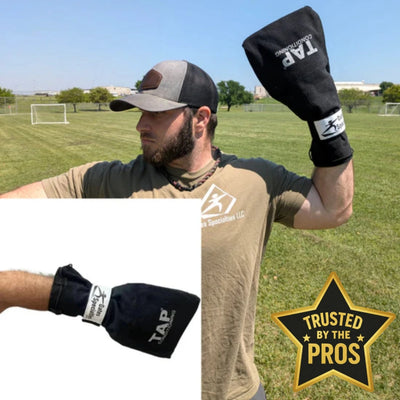
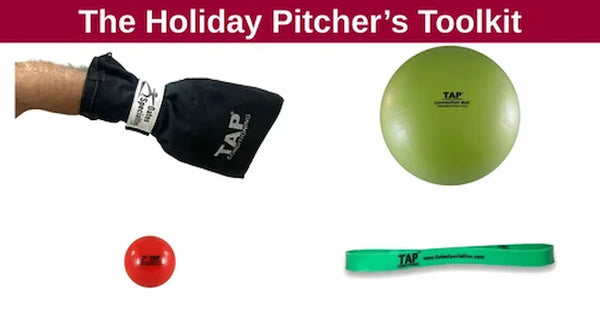
The TAP® Baseball Training Sock lets an athlete throw in a hotel room, a garage, or a cold gym. Section 4 covers how a practitioner uses it in this window.
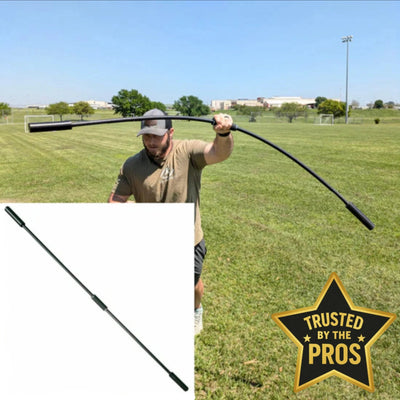
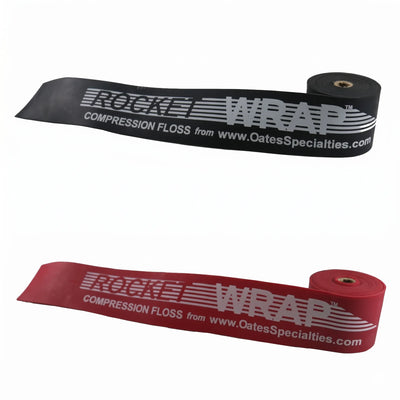
Arm care and recovery run through every week. The TAP® Shoulder Tube and TAP® Rocket Wrap fit that routine during the deload and the ramp-up.
The guide ends with Oates Specialties’ eight-week example. Two weeks of deload come first. A checkpoint follows, and it has its own article next in this series. Six weeks of ramp-up lead into the season. An athlete who threw little this fall can skip the deload, take the checkpoint, and start the ramp-up. Record the week’s throwing, but keep it brief.
Find Your Answer
Answer the question closest to what you need right now, and jump straight there.
- “What is the difference between pitching and throwing?” → Jump to: 1. Pitching Is Competing. Throwing Is Working.
- “Does a pitcher who threw a lot this fall need a deload?” → Jump to: 2. Start From What He Did This Fall
- “What is a deload, and does it mean he stops throwing?” → Jump to: 3. What a Deload Is, and What It Is Not
- “How do you set how much a pitcher throws?” → Jump to: 7. Setting the Amount
- “What does an eight-week plan from deload to ramp-up look like?” → Jump to: 8. Oates Specialties’ Example: Eight Weeks From Deload to Ramp-Up
🎧 Prefer to listen? Audio version of this article:
Scope and Safety
This guide is for team coaches, private instructors, academies, and development staffs working with high-school-age and college baseball players. The sample block is an example, not a prescription. The athlete’s staff makes the actual assignment.
Follow the rules that apply to the player, including his league’s and program’s policies. Honor any restriction from a qualified health professional. This guide is not rehabilitation or medical clearance. Stop throwing for concerning symptoms and refer the athlete.
1. Pitching Is Competing. Throwing Is Working.
Pitching happens in a competitive setting. A hitter stands in, the runs matter, and the pitcher competes.
Throwing is work with a clear intent. The intent may be to get the arm moving, to ramp up, or to work on velocity or command. It can happen on a mound or in a hallway.
Fall ball is ending, and the athlete is no longer competing. He is now building toward his first game. For a pitcher who pitched often this fall, building may start with a very short step back. A pitcher with modest or little mound time keeps progressing on what he needs most.
Before every session, ask what the throwing is for. The answer sets the effort, the amount, and the tool.
| Job | What it looks like |
|---|---|
| Recover | Easy effort, lower volume, no maximum intent |
| Get moving | Short, easy sessions that keep a routine |
| Ramp up | Planned growth in distance, volume, and effort |
| Work on a skill | A stated goal, such as velocity or command, with a clear target |
2. Start From What He Did This Fall
The starting point is the athlete’s fall, not the calendar. Add up all of it: games, side bullpens, long toss, showcases, and throwing for other teams.
Three athletes show the range:
- Heavy fall. He competed often and threw between outings. Start with a deload.
- Moderate fall. He pitched some and threw regularly. A one-week deload may be enough.
- Light fall. He pitched little and threw little. He does not need a deload. He takes the checkpoint, finds where he still needs to improve, and starts the ramp-up.
Look at his last four to six weeks of work, along with how he feels. Do not decide from innings alone. A pitcher with few innings may still have thrown a great deal in side work and long toss.
Consider a junior who pitched in three fall tournaments and threw side bullpens between them. By November his arm feels flat. His job for the next two weeks is to recover and keep the pattern. A pitcher who threw twice a week has little to recover from, so he can move straight into the build.
If the deload is the first priority, keep it short. The season is a few weeks away, and the ramp-up needs room. A long deload turns into lost time.
TAP® Baseball Training Sock

The throwing doesn’t have to stop when the field, the weather, or the calendar gets in the way. The Training Sock is a heavy-duty sleeve that attaches at the wrist. The athlete throws, lets go of the ball, and the sock catches it — no distance, no partner.
- Full motion, including release and finish — the arm still slows down through the finish.
- Keeps the routine alive through holidays, travel, and bad weather.
- Takes weighted balls up to 21 ounces.
3. What a Deload Is, and What It Is Not
A group of expert coaches in strength sports defined a deload as a period of reduced training stress. It aims to ease physical and mental fatigue, support recovery, and prepare the athlete for what follows. The definition came from expert consensus, not from a trial.
A deload is not detraining. The athlete does not stop. He lowers the amount for a short time and keeps the habit.
Two bodies of research point the same way:
- A meta-analysis of tapering studies in competitive athletes found the best results from about two weeks. Training volume dropped by 41 to 60 percent while intensity and frequency stayed the same.
- In a trial of 39 resistance-trained adults, one group took a full week off lifting midway through nine weeks. Muscle size and power matched the continuous group. Lower-body strength gains were smaller.
The mental side matters too. In the same trial, the group that rested reported a drop in motivation later on. The authors called the difference modest and said its practical meaning remains questionable. They also noted that participants often reported feeling lethargic after the week off, and suggested that a period of reduced volume and intensity, “but not complete cessation,” might ease fatigue without that feeling. That argues for a short, lower-load deload with a clear purpose, not an open-ended break.
The first result says to cut volume and keep the routine. The second says a complete stop has a cost. Together they support a short, lower-volume phase that keeps the athlete moving.
The taper studies kept intensity high, because their goal was peak performance. A baseball deload has a different goal. Here, effort comes down too. Section 7 explains why lowering effort alone is not enough.
4. Practitioner Views: Sullivan and Wolforth
Randy Sullivan of the Florida Baseball ARMory rejects the choice between shutting down and throwing as usual. He argues that a strict shutdown of two to three months can leave players short of time before spring. He also argues that healing tissue organizes itself around the stress it sees.
His alternative is a taper. The athlete throws light bullpens and easy long toss for a few weeks. Then he moves to a low-intensity maintenance plan with sub-maximal throwing. Sullivan names the Training Sock and the Connection Club as tools for that plan. His stated aim is to keep the tissue organized, physically and neurologically. A player who does this starts the ramp-up with a rolling start. He also recommends a physical assessment and a video review before designing the plan. In his words, “With no stress, there is no order.” A tissue that sees no stress for months has to rebuild its structure when the stress returns. A tissue that sees light, regular stress keeps that structure and has less to rebuild.
Ron Wolforth of the Texas Baseball Ranch makes the same point about building back. For a return to competition, he moves from one or two innings toward two to four, then three to five. He asks coaches to look at the full seven-day cycle, not only the outing.
Alan Jaeger offers a reference point for bringing back mound work.
His healthy fall and winter example adds bullpens after a throwing base is in place. It begins at 15 to 25 pitches and later reaches 35 to 45. He says the amount and intensity vary by pitcher and by the work before the bullpen. In Oates Specialties’ reading, a pitcher with little recent throwing should not get 15 just because it is the low end. His approach is built around long toss, so its counts belong inside that approach.
All three say the same thing. Keep the arm working, start small, and build in steps. None of them asks the athlete to jump back to full load.
5. Throwing in the Training Sock
The TAP® Baseball Training Sock is a heavy-duty fabric sleeve that attaches at the wrist. The athlete throws the ball and lets go of it. The ball travels a short way and hits the end of the bag. The sock catches it, so the throw needs no distance and no partner.
That mechanism fits a deload. The athlete throws with a full motion, including release and finish, and can match his effort to the job. The ball only travels to the end of the bag. The arm still moves through its full path and slows down through the finish. The sock accepts weighted balls up to 21 ounces. In Oates Specialties’ example, the deload uses a light ball and easy effort.
The sock also solves practical problems during Fall and Winter months:
- Travel. A hotel room or a relative’s living room can hold a session.
- Confined space. A garage, a hallway, or a small gym works.
- Weather. Cold or wet days do not cancel the work.
- Holidays. A few days away from the usual setup do not break the routine.
A sample Week 1 session in the sock: warm up as usual. Then take 20 to 30 throws at easy effort with a light ball. Let the arm slow down through the finish. Note how the arm feels, and stop there. The session takes about 10 minutes.
The sock has limits. The ball does not fly to a target, so it does not train command. It does not replace long toss or mound work in the ramp-up. For this window, it keeps the pattern and the habit alive at a low load.
Treat sock throws as throws. Count them.
6. Arm Care and Recovery Come With Every Week
Arm care does not pause during a deload, and it does not wait for the ramp-up. The deload lowers the throwing load. The arm still needs preparation before throwing and attention afterward. As the load rises, the routine matters more.
Two Oates Specialties tools fit that routine.
TAP® Shoulder Tube. The Shoulder Tube is a handheld tube with counterweighted ends. The athlete holds it with a stiff arm and uses quick, controlled hand movements to send waves down the shaft. The tube bends and swings, so the muscles around the shoulder, elbow, and shoulder blade work to control it. It is like taking the arm for a walk, not an all-out sprint. Its uses are warm-up, cool-down after throwing, and arm-care conditioning. That makes it useful on every day of the plan, including days with no throws.
TAP® Rocket Wrap compression floss. The Rocket Wrap is a rubber compression band about 7 feet long and 2 inches wide. The athlete wraps it snugly around the elbow or shoulder, starting away from the heart and working toward it. He moves the arm through its range of motion, then removes the band. The product guidance is 20 seconds to 1 minute, and never more than 2 minutes. Follow the product instructions. Remove the band at once and tell a coach or trainer if pain, numbness, tingling, or unusual discomfort occurs.
In Oates Specialties’ example, the routine stays the same as the load changes. During the deload, the athlete uses the Shoulder Tube before and after each sock session and on off days. He adds a short Rocket Wrap step before throwing when the elbow feels stiff. During the ramp-up, the same steps surround every throwing day, and bullpen days get the full routine.
Neither tool replaces strength work, mobility work, or sleep.
7. Setting the Amount
Use his own fall week as the reference. Count every throw in it, not only mound pitches. In one study of 115 high-school starting-pitcher outings, 42.4 percent of mound pitches came outside the live-game count. Warm-ups and bullpens add up.
Lower volume first. In Oates Specialties’ example, Week 1 is about half of his usual weekly throwing. Week 2 is about 60 percent. Both stay below his fall load.
Do not rely on effort alone. In a laboratory study, high-school pitchers asked for 50 percent effort still produced about three-quarters (about 77 percent) of full-effort elbow torque. Easy effort does not cut the demand in half. Use fewer throws, fewer days, and easy effort together.
Here is a worked case. A pitcher’s fall week held about 200 throws, counting everything. Week 1 of the deload holds about 100. Week 2 holds about 120. Those throws are spread over three or four easy days, not packed into one.
Name the job for each session in a few words. “Recover and keep the pattern” is a job. “Throw” is not.
Keep the deload short. Two weeks is the most this example uses. A lighter fall may need only one. A pitcher who rarely pitched and threw little outside games can start progressing right away, after the checkpoint.
When the deload ends, build up from the deload amount, not from his fall total. A pitcher who did not need a deload starts from his current week and builds the same way. In Oates Specialties' example, one lever changes each week. The levers are days per week, distance, throws per day, effort, and the mound. Distance can mean a longer catch, or long toss if his program uses it. Changing one at a time makes it easier to see how he responds to each step. Keep the steps small, keep the record going, and ask him how his arm and body feel after each change. His answer matters as much as the count. If he feels off, tired, or sore after a change, hold there another week before the next one. If the soreness is still there after that week, lower the volume slightly the next week, then start building again once he feels fresh. Pain is different from soreness. If pain or other concerning symptoms appear, he stops throwing and sees a qualified health professional.
8. Oates Specialties’ Example: Eight Weeks From Deload to Ramp-Up
This is Oates Specialties’ example of how the ideas could be put into practice. It is not a prescription. Adjust it to the athlete’s fall, his rules, and his health professional’s guidance. Move forward only when the athlete is ready. Otherwise, repeat the week.
Each ramp-up week changes one lever. Everything else stays where it was the week before.
| Week | Job | The one change | Days and amount | Setting and tools |
|---|---|---|---|---|
| 1 | Deload: recover and keep the pattern | Starting point | 3 days; about half of his usual fall week | TAP® Baseball Training Sock and easy short catch; no mound |
| 2 | Deload: keep the pattern, add a little | Throws per day | 3 days; about 60 percent of his usual fall week | Sock plus easy catch at a comfortable distance; no mound |
| Checkpoint | Review and plan | None | End of Week 2 | Covered in the next article |
| 3 | Ramp-up: restart | Days per week | 4 days; same distance, effort, and throws per day | Sock and easy catch |
| 4 | Ramp-up: stretch out or return to the mound | Distance or the mound; choose one | 4 days; add either more catch distance or one short bullpen of 15 to 20 pitches | Longer catch, or a bullpen to a target; sock on travel, tired, or weather days |
| 5 | Ramp-up: add the other | The one not chosen in Week 4 | 4 days; add whichever he did not start in Week 4 | Longer catch and a bullpen to a target |
| 6 | Ramp-up: build | Throws per day | Bullpen grows to 20 to 30 pitches | Bullpen to a target; command work from the related guide |
| 7 | Ramp-up: build intent | Effort | Same bullpen count; effort moves toward game-like | Bullpen to a target; velocity work only as the staff has approved |
| 8 | Prepare for the season | Throws per day | Bullpen reaches 30 to 40 pitches | Bullpen to a target; staged live work comes next |
Weeks 1 and 2: deload. The job is to recover and keep the pattern. Use the sock for most throws. Add easy catch at a short distance. Keep every throw at easy effort. No mound work. Week 2 adds a few throws to each day, and nothing else, as long as he feels fresh. A sample Week 1 day: 20 sock throws at easy effort, then 10 easy catch throws at a short distance. A sample Week 2 day: 25 sock throws, then 15 catch throws at a comfortable distance. Run the arm care routine from Section 6 every day.
Checkpoint. The checkpoint comes at the end of Week 2. Section 9 covers what happens before and after it.
Week 3: frequency. The ramp-up starts right after the deload. Add a fourth throwing day. Keep the distance, the effort, and the throws per day the same.
Week 4: distance or the mound. Keep four days and add one of two things. Option one is more distance. Stretch the catch a little, or add easy long toss if his program uses it. Stay within what he can reach with a smooth, relaxed throw. Option two is one short bullpen of 15 to 20 pitches, with a clear pitch and spot for each throw. Choose the one that fits his program, his space, and his weather. Do not add both in the same week. Use the sock when travel, weather, or fatigue calls for it.
Week 5: the other one. Add whichever he did not start in Week 4. The other days stay the same.
Week 6: throws per day. The bullpen grows to 20 to 30 pitches. Start the command work blocked, one pitch to one spot. The command guide explains the practice order.
Week 7: effort. Keep the bullpen count. Let the effort move toward game-like. The velocity guide explains how to add velocity safely.
Week 8: throws per day. The bullpen reaches 30 to 40 pitches. Staged live work, one or two innings at a time, comes after this block. The ramp guides cover it.
The holidays fall inside this block. A trip does not need to cancel a week. Pack the sock, keep the job easy, and keep the count. If a week is lost anyway, repeat the last good week when he returns.
An athlete who threw little this fall skips Weeks 1 and 2. After the checkpoint, he starts at Week 3. If he has barely thrown, he first holds at three easy days for a week. Then he follows the same one-lever sequence.
If a stage falls apart, repeat the week. Do not skip ahead to save time.
9. The Checkpoint: Before and After
The checkpoint sits between the deload and the ramp-up. Before it, the athlete finishes the deload and brings his record of the last two weeks. After it, the ramp-up begins right away. It is not a second pause.
At the checkpoint, the staff looks at what the athlete can now repeat and where he still needs to improve. Those answers set the job for the ramp-up. The next article in this series covers the checkpoint in full.
An athlete who threw little this fall follows the same order. He takes the checkpoint first, then starts the ramp-up at Week 3. He does not need a deload to find out what to work on.
If pain or other concerning symptoms appear at any point, he stops throwing and sees a qualified health professional.
10. Record the Whole Week, Briefly
Write down what he threw this week and what the plan calls for next. Include sock throws, catch, long toss, bullpens, and any games or lessons elsewhere. One line per day is enough: the type, the amount, and how he felt.
Training-load guidance supports a simple diary as one input to these decisions. It is not a test of readiness. Bring the page to the checkpoint. It makes the next step clearer.
Where This Guide Fits
The velocity, command, and deceleration guides explain the skills. This guide covers how much throwing supports them from late fall to the first outing. The ramp guides later bring that work closer to hitters, innings, and role-specific demands.
Commercial Transparency
Oates Specialties sells baseball-training equipment, including the TAP® Baseball Training Sock, TAP® Shoulder Tube, and TAP® Rocket Wrap. Texas Baseball Ranch and Florida Baseball ARMory run commercial training businesses and have business relationships with Oates. Jaeger Sports also runs a commercial training business.
Their guidance is included as attributed practitioner experience. It is not independent proof that Oates products or any system produces a result.
No product is required to use this framework. The cited studies do not establish that an Oates product selects a workload, prevents injury, or clears an athlete to throw.
Appendix A. What the Research Does and Does Not Support
This is a focused, evidence-informed guide, not a systematic review. Nothing here guarantees a result. Only qualified health professionals diagnose injuries or clear a pitcher to throw.
| Topic | What the sources say |
|---|---|
| Deload definition | An expert panel in strength sports defined it as a period of reduced training stress to ease fatigue, support recovery, and prepare for later training. |
| Tapering | A meta-analysis of competitive athletes found the best results from about two weeks of reduced volume, with intensity and frequency kept. |
| A full week off | Trained adults who rested a week from lifting kept muscle size and power. Lower-body strength gains were smaller. |
| Tissue flossing | A scoping review of 24 studies found that one floss treatment can increase joint range of motion. Evidence for faster recovery is weak. |
| Counting all throws | In 115 high-school outings, 42.4 percent of mound pitches came outside the live-game count. |
| Easy effort | At 50 percent effort, high-school pitchers produced about three-quarters (about 77 percent) of full-effort elbow torque. Professionals were not tested at 50 percent. |
Where the evidence is thin. No study has tested a deload in pitchers. The deload and taper findings come from strength and physique sports and from competitive athletes in other sports. This guide treats them as relevant to throwing. The eight-week example joins those findings with practitioner guidance and reasoning. The amounts in Section 8 are Oates Specialties’ own and are not tested doses. The Training Sock, Shoulder Tube, and Rocket Wrap descriptions come from the product pages. No study tests these products in pitchers. Sample sizes in the cited studies are small, and the bibliography notes each study’s scope.
Descriptions of the practitioners’ views come from the sources in Appendix B and are not trial results.
Appendix B. Annotated Bibliography
1. Sullivan R. Shut It Down Or Keep Throwing? Maybe There’s an Alternative. Florida Baseball ARMory. https://floridabaseballarmory.com/?p=3674
Review level: page text reviewed. Why it matters: practitioner source for tapering and low-intensity throwing with the Training Sock during the offseason. Use with care: a practitioner essay with no outcome data, no stated throw counts or intensities, and only loose durations (“a few weeks”). It argues against a strict months-long shutdown, so apply it alongside the player’s own rules and his health professional’s guidance.
2. Wolforth R. Summation of All Fears. Texas Baseball Ranch. https://www.texasbaseballranch.com/blog/summation-of-all-fears/
Review level: page text reviewed for this revision; the page shows no publication date. Why it matters: practitioner example of staged innings and attention to the full week. Use with care: no fixed inning-to-pitch conversion is supplied. Rest rules and strong physiological claims are not adopted.
3. Jaeger A. In Season Throwing Program. Jaeger Sports; the source ties the article to Performance Conditioning, February 2009. https://jaegersports.com/in-season-throwing-program/
Review level: page text reviewed for this revision. Why it matters: supplies 15 to 25 and later 35 to 45 pitch bullpen examples after base-building. Use with care: a long-toss-centered routine, not a tested universal dose.
4. Bell L, Strafford BW, Coleman M, Androulakis Korakakis P, Nolan D. Integrating Deloading into Strength and Physique Sports Training Programmes: An International Delphi Consensus Approach. Sports Medicine - Open. 2023;9:87. DOI: 10.1186/s40798-023-00633-0. https://doi.org/10.1186/s40798-023-00633-0
Review level: abstract reviewed. Why it matters: supplies the consensus definition of a deload. Use with care: expert opinion in strength and physique sports, not baseball and not a trial.
5. Bosquet L, Montpetit J, Arvisais D, Mujika I. Effects of tapering on performance: a meta-analysis. Medicine & Science in Sports & Exercise. 2007;39(8):1358-1365. DOI: 10.1249/mss.0b013e31806010e0. https://pubmed.ncbi.nlm.nih.gov/17762369/
Review level: abstract reviewed. Why it matters: shows that about two weeks of reduced volume, with intensity and frequency kept, gave the best performance results. Use with care: competitive athletes with a pre-competition goal; the abstract does not name the sports included. It does not address throwing.
6. Coleman M, et al. Gaining more from doing less? The effects of a one-week deload period during supervised resistance training on muscular adaptations. PeerJ. 2024;12:e16777. DOI: 10.7717/peerj.16777. https://peerj.com/articles/16777/
Review level: article summary reviewed. Why it matters: a week off lifting did not change muscle size or power, but lower-body strength gains were smaller. Use with care: 39 resistance-trained adults, a full rest week from lifting, and some credible intervals that overlapped zero. The drop in motivation was modest, and the authors questioned its practical meaning.
7. Zaremski JL, et al. Unaccounted Workload Factor: Game-Day Pitch Counts in High School Baseball Pitchers—An Observational Study. Orthopaedic Journal of Sports Medicine. 2018;6(4):2325967118765255. DOI: 10.1177/2325967118765255. https://pubmed.ncbi.nlm.nih.gov/29662911/
Review level: abstract reviewed. Why it matters: shows that many mound pitches fall outside the live-game count. Use with care: it does not count every throw in the day and is not an individual limit.
8. Hyeamang LJ, et al. The Influence of Rate of Perceived Effort on Pitching Mechanics and Elbow Varus Torque in High School and Professional Pitchers. Orthopaedic Journal of Sports Medicine. 2026;14(1):23259671251374296. DOI: 10.1177/23259671251374296. https://scholars.duke.edu/publication/1700872
Review level: abstract reviewed. Why it matters: reports about 77 percent of full-effort elbow torque (53.3 vs 69.1 N·m) at prescribed 50 percent effort in 38 high-school pitchers. Use with care: a group-level laboratory fastball result, not an individual conversion rule. Professional pitchers were tested only at 75 and 100 percent effort.
9. Bourdon PC, et al. Monitoring Athlete Training Loads: Consensus Statement. International Journal of Sports Physiology and Performance. 2017;12(Suppl 2):S2-161-S2-170. DOI: 10.1123/IJSPP.2017-0208. https://journals.humankinetics.com/downloadpdf/journals/ijspp/12/s2/article-pS2-161.xml
Review level: article text reviewed for this revision. Why it matters: supports simple training diaries as one input to decisions. Use with care: a cross-sport expert consensus, not a baseball mandate.
10. Konrad A, Močnik R, Nakamura M. Effects of Tissue Flossing on the Healthy and Impaired Musculoskeletal System: A Scoping Review. Frontiers in Physiology. 2021;12:666129. DOI: 10.3389/fphys.2021.666129. https://doi.org/10.3389/fphys.2021.666129
Review level: abstract and summary reviewed. Why it matters: reports that a single floss band treatment can increase joint range of motion. Use with care: 24 studies with 513 participants, small to moderate effects, weak evidence for recovery or pain relief, and no baseball pitchers.
11. TAP® product pages: Baseball Training Sock, Shoulder Tube, and Rocket Wrap Compression Floss. https://oatesspecialties.com/products/baseball-training-sock, https://oatesspecialties.com/products/shoulder-tube, https://oatesspecialties.com/products/rocket-wrap
Review level: product pages and the Shoulder Tube information sheet reviewed. Why it matters: describe how each product works, its listed uses, and its usage guidance. Use with care: product descriptions, not research. The Training Sock page does not mention a deload.
About This Analysis
Created by the Oates Specialties team led by Robert Oates, M.Ed., Founder
Editorial oversight by Gunnar Thompson, BS, CSCS, General Manager
Certified Strength & Conditioning Specialist | Biomechanics Specialist
November 2026
Complete Credentials
ROBERT OATES, M.Ed., Founder: Founded Oates Specialties in 2003. Master of Education degree. Provides strategic direction for educational content and athlete development philosophy.
GUNNAR THOMPSON, General Manager: BS Kinesiology (Clinical Exercise Science). CSCS (NSCA), PES (NASM), CPPS certifications. Technical authority on biomechanics and performance science. Conducts review of all educational content for scientific accuracy.
Questions or corrections: gunnart@oatesspecialties.com
© 2026, Oates Specialties LLC