Why Can’t My Pitcher Stay Healthy?
What research can tell you about recurring throwing-arm problems, what it cannot tell you about one athlete, and what to do next.
An evidence-informed preparation guide from Oates Specialties · Part of: From Fall to Opening Day
Important: This is educational information, not a diagnosis or a return-to-throwing plan. An observation, video, workload log, or screen cannot tell you whether tissue is damaged or clear an athlete to throw. Follow qualified-professional guidance and organization policy when they apply.
Executive Summary
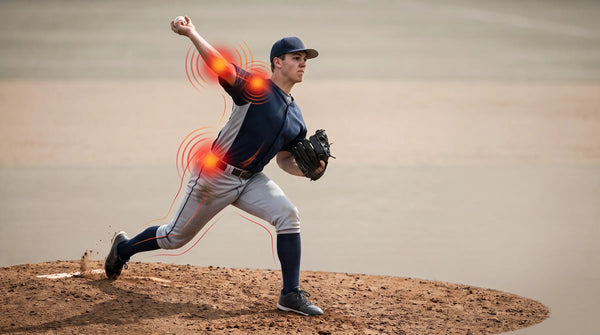
A pitcher who keeps having shoulder or elbow problems does not necessarily have one hidden flaw waiting to be found. The issue may be a mismatch between the athlete’s recent throwing history, preparation, recovery, and the role he is now expected to handle.
The useful question is not, “What single thing caused this?” It is: What changed, how fast did it change, and what can we adjust over the next four weeks?
This guide helps a program respond to a pitcher with a history of arm issues. It explains what to do when an athlete reports a problem, what to consider before changing the next demand, and how to make that demand visible, gradual, familiar, and adjustable.
Find Your Answer
Answer the question closest to what you’re facing right now, and jump straight there.
- “My pitcher has arm pain, fatigue, weakness, numbness, or something that feels different. What should we do right now?” → Jump to: What to Do When a Pitcher Reports a Problem
- “My pitcher is not reporting a current problem. How do I know what he can reasonably handle next?” → Jump to: Before You Change the Next Demand
- “How do we build from current throwing toward the role he will need to handle?” → Jump to: A Four-Week Preparation Example
- “What does research actually say about fatigue, workload, past problems, mechanics, and sequencing?” → Jump to: What Research Can and Cannot Tell You
- “What do we need to review next to build a complete plan for this pitcher?” → Jump to: Next in the Series
🎧 Prefer to listen? Audio version of this article:
Why Pitchers Keep Having Arm Problems
The foundation guide in this series explains how to organize a fall program around maturity, exposure, recovery, and capacity. This guide begins when one pitcher makes that process more complicated: he arrives with a recurring arm-problem history.
A recurring history does not necessarily mean the athlete is fragile or that one part is broken. It may mean that the demand now placed on him exceeds what his recent throwing history, preparation, recovery, and current role can support.
What changed, and how fast did it change?
A new role, more frequent throwing, higher intent, mound work, live hitters, tournaments, showcases, private instruction, velocity work, a second team, or a new training task can change the athlete’s demand faster than his preparation has allowed.
Research can show patterns across groups of athletes. It cannot identify one hidden cause for one pitcher. The practical response is to make the next demand visible, gradual, familiar, and adjustable.
What to Do When a Pitcher Reports a Problem
When a pitcher reports fatigue, pain, an unusual sensation, weakness, or a meaningful change from normal, do not begin by trying to identify one mechanical cause. Begin by listening, making the report clear, and changing the immediate plan when needed.
What to Do Today
| What the Athlete Reports or Shows | What to Do Today | What Happens Next | Avoid |
|---|---|---|---|
| Throwing-arm fatigue without pain, unusual sensation, or loss of normal function | Reduce or end that day’s throwing demand | Ask about all throwing during the past week, record the response, and reassess before the next demanding throwing day | Asking the athlete to finish the planned inning, bullpen, pitch count, or drill |
| Pain that is sharp, persistent, worsening, or limiting normal throwing function | Stop treating it as only a training adjustment | Follow the organization’s parent/guardian communication and qualified-referral process | Diagnosing, prescribing rehabilitation, or clearing a return to throwing |
| Numbness, tingling, weakness, catching, locking, or a meaningful change from normal | Stop the activity and escalate | Seek qualified evaluation through the organization’s established process | “Testing it out” with another throw, drill, or mechanical cue |
| A recurring complaint in the same area | Treat the recurrence as meaningful history | Confirm prior evaluation, current restrictions, recent throwing, and whether the pattern has changed | Assuming an old clearance or old program answers a new recurrence |
What to Observe and Record
Before deciding what changes next, build the full picture. Ask about the athlete’s recent throwing, the current role, prior symptoms, previous evaluation, current restrictions, and the response after demanding work.
Use observation to decide whether to hold, reduce, progress, coordinate, or refer.
- Is the athlete’s reported history consistent with the workload and response you are observing?
- Does throwing quality or recovery change after demanding days?
- Has outside throwing increased without being accounted for in the plan?
- Does the current role demand more than the athlete can repeat well?
If the answer changes, change the next decision. Do not wait for a neat explanation.
For Athletes and Parents
For athletes: Your history is information, not a verdict about your toughness or future. Tell the program about everything you throw, including lessons, showcases, and work with other instructors. Report fatigue early. Report pain, numbness, tingling, weakness, catching, locking, or a meaningful change from normal immediately.
For parents and guardians: A recurring arm problem deserves a complete picture: prior symptoms, outside throwing, travel and school schedules, prior evaluation, and current restrictions. Ask the athlete whether he believes he can report arm fatigue or pain without being punished. That conversation can be more useful than another attempt to identify one hidden defect.
Coordination, Referral, and Documentation
Parents, program staff, and instructors can ask, record, notice, monitor, adjust, coordinate, and refer. Qualified professionals evaluate, diagnose, interpret clinical findings, and determine medical clearance.
If a parent or guardian declines recommended evaluation, do not argue diagnosis or substitute a training solution. Document the athlete’s report, the communication, the guidance already provided, and the family’s response. Follow the organization’s written health, participation, and escalation policies. Existing restrictions and concerning changes in function should continue to guide what the program can responsibly allow.
The absence of the signs listed above does not establish that throwing is medically appropriate. The next preparation decision still depends on the athlete’s history, restrictions, full throwing exposure, role demand, and response to work.
Before You Change the Next Demand
The response table earlier in this guide addresses what to do when a pitcher reports a current problem. This section begins after that immediate decision: there is no current need to stop and escalate, but the athlete’s history still matters before you add, repeat, or progress throwing demand.
A history of arm issues does not automatically mean the athlete should be shut down, placed on a rehabilitation plan, or treated as fragile. It does mean the program should avoid assuming that being available today means the athlete is prepared for every demand that may come next.
Available, Symptom-Free, and Tolerant Are Different
People often use “healthy” as one word for several different states.
- Available: The athlete can pitch when the schedule asks.
- Symptom-free: The athlete reports no pain or unusual sensation.
- No known restriction or unresolved medical issue: No current qualified-professional restriction or known unresolved concern is affecting the plan. If you do not know, ask the athlete and parent or guardian rather than assuming.
- Tolerant: The athlete can repeatedly handle the next demand placed on him and recover well enough for the demand after that.
These are not interchangeable. An athlete can be available while reporting symptoms. He can be symptom-free in a low-demand fall setting but not yet tolerant of a spring role. He can have no known restriction and still be unprepared for the volume and intensity a schedule will require.
For this preparation framework, tolerance is the useful target: can the athlete handle the next planned demand and recover well enough for what comes after it?
Build the Decision Picture
Before changing the throwing plan, collect the facts that shape the next decision. Maturity, exposure, recovery, and capacity are not a score, diagnosis, injury prediction, or medical-clearance decision. They are a way to organize what you know.
- Maturity: Age, recent growth changes if known, position, role, and prior symptom history can help explain the context in which a complaint occurred.
- Exposure: Count everything the athlete throws, not only the pitches the program records: games, bullpens, catch play, long toss, position work, lessons, showcases, travel ball, velocity programs, and informal throwing.
- Recovery: Include sleep, school demands, travel, nutrition, illness, stress, and the athlete’s response after demanding throwing.
- Capacity: Consider the strength, motion, coordination, and repeat-effort ability needed for the next demand. Use mobility, strength, and movement observations to organize preparation and notice change over time.
The central question is: What has this athlete actually thrown everywhere, and what can he reasonably repeat next?
Use the Picture Before, During, and After Throwing
Before the session: Ask what the athlete has thrown during the past 7 days, including work outside the program. Identify whether today is ordinary throwing or a demanding day because of a bullpen, game, live work, high-intent throwing, showcase, or new task. Use the athlete’s familiar pre-throw preparation routine. Do not add a new high-intent drill or unfamiliar loading tool because of history alone.
During the session: Start with a demand below the athlete’s assumed ceiling. Keep the role, amount, intent, frequency, distance, mound work, live work, and new-task exposure easy to hold or reduce. If reported fatigue changes the athlete’s normal throwing response, reduce or end the day’s throwing rather than requiring the planned volume.
After the session and across the week: Record what was thrown, how demanding it was, how the athlete responded, and what is scheduled next. Put all throwing on one calendar, identify demanding days before adding another one, and avoid layering several new demands at once when recent preparation or outside work is unclear.
| Record | Simple Question |
|---|---|
| Throwing exposure | What did you throw today, and what else is scheduled before the next session? |
| Session demand | Was this ordinary catch play, a bullpen, live work, a game, a showcase, or another demanding task? |
| Athlete report | Did anything feel painful, unusually tired, tight, weak, or different from normal? |
| Next-day response | What can you honestly repeat well tomorrow? |
| Next decision | Hold, reduce, progress, coordinate, or refer? |
Build toward game demand. Do not begin with it. Professional preseason examples often show a staged buildup from lower-demand throwing toward bullpen, live, and game work. This illustrates progressive preparation. It is not a copied high-school protocol or an individual capacity test.
A Four-Week Preparation Example
This is a planning example, not an individualized prescription or an injury-prevention guarantee. Its purpose is to make the athlete’s next demand visible, manageable, and adjustable.
Week 1: Build the Picture
Collect the athlete’s current process before changing it. Ask about total throwing, outside work, prior symptoms, previous evaluation, current restrictions, familiar warm-up, post-throw routine, and the role expected in the next month.
Put all known throwing on one calendar. Identify games, bullpens, high-intent work, private sessions, showcases, position throwing, and planned recovery days. The objective is to avoid adding program demand to work already happening elsewhere.
Week 2: Start Below the Assumed Ceiling
Use a familiar pre-throw preparation routine. Begin throwing at lower intent and build toward the day’s task. Use a role, amount, intensity, frequency, distance, mound demand, and new-task exposure that can be held, reduced, or progressed.
Change one main demand at a time where possible. A demand can be total throws, intensity, throwing frequency, distance, mound work, live hitters, game role, or a new training task. Avoid adding several at once when recent preparation or outside workload is uncertain.
Week 3: Review Response, Not Just Compliance
Review what happened after demanding throwing: later that day, the next day, and in the next demanding session. Compare reported fatigue, pain or unusual sensation, throwing quality, recovery, outside throwing, and the ability to repeat the planned work.
Week 4: Hold, Reduce, Progress, Coordinate, or Refer
- Hold: Keep the present demand when the athlete needs more time at the current level.
- Reduce: Bring the demand back down when the athlete’s response does not support the current level.
- Progress: Add one manageable part of the demand when the reported response, known workload, and current preparation support it.
- Coordinate: Align program work with parents or guardians, outside instructors, athletic-training staff, and qualified professionals so the athlete is not carrying competing plans.
- Refer: Move to qualified evaluation when the signs in the response table apply.
Hold, reduce, and progress are preparation decisions. Coordinate is a shared-plan decision. Refer is the qualified-evaluation boundary.
What Research Can and Cannot Tell You
Research does not provide one simple explanation for why an individual pitcher keeps having trouble. It does provide useful context for the next decision.
Fatigue
Several adolescent-pitcher studies have linked pitching with arm fatigue to shoulder and elbow injury. In practice, use a fatigue report as decision information. Make it safe for the athlete to report fatigue before pain, performance pressure, or fear of losing innings delays the conversation.
Previous Problems
A long-term study of professional pitchers found that an earlier injury elsewhere in the body was linked with a greater chance of later arm injury. A prior problem anywhere in the body belongs in the throwing conversation. A recurring history supports a fuller history, a more adjustable starting demand, and closer follow-up.
Workload
Studies that followed players over time have not shown that one workload number explains why a specific pitcher gets hurt. They do show why total exposure is important to track. Injury studies also use different definitions and often rely on self-reported workload.
Pitch counts provide one workload boundary. Read them alongside total throwing, current role, reported symptoms, recovery, and the athlete’s ability to repeat work.
Mechanics, Movement Efficiency, and Sequencing
Research does not identify one visible pitching delivery that guarantees lower arm stress, better performance, or protection from future injury. Pitchers use different movement solutions, and a coach cannot diagnose the cause of pain, clear an athlete to throw, or predict one athlete’s injury risk from a delivery observation alone.
That does not mean movement information is useless. Biomechanical research can help describe how pitchers organize and transfer speed through the body during a throw. One useful concept is the kinematic sequence: the order in which body segments reach peak rotational speed. In a theoretical proximal-to-distal sequence, the pelvis leads, followed by the trunk, upper arm, forearm, and hand.
This does not mean every healthy or effective pitcher will reproduce one identical sequence on every pitch. Sequencing varies even in experienced pitchers, and research has found multiple sequence patterns within the same pitcher. Still, different sequence categories have been associated with different shoulder and elbow torque values. In research using 3D motion capture, proximal-to-distal sequencing was associated with lower shoulder external-rotation and elbow-valgus torque than some out-of-order sequence categories. These are biomechanical loading associations, not proof that one sequence prevents injury or that any athlete should be coached into one universal pattern.
The practical coaching question is not, “Can we find the one correct delivery?” It is, “Can we help this athlete organize movement, transfer speed through the body, and repeat the demands of his role more effectively?” Use observation to guide performance instruction and notice meaningful changes over time. Keep pain, loss of function, concerning symptoms, and return-to-throwing decisions within the qualified-evaluation process.
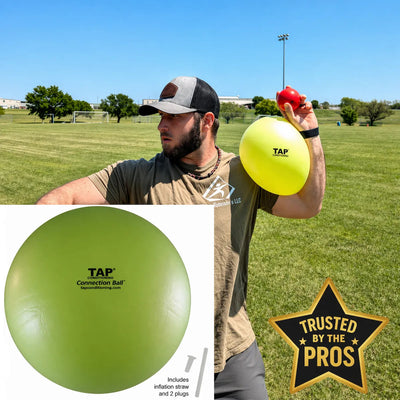
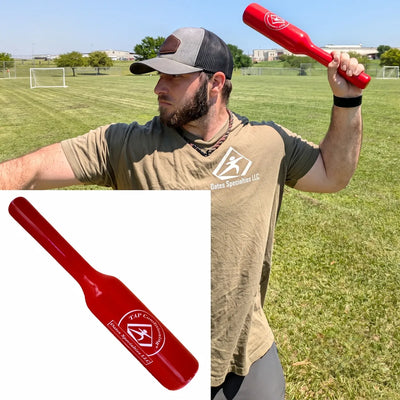
When it is practical within a supervised skill or preparation task, movement-feedback equipment can give an athlete a physical reference for coordination between body segments. TAP® Connection Ball and TAP® Connection Throwing Club are examples of tools that may help an athlete notice whether the throw feels connected and sequenced, rather than relying only on a verbal cue. Their role is to support a coaching task — helping an athlete explore timing, connection, and the transfer of movement — not to diagnose a mechanical fault or solve recurring arm symptoms.
Research discussed here supports the general reason to pay attention to sequencing and movement feedback. It does not establish that either product changes a pitcher’s kinematic sequence, lowers arm stress, prevents injury, speeds recovery, or reduces recurrence.
Structured Preparation
Structured youth and high-school baseball interventions have reported favorable injury-related findings in their study populations. The programs, athletes, and statistical results differed, so the findings do not identify one required routine or establish an individual recurrence solution.
In one youth study, the warm-up included stretching, dynamic movement, and balance tasks. That supports a consistent pre-throw preparation routine at the group level.
Practitioner and Equipment Context
Practitioner and commercial disclosure: Ron Wolforth, Randy Sullivan, and Oates Specialties operate commercial baseball-preparation businesses. Oates Specialties designs and sells baseball training equipment, including weighted implements and arm-care tools. Wolforth and Sullivan use Oates Specialties’ products in their facilities and have commercial relationships. Their public practices are included as examples of how preparation businesses organize information and routines, not as independent proof that a method or product prevents recurrence.
Practitioner Examples
The public materials reviewed from Wolforth and Sullivan offer three useful process examples.
Make the weekly process visible. Wolforth’s public work emphasizes reviewing total throwing, identifying demanding days, and considering warm-up, post-throw routine, recovery, and the athlete’s full week rather than looking only at a game pitch count.
Build into demand rather than beginning with it. Wolforth’s public materials describe gradual ramp-up and distinguish demanding throwing from lower-demand work. Sullivan’s public material emphasizes individualized progression rather than moving every athlete through the same calendar.
Record athlete response. Public Wolforth and Sullivan material emphasizes attention to discomfort, fatigue, recovery, and individual response rather than assuming that completed work proves readiness.
Equipment Context
Mention equipment when it has a practical coaching role: to create a controlled task, give the athlete feedback, or help the athlete feel a movement concept that would otherwise be difficult to describe.
- “This tool can be part of a familiar low-intent preparation task.”
- “This tool can give an athlete movement feedback during a supervised throwing or preparation task.”
- “This tool can help an athlete explore the timing and coordination of a connected throw.”
- “This routine can support general preparation.”
- “This training log can make reported exposure easier to see.”
Equipment does not diagnose a mechanical fault, establish medical readiness, clear an athlete to throw, or replace qualified evaluation when concerning symptoms are present. Product-specific claims about injury prevention, recovery, reduced recurrence, or a measurable change in arm stress require product-specific evidence in the relevant population.
Next in the Series
This guide puts arm health first. It helps a program respond when a pitcher reports a problem, account for relevant arm-history information, and make the next throwing decision without treating a symptom report as a mechanical puzzle or a medical diagnosis.
Once those immediate boundaries are clear, the next question is broader: What pitcher is actually in front of us, what will his role require, and what process will help him get there?
The Audit: What Pitcher Is Actually in Front of Me? builds the whole-athlete picture. It carries forward the arm-history, throwing-exposure, restrictions, recovery, and communication information from this guide. It then adds performance goals, current role and upcoming calendar, strength, mobility, movement observations, repeat-effort capacity, available preparation time, and the people who need to share the plan.
The goal is not to produce a score, diagnose a problem, or promise injury prevention. The goal is to build the clearest practical picture of the pitcher in front of you: what must be respected, what can be trained, what needs more information, and what the next preparation window should actually include.
This guide asks: What should we do when arm health becomes a concern?
The Audit asks: Given the whole athlete in front of us, where does he need to go and what is the process to get there?
Related Guides
- How Much Should a Pitcher Actually Throw? — Interpret total throwing exposure, pitch counts, rest, and outside workload.
- What a Mobility Screen Actually Tells You — Understand what a screen can inform and what it cannot diagnose.
- How Long Does It Take to Build Arm Strength? — Plan realistic preparation timelines.
- The Mid-Window Checkpoint — Decide whether to hold, reduce, or progress the plan.
- How Do Pitchers Safely Add Velocity? — Separate velocity-development claims from injury-prevention claims.
Technical Appendix
The main article uses plain language so readers can act on the information. This appendix provides research design, sample, statistics, and terminology for readers who want to cross-check the evidence.
Arm Fatigue
Salamh and colleagues pooled five adolescent-pitcher studies and found arm fatigue associated with shoulder and elbow injury. The pooled odds ratio was 13.32, with a 95% confidence interval of 3.22 to 55.09. The estimate is large but imprecise and should not be used as an individual risk number.
Pitching Role and Preseason Screening
Oyama and colleagues followed 832 high-school baseball players. Pitchers had higher throwing-related injury risk than nonpitchers, while the specific preseason shoulder range-of-motion and humeral-retrotorsion measures studied did not predict injury.
Specific Preseason Measures
Shitara and colleagues found selected shoulder strength and range-of-motion measures associated with later shoulder or elbow injury in a prospective high-school pitcher cohort. Those results do not create an informal screening cutoff.
Youth Elbow Risk Factors
Matsuura and colleagues prospectively studied youth baseball players and reported associations between later elbow injury and prior elbow pain, pitching or catching roles, higher annual innings, and higher weekly training time. The findings do not create an individual risk score or a universal workload threshold.
Previous Injury Elsewhere in the Body
Bullock and colleagues followed 297 Minor League pitchers over seven years. An initial kinematic-chain injury was associated with a higher hazard of later arm injury after adjustment for age, body mass index, arm dominance, pitching role, previous arm injury, appearances, and seasonal pitch load. The adjusted hazard ratio was 2.6, with a 95% confidence interval of 1.2 to 5.6. Kinematic chain refers to connected body segments through which movement and force are transferred.
Mechanics, Movement Efficiency, and Kinematic Sequencing
Kinematic-sequence research describes the order in which body segments reach peak rotational speed during a pitch. Scarborough and colleagues classified 249 pitches from 30 pitchers using the theoretical proximal-to-distal sequence of pelvis, trunk, arm, forearm, and hand. Different sequence categories were associated with different elbow-valgus and shoulder external-rotation torque values; the study describes biomechanical loading associations rather than prospective injury outcomes. In a separate study of 88 pitches from 10 pitchers, no analyzed pitch followed the complete theoretical sequence. Another study comparing curveballs and fastballs reported altered distal sequencing in 49% of curveballs and 43% of fastballs. Together, these studies show that sequencing varies in real pitchers and can be studied in relation to joint loading. They do not predict injury for an individual athlete, establish one universal visual mechanics model, or validate a particular training tool.
Preparation Programs
Sakata and colleagues reported fewer throwing injuries in youth baseball players who participated in a prevention program. Shitara and colleagues later compared shoulder stretching and external-rotation strength training in high-school pitchers. These studies support structured preparation at a group level; they do not prove an individual recurrence solution.
Pitch-Count Compliance
In one study of youth tournament settings, more than 90% of teams and nearly half of pitchers did not comply with published pitch-count guidelines. This supports the practical problem that team-recorded workload may not capture all of a young athlete’s exposure. It does not establish that guideline noncompliance explains one athlete’s history.
Weighted-Ball Program Prevalence
A multicenter study of 115 high-school pitchers reported that 63% had participated in a weighted-ball velocity program. The study could not compare injury rates between participants and nonparticipants because only one injury occurred during the study period. The useful point here is informational: programs may inherit training history they did not assign.
Preseason Workload
Tabaracci and colleagues studied nine collegiate pitchers and documented substantial week-to-week variation in preseason throwing workload, including elevated acute-to-chronic workload ratio values during several preseason weeks. The authors recommended workload monitoring and progressive preseason development. The small collegiate sample and workload methods do not establish a universal ratio cutoff or capacity test for one athlete.
Annotated Bibliography
The links below are provided so readers can cross-check the cited source. Peer-reviewed research is listed first. Practitioner sources are listed separately and are included as practitioner examples, not as independent scientific proof.
Core Peer-Reviewed Research
Agresta CE, Krieg K, Freehill MT. “Risk Factors for Baseball-Related Arm Injuries: A Systematic Review.” Orthopaedic Journal of Sports Medicine. 2019;7(2):2325967119825557.
Why it is here: Reviews prospective evidence on baseball arm-injury risk factors and the limitations of that evidence. Supports the article’s caution that one common factor rarely explains an individual athlete’s history.
Oyama S, Hibberd EE, Myers JB. “Preseason Screening of Shoulder Range of Motion and Humeral Retrotorsion Does Not Predict Injury in High School Baseball Players.” Journal of Shoulder and Elbow Surgery. 2017;26(7):1182–1189.
Why it is here: Supports the high-school pitcher-versus-nonpitcher injury-risk comparison and the point that the particular preseason shoulder range-of-motion and humeral-retrotorsion measures studied did not predict injury. It does not establish that screening is useless or provide a coach-administered clearance test.
Milewski MD, Skaggs DL, Bishop GA, et al. “Chronic Lack of Sleep Is Associated With Increased Sports Injuries in Adolescent Athletes.” Journal of Pediatric Orthopaedics. 2014;34(2):129–133.
Why it is here: Provides limited, non-baseball-specific context for including sleep in the recovery conversation. It is retrospective and does not establish a pitching threshold or prove that increasing sleep prevents injury.
Shitara H, Kobayashi T, Yamamoto A, et al. “Prospective Multifactorial Analysis of Preseason Risk Factors for Shoulder and Elbow Injuries in High School Baseball Pitchers.” Knee Surgery, Sports Traumatology, Arthroscopy. 2017;25(10):3303–3310.
Why it is here: Supports the narrow point that selected preseason shoulder strength and range-of-motion findings were associated with later injury in this high-school pitcher cohort. It does not provide a coach-administered screening cutoff or an individual injury prediction.
Salamh P, Jones E, Bashore M, Liu X, Hegedus EJ. “Injuries and Associated Risk Factors of the Shoulder and Elbow Among Adolescent Baseball Pitchers: A Systematic Review and Meta-analysis.” Physical Therapy in Sport. 2020;43:108–119.
Why it is here: Supports the association between pitching with arm fatigue and shoulder/elbow injury in adolescent pitchers. The pooled estimate has a wide confidence interval and should not be used as an individual prediction.
Olsen SJ II, Fleisig GS, Dun S, Loftice J, Andrews JR. “Risk Factors for Shoulder and Elbow Injuries in Adolescent Baseball Pitchers.” The American Journal of Sports Medicine. 2006;34(6):905–912.
Why it is here: Supports the case-control finding that reported fatigue and overuse patterns were strongly associated with membership in the surgery group. The retrospective design and recall-based exposure data limit causal interpretation.
Bullock GS, Thigpen CA, Noonan TK, Kissenberth MJ, Shanley E. “Initial Kinematic Chain Injuries Increase Hazard of Subsequent Arm Injuries in Professional Baseball Pitchers.” Journal of Shoulder and Elbow Surgery. 2022;31(9):1773–1781.
Why it is here: Supports the point that an injury elsewhere in the body can be relevant to later arm-injury risk in a professional-pitcher cohort. It does not establish a causal mechanism or a high-school intervention.
Mine K, Milanese S, Jones MA, Saunders S, Onofrio B. “Risk Factors of Shoulder and Elbow Injuries in Baseball: A Scoping Review of 3 Types of Evidence.” Orthopaedic Journal of Sports Medicine. 2021;9(12):23259671211064645.
Why it is here: Supports the broader discussion of evidence gaps between arm-loading measurements and later injury outcomes. It also supports caution in treating isolated workload, screening, or mechanics findings as an individual injury prediction.
Scarborough DM, Bassett AJ, Mayer LW, Berkson EM. “Kinematic Sequence Patterns in the Overhead Baseball Pitch.” Sports Biomechanics. 2020;19(5):569–586.
Why it is here: Provides background on kinematic-sequence variability in baseball pitchers. It supports the point that real pitches do not necessarily reproduce the complete theoretical proximal-to-distal order. It does not establish an injury-risk threshold or a product-specific intervention.
Scarborough DM, Linderman SE, Sanchez JE, Berkson EM. “Kinematic Sequence Classification and the Relationship to Pitching Limb Torques.” Medicine & Science in Sports & Exercise. 2021;53(2):351–359.
Why it is here: Supports the biomechanical association between kinematic-sequence category and elbow/shoulder torque in the study sample. It does not prospectively establish injury risk or validate a particular training tool.
Scarborough DM, Colón PE, Linderman SE, Berkson EM. “Comparison of Kinematic Sequences During Curveball and Fastball Baseball Pitches.” Frontiers in Sports and Active Living. 2021;3:699251.
Why it is here: Supports the point that altered distal-segment sequencing was common in the study’s curveballs and fastballs. It does not establish that any specific training tool corrects sequencing, reduces injury, or reduces recurrence.
Sakata J, Nakamura E, Suzuki T, et al. “Throwing Injuries in Youth Baseball Players: Can a Prevention Program Help? A Randomized Controlled Trial.” The American Journal of Sports Medicine. 2019;47(11):2709–2716.
Why it is here: Supports structured preparation at the group level. The youth intervention included stretching, dynamic movement, and balance tasks as part of warm-up. It does not identify one essential exercise or validate a particular product.
Shitara H, et al. “Shoulder Stretching Versus Shoulder Muscle Strength Training for the Prevention of Shoulder and Elbow Injuries in High School Baseball Pitchers: A Randomized Trial.” Scientific Reports. 2022;12:22118.
Why it is here: Provides high-school randomized-trial context for structured shoulder preparation. Its study population, intervention, and statistical framework differ from Sakata’s youth trial, so the studies should not be treated as one universal protocol.
Matsuura T, Suzue N, Kashiwaguchi S, Arisawa K, Yasui N. “Elbow Injuries in Youth Baseball Players Without Prior Elbow Pain: A 1-Year Prospective Study.” Orthopaedic Journal of Sports Medicine. 2013;1(5):2325967113509948.
Why it is here: Supports prospective youth-baseball context showing that age, pitcher or catcher role, and playing more than 100 games per year were associated with later elbow pain in players without prior elbow pain. These findings do not create an individual risk score or a universal workload threshold.
Practitioner Sources
Wolforth R. “When It Comes to Arm Issues…” Texas Baseball Ranch. Undated.
Why it is here: Practitioner example for reviewing pain/discomfort, recovery, workload, and the athlete’s broader throwing context. Not peer-reviewed evidence or a universal protocol.
Wolforth R. “Wolforth Throwing Mentorship: Article 62.” Perfect Game. January 12, 2026.
Why it is here: Practitioner example for tracking workload beyond a total pitch count and recognizing changes in athlete response. Not peer-reviewed evidence or a universal protocol.
Sullivan R. “It’s Time for a Revolution in Throwing Rehab.” Florida Baseball ARMory. March 6, 2026.
Why it is here: Practitioner rehabilitation perspective on individualized progression and athlete response. It is not a nonclinical return-to-throwing protocol or independent scientific proof.
Additional Peer-Reviewed Baseball Context
Greiner JJ, Trotter CA, Walczak BE, Hetzel S, Baer GS. “Pitch-Count Compliance in Youth Baseball Tournament Settings.” Orthopaedic Journal of Sports Medicine. 2021;9(11):23259671211050127.
Why it is here: Supports the point that formal pitch-count rules may not capture or control all real-world youth baseball throwing behavior. It does not establish that guideline noncompliance explains one athlete’s arm-problem history.
Bowman EN, Camp CL, Erickson BJ, et al. “Most High School Baseball Pitchers Are Using Weighted Ball Throwing Programs to Increase Ball Velocity: Cross-sectional Analysis of US High School Pitchers.” JSES Reviews, Reports, and Techniques. 2023;3(2):137–141.
Why it is here: Supports the point that programs may inherit weighted-ball training history they did not assign. It could not meaningfully compare injury rates because only one injury occurred during the study period.
Tabaracci B, Sudhir S, Gauthier M, Hannigan L. “Preseason Workload in Collegiate Baseball Pitchers.” International Journal of Sports Physical Therapy. 2025;20(2):221–230.
Why it is here: Provides limited descriptive collegiate preseason-workload context. It documents substantial week-to-week variation in throws and measured workload and supports monitoring workload while gradually building preseason throwing demand. The sample was small and does not provide a universal workload threshold, a capacity test, or evidence that monitoring prevents injury.
About This Analysis
Created by the Oates Specialties team led by Robert Oates, M.Ed., Founder
Editorial oversight by Gunnar Thompson, BS, CSCS, General Manager
Certified Strength & Conditioning Specialist | Biomechanics Specialist
September 2026
Complete Credentials
ROBERT OATES, M.Ed., Founder: Founded Oates Specialties in 2003. Master of Education degree. Provides strategic direction for educational content and athlete development philosophy.
GUNNAR THOMPSON, General Manager: BS Kinesiology (Clinical Exercise Science). CSCS (NSCA), PES (NASM), CPPS certifications. Technical authority on biomechanics and performance science. Conducts review of all educational content for scientific accuracy.
Questions or corrections: gunnart@oatesspecialties.com
© 2026, Oates Specialties LLC