Bat Speed Training for Younger Hitters: The Right Sequence for Ages 13 to 15
Executive Summary
Bat speed tools work for youth baseball hitters aged 13 to 15, and the real question was never whether they work — it is whether a hitter’s body is ready for them yet, and in what order, since this age range sits in the middle of the body’s fastest stretch of growth. Coordination can dip for a while, growth plates are more sensitive to overuse stress, and the lower back carries real risk if a swing leans on it for rotation instead of the upper back. None of that means special tools are off limits. It means they need to be introduced in the right sequence, at the right intensity, with the right supervision. This article lays out that sequence in plain terms: what to build first, what to add next, and what to watch for the whole way through. Every hitter, at any age, builds bat speed through the same basic chain — strength first, then usable range of motion, then rotational power, then more specific loaded work, confirmed along the way by real measurement. That chain does not change for a 14-year-old. What changes is the pace and the caution required to move through it safely.
🎧 Prefer to listen? Audio version of this article:
Why Younger Hitters Need Their Own Plan
A hitter who dominated in junior high can walk into a high school program and suddenly look like a different player. His timing is off. His once-smooth swing looks stiff. Nothing about his work ethic changed. His body did.
Most boys move through their fastest growth stretch right around this age, and that stretch briefly throws off coordination, since the nervous system’s sense of arm and leg length has not caught up to how fast the body just changed shape. This is not a flaw to train around quietly. It is the single biggest reason a youth hitting program has to look different from an adult one, and it is the reason special tools that work great for a college player can be the wrong choice, at the wrong time, for a 14-year-old.
It is worth being precise about the biology here, since it is easy to get backwards. This age range is not “before” puberty — it is usually right in the middle of it. For most boys, puberty is already well underway by 13, and the single fastest point of growth typically lands around age 13 and a half. That timing matters for coaching: a 13 to 15 year old hitter is not a smaller version of a high schooler waiting to grow into his body. He is actively in the middle of the exact stretch where growth outpaces the coordination and soft-tissue durability needed to keep up with it.
The Body’s Advantage: Short, Explosive Effort Fits This Age Well
Here is a piece of genuinely good news that does not get said enough: a young athlete’s body is actually well built for the kind of short, explosive effort that bat speed training involves.
A single hard swing lasts a fraction of a second, and the energy for it comes from the body’s fastest available fuel source — one that is ready in an instant but runs out within about ten to fifteen seconds of continuous maximal effort. What matters more than the swing itself is how fast the body bounces back afterward, and research shows younger athletes recover from that kind of effort faster than adults do, in part because their fuel stores refill more quickly. Their overall energy system also leans more toward steady, oxygen-based fuel and less toward the harder-recovering, fatigue-heavy pathway adults rely on more during sustained hard efforts.
In plain terms: short, all-out swings with real rest in between are a good physical match for this age group. The caution is not that their bodies cannot handle explosive effort. It is the same caution that runs through this whole article — manage total volume and stay alert to the injury risks covered below, rather than treating energy and recovery as the limiting factor.
The Right Order: A Progression, Not a Shopping List
Special tools earn their name because they are meant to sharpen something that is already there, not build it from nothing. For a younger hitter, that means sequence matters more than any single tool.
Start with movement quality and light resistance. Before adding any loaded or resisted swing tool, a hitter needs clean rotational movement and basic coordination already in place. Light, adjustable resistance bands are a good starting point here, since the athlete controls both the range of motion and the load.
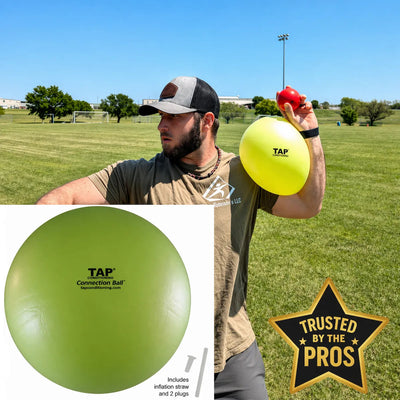
Add feedback and sequencing tools next. Once movement quality is reasonably clean, tools that give a hitter direct feedback on his own swing, rather than adding load to it, are a natural next step. The TAP® Connection Ball is a good example: rather than making the swing harder, it gives the hitter something to feel, helping him sense proper bat angle and sequencing for himself. Mike Ryan, a long-time hitting instructor at Fastball USA, has pointed to the Connection Ball specifically as one of the fastest tools he has seen for changing a hitter’s swing feel, and notes that his program uses it with youth hitters as well as more advanced players.
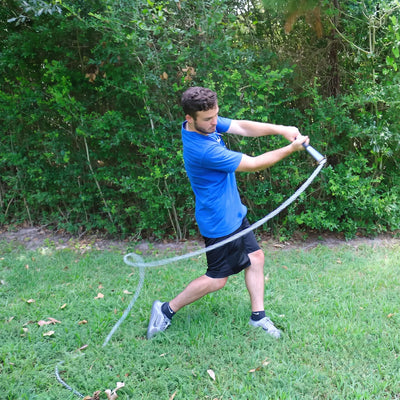
Introduce variable-resistance and loaded tools once the foundation holds. Once a hitter shows clean rotational movement, solid coordination, and has been comfortable with lighter feedback tools for a stretch of time. A variable-resistance tool like the SpeedChain® is a natural next step because the resistance itself can be scaled up or down to match where the hitter actually is, rather than locking him into one fixed load. Many of these systems go a step further and offer separate resistance levels built specifically for younger, pre-adolescent hitters versus older high school hitters — a younger or less-trained hitter should be using the lighter setting built for his age and stage, not the same setting as an older teammate scaled down by feel. That built-in distinction reflects the same progression logic this article is built on.

Save the most demanding, high-intent explosive work for last, and only once a coach has confirmed the earlier layers are solid. This is not the place to chase a new gadget first.
A useful way to picture how this can go wrong: a 14-year-old hitter tries a variable-resistance bat trainer at the same setting his 17-year-old teammate uses, because it “felt fine” during a few practice swings. Without a coach recognizing that the tool itself is built with a lighter setting for his age and training stage, he is training at a load meant for a more physically mature athlete.
All exercises and training applications described in this article are general educational examples. They are not prescriptive training programs. Oates Specialties does not provide individual training instruction.
How to Tell If He’s Actually Ready
Two hitters can share a birthday and still be in completely different places physically. One may have already been through his fastest growth stretch. The other may be just entering it. Going by age on the roster sheet alone can lead a coach to advance both of them through the same tool progression at the same pace, even though their bodies are asking for different things.
A more reliable approach is tracking physical maturity directly, not just birth year. This does not require special equipment or a lab visit. Simple, repeated height and weight measurements, checked every month or two during a known growth stretch, give a coach a much clearer picture of where a hitter actually sits, compared to relying on his age alone. Sports science literature on this approach consistently points to the same practical takeaway: training load and progression decisions hold up better when they are based on where an athlete is in his physical maturity, not simply how many years he has been alive.
The coaching payoff is direct. A hitter who is already well past his fastest growth stretch may be ready to move through the tool progression above more quickly. One who is currently in the middle of it may need to stay at the movement-quality and light-resistance stage longer, regardless of what grade he is in or what his teammates are doing.
Guardrails: What to Watch For
A few specific injury risks deserve direct attention during this age range, because they show up consistently in the medical literature and because a coach who knows what to look for can catch them early.
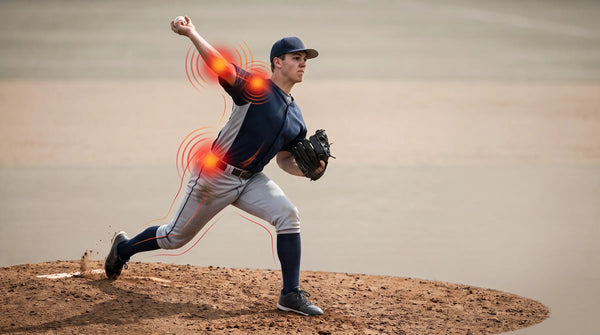
Growth plates take the most stress during rapid growth. Bone lengthens faster than the surrounding muscle and tendon can stretch to keep pace, which adds strain right at the growing edges of bone in the shoulder, elbow, and hip and pelvis. One specific injury worth knowing by name: an apophyseal avulsion — where sudden, forceful hip rotation, including the kind involved in swinging a bat, pulls hard enough on the still-growing edge of the pelvis to tear tissue away from the bone, not just cause soreness.
The lower back is a common and often overlooked risk point. A swing that leans on the lower back for rotation, rather than the upper back, puts stress on a part of the spine that is not well designed to twist. This mechanism is directly tied to a documented injury — a stress fracture in the vertebra — that shows up more often in young athletes during growth spurts specifically.
Supervision and technical quality matter more than any single tool choice. Simple, well-executed movement patterns should always come before high speed, added resistance, or instability work, and expert youth training guidelines are consistent on this point.
Why Practice Structure Matters as Much as Tool Choice
One more piece belongs here, since it is easy to overlook: how practice itself is structured affects how well any of this training actually sticks. A study of high school-age hitters found that mixing up pitch types and situations during batting practice, rather than repeating one pattern over and over, improved performance on both an already well-learned swing and a newer one being developed, at the same time. Tool progression and practice structure work together, not separately.
Safe Use of Special Tools
Light resistance bands are a genuinely good starting point for this age group. Youth resistance training guidelines consistently support well-designed, supervised training using accessible tools like bands, provided technique is prioritized over chasing speed or load early.
The TAP® Connection Ball gives a hitter direct physical feedback on bat angle and sequencing without adding resistance, making it a low-risk way to refine mechanics once basic coordination is in place. Coach Mike Ryan of Fastball USA, drawing on more than 25 years of hitting instruction, uses this tool with youth and advanced hitters alike as a way to quickly change how a swing feels — exactly the kind of low-load, high-feedback tool that fits well early in a younger hitter’s progression.
Variable-resistance bat trainers, such as the SpeedChain®, are appropriate once a hitter has the movement foundation described above, and should be used at the resistance level built for his age and training stage rather than an older teammate’s setting.
None of these tools replace a coach’s eyes on the movement. Used out of sequence, or without supervision, the same tools that support safe development can just as easily reinforce a pattern that is not ready for them yet.
Safety Information
The tools referenced in this article are training aids, not toys, and are not intended for impact use or any use outside their designed training pattern. They are not rehabilitation devices and do not replace guidance from a qualified medical or physical therapy professional for any injury or pain.
Younger athletes should use any tool referenced here under direct coach supervision, with proper technique and movement quality prioritized over chasing a number or a new sensation. This article describes general training concepts for educational purposes and does not constitute individualized medical, physical therapy, or coaching advice for any specific athlete. Any persistent pain, swelling, or change in throwing or hitting performance should be evaluated by a qualified medical professional.
Where to Go Next
This article covers one specific lane in the bat speed development series: how a younger hitter should move through the same development chain every hitter follows, safely and in the right order. How to Increase Bat Speed: A Strength-First System for Power and Transfer maps that full chain. What Gets Measured Gets Better covers establishing a baseline and confirming what carried over. Building the Strength Foundation for Bat Speed covers the force-production foundation this article assumes a hitter is already building. Mobility Will Not Add Bat Speed — But a Restriction Will Take It Away, Rotational Power and Med-Ball Throws: From Wall to Bat, Overload, Underload, and Overspeed, Instability and Chaos Training, and Applying the System Across the Season each cover a layer of the same system in full depth, in that order. Check out the full series to get an in depth guide to increasing bat speed.
The Evidence in Summary
Bat speed development for youth hitters follows the same chain as every other hitter — strength, mobility, rotational power, loaded work, and measurement — but the pace and caution required to move through that chain safely changes during the 13-to-15 growth window. A young athlete’s short-effort energy system is actually well suited to bat speed training. The real risks are specific and known: growth plate stress at the hip, lower back strain from rotation that leans on the spine instead of the upper back, and tool loads that outpace a hitter’s physical maturity. Tracking physical maturity through simple, repeated measurements gives a coach a more reliable guide than age alone. A progression that starts with movement quality, adds feedback tools, then introduces age-appropriate loaded resistance, all under direct supervision, allows a younger hitter to build the same qualities an older hitter builds without asking a still-developing body to absorb demands it is not ready for.
Frequently Asked Questions
There is no single correct age, since young athletes grow and mature at different rates. The better guide is readiness: a hitter should have clean rotational movement and basic coordination in place before adding resistance, which typically lines up with the mid-teen years but should be judged individually and under coach supervision.
Yes, with the right sequencing and supervision. The short, explosive effort bat speed training requires actually matches a younger athlete’s recovery ability well. The real risks — growth plate stress and lower back strain — are specific and known. Managing them is a matter of sequencing and monitoring, not avoiding training altogether.
No. Many training tools are built with different intensity or resistance levels specifically for younger, less physically mature athletes versus older, more advanced ones, and that distinction should be respected rather than matched by feel.
Track physical maturity, not just age. Simple height and weight measurements every month or two during a growth stretch give a clearer picture than birth year alone. A hitter past his fastest growth stretch may progress more quickly; one in the middle of it may need to stay at the light-resistance stage longer, regardless of grade.
Technical Appendix
Growth timing and coordination. Most boys move through peak height velocity, the point of fastest growth during puberty, around age 13 to 14. This means the 13-to-15 age range sits in the middle of puberty, not before it: average puberty onset in boys is around age 11, with a typical range of 9 to 14, and peak height velocity most commonly occurring while boys are already in an active stage of pubertal hormonal development [Source I]. A temporary decline in coordination around this period, sometimes called adolescent awkwardness, is well documented and tied to the body’s changing proportions outpacing the nervous system’s internal sense of limb length [Source A].
Tracking maturity rather than age alone. Because two athletes of the same age can differ substantially in physical maturity, sports science literature supports estimating maturity status through simple, repeated anthropometric measurements such as height and weight, rather than relying on chronological age alone, in order to guide training load and progression decisions more accurately and to better manage injury risk during rapid growth [Source J].
Energy system fit for youth. A single maximal-effort swing draws primarily on the phosphagen (ATP-PC) energy system, which supports maximal intensity effort for roughly ten to fifteen seconds before depleting [Source B]. Research comparing children and adults found that phosphocreatine resynthesis, the process that restores this fuel source after a maximal effort, occurs roughly twice as fast in young boys as in adult men, and that children rely more heavily on oxidative metabolism with lower accumulation of fatigue-related byproducts during high-intensity exercise compared to adults [Source C, Source D].
Growth plate vulnerability, including the pelvis. Apophyseal avulsion injuries in the pediatric pelvis occur with sudden eccentric forces, explicitly including swinging a bat, most commonly at the anterior superior iliac spine, anterior inferior iliac spine, and ischial tuberosity, with the anterior superior iliac spine’s growth center beginning ossification between ages 13 and 15 and not fully fusing until the early-to-mid twenties [Source E].
Lower back risk. Spondylolysis, a stress fracture in the vertebra, is a well-documented cause of low back pain in young athletes, with lumbar extension and rotation established as risk factors, and risk of progression noted as highest around the adolescent growth spurt specifically [Source F].
Youth resistance training guidance. The 2014 International Consensus statement on youth resistance training, endorsed by multiple sports medicine and pediatric organizations, supports well-designed and supervised resistance training for children and adolescents, emphasizing that the development of high-velocity movement may be especially important during the growing years, when neural plasticity and motor coordination are most sensitive to change [Source G].
Practice structure and skill retention. A study of high school-age baseball players found that randomized practice, mixing pitch types and situations rather than repeating one pattern, improved hitting performance on both an already well-learned swing and a newly developing one [Source H].
Annotated Bibliography
All sources below were directly reviewed and their URLs verified during research for this article.
A. Retzepis, N-O., et al. The effect of peak height velocity on strength and power development of young athletes: A scoping review. Journal of Functional Morphology and Kinesiology, 2025.
https://www.ncbi.nlm.nih.gov/pmc/articles/PMC12101259/
Peer-reviewed scoping review. Source for growth timing and adolescent awkwardness.
B. The ATP-PC system. PT Direct.
https://www.ptdirect.com/training-design/anatomy-and-physiology/the-atp-pc-system
Practitioner-level exercise physiology reference. Source for the ten-to-fifteen-second maximal effort window of the phosphagen system.
C. Chapter 17: The child: Responses and adaptations to physical activity and training. Open Textbook of Exercise Physiology.
https://pressbooks.openeducationalberta.ca/otep/chapter/chapter-17-the-child-responses-and-adaptations-to-physical-activity-and-training/
Peer-reviewed academic textbook chapter, citing Ratel et al. Source for the roughly two-fold faster phosphocreatine resynthesis rate in young boys compared to men.
D. Metabolic and fatigue profiles are comparable between prepubertal children and well-trained adult endurance athletes. Frontiers in Physiology, 2018, hosted on PMC.
https://pmc.ncbi.nlm.nih.gov/articles/PMC5928424/
Peer-reviewed original research. Source for reduced fatigue byproduct accumulation in prepubertal children during high-intensity exercise.
E. Pelvic avulsion injuries in the adolescent athlete. Musculoskeletal Key.
https://musculoskeletalkey.com/pelvic-avulsion-injuries-in-the-adolescent-athlete/
Citing peer-reviewed orthopedic literature. Source for apophyseal avulsion injury mechanism, including the explicit mention of bat swinging, and ossification timing.
F. Spondylolysis: Underrecognized cause of low back pain. Contemporary Pediatrics.
https://www.contemporarypediatrics.com/view/spondylolysis-underrecognized-cause-low-back-pain
Peer-reviewed clinical pediatric publication. Source for spondylolysis risk factors and elevated risk during the adolescent growth spurt.
G. Lloyd R. S., Faigenbaum A. D., Stone M. H., et al. Position statement on youth resistance training: The 2014 international consensus. British Journal of Sports Medicine, 48(7), 498–505, 2014.
https://pubmed.ncbi.nlm.nih.gov/24055781/
Peer-reviewed, multi-organization endorsed consensus statement, independently verified.
H. Contextual interference modulated by pitcher skill level. Study of high school-age baseball players on random versus blocked batting practice.
https://www.researchgate.net/publication/262262923_Contextual_Interference_Modulated_by_Pitcher_Skill_Level
Peer-reviewed original research. Source for the practice-structure finding on skill retention in both well-learned and novel swings.
I. American Academy of Pediatrics. Growth and normal puberty. Pediatrics, 1998.
https://publications.aap.org/pediatrics/article/102/Supplement_3/507/28134/Growth-and-Normal-Puberty
Peer-reviewed clinical review, independently verified. Source for average puberty onset age and timing of peak height velocity relative to pubertal hormonal development in boys.
J. Maturity-associated considerations for training load, injury risk, and physical performance in youth soccer: One size does not fit all. Journal of Sport and Health Science.
https://www.sciencedirect.com/science/article/pii/S2095254620301198
Peer-reviewed review. Source for the recommendation to track biological maturity, such as through height and weight measurement, rather than chronological age, when guiding youth training load and injury-risk decisions.
TAP® Connection Ball. oatesspecialties.com.
https://oatesspecialties.com/products/connection-ball
A 12-inch inflatable constraint trainer used between body segments to expose disconnections in throwing, hitting, and rotational movement as they happen. Referenced in this article as the feedback and sequencing tool appropriate for the second stage of the youth progression.
SpeedChain®. oatesspecialties.com.
https://oatesspecialties.com/products/bat-speedchain
Variable-resistance bat trainer offered at distinct resistance levels for pre-adolescent versus high school hitters. Referenced in this article as the loaded-resistance tool appropriate once a hitter’s movement foundation is established, used at the age-appropriate resistance setting.
Ryan, Mike. Connection Ball hitting drills give you a MLB look. Fastball USA.
https://fastballusa.com/connection-ball-hitting-drills-give-you-a-mlb-look/
Verified first-person blog post from Coach Mike Ryan, confirming over 25 years of hitting instruction experience and direct use of the Connection Ball with youth hitters. Practitioner source cited for stated coaching experience.
Oates Specialties. How to Increase Bat Speed: A Strength-First System for Power and Transfer. oatesspecialties.com.
https://oatesspecialties.com/blogs/education-hub/how-to-increase-bat-speed
Maps the full development chain this article operates within — measurement, strength, mobility, rotational power, overload and underload training, instability and chaos training, and competition-day application. This article covers how the same chain applies to younger hitters safely and in the right order.
About This Analysis
Created by the Oates Specialties team led by Robert Oates, M.Ed., Founder
Editorial oversight by Gunnar Thompson, BS, CSCS, General Manager
Certified Strength & Conditioning Specialist | Biomechanics Specialist
August 2026
Complete Credentials
ROBERT OATES, M.Ed., Founder: Founded Oates Specialties in 2003. Master of Education degree. Provides strategic direction for educational content and athlete development philosophy.
GUNNAR THOMPSON, General Manager: BS Kinesiology (Clinical Exercise Science). CSCS (NSCA), PES (NASM), CPPS certifications. Technical authority on biomechanics and performance science. Conducts review of all educational content for scientific accuracy.
Questions or corrections: gunnart@oatesspecialties.com
© 2026, Oates Specialties LLC