

TAP® Shoulder Tube — Long-Lever Oscillation Trainer for Baseball Shoulder Stability
Couldn't load pickup availability
Long-lever oscillation that forces the shoulder to organize itself — in every direction, not just one.
The TAP® Shoulder Tube® is a 69-inch long-lever oscillation tool that uses quick hand movements to send kinetic waves down the shaft, forcing the shoulder, scapula, and trunk to control motion in all directions instead of just one straight line. It delivers a structured way to prepare the arm before throwing, build shoulder control and tissue durability, and support post-throw recovery for baseball and other overhead athletes.
- 360-Degree Cylindrical Design — Smooth motion in any direction without forcing the athlete to twist their torso, unlike single-plane flat or bow-style bars.
- Chaotic Dynamic Stabilization — Counterweights never flex the same path twice, forcing the shoulder’s nervous system to constantly adapt — just like a live throw demands.
- Long-Lever Torque Amplification — Small hand movements create significant energy at the tips; the 69-inch shaft multiplies modest effort into a meaningful stability challenge.
- Circular Hand Control — Small circles shift load off large prime movers and onto the deep rotator cuff stabilizers that keep the arm centered in the socket.
- Warm-Up, Conditioning & Recovery — Rhythmic oscillations drive blood flow and joint lubrication before throwing, and re-center the shoulder afterward at lower intensity.
What Is It?
The TAP® Shoulder Tube® is a long, flexible rod with weighted ends designed to bend and rebound when the athlete makes short, rapid hand movements at the grip. Each oscillation sends a wave down the lever and back toward the shoulder, creating a constant stabilization demand at the glenohumeral joint (the ball-and-socket at the top of the arm), the shoulder blade, and the trunk.
Unlike flat or bow-style oscillation bars that mostly move in a single straight plane and often require the athlete to twist their body to reach different angles, the Shoulder Tube®’s cylindrical design allows smooth motion in any direction from the same stance — matching the multi-axis demands of throwing and overhead hitting.
How It Works
Three mechanisms behind every oscillation
Long-Lever Torque
The 69-inch length amplifies small hand oscillations into significant energy at the tips. As the rod bends and rebounds, that energy returns toward the shoulder, demanding the joint stay centered under rapidly changing load.
Chaotic Stabilization
Because the counterweights follow an unpredictable path, the shoulder’s sensory receptors never settle into a pattern. The nervous system must continuously send fast corrections to the stabilizing muscles — preparing them for the forces of a live throw.
Deep Rotator Cuff Isolation
Small circular hand motions create a controlled spin at the tip, shifting load off large prime movers and onto the deep stabilizers that keep the arm centered in its socket through multi-directional positions.
Backed by Research
The Science of Long-Lever Oscillation
There is no single peer-reviewed trial on the TAP® Shoulder Tube® itself; its value is supported by broader work on long-lever training, perturbation-based stabilization (using small, unpredictable forces to train balance and control), and proprioceptive training (improving the body’s sense of joint position and movement) in overhead athletes, plus over two decades of field use. Research supports perturbation and upper-body plyometric training for improving neuromuscular control in overhead athletes.
Video Library
See It In Action
Click a thumbnail to play from the start — click any timestamp to jump to that moment.
2022
TAP™ Shoulder Tube™ | Enhance Shoulder Strength & Stability
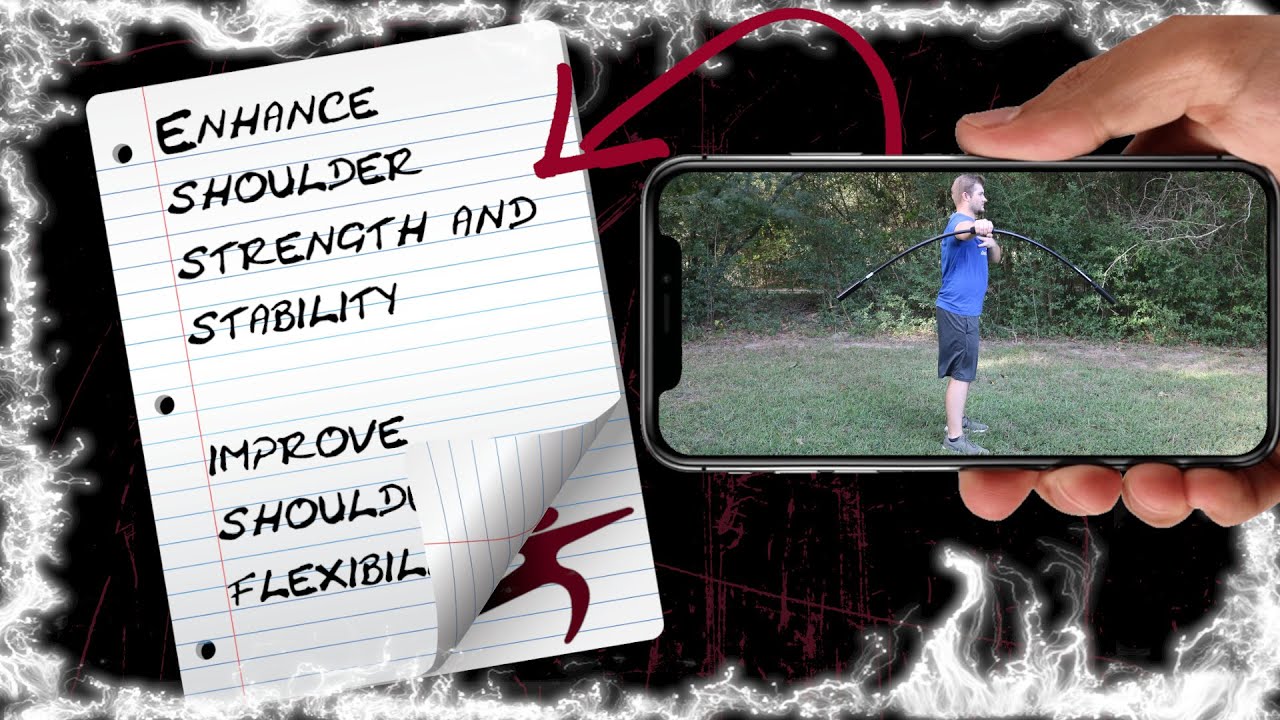
| 360-degree cylindrical design vs. flat one-dimensional options — why it matters. | |
| Omnidirectional movement: smooth transitions without forcing the trunk to tilt or twist. | |
| High-speed video data showing counterweights change direction unpredictably with every shake. | |
| Defining chaotic dynamic stabilization and why variable resistance prepares the arm for throwing. | |
| Travel and storage FAQ: why the 69-inch length stays uncompromised to preserve reactive feel. | |
| Common mistake: large arm movements that over-rely on big mirror muscles instead of stabilizers. | |
| Advanced technique: small circular hand motions to target the deep posterior rotator cuff. |
2025
TAP® Shoulder Tube® — Warm-Up, Strengthen & Cool Down the Shoulder
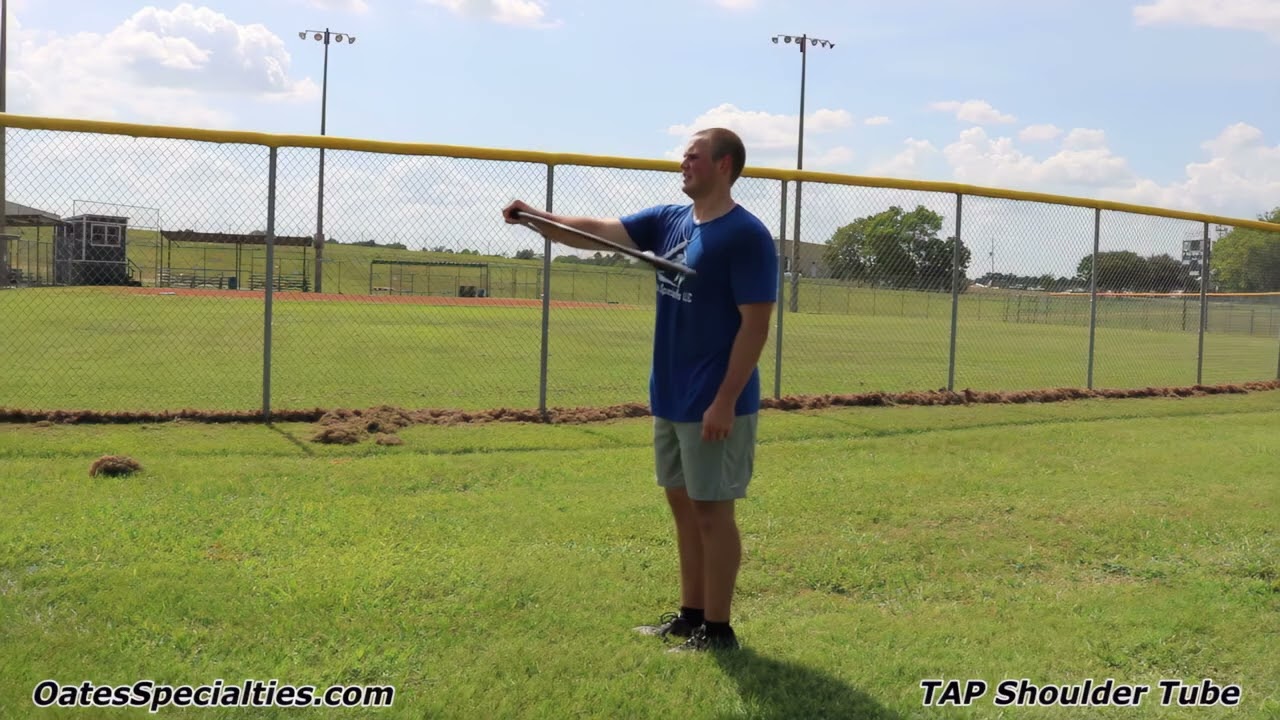
| Neutral Horizontal Pattern — shoulder-height oscillation directly across the chest. | |
| Overhead High-Cocking Pattern — tube overhead to target the arm's launch-ready phase. | |
| Diagonal Tracking Pattern — angled path mimicking the deceleration arc of a throw. | |
| Internal/External Rotation — elbow tucked at 90° to isolate subscapularis and infraspinatus. | |
| Sagittal Extension — arm straight down, oscillating to activate lower traps and serratus anterior. | |
| Full Throw Simulation — slow-motion pitching motion with tube oscillating throughout. |
Product Details
How to Use It
Warm-up and pre-throw prep: Start with neutral horizontal oscillations across the chest using small, quick hand movements. Progress to vertical, diagonal, overhead high-cocking positions, and low-hanging oscillations to wake up the shoulder through the full range it will see while throwing.
Main training-block use: Use in dedicated arm-care blocks across multiple planes: horizontal, overhead, diagonal tracking, internal/external rotation, and straight-arm extension. Emphasize tight, controlled hand movements and consistent rhythm — avoid large, whole-arm swings dominated by big prime movers.
Light-day and recovery use: Softer, lower-amplitude oscillations as part of a recovery circuit to promote blood flow and gentle tissue activation. Keep intensity modest so the tool supports joint organization rather than adding more load.
How to Progress Difficulty
| Level | Focus |
|---|---|
| Easier | Horizontal and vertical oscillations at shoulder height — moderate speed, shorter sets |
| Intermediate | Add diagonal tracking, overhead high-cocking, and low-hanging patterns to expose the full throwing arc |
| Advanced | Small circular hand motions in challenging overhead and scapular pull-back positions to target deep stabilizers |
Who This Is For
- Commonly used for pitchers and position players who want to build shoulder control and readiness in all directions, not just along a single plane.
- Commonly used for overhead athletes in other sports (such as volleyball or tennis) who need reactive shoulder control that matches their serving or hitting demands.
- Commonly used by high-school, college, and professional programs that integrate dynamic stabilization tools into their arm-care and conditioning systems.
- Commonly used for older youth athletes under close supervision, with smaller oscillations, simpler positions, and conservative volumes.
We are not coaches. We do not provide coaching.
What This Implement Does NOT Do
- It does not replace foundational strength work, throwing programs, or full-body conditioning; it is one arm-care and stability tool within a broader system.
- It does not guarantee improved velocity or injury prevention on its own; outcomes depend on total workload, mechanics, and recovery habits.
- It does not train lower-body force production, mound command, or sport-specific decision-making.
- It should not be used as a rehabilitation tool unless introduced under the direct advisement of a certified medical professional or rehab coordinator.
Technical Specs
| Product Name | TAP® Shoulder Tube® (also known as "wiggle stick," "javelin," or "shoulder rod") |
|---|---|
| SKU | SHT |
| UPC | 608938930552 |
| Construction | 69-inch unibody shaft; terminal counterweights; cylindrical profile for 360-degree movement |
| Length | 69 inches |
| Weight | 5 lbs |
| Design Note | Non-collapsible by intent — preserves elastic responsiveness and consistent feedback |
| Primary Use | Dynamic shoulder stabilization, arm care, and recovery for overhead athletes |
| Environment | Indoor or outdoor — clear spaces with enough room to move the full 69-inch lever safely |
Safety and Youth Guardrails
The TAP® Shoulder Tube® is intended for athletes with basic movement competency training under a coach or qualified adult, typically 13 and up. All use should occur in clear spaces with enough room to move the full 69-inch lever safely. Stop immediately if there is sharp pain, loss of normal shoulder control, or unusual symptoms.
Growth-window guidance: Athletes going through rapid height or limb-length changes should use conservative loading and volume and be especially cautious about soreness at growth plates or tendon attachment sites, as bones can adapt faster than tendons and ligaments during these periods.
- Not a toy: A training implement for supervised athlete and coach use only.
- Rehabilitation use only under supervision: If used in a rehab setting, introduce only under the direct advisement of a certified medical professional or rehab coordinator.
Frequently Asked Questions
Why doesn’t the TAP® Shoulder Tube® break down for travel?
The 69-inch unibody design is deliberate; introducing joints or break points would change the way the lever flexes and rebounds, altering the feedback athletes rely on. The full-length shaft is what makes the oscillation feel elastic and responsive rather than stiff or dead.
How big should the hand and arm movements be?
Small and quick. Short movements at the handle create the high-frequency waves that best challenge shoulder control. Large, sweeping arm motions shift the work onto big prime movers instead of the deep stabilizers the tool is designed to target.
How does this differ from flat or bow-style oscillation bars?
Flat or bow-style devices mainly move in a single straight line and often require the athlete to twist or reposition their body to reach different angles. The TAP® Shoulder Tube®’s round, 360-degree design allows smooth movement into multiple planes from the same stance, better matching the multi-axis demands of throwing and hitting.
Is this only for baseball pitchers?
No. Any overhead athlete who needs better shoulder control and joint organization — pitchers, position players, volleyball players, tennis players, and more — can integrate the Shoulder Tube® into their arm-care work.
Where does it fit in a weekly plan?
Most athletes use it briefly before throwing to prep the shoulder, and again at lower intensity after sessions as part of a structured recovery block. A simple starting plan is brief oscillation sets in two or three key positions before throwing, adding diagonal, overhead, and circular-hand patterns only after clean control is established at lower complexity.
Questions before you buy? Call or Text Our Team at (936) 295-4459
Featured Products