

Swing Speed Radar – Bat Speed Measurement Tool for Baseball & Softball Training
Couldn't load pickup availability
Stop guessing whether a swing change actually worked. See the number after every rep.
The Swing Speed Radar is a small microwave Doppler sensor that measures swing speed for bats and clubs so athletes and coaches can see real numbers instead of guessing based on feel. In plain terms, Doppler radar sends out a signal and reads how its frequency shifts when it bounces off a moving bat or clubhead, which is how it calculates speed. Overspeed training in this context means using lighter loads, assistance, or other methods that let an athlete move faster than their usual max, with the goal of raising their ceiling for unassisted speed over time.
- Doppler Radar Instead of Guess-and-Check Feel — Reads swing speeds from about 20 to 200 mph, similar in principle to larger radar-based systems. Every swing becomes a data point so you can track real changes in velocity over a session or a full training block.
- Instant Speed Feedback on Every Rep — Positioned 8–10 inches from the ball or swing path, the unit displays speed immediately after each swing — a tight feedback loop that keeps athletes honest about intent and shows in real time when they are trending faster, holding steady, or starting to fatigue.
- Simple, One-Button Operation — Battery powered (3×AA), with one button to power on, select mph or km/h, and toggle between golf and baseball modes on certain models. No apps, subscriptions, or complex menus.
- Works With or Without a Ball — Reads the bat or clubhead as it passes the sampling area, whether hitting a real ball, a training ball, or taking dry-swings — useful for indoor cages, garages, or on-field warm-ups.
- Objective Verification for Speed Chains, Bats, and Swing Trainers — Pair with a variable-resistance or overspeed tool and it tells you whether those swings are actually producing higher speeds, not just feeling harder. A variable-resistance tool is one where resistance changes through the range of motion — like chains that get heavier as more links lift.
- Compact and Portable for Field, Cage, or Range — Small footprint sets on the ground in front of a tee, next to a net, or on a small riser. Lives in a bat bag or coach’s backpack for objective feedback at any session.
What Is It?
Swing Speed Radar is a handheld microwave Doppler velocity sensor that measures the speed of a bat, club, or similar implement as it passes through the radar beam. The unit is tuned for swing sports and shows speed directly on its built-in screen, functioning as a simple, personal swing-speed meter rather than a full launch monitor.
Compared with high-end camera or radar systems that track full ball flight and impact metrics, Swing Speed Radar focuses on swing speed only, at a small fraction of the cost and complexity. Compared with training “by feel,” it replaces guesses, myths, and ego with a simple number that either goes up, stays flat, or drops as you change training variables.
How It Works
Key mechanisms behind objective swing-speed feedback
Objective Numbers Instead of Subjective Effort
Athletes often feel like they are swinging harder or faster when they change cues or add a new tool, but without a radar there is no way to confirm whether speed actually increased. Showing swing speed on every rep exposes false positives and helps keep only the changes that consistently move the number up.
Overriding the Body’s “Safety Governor” Safely
The nervous system naturally limits how fast it will allow a limb to move without a clear reason. Chasing a specific number on the screen encourages maximal but focused effort toward that target, helping the body become comfortable moving faster while the athlete and coach still control volume, rest, and mechanics.
Flagging Fatigue Before Mechanics Break Down
Overspeed training depends on a fresh nervous system, so falling numbers despite max intent are an early sign of fatigue. The radar gives a clear, objective “time to stop” signal, reducing the temptation to grind through low-quality reps that engrain poor sequencing.
Backed by Research
Verified Feedback for Overspeed Training
The Swing Speed Radar itself is not a training tool; it is a measurement device. Its value comes from closing the loop between what an athlete feels and what the radar actually reads, especially when combined with well-designed overspeed or variable-resistance training. In an internal Oates Specialties SpeedChain case study, two athletes followed a 36-day protocol with 15-minute sessions and increased their average clubhead swing speed by roughly 5 mph or more — illustrating measurable change for those specific athletes, without claiming universal results.
Video Library
See It In Action
Click the thumbnail to play from the start — click any timestamp to jump to that moment.
2022
Swing Speed Radar — SpeedChain® Clubhead Speed Trainer Case Study
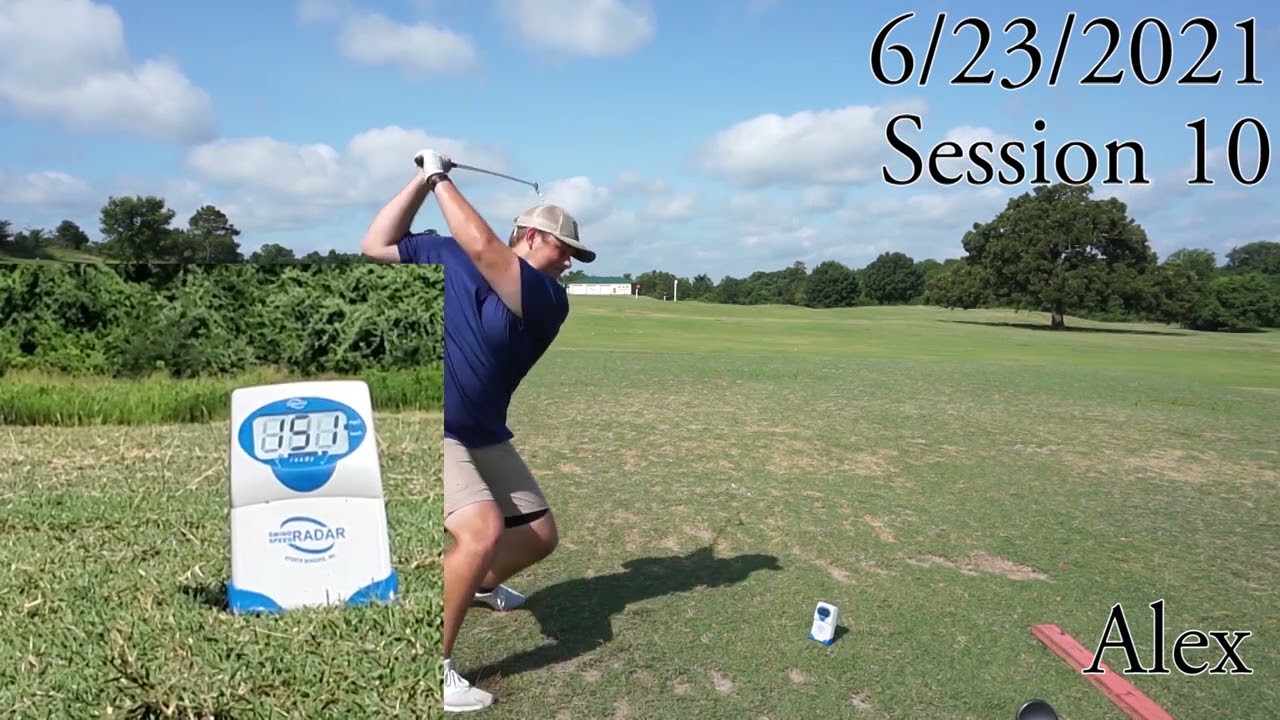
| Introduction and Equipment Pairing — the SpeedChain® NOS® Golf Clubhead Speed Trainer is introduced, with the Swing Speed Radar positioned on the ground at a 45-degree angle to the swing arc to capture accurate passing data. | |
| Case Study 1 — Variable Resistance Demonstration — the first individual demonstrates the training protocol; chain links lift off the floor sequentially as the swing accelerates, forcing the core and upper back to generate a continuous push through the simulated impact zone. | |
| Case Study 2 — Driving High Neuromuscular Intent — a second individual executes a series of maximal-intent swings, checking the radar screen after every repetition to monitor speed and adjust sequencing. | |
| Data Tracking and Performance Results — a comparative breakdown of the 36-day training cycle, where both individuals increased their average clubhead swing speed by approximately 5 mph or more over 15-minute daily sessions. | |
| Product Procurement and Wrap-up — final summary details and purchase pathways for both the SpeedChain trainer and the paired Swing Speed Radar. |
Product Details
How to Use It
Set up basic positioning and environment: Place the radar about 8–10 inches from the ball or swing path, in line with the swing and facing the direction the bat or clubhead is coming from. For irons and some bats, a 45-degree angle relative to the swing path helps the radar see the back of the club or bat more clearly for consistent reads.
Run simple speed sets with or without a ball: After turning the radar on and confirming units (mph or km/h), take 3–5 warm-up swings, then begin sets of full-intent swings while watching the display after each rep. Use a tee, soft toss, or dry-swings depending on space — the key is consistent swing intent and consistent radar placement.
Pair with overspeed and variable-resistance tools: When using a variable-resistance tool such as the SpeedChain, set the radar at the base of the swing arc and record speeds over a set number of swings or a full cycle, as in Oates Specialties’ internal 36-day SpeedChain case study. Use the data to confirm that a training block is actually shifting baseline swing speeds upward rather than just feeling harder.
Use the numbers to manage intent and fatigue: Overspeed training is only productive when the nervous system is fresh; if speeds fall off despite maximal effort, it is usually time to shut the set down. Track best swings, average swings, and day-to-day trends to spot when an athlete is ready to progress load or needs recovery.
Variant & Selection Guide
| Variant | Weight | SKU | UPC |
|---|---|---|---|
| Swing Speed Radar unit | ~1.5 lb | SSR | 608938930040 |
Single primary product tuned for swing-speed measurement. Used across baseball, softball, and golf applications, and pairs with multiple swing-training implements.
Who This Is For
- Commonly used for baseball and softball hitters who want to see true bat-speed changes when they adjust mechanics or use speed bats.
- Commonly used for golfers running clubhead-speed training blocks with overspeed sticks, SpeedChain-style trainers, or regular clubs.
- Commonly used for strength and conditioning coaches who want a simple way to test whether a rotational power block is translating into higher swing speeds.
- Commonly used for private facilities and academies that need a portable, low-maintenance speed reader they can move between cages, bays, and stations.
What This Implement Does NOT Do
- It does not measure ball flight, launch angle, spin, or contact quality; it only reports swing speed.
- It is not a replacement for coaching; it will show you the number, but coaches and athletes still have to decide which technical changes to keep.
- It is not a medical or rehab device; it should not be used to clear athletes for play or diagnose injury.
- It does not make overspeed training risk-free; volume, mechanics, and overall workload still need to be managed thoughtfully.
Technical Specs
| Product Name | Swing Speed Radar |
|---|---|
| SKU | SSR |
| UPC | 608938930040 |
| Also Known As | Bat head speed radar, swing-speed measurement tool, clubhead speed radar |
| Measurement Technology | Microwave Doppler radar velocity sensor |
| Speed Range | ~20–200 mph |
| Sports | Golf, baseball, softball, and other swing sports |
| Placement | 8–10 inches from the ball or swing path, often at a 45-degree angle for irons or some bats |
| Display | On-device digital readout in mph or km/h |
| Power | 3×AA batteries (commonly not included) |
| Weight | ~1.5 lb |
Safety and Care
Not a toy — the Swing Speed Radar is an electronic training device and should not be struck by bats, clubs, or balls. Position it out of the direct line of impact so a miss-hit ball or bat cannot strike the device. Avoid using the radar in environments with obvious sources of interference (strong RF or microwave sources) that may cause erratic readings.
- Not a toy: Electronic training device only — should not be struck by bats, clubs, or balls.
- Protect the unit: Position out of the direct line of impact.
- Monitor overspeed volume: High-intent swing blocks should be programmed carefully, especially for youth athletes and in-season players; use falling numbers as a sign to shut a session down.
- Environment: Avoid strong RF or microwave interference sources that may cause erratic readings.
- Medical considerations: Any return-to-play swing work for injured athletes should be guided by medical or performance professionals; the radar is only a measuring tool.
Frequently Asked Questions
What does Swing Speed Radar measure?
It measures the swing speed of the bat, club, or similar implement as it passes through the radar beam — not ball speed or ball flight.
Does it work without hitting a ball?
Yes. You can capture swing speed with a real ball, a training ball, or no ball at all, which is helpful for indoor or limited-flight environments.
How accurate is it?
Independent testing against higher-end systems has found average differences on the order of a couple of percent, which is typically sufficient for training trends and block comparisons.
How should I position it for best results?
Place the radar about 8–10 inches from the ball or swing path, facing the oncoming club or bat, and use a 45-degree angle for some swings so the unit has a clear view of the head as it passes.
Can I use it with swing trainers like SpeedChain, SuperSpeed, or speed bats?
Yes. The radar pairs well with swing trainers and overspeed tools, giving you objective feedback on whether those tools are actually increasing your swing speed over time.
Will it help me hit farther?
It does not change your swing by itself, but it helps you build training blocks and adjustments that truly move your swing-speed numbers — one important piece of hitting or driving the ball farther when paired with good mechanics and contact.
Questions before you buy? Call or Text Our Team at (936) 295-4459
Featured Products