





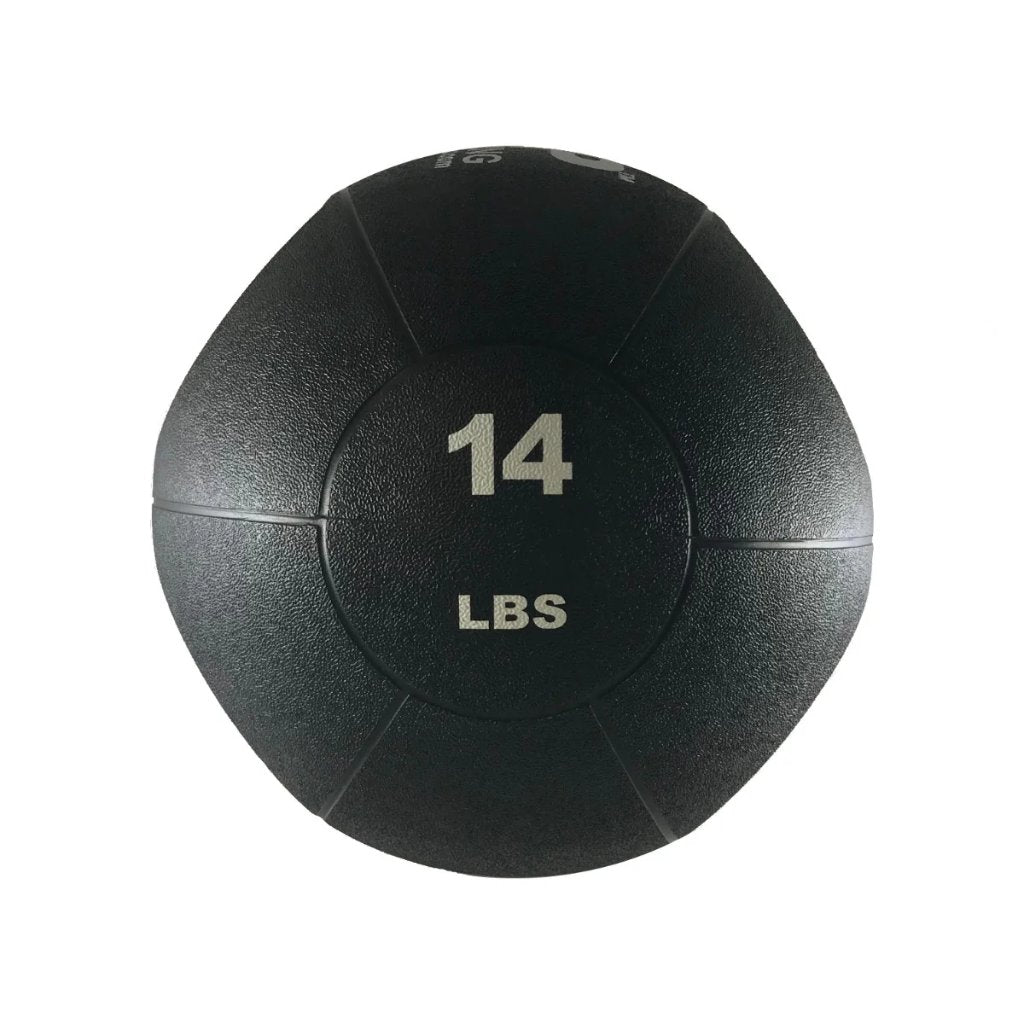


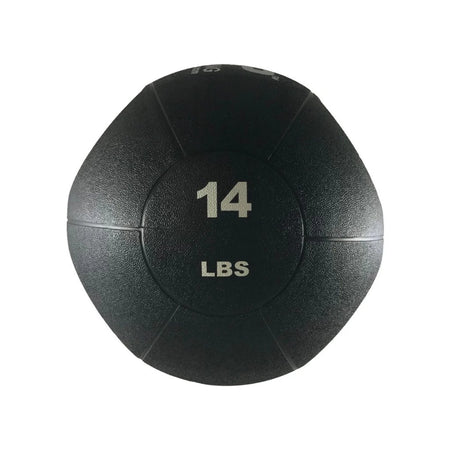


TAP® Double Handle Medicine Ball — Rotational Medicine Ball for Baseball, Pitchers & Overhead Athletes
Couldn't load pickup availability
TAP® Double Handle Medicine Ball — Rotational Medicine Ball for Baseball, Pitchers & Overhead Athletes
The Double Handle Medicine Ball is built for retained-grip rotational work — full arcs, rapid direction changes, and backward-drive patterns. The two opposing fixed handles let athletes maintain a secure grip through dynamic, multi-plane movements that standard medicine balls make awkward. The handle design supports the Wall Series drills popularized at the Texas Baseball Ranch, where the ball is driven into a wall behind the athlete's body to develop the posterior chain structures that overhead sport demands most. Available in nine weights from 4 to 20 lbs.
Key Features & Benefits
- Dual opposing handles — Maintain a secure grip through full rotational arcs and backward-drive patterns, especially Wall Series work where the ball is never released.
- Nine weight options (4–20 lb) — Match the ball to the drill: lighter for reactive sets and proprioceptive work, heavier for seated core and off-season strength.
- Durable rubber shell — Holds up to repeated wall contact and high-frequency use indoors and out.
- Built for Wall Series and beyond — Supports all five Wall Series patterns, Russian twists, chop-and-lift variations, standing rotational throws, and partner work.
- Posterior chain focus — Back-to-wall positioning loads the lats, posterior shoulder, and glutes — structures that support arm deceleration and that high-volume throwing rarely addresses directly.
What Is It?
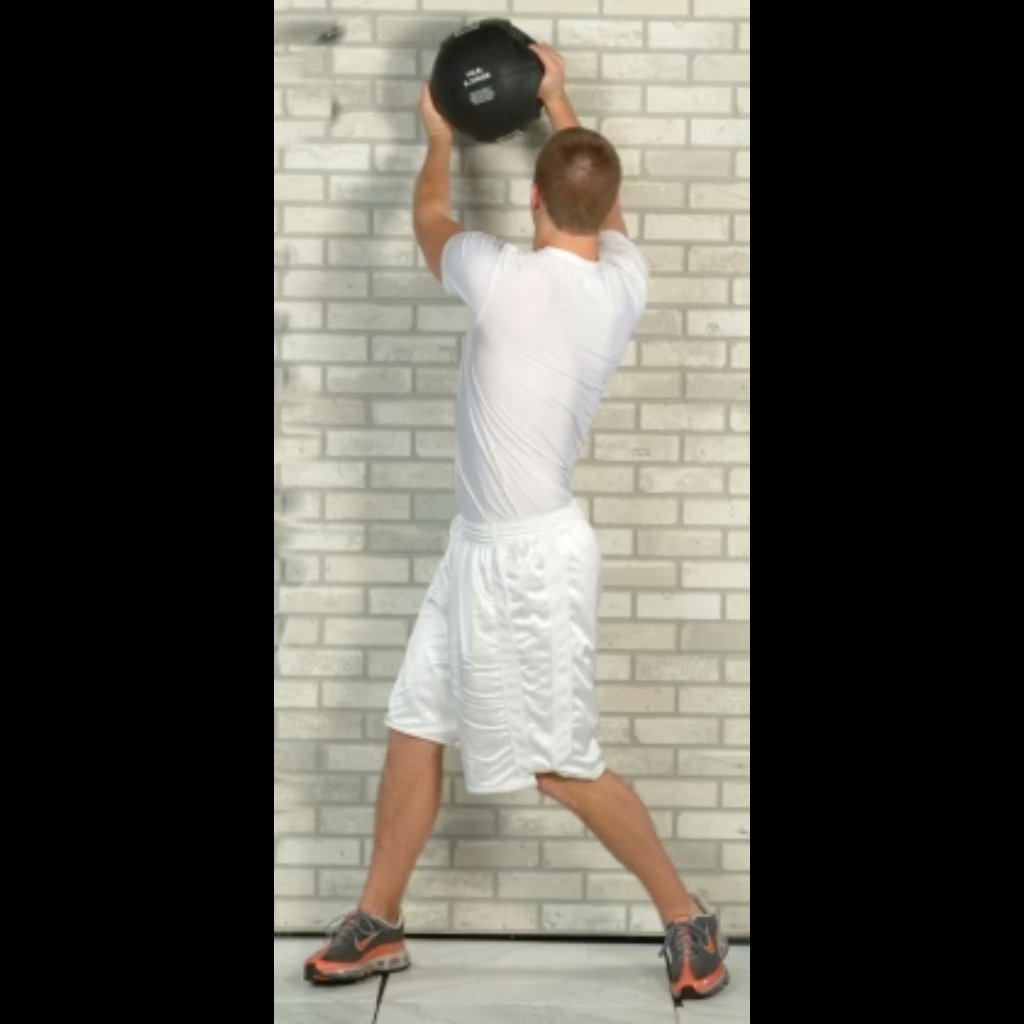
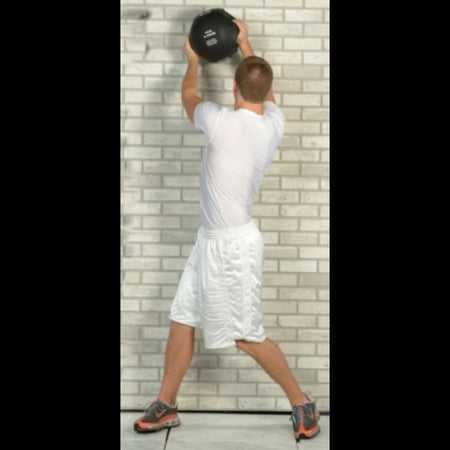
A double-handle medicine ball with two fixed handles on opposite sides of a rubber shell. The handles separate it from a standard smooth-surface ball — they give the athlete a locked, consistent grip through dynamic, multi-plane movements. It works across a wide range of rotational patterns, but it is specifically well suited for Wall Series training, where the athlete's back faces the wall, the ball is driven behind the body at maximum effort, and the grip is never released.
How to Use It
Wall Series work. The athlete faces away from the wall and drives the ball backward in short, maximum-effort sets, retaining the grip throughout. Five drill patterns are commonly used: diagonals, bilateral lateral, woodchopper, same-side arc, and a surface variable that distinguishes between hard wall and soft wall or net.
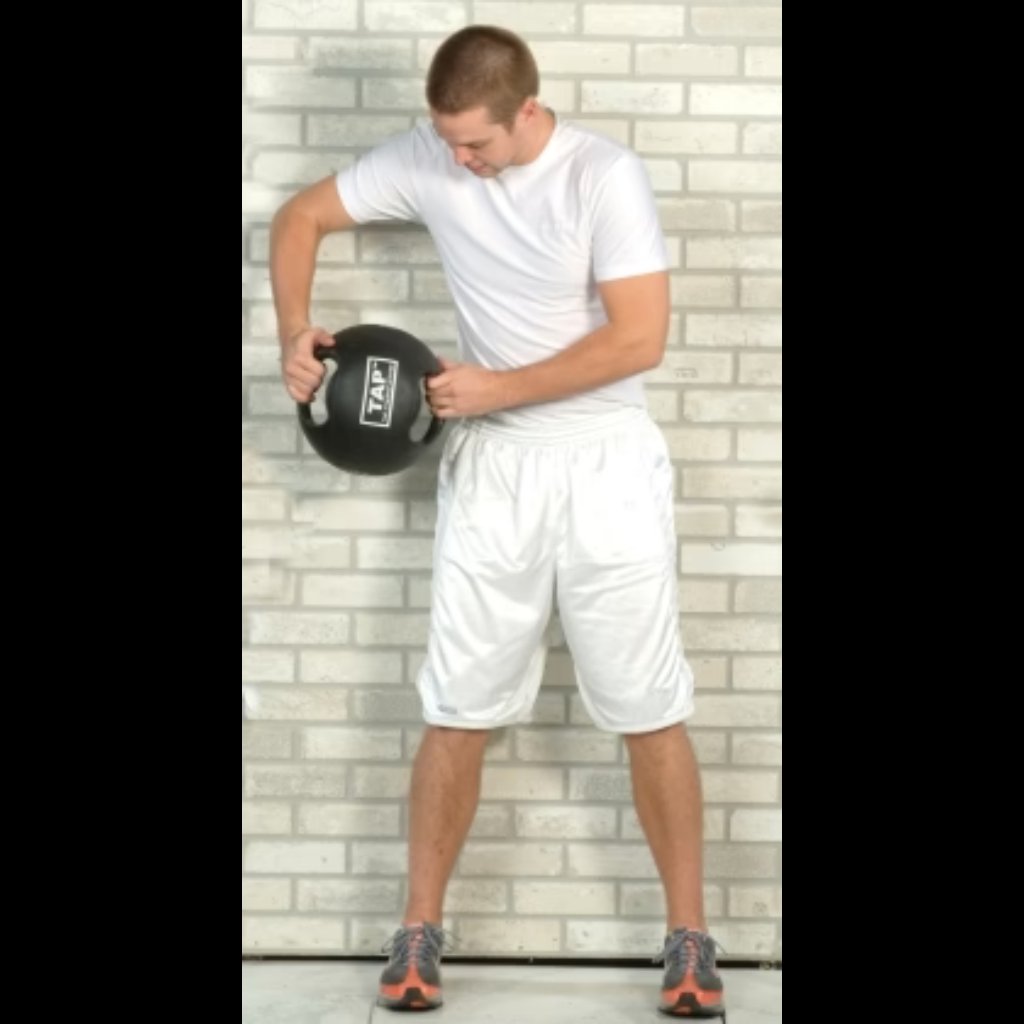
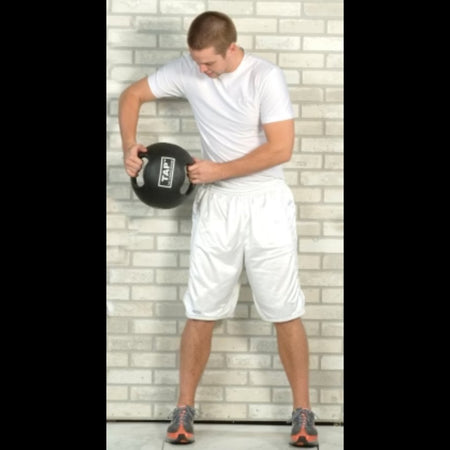
Seated and standing core work. Russian twists, rotational throws, chop-and-lift patterns, and partner drills where grip control through a full range of motion is the priority.
Slow-speed pattern rehearsal before any full-effort sets helps athletes develop spatial awareness — since the ball is driven behind the body and the wall cannot be seen, feel and proprioception do the work that vision normally would.
Weight Selection Guide
- 4–6 lb — Youth athletes, Wall Series introduction, high-speed reactive work, warm-up circuits.
- 8–10 lb — High school to college, full Wall Series protocol, all five drill patterns.
- 12–14 lb — College to professional, strength-phase Wall Series, seated core patterns.
- 16–20 lb — Advanced athletes, off-season posterior chain strength, heavy core work.
Hard Wall vs. Soft Wall / Net
Hard wall returns a reactive rebound, which forces the muscles to absorb the return before driving again — best suited for in-season maintenance and reactive power work.
Soft wall or net absorbs all of the impact at contact, requiring the athlete to generate all of the force on every rep — a higher demand suited for off-season strength development.
Why It Works
When the ball contacts the wall and rebounds, the returning force loads the posterior chain eccentrically before the athlete drives again. Research confirms that active stretch preceding active shortening produces greater force output than a concentric-only contraction (Seiberl et al., 2015). Every rebound reception in a Wall Series set exploits this stretch-shortening mechanism — the same mechanism that makes plyometric training effective for power development.
The back-to-wall positioning directs that mechanism at the right structures. Pitching biomechanics research identifies the posterior shoulder complex, latissimus dorsi, and posterior rotator cuff as primary targets for arm durability — the structures that decelerate the arm after release and carry significant demand across a long throwing season. The Wall Series loads them through sport-relevant ranges at sport-relevant speed.
A 2023 meta-analysis of upper-body plyometric training pooled 35 studies and over 1,400 participants and found meaningful effect sizes for both throwing performance and medicine-ball throw performance — the category the Wall Series belongs to.
Who This Is For
- Baseball pitchers and position players building posterior chain capacity for arm deceleration and durability.
- Strength coaches implementing Wall Series or rotational training programs for overhead athletes.
- College and professional athletes in structured off-season strength and power blocks.
- High school athletes under coach supervision with appropriate weight selection.
- Youth athletes with close coach or parent oversight, lighter weights, and conservative volume.
Not designed for overhead slam patterns — the TAP® Pummel Ball is better suited for that application.
Technical Specs
- Handle configuration: Two opposing fixed handles
- Shell material: Rubber
- Available weights: 4, 6, 8, 10, 12, 14, 16, 18, 20 lb
- Indoor / outdoor use: Both
- Wall compatibility: Hard wall (reactive) or soft wall / net (concentric)
- Care: Wipe down with a damp cloth; store away from sharp surfaces
Frequently Asked Questions
What weight should I start with?
Most coaches start with a lighter ball — 4 to 8 lb — to establish correct positioning and movement quality before increasing load. For Wall Series work, the ball needs to be heavy enough to create meaningful resistance, not as heavy as possible. For seated core patterns, athletes can typically handle more weight than they would for reactive wall drills.
Why do the handles matter for this type of training?
The handles allow the athlete to maintain a consistent, locked grip through rapid direction changes, backward-drive patterns, and multi-plane arcs where a smooth-surface ball would be difficult to control. In Wall Series drills specifically, the ball is never released — the retained grip is what keeps the load on the posterior chain through both the drive and the rebound.
Can this be used for exercises other than Wall Series drills?
Yes. The handles make it well suited for seated Russian twists, standing rotational patterns, chop-and-lift variations, and partner work. Any exercise where grip control through a full range of motion matters benefits from the handle design.
Is this appropriate for youth athletes?
It can be appropriate for youth athletes under coach or parent supervision using lighter weights and simpler patterns. For Wall Series work, slow-speed rehearsal before any full-effort sets is important — the athlete drives the ball behind their body and cannot see the wall, so spatial awareness needs to be established before adding intensity.
What is the difference between using a hard wall and a soft wall or net?
A hard wall returns a reactive rebound, which forces the muscles to absorb the return before driving again — better for in-season maintenance. A soft wall or net absorbs everything at contact, requiring the athlete to generate all the force on every rep — better for off-season strength work.
Questions before you buy? Call or Text Our Team at (936) 295-4459.
Featured Products