

TAP® Weighted Forearm Sleeve: Posterior Shoulder Loading & In-Season Arm Recovery
Couldn't load pickup availability
The TAP® Weighted Forearm Sleeve is a 16-ounce wearable training tool designed to support posterior shoulder deceleration loading and conservative arm recovery for in-season pitchers and overhead athletes. It is used by coaches, athletes, and physical therapists as a targeted implement within a structured Prepare–Compete–Restore arm-care system.
The sleeve is most accurately described as a regression option within the Restore phase — a step below the standard throwing sock path for arms that need more time due to a heavier workload, a shorter turnaround, or lingering posterior shoulder soreness that makes low-intent throwing feel like too much too soon.
Key Features & Benefits
- Posterior Chain Loading: The rotator cuff, elbow flexors, and scapular stabilizers work eccentrically throughout the finish to control the weighted forearm — building deceleration capacity without requiring a throw.
- Gradual Eccentric Demand: The weight stays on the arm the entire time — from cocking through follow-through — creating a gradual braking load rather than a sudden distraction force at the end of the motion.
- Soft-Elbow Reinforcement: The forearm weight keeps the elbow gently bent through the finish, distributing braking load across the joint rather than concentrating it in the ligaments and capsule.
- Proprioceptive Feedback: The added weight gives the arm a clearer sense of where it is in space during the finish — helping athletes find and hold a soft-elbow position without repeated verbal cueing.
- No Partner or Field Required: Dry throws, ball holds, and submaximal throws with the sleeve work in a backyard, garage, hotel hallway, or dugout — anywhere the athlete has room for a throwing motion.
- Adjustable Fit: Three secure straps for a snug, customizable fit during any session.
- Portable: Fits in any equipment bag alongside a throwing sock and elastic resistance as a minimum viable in-season arm care kit.
How It Works
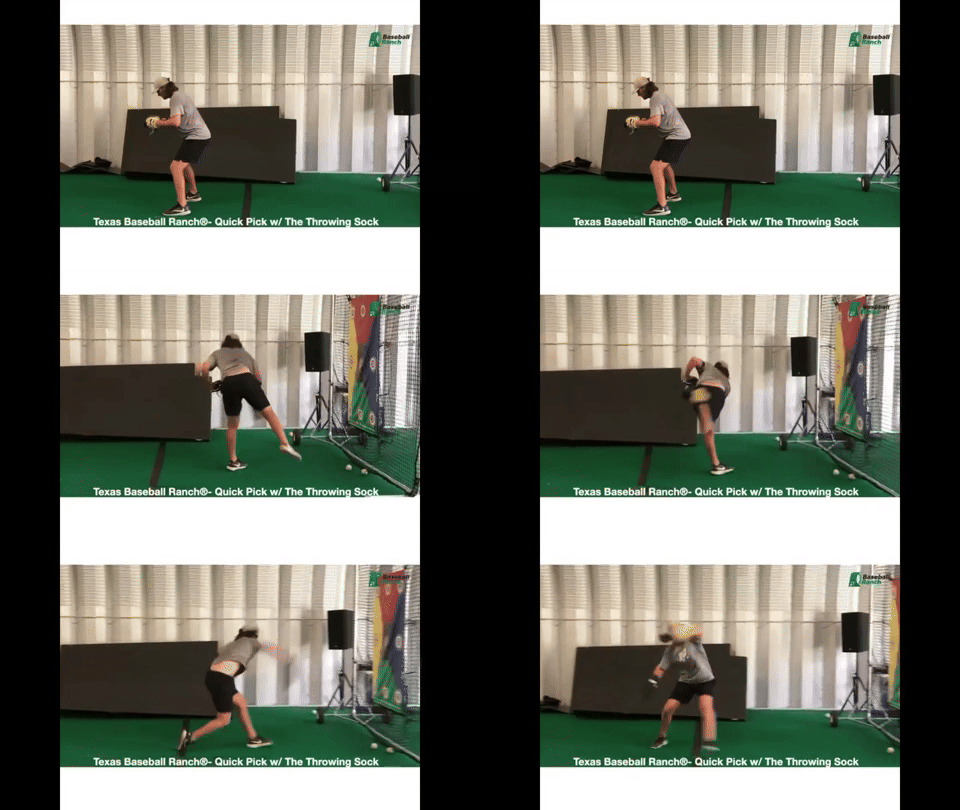
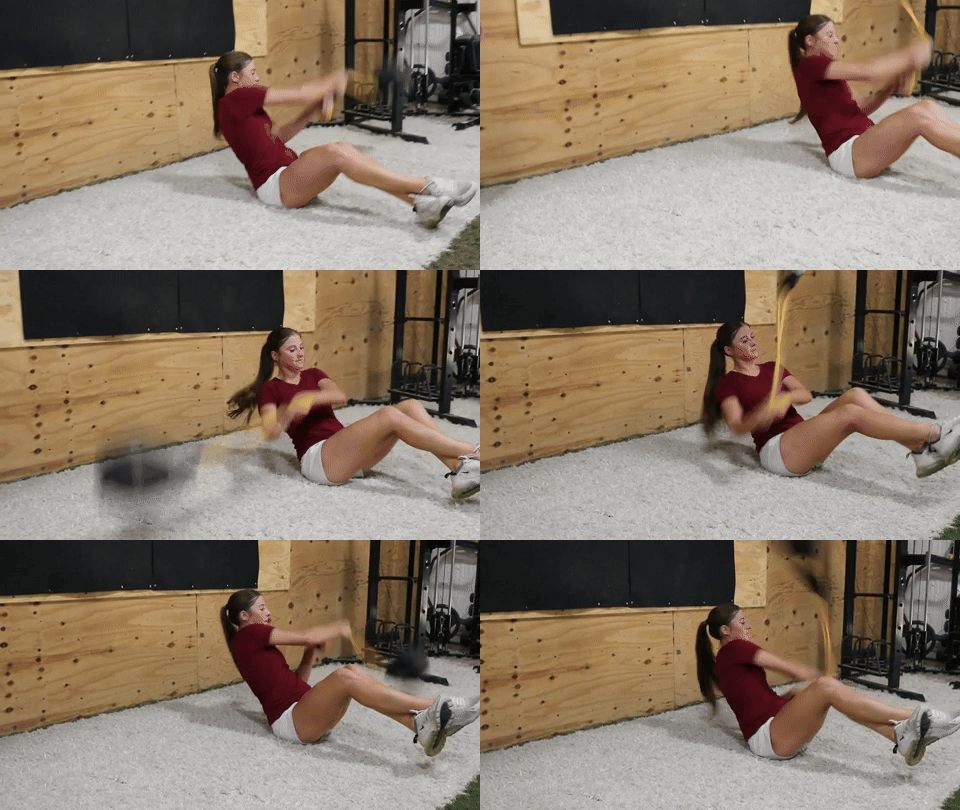
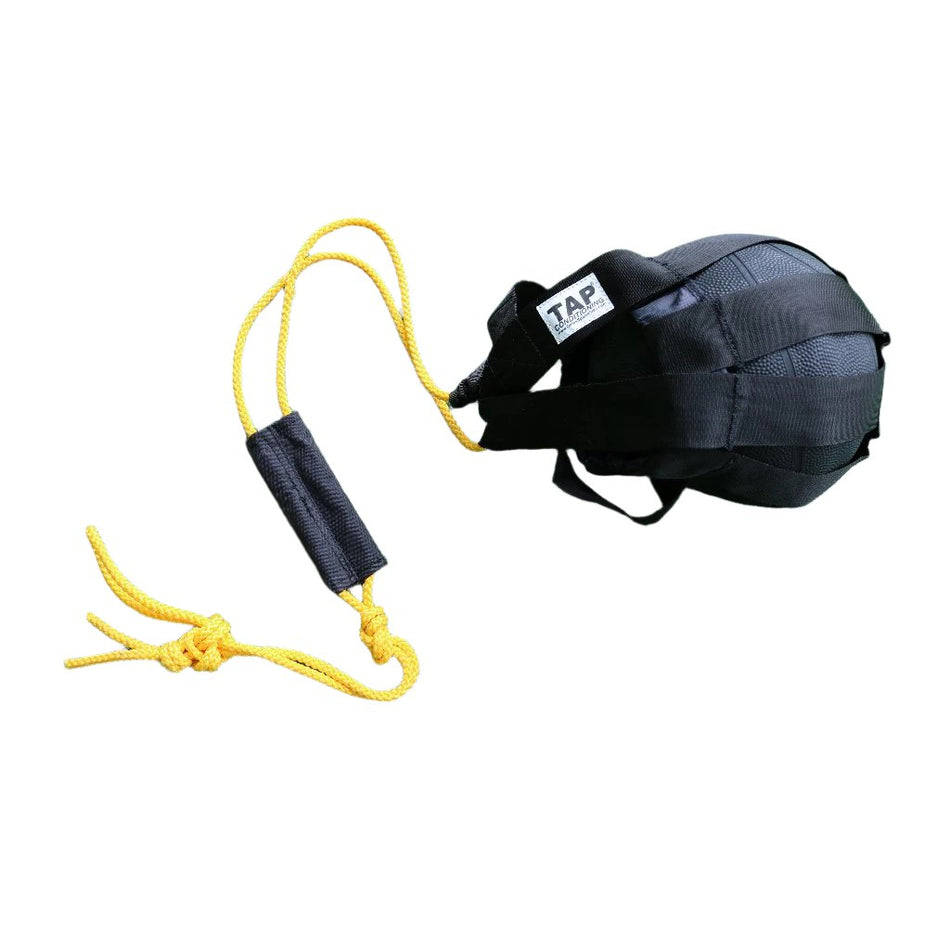
Adding weight toward the end of the forearm — distal loading — increases the arm's resistance to starting and stopping without directly loading the shoulder joint. At submaximal effort, this creates a training environment where the posterior chain does real deceleration work across the entire throwing motion. Unlike the TAP® Baseball Training Sock, where the ball is released and a distraction force arrives at the end of the motion, the weighted forearm sleeve keeps load on the arm continuously — making it the more conservative of the two tools and the right choice when the standard recovery path needs more time.
Where It Fits: Prepare, Compete, Restore
- Prepare: Dry throws with the sleeve before a ball is introduced prime the posterior shoulder and rehearse the soft-elbow finish at low effort before game-speed demands arrive.
- Compete: Between innings, dry throws and ball holds with the sleeve require no partner and keep the arm in a purposeful deceleration pattern without adding acceleration-phase stress.
- Restore: The sleeve opens a lower-stress entry point into recovery — deceleration work without throwing — for arms that need a more gradual path back before they are ready for the throwing sock.
For the full breakdown of how distal forearm loading works, the research behind it, and a complete four-day gradual-return progression with volume and dosing guidance for 13U through college athletes: Read the full Weighted Forearm Sleeve article.
Who It's For
- Physically mature pitchers (generally 14U and older) with no current shoulder or elbow pain.
- Arms that need a more gradual path back from an outing than the standard throwing sock progression provides.
- Athletes who tend to straighten the elbow at the finish and benefit from the proprioceptive feedback of the weight.
- Coaches looking for a structured post-outing recovery option that works without a partner, a field, or a full facility.
Who It's Not For
- Athletes roughly 13 and under — 16 ounces is heavy enough to break down the throwing motion at this stage. If mechanical breakdown occurs during dry throws, the sleeve does not belong in this athlete's program yet.
- Athletes with current elbow or shoulder pain — medical evaluation comes first.
- Situations where deceleration problems are rooted in major mechanical issues. The sleeve can reinforce a pattern, but it cannot correct a fundamental breakdown. Coaching comes first.
Product Specifications
- Weight: 16 ounces
- Fit: Three adjustable straps for secure placement
- Use Cases: In-season arm recovery, deceleration pattern training, warm-up preparation, between-inning maintenance
- Cleaning: Surface clean only with mild, skin-safe solutions; store in a dry, cool place
Frequently Asked Questions
Both tools train deceleration, but they work at different stress levels and suit different recovery situations.
- The throwing sock trains deceleration at near-game arm speeds — the right first choice for a healthy arm with a normal workload on the day after an outing.
- The weighted forearm sleeve is a step below — more conservative, lower arm speed, and no ball flight. It is the right choice when the arm needs more time: heavier pitch count, shorter turnaround, or lingering posterior shoulder soreness.
- One is not better than the other. They each have their place, and knowing which one the arm needs on a given day is the skill.
Yes, as long as the movement is controlled and supervised. The sleeve is designed to be worn during real throwing patterns — not just isolated exercises.
- Dry throws, ball holds, and submaximal throws into a net or sock are all appropriate with the sleeve on.
- Best used at submaximal effort — 2–5 out of 10 relative to game-day fastball — where the goal is movement quality and deceleration pattern, not velocity.
- Full-effort game-speed throwing with the sleeve on is not the intent.
The sleeve provides a different training stimulus than bands or free weights — one specific to the throwing motion.
- Bands and free weights build foundational eccentric strength through controlled, isolated movements. That baseline matters and should not be skipped.
- The sleeve trains how quickly the braking system engages during actual movement at submaximal throwing speeds — a quality that slow band work does not replicate.
- The weight stays on the arm the entire time, creating a gradual eccentric demand from cocking through follow-through rather than a sudden braking force at one moment.
Age and physical maturity matter significantly with this tool.
- For most athletes roughly 14U and older with no current shoulder or elbow pain, the sleeve can be used under coach supervision at low volumes and submaximal effort.
- For athletes roughly 13U and under, 16 ounces of forearm weight is typically heavy enough to break down the throwing motion itself.
- The clearest signal: if observable mechanical breakdown happens during dry throws, the sleeve does not belong in this athlete's program yet.
Stop immediately and consult a qualified medical professional or athletic trainer if:
- The athlete reports sharp, pinching, catching, or "stuck" sensations in the elbow or shoulder during use.
- Something pops, clicks, or feels unstable during a throw or ball hold.
- Swelling, warmth, or soreness does not resolve within 24 hours after a session.
- The athlete has current elbow or shoulder pain before starting — medical evaluation comes first.
Comfortable muscle fatigue in the back of the shoulder after deceleration work is normal. Sharp, pinching, catching, or lingering joint pain is not.
The sleeve is designed for personal use and straightforward maintenance.
- Wipe down with a mild, skin-safe disinfectant after each use.
- Avoid submerging in water or using harsh chemicals.
- Store in a dry, cool place to preserve the materials and straps.
Featured Products