
Contact-Quality Evaluation for Baseball Programs Without Advanced Tracking
Executive Summary
Some baseball programs at the Legion, travel-ball, high school, and small-college level train hitters without any structured measurement — and without a baseline before a training block and a confirmation after it ends, there is no way to know whether the work produced a real result. Three accessible tools change that: a hitting target, a handheld radar, and a bat speed device used together cover exit velocity, bat speed, and launch angle at a fraction of the cost of advanced tracking systems.
Most coaches learn early that what they think happened in a swing and what actually happened are not always the same thing. The eye adjusts for what it expects to see. A hitter who looks better in March may be more confident, facing weaker pitching, or swinging a new bat. This article is about building a measurement process — and using it to confirm that training is doing what it is supposed to do.
🎧 Prefer to listen? Audio version of this article:
What Evaluation Actually Does
Before any tool gets introduced, there is a question worth slowing down on: what does a coach actually want from measurement? The answer is not one thing. It is four things — and most programs without tracking technology are getting one of them at best.
The first is a baseline — a number taken before training starts that tells a coach where a player is right now. Without a baseline, everything that follows is context-free. The second is a diagnostic: not just where the player is, but what is limiting him and what to work on first. The third is a progress check, run during a training block to confirm the plan is working and catch it early if it is not. The fourth is post-training confirmation — the session at the close of the block that answers the question a player and coach most want answered: did this period of work accomplish anything, and did what was trained actually carry over?
Programs that train without structured evaluation tend to collapse all four functions into observation and intuition. A coach watches a hitter look better, hit it harder in practice, seem more comfortable. Those impressions are not worthless. But they are not the same as measurement. The difference matters more than most coaches realize until they have real data to compare impressions against.
Training without a baseline and a post-training confirmation is development without verification. A coach who cannot measure whether a training plan produced the results it was supposed to is guessing at a problem he has not defined and a solution he cannot confirm.
What Programs With Technology See
Walk into a program with a full tracking system after a hitting session and here is what is on the screen. Peak and average exit velocity for every hitter, swing by swing. Launch angle for each swing, showing whether contact trended flat, steep, or in the productive range. The percentage of swings landing in baseball’s Sweet Spot zone — the launch angle range where line drives and productive fly balls live. Where the ball went left and right. And for programs with bat sensors alongside their radar, bat speed on each swing — which tells whether a gain in exit velocity came from better contact or just from swinging harder.
That information changes training in specific ways. Consider two hitters. One generates solid exit velocity but directs it downward on 65 percent of his swings. The other hits the ball at the right angles but is 8 miles per hour below his age group on exit velocity. Same result at the plate, two completely different problems. Without the data, a coach is just as likely to work on the wrong one.
The framework those systems are built on — exit velocity, launch angle, and contact efficiency — does not require expensive hardware to apply. It requires the right tools and a process consistent enough to produce numbers worth comparing.
The Access Gap
HitTrax, Rapsodo, Blast Motion, Hawk-Eye — each is genuinely excellent. Each is also expensive, and most require facility infrastructure or technical expertise to run well. Most Legion programs do not have them. Most travel organizations do not. Most high school programs at the 2A and 3A level do not, and the larger programs that do often have one coach who knows how to run the software while everyone else watches.
That is not a failure of ambition. It is a resource reality. And there is a practical question sitting inside it that coaches at those levels deal with every spring: what can a program measure rigorously with what it actually has?
The answer is more than most coaches realize.
Start With a Target: Baseline and Visual Feedback
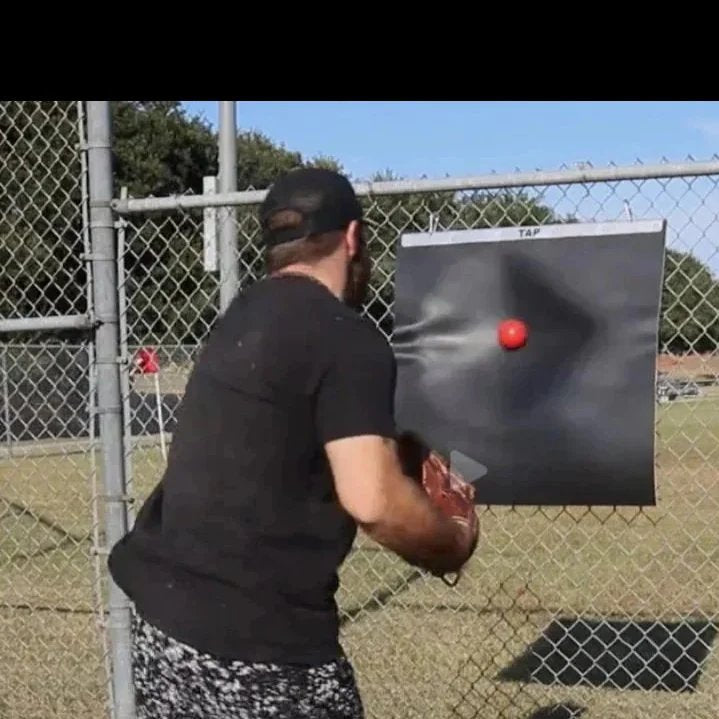
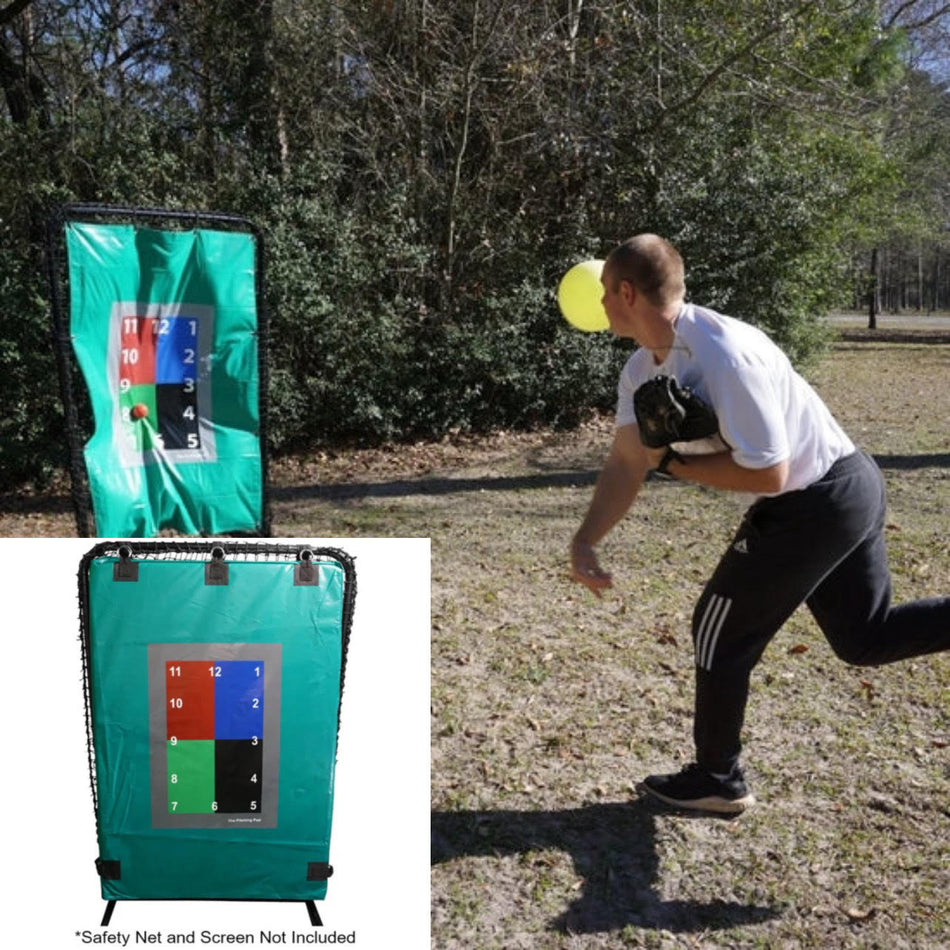
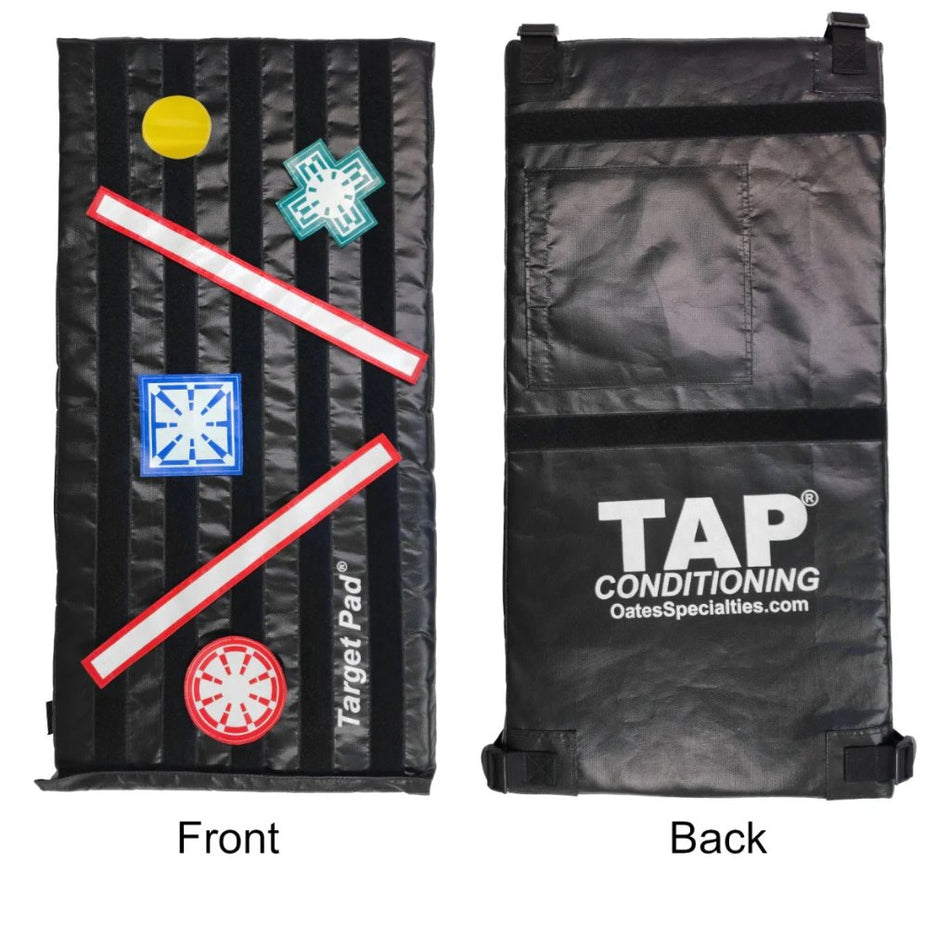
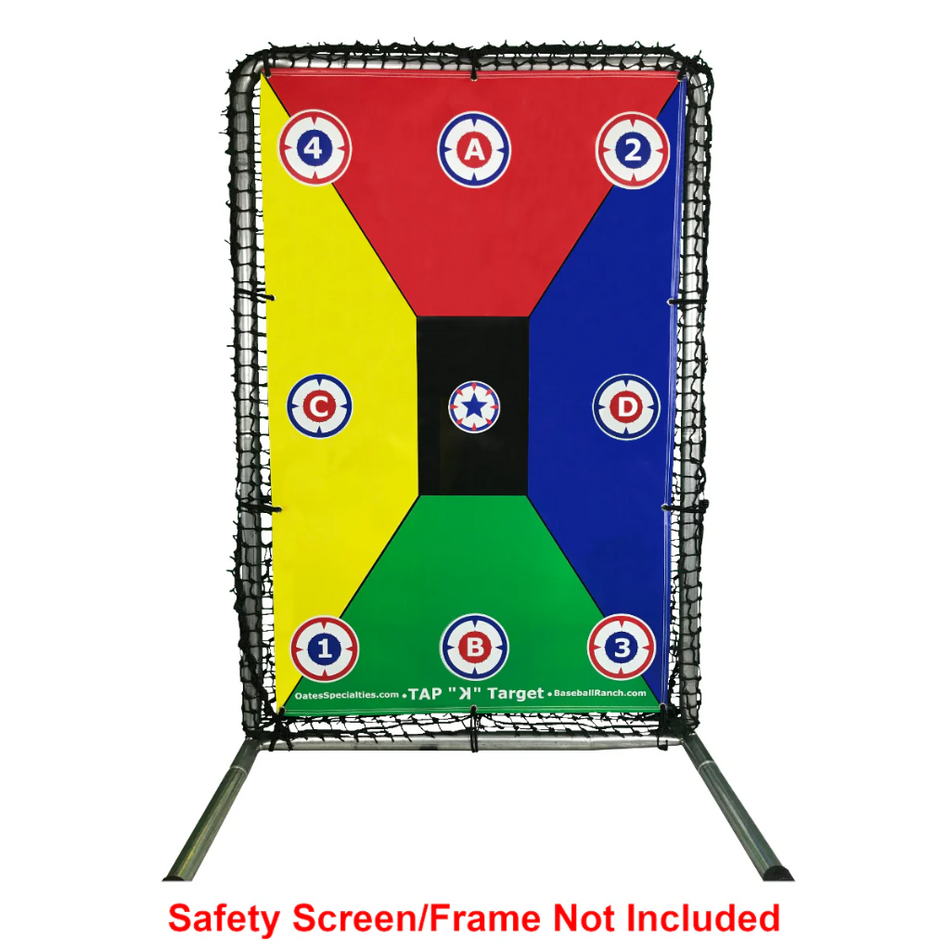
The most accessible measurement in contact-quality development requires no electronics at all. A hitting target mounted in front of the tee gives a hitter a concrete goal and immediate feedback about whether contact went where it was supposed to go. The TAP® Hitting Target is one option. That is how skill develops at its most fundamental level: something specific to aim at, and a result that shows up without waiting for a verbal cue from a coach.
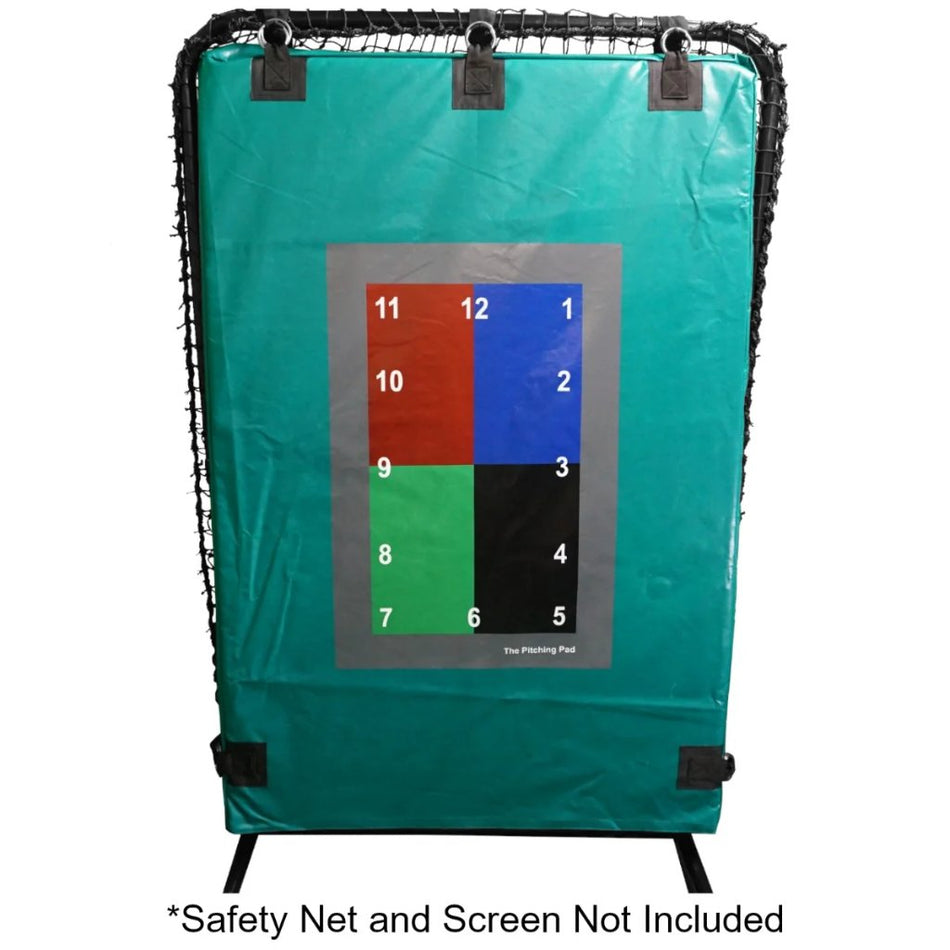
A hitting target translates where the ball strikes the face into a launch-angle category. Not a precise angle the way an optical system measures it — a category. Too flat, too steep, or in the productive range. That distinction changes how a coach talks to a hitter and gives the hitter something specific to work on in the next round of swings rather than a general cue to hit it harder.
The target also shows horizontal direction. Left, center, and right markers show where the ball was sent across the field. A hitter who consistently pulls everything or pushes it the other way has a different pattern to address than one working only on vertical trajectory. Both signals are visible from the same piece of equipment.
MLB Statcast defines the productive launch angle range as 8 to 32 degrees — where batting average and slugging are both high. The table below maps that framework to target zones.
| Zone | Launch Angle | Contact Type | Training Goal |
|---|---|---|---|
| Below Sweet Spot | Below 8° | Ground ball | Reduce |
| Sweet Spot | 8–32° | Line drives and productive fly balls | Maximize |
| Above Sweet Spot | 32–50° | Non-productive fly ball | Reduce |
| Pop-up | Above 50° | Pop-up | Eliminate |
The goal is not simply hitting it higher. It is hitting it in the 8 to 32 degree range where both average and power output are at their highest.
Used consistently with session-to-session tracking, a hitting target alone covers the baseline and progress-check functions. It requires nothing more than the target, a notebook, and the discipline to record what happened before training starts and again at the end.
Note: All tools described in this article are general educational examples of one approach. They are not prescriptive training programs. Oates Specialties does not provide individual training instruction.
Add the First Number: Exit Velocity
Radar is already common in baseball at the varsity level and above. It sits in a bag, it gets used in pitcher bullpens, and it has probably never been pointed at a ball coming off a tee in a systematic way. That one change — pointing the same device at tee work and recording the results consistently — is worth more than most hitting gadgets a program could buy.
Exit velocity is the single most predictive number in contact-quality assessment. Research from physicist Alan Nathan establishes that each additional mile per hour of exit speed adds roughly 5 feet to a home run under standard conditions. A 2025 study published in the Journal of Strength and Conditioning Research confirmed that measuring exit velocity off a tee is a valid field assessment of hitting performance in youth baseball — not a rough proxy, but a legitimate measurement method that holds up under research scrutiny.
A handheld radar produces readings within about a mile per hour when set up correctly. The Pocket Radar Ball Coach is designed for this purpose and costs under $300. One setup rule matters above all others: keep the device within roughly 15 to 20 degrees of the ball’s flight path. Any wider and the reading understates actual speed. Position it behind the hitting area aimed at where the ball travels, keep it fixed, and record 10 to 15 hard swings per session.
The exit velocity benchmarks below reflect practitioner normative data compiled from over 50,000 tee-work swings tracked via HitTrax and Rapsodo over seven years. One important context note: the benchmarks in this table represent tee-work maximums — a player’s peak exit velocity potential under ideal conditions. Average in-game exit velocity typically runs 5–10 mph lower than these tee maximums, because pitch timing, pitch movement, and contact variability across all batted balls pull the average down. Use tee measurements to track development progress within the same athlete over time. They are not a direct substitute for in-game numbers.
| Level | Average | Good Goal | Elite (Top 10%) |
|---|---|---|---|
| 8–10 Years | 40–55 mph | 50–60 mph | 60+ mph |
| 11–12 Years | 50–65 mph | 60–70 mph | 70+ mph |
| 13–14 Years | 60–75 mph | 70–80 mph | 80+ mph |
| 15–16 Years | 70–85 mph | 80–90 mph | 90+ mph |
| 17–18 Years | 75–90 mph | 85–95 mph | 95–100+ mph |
| College | 87–95 mph | 92–100 mph | 100–105+ mph |
A player who enters a six-week training block at 74 miles per hour and exits at 79 has documented evidence that the training produced a physical result. That is not a coaching impression. It is a number — and it means the work carried over.
Add the Second Number: Bat Speed
Exit velocity and bat speed are not the same measurement. That difference is where diagnostic value lives, and it is the piece most programs without tracking technology are missing even when they have a radar.
A player can raise exit velocity by squaring the ball up more consistently without bat speed changing at all. He can also gain bat speed without improving exit velocity if contact quality falls at the same rate. The ratio between the two — how hard the ball came off versus how fast the bat was moving — tells a coach which of those things is actually happening. Research on how the bat and ball interact establishes that solid tee contact typically produces an exit velocity of approximately 1.20 to 1.30 times the bat speed — meaning a hitter swinging at 70 mph should produce exit velocity in the 84 to 91 mph range if contact is genuinely squared up. A ratio that drops over a training block means something changed in the contact itself, not just the swing speed.
The Swing Speed Radar positions 8 to 10 inches from the tee and measures how fast the bat is moving through the contact zone. Used on its own, it tells a coach whether a strength and power training block is producing the force development it was designed to produce.
When You Put Them Together
Both numbers have independent value. Track bat speed alone through a training block and a coach knows whether the physical development plan is working. Track exit velocity alongside it and the picture becomes diagnostic — the coach can see not just that numbers changed, but whether that force development is transferring to contact quality. Together they answer the question that matters most: is this player getting better, and did the training actually carry over?
A hitting target, a handheld radar, and a bat speed device are three tools with three different data streams. Together they approximate what high-end systems provide — at a fraction of the cost and without anything that requires a facility installation or a software subscription.
The diagnostic picture gets specific when the numbers are read together. Bat speed going up while the exit-velocity-to-bat-speed ratio stays stable means the hitter is getting stronger and maintaining contact quality. Exit velocity rising while the ratio falls suggests something in the contact changed — harder swing, different mechanics, a pattern worth investigating. A solid ratio with a poor zone percentage means swing plane is the issue, not contact strength. Each pattern points to a different coaching response.
The process that makes all of it meaningful is simple. A baseline session before the block begins — target zone percentage, exit velocity, bat speed, all three. A midpoint check to confirm the plan is working or catch it early if it is not. A post-training confirmation session at the close of the block — the same protocol, the same setup, a direct comparison to where the athlete started. That structure covers all four evaluation functions and tells a coach whether what was trained actually transferred to the output that matters.
The sophistication is not in the tools. It is in the consistency of the process — and in the discipline of comparing where the athlete started to where he finished.
What This Approach Cannot Do
Spin rate is not measured. Backspin changes how far a ball carries, and without tracking it, distance estimates from this system carry a margin of roughly 30 to 50 feet. Use distance as a sense of direction, not a precise output.
Individual swings cannot be correlated across all three devices at once. Because each device runs independently and data is recorded manually, the protocol produces session averages rather than swing-by-swing analysis. Getting that level of correlation requires integrated sensor hardware.
Tee-work exit velocity is also not the same as average in-game exit velocity. The benchmarks in this system represent maximum potential under ideal conditions. Average in-game exit velocity typically runs 5–10 mph lower because pitch timing, movement, and contact variability pull the average down across all batted balls. Tee measurement is a valid development proxy for tracking change within the same athlete. It is not a game-condition replacement.
Stating those limits is not a weakness of this system. It is what makes the rest of it credible. A coach who knows what his data cannot tell him is a coach who uses what it can tell him correctly.
The three-tool stack gives a coach exit velocity, bat speed, and a launch-angle category. That is not Rapsodo. It is also not a guess.
The Evidence in Summary
The framework that professional tracking systems are built on — exit velocity, launch angle, and contact efficiency — applies at every level of the game. The tools change. The physics does not. Three accessible tools used consistently, with a baseline before training starts and a confirmation session after it ends, give any program the ability to know whether development is real or just an impression. The difference between those two things is the difference between a coaching decision and a coaching guess.
Where to Go Next
This article is the starting point for the bat speed development series — the measurement framework that runs at the beginning of every training block and again at the end to confirm what carried over. How to Increase Bat Speed: A Strength-First System for Power and Transfer covers the complete bat speed development framework, from strength and mobility through rotational power and loaded swing work, and maps every companion article in the series.
The next article — Strong in the Garage, Fast at the Plate — covers how to identify which type of training a given hitter needs most: foundational strength or the specific bridge between strength and bat speed. The measurement system in this article runs before that training begins and again when it ends.
Technical Reference
This section provides the physics derivations, full data tables, and measurement validations referenced in the article. Coaches who need only the practical guidance can skip this section entirely. It is here for those who want to examine the evidence or respond to technical questions from athletes, parents, or critics.
Batted-Ball Physics and Exit Velocity
Batted-ball distance is driven primarily by exit velocity, launch angle, and spin via the Magnus effect, modified by air drag. The governing formula for air drag is:
Fd ≈ ½ρv²CdA
Where ρ = air density, v = ball velocity, Cd = drag coefficient (which varies with speed and spin rate), and A = cross-sectional area. Air resistance grows quickly as the ball speeds up, and backspin partially offsets that drag by generating lift. Because spin is not measured in this protocol, distance estimates carry a margin of approximately 30 to 50 feet. Research by physicist Alan Nathan establishes the approximately 5-feet-per-mph relationship between exit velocity and distance for a home-run trajectory under standard conditions.
Collision Efficiency: The Smash Factor Formula
For tee work with a stationary ball, collision physics places the expected exit-velocity-to-bat-speed ratio at approximately 1.20 to 1.30 for squared-up contact. This reflects the coefficient of restitution (COR) of a BBCOR-compliant bat striking a stationary ball:
EV ≈ (1 + q) × Vbat, where q ≈ 0.20–0.25 at the sweet spot
For live pitching, the formula expands because incoming pitch velocity contributes energy to the collision — ratios above 1.30 are expected in that context. This protocol uses tee-based values only. A falling smash factor over a training block — exit velocity stable while bat speed rises — signals declining contact efficiency and warrants mechanical investigation.
Cosine Error and Radar Alignment
A Doppler radar measures the component of ball velocity along the radar beam, not actual ball speed. When placed off-axis relative to the ball’s flight path:
Vmeasured = Vactual × cos(θ)
| Alignment Angle | Multiplier | Error |
|---|---|---|
| 15° off-axis | 0.966× | ~3% — within rated accuracy |
| 30° off-axis | 0.866× | ~13% — meaningful understatement |
| 45° off-axis | 0.707× | ~30% — severe understatement |
The practical standard of 15–20° maximum alignment keeps cosine error under 3%, which is within the Pocket Radar’s rated ±1 mph specification.
Barrel Zone and Sweet Spot Benchmarks
MLB Statcast defines a Barrel as a batted ball with exit velocity at or above 98 mph at a launch angle of 26–30°, with the qualifying zone expanding as exit velocity increases above 98 mph. Barrel-zone balls have produced a minimum .500 batting average and 1.500 slugging percentage at the professional level.
Industry Barrel rate benchmarks for context: at or above 15% of batted balls is elite, 10–15% is good, 6–9% is average.
At developmental levels, the physics principles apply but the velocity thresholds do not. This protocol uses the term “Barrel-like contact profile” rather than Barrel to accurately reflect the proxy nature of the measurement. Sweet Spot percentage — the fraction of swings landing in the 8–32° zone — is the primary metric because it is achievable as a coaching target at every level of the game, where true Statcast Barrel thresholds are not.
Tee-Based Exit Velocity as a Valid Field Assessment
Bordelon et al. (2025, Journal of Strength and Conditioning Research, 39(2):210–216) used three maximal-effort tee swings as the criterion field assessment for batting performance in 49 youth baseball players (mean age 11.1 ± 1.6 years). The standing broad jump emerged as the strongest predictor of batted-ball velocity, supporting the relationship between lower-body force production and tee exit velocity. The study explicitly supports tee-based exit velocity as a valid, practical field test in youth baseball — not a compromise measure but an accepted methodology. PMID: 39874526.
Critical context: tee-work exit velocity represents a player’s maximum potential under ideal conditions. Average in-game exit velocity typically runs 5–10 mph lower than tee maximums because pitch timing, movement, and contact variability pull the average down across all batted balls. Use tee measurements as a development proxy for tracking change within the same athlete over time.
Frequently Asked Questions
A post-training number without a pre-training baseline is not a result — it is just a number. A player who exits a training block at 82 miles per hour exit velocity may have started at 74, or at 80, or at 83 the previous season. The baseline is what converts a number into a result. Both data points — before and after — are required to know whether the training carried over.
The full system uses three tools: the TAP® Hitting Target for launch angle category and direction, the Pocket Radar Ball Coach for exit velocity, and the Swing Speed Radar for bat speed. Each can be used independently and adds value on its own. A program with only a hitting target and a notebook still covers launch angle and direction. A program with only a radar covers exit velocity. Every additional tool adds diagnostic specificity.
Tee-work exit velocity represents a player’s maximum potential — peak output under ideal conditions with perfect setup and full intent on every swing. Average in-game exit velocity typically runs 5–10 mph lower, because pitch timing, pitch movement, and contact variability across all batted balls pull the average down. This is why tee measurements are the standard for recruiting and player development benchmarks. Use them to track change within the same player over time, not to predict average in-game stats.
Research on bat-ball collision physics establishes that squared-up tee contact typically produces a ratio of approximately 1.20 to 1.30 — meaning the ball leaves the bat at roughly 1.2 to 1.3 times the bat speed. A ratio that holds stable over a training block means contact quality is being maintained. A ratio that falls — exit velocity holding steady while bat speed rises — means something in the contact mechanics changed. That pattern is worth investigating before attributing an exit velocity plateau to a strength limitation.
Annotated Bibliography
Kagan, D., & Nathan, A. M. (2017). Statcast and the baseball trajectory calculator. The Physics Teacher, 55, 134.
https://baseball.physics.illinois.edu/Statcast-TPT.pdf
Foundational trajectory research from physicist Alan Nathan at the University of Illinois. Source for the approximately 5 feet per mile-per-hour exit-velocity distance relationship, quadratic drag modeling, and Magnus-effect carry extension. Primary physics reference for all batted-ball flight estimates in this article. Because spin rate is not measured by the tools described here, distance estimates carry a margin of approximately 30 to 50 feet.
MLB Statcast Glossary. Launch Angle, Sweet Spot, and Barrel Definitions. Major League Baseball.
https://www.mlb.com/glossary/statcast/launch-angle
MLB’s official definitions for the Sweet Spot zone (8–32°), Barrel threshold (exit velocity at or above 98 mph at 26–30°, expanding with velocity), and standard batted-ball zone boundaries. Built from outcome data across tens of millions of professional batted balls. The contact-quality framework this article’s zone table is anchored in. Barrel rate benchmarks for context: at or above 15% of batted balls is elite, 10–15% is good, 6–9% is average. The article uses Sweet Spot percentage as the primary metric because it is achievable as a coaching target at every level of the game.
Bordelon, N. M., Agee, T. W., Wasserberger, K. W., Downs-Talmage, J. L., Everhart, K. M., & Oliver, G. D. (2025). Field-testing measures related to youth baseball hitting performance. Journal of Strength and Conditioning Research, 39(2), 210–216.
https://pubmed.ncbi.nlm.nih.gov/39874526/
Peer-reviewed 2025 study validating tee-based exit velocity as a legitimate field assessment in 49 youth baseball players (mean age 11.1 ± 1.6 years). Three maximal-effort tee swings established as a valid and practical measurement protocol. The standing broad jump emerged as the strongest predictor of batted-ball velocity, supporting the relationship between lower-body force production and tee exit velocity. Directly addresses the validity question for tee-based measurement and confirms it as an accepted research methodology, not a compromise measure.
Cross, R., & Nathan, A. M. (2006). Scattering of a baseball by a bat. American Journal of Physics, 74, 896–904.
https://baseball.physics.illinois.edu/swing.html
Peer-reviewed paper establishing the collision mechanics of oblique bat-ball contact. Derives the relationship between attack angle, bat-ball offset, exit velocity, launch angle, and spin. Primary source for the exit-velocity-to-bat-speed ratio range of approximately 1.20 to 1.30 for squared-up tee contact. For live pitching, ratios above 1.30 are expected because incoming pitch velocity contributes to the collision. Ratio monitoring is the mechanism through which this article’s evaluation system detects changes in contact quality versus swing speed.
Pocket Radar. Setup, accuracy, and device specifications.
https://www.pocketradar.com/pages/pocket-radar-accuracy
Device validation documentation and the ±1 mph accuracy specification for Pocket Radar units. Accuracy is contingent on alignment within 15 to 20 degrees of ball flight. A Doppler radar measures the component of ball velocity along the radar beam — at 15 degrees off-axis the measurement error is approximately 3%, within the device’s rated accuracy. At 30 degrees off-axis the error rises to approximately 13%, which is why alignment discipline is the single most important setup variable in tee-based exit velocity measurement.
Driveline Baseball. Smash factor: A data-driven approach to assessing the hit tool. (2021).
https://www.drivelinebaseball.com/2021/02/smash-factor-a-data-driven-approach-to-assessing-the-hit-tool/
Applied explanation of collision efficiency and the exit-velocity-to-bat-speed ratio as a practical contact-quality diagnostic. Explains why tee-based and live-pitch smash factors differ and how to interpret the ratio in a development context. Supports the ratio monitoring framework described in this article with applied context from a practitioner research environment.
Bat Digest. Exit velocity by age: Benchmarks from 50,000-plus swings over seven years. (2024).
https://batdigest.com/resources/exit-velocity-by-age/
Practitioner normative data compiled from over 50,000 tee-work swings tracked over seven years using HitTrax and Rapsodo measurement systems. Provides average, good-goal, and elite tee-maximum exit velocity benchmarks by age group from 8–10 years through college. This is practitioner normative data, not peer-reviewed research. Used in this article as a practical reference for contextualizing player exit velocity within age-group development norms.
TAP® Hitting Target. oatesspecialties.com.
https://oatesspecialties.com/products/tap%C2%AE-hitting-target-visual-feedback-training-tool-for-launch-angle-swing-efficiency-tee-work
Developed with hitting coach Mike Ryan. Provides visual feedback on ball-flight direction and launch-angle category in real time. Not a precise digital launch-angle measurement tool — produces a launch-angle category, not an exact degree reading. Used in this article as the target-based component of the three-tool evaluation system.
Swing Speed Radar. oatesspecialties.com.
https://oatesspecialties.com/products/swing-speed-radar
Handheld radar for measuring bat speed in a consistent, controlled tee-based setting. Positioned 8 to 10 inches from the tee and measures bat head speed through the contact zone. Measures bat speed, not ball speed. Used in this article as the bat speed component of the three-tool evaluation system and as the denominator in exit-velocity-to-bat-speed ratio monitoring.
Pocket Radar Ball Coach. oatesspecialties.com.
https://oatesspecialties.com/products/the-ball-coachtm
Handheld Doppler radar measuring exit velocity — ball speed off the bat — during tee work or controlled batting practice. Measures ball speed, not bat speed. Used in this article as the exit velocity component of the three-tool evaluation system.
About This Analysis
Created by the Oates Specialties team led by Robert Oates, M.Ed., Founder
Editorial oversight by Gunnar Thompson, BS, CSCS, General Manager
Certified Strength & Conditioning Specialist | Biomechanics Specialist
June 2026
Complete Credentials
ROBERT OATES, M.Ed., Founder: Founded Oates Specialties in 2003. Master of Education degree. Provides strategic direction for educational content and athlete development philosophy.
GUNNAR THOMPSON, General Manager: BS Kinesiology (Clinical Exercise Science). CSCS (NSCA), PES (NASM), CPPS certifications. Technical authority on biomechanics and performance science. Conducts review of all educational content for scientific accuracy.
Questions or corrections: gunnart@oatesspecialties.com
© 2026, Oates Specialties LLC