The Development Chain Behind Bat Speed
Executive Summary
Bat speed increases most reliably when physical development follows a specific sequence: strength, mobility, rotational power, then bat-specific work. Most development stalls not because athletes lack effort, but because they reach for specific tools before the foundation that makes those tools effective has been built. Research on what actually drives swing velocity points consistently in the same direction — and the order matters as much as the tools themselves. Adding specialty implements before that sequence is in place changes the feel of a drill without supplying what is physically missing. This article maps the development chain from the weight room to the barrel — covering each layer in order, explaining the mechanism behind it, identifying where specific tools belong, and describing the most common mistakes that stall development. Measurement is listed first in this series because it establishes the baseline every other layer is built against — and retested against when the work is done. This article establishes the framework. Each layer is addressed in depth in the articles that follow.
🎧 Prefer to listen? Audio version of this article:
Why Bat Speed Work Stalls
Most bat speed content piles everything together — mechanics, training tools, gadgets, and statistics — without telling a coach what matters most or what order to do it in. That gap is where development breaks down. An athlete spends months working on bat speed and barely moves the number in a game setting. The tools changed the feel of the drill. They did not supply what was physically missing.
A more useful approach is sequential. Measurement comes first — it establishes the baseline that makes every other layer accountable. Strength determines how much force an athlete has to work with. Mobility determines whether the swing can access the positions that let that force transfer efficiently. Rotational power converts weight-room strength into a fast, usable movement pattern. Bat-specific work sharpens what was already built.
The most common mistake is reaching for loaded swing work before strength, mobility, and rotational power are in place. Weighted bats, resistance trainers, and specialized drills look like the real swing and promise quick results. But specificity layered on an underdeveloped physical base produces limited results — not because the tools are wrong, but because the foundation is not ready to express through them.
The Most Common Bat Speed Mistakes
Understanding what goes wrong is as useful as understanding what to build. These are the three patterns that consistently stall bat speed development — and what each one reveals about where the actual gap is.
Mistake 1: Starting with bat-specific tools before the physical base exists.
This is the most common and the most costly. A hitter picks up a weighted bat, a resistance trainer, or a swing-specific device and works it hard for weeks. The movement feels more loaded and purposeful, but the number barely moves. The problem is not the tool — it is that there is no physical base for the tool to express through. If a hitter cannot produce meaningful rotational force from the ground up on a stable surface with a standard bat, a specialty implement will not allow the athlete to improve bat speed meaningfully and safely.
Mistake 2: Confusing bat speed improvement in the cage with bat speed improvement in the game.
These are not the same measurement. A tee session in a controlled environment with full focus is a different neurological and physical task than swinging at a live pitch in a game with a count, a situation, and a pitcher trying to deceive. Bat speed gains that show up on a tee but disappear under competitive conditions typically indicate that the underlying physical quality — rotational power, front-side stability, or force delivery — was not developed to a level that holds under pressure. The swing in the game tends to reveal if the athlete was improving during training based on effort alone rather than actual physical development. Anyone can swing hard and fast if the goal isn’t to hit a round ball coming in at 80, 85, or even 90+ mph. In-game assessments are necessary to track for this instance. Training is supposed to lead to better outcomes on the field. If it doesn’t, it is time to go back through the sequence.
Mistake 3: Treating a physical problem as a mechanics problem.
A hitter who cannot get to a strong launch position consistently — or who looks strong but still swings slow — may not have a coaching problem. They may have a physical one. If the hips lack range to load fully, the thoracic spine cannot rotate through the swing, or the core cannot maintain posture under rotational demands, no amount of mechanical repetition will produce a consistently efficient swing. The same is true for rotational power: an athlete who has built force capacity in the weight room but never trained to express it fast will show a gap between physical profile and barrel speed that mechanical work cannot close. The body compensates for what it cannot access or express, and those compensations look exactly like timing errors or swing faults. Rule out the physical cause — mobility, stability, or rotational power — before adding more reps to a pattern the body cannot cleanly produce.
The Development Chain: Why Order Matters
The physical system that produces bat speed follows a clear chain:
Baseline Measurement → Strength → Mobility → Rotational Power → Loaded Swing Work → Bat Speed → Exit Velocity → Ball Flight → Retest
Measurement comes first to establish a baseline — an honest starting number that development can be measured against. The development sequence that follows is fixed: strength raises the force ceiling, mobility is the gate that strength has to pass through, rotational power trains the body to redirect that strength into fast movement, and loaded swing work sharpens that output in a pattern that looks like the real swing. Measurement at the end of a training block closes the loop — confirming what actually transferred and what still needs work.
A coach can intervene at more than one point in this chain. But working on loaded swing work before an athlete has the strength and movement quality to back it up means less carries over — and more coaching time goes toward polishing something that is still physically limited.
The tools covered in this article help express power and measure progress. They are built on top of strength and athleticism. They do not replace that foundation. Each layer in this chain is the subject of a dedicated article in this series — covering the specific exercises, progressions, and tool applications that this framework can only introduce.

Establishing a Baseline: Measuring Before You Build
Before any training method is introduced, a coach needs a number. Without a baseline, there is no way to know whether a training block produced real development or just a different feeling in the cage. Measurement is not the final step in bat speed development — it is the first.
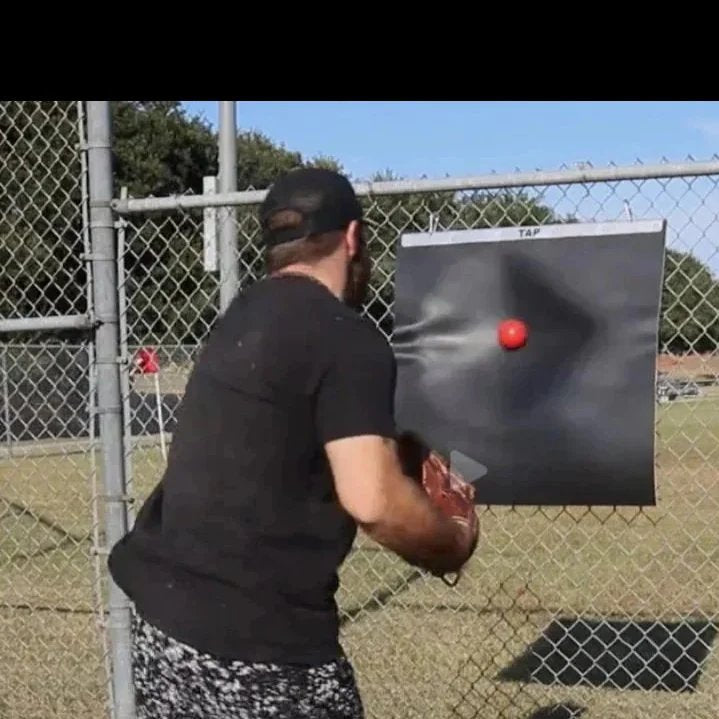
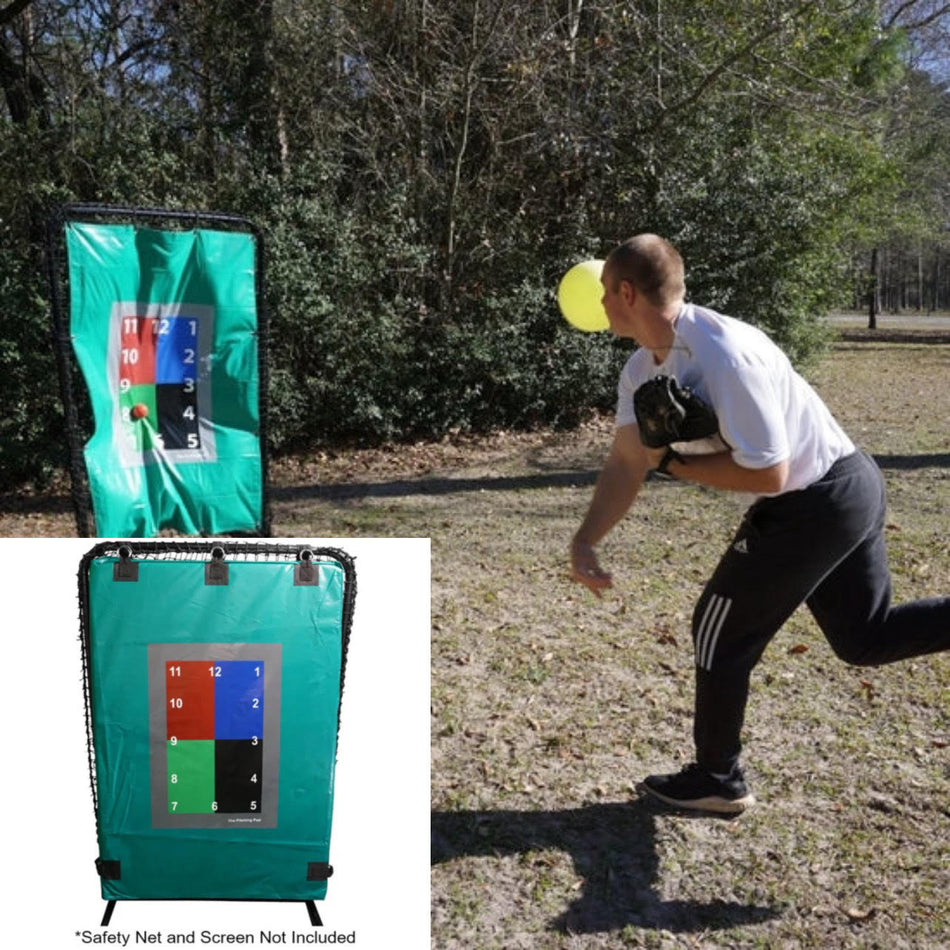
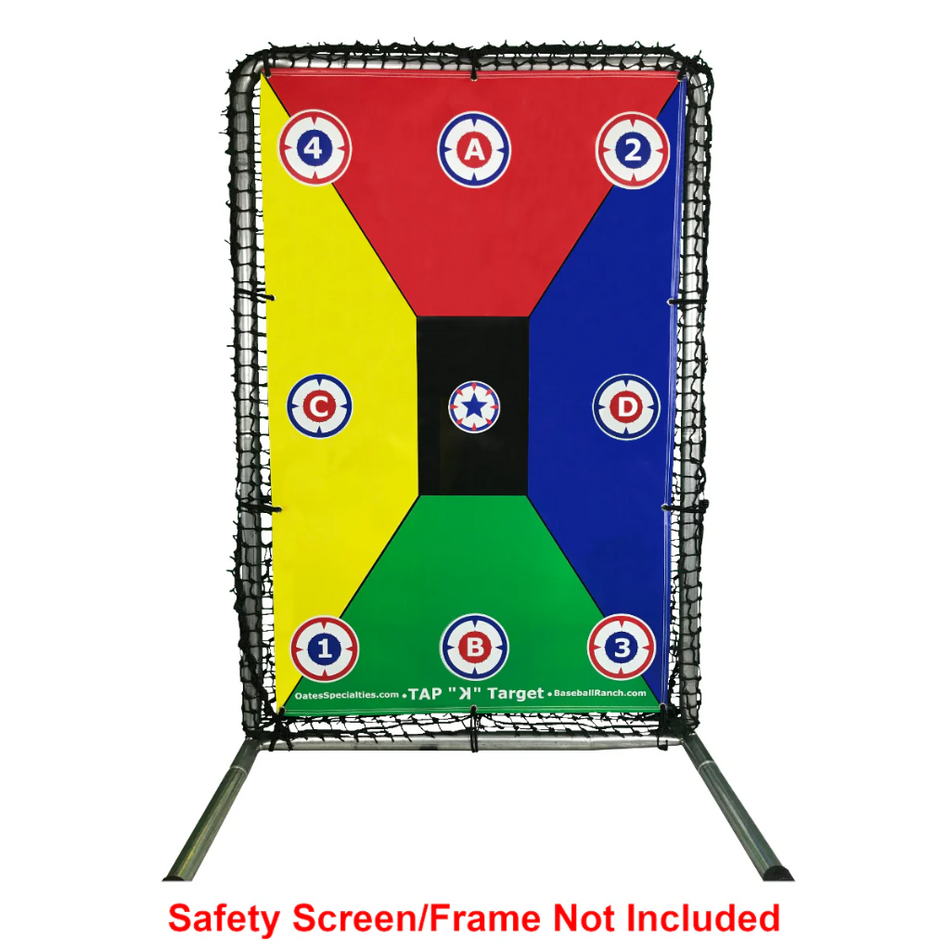
Three tools cover the core input-to-output picture. The Swing Speed Radar measures bat speed — how fast the bat moved through the hitting zone. The Pocket Radar Ball Coach measures exit velocity — how fast the ball left the bat. The TAP® Hitting Target provides visual feedback on launch and ball-flight direction.
Bat speed and exit velocity are related but not the same number. A hitter with high bat speed and poor contact quality will show a gap between the two. Tracking both together gives a more complete picture of what is happening at the point of contact than either measurement alone.
Each tool has a specific role and a specific limitation. The Swing Speed Radar works best in a controlled, repeatable tee setting. The TAP® Hitting Target gives a visual flight read, not a precise digital launch-angle number. The Pocket Radar measures ball speed, not bat speed.
Same tee height, same ball, same warm-up, same position every session. Eight to ten max-intent swings. Record best and average bat speed alongside exit velocity. Run this assessment before beginning a training block. Run it again after four to six weeks. The change in those numbers — not session feel, not cage impressions — is what tells the coach whether the work transferred.
Strength: The Foundation of the Force Ceiling
Start with general strength because it gives a hitter more force to organize, redirect, and deliver into the swing. A 2023 review of bat swing velocity research identified the strongest associations with lean body mass, grip strength, back strength, and explosive rotational output. Those findings are correlational — they do not prove a single cause — but they are consistent enough to act on. When athletes get stronger and learn to connect that strength to fast rotational movement, bat speed tends to follow.
Strength alone is not the finished product. It pays off most when the layers that follow teach the body to access good positions, move fast, and deliver force into the barrel at the right moment. But it is the necessary starting point. Without a genuine force ceiling to work from, every subsequent layer is working with less than it needs.
In practice, building that foundation means squats, hinges, presses, pulls, and loaded carries trained consistently and progressed over time. Those movements come before any specialty swing implement — not as a formality, but because they are doing the work that makes everything else more effective.
The Lead Leg: What Happens When It Doesn’t Brace
The lead leg is not a passive landing structure. It is the mechanism that converts lower-half rotation into upper-half speed — and what happens when it fails to brace is one of the most misunderstood force leaks in hitting.
The biomechanics are specific. Research on skilled hitters documented front-foot braking forces of approximately 123 percent of body weight at foot strike. That is not a rounding error. It means the lead leg is absorbing more than a full body weight of forward momentum and converting it into rotational energy up the kinetic chain. The hip, shoulder, and bat head angular velocities that follow — approximately 714 degrees per second, 937 degrees per second, and 31 meters per second respectively — are downstream products of that braking event. The lead leg is what makes those numbers possible.
When the lead leg does not brace, the energy that should redirect upward keeps moving forward. The lower half does not stop — it collapses or drifts. The upper half has nothing firm to rotate around. What coaches typically see is one or more of the following: the hitter “rolls over” early, the front shoulder pulls out instead of staying in the zone, the swing path flattens or comes around the ball, and contact point moves toward the body rather than out front. The hitter may feel like they are swinging hard. The exit velocity tells a different story.
The lead-leg braking failure also creates a cascade that affects timing. When the lower half drifts rather than stops, the sequencing of hip rotation, trunk rotation, and arm acceleration gets compressed. The hitter loses the separation between lower and upper half that generates the whipping action at the barrel. Mechanically this shows up as “casting,” early extension, or what coaches describe as “spinning off the ball” — but the root cause is not a swing path problem. It is a stability and strength problem at the front side.
What develops braking capacity is not a swing drill. It is lower-body strength work — specifically single-leg strength, hip stability under load, and the ability to accept and redirect force through a bent front knee without collapsing inward or straightening prematurely. Bulgarian split squats, single-leg Romanian deadlifts, lateral bounds with a controlled stick landing, and any loaded pattern that demands eccentric stability at the front hip and knee are building the same physical quality the lead leg needs at foot strike. This is why lower-body strength training belongs at the foundation of bat speed development — not because squats look like a swing, but because the physical demand of the lead leg at contact is a strength and stability event before it is a mechanics event.
Mobility: The Gate Strength Has to Pass Through
Not every swing flaw is a coaching problem. Sometimes a hitter lacks the range of motion or the control to consistently reach the position being asked for. When the body cannot get there cleanly, it compensates — and a compensation can look exactly like a timing error or a mechanical flaw when it is a physical one.
The joints and regions that matter most for hitters are the hips, the thoracic spine — the mid-back segment responsible for rotational range — and the core that maintains posture while the body rotates. In this framework, mobility means the ability to access a range of motion. Stability means the ability to control and load that range once in it. Both are necessary, and they are not the same quality.
One distinction worth making explicitly with athletes: more mobility is not always better. A hitter with excessive range and poor core control can leak force at the transfer point. The trunk needs to be mobile enough to load fully and stable enough to fire hard when it unwinds. Range of motion without the stability to use it does not add bat speed — it loses it.
Before repeating a mechanical correction ten more times, check whether the body can physically get there. A long resistance band works well for active warm-up, assisted range work, and dynamic rotation drills. A band will not fix a swing by itself. But better movement access makes the strength and power work that follows more effective.
Rotational Power: The Bridge From Weight Room to Barrel
Once a hitter is reasonably strong and moves well, the next step is rotational power — training the body to accelerate force through the trunk and deliver it to the barrel quickly. This is where the physical qualities built in the first two layers start to look like a swing.
Rotational medicine ball work is the clearest bridge from the weight room to the swing. In one study of college baseball players, athletes who threw a rotational medicine ball faster also tended to swing faster — the relationship accounted for approximately 39 percent of the variance in bat swing velocity. A separate study found a short-term performance increase in bat speed and exit velocity after a single session of medicine ball throws on a vibration platform. That was an acute priming result from one session, not a long-term development study — but it reinforces that rotational ballistic intent can prime the system when trained with purpose.
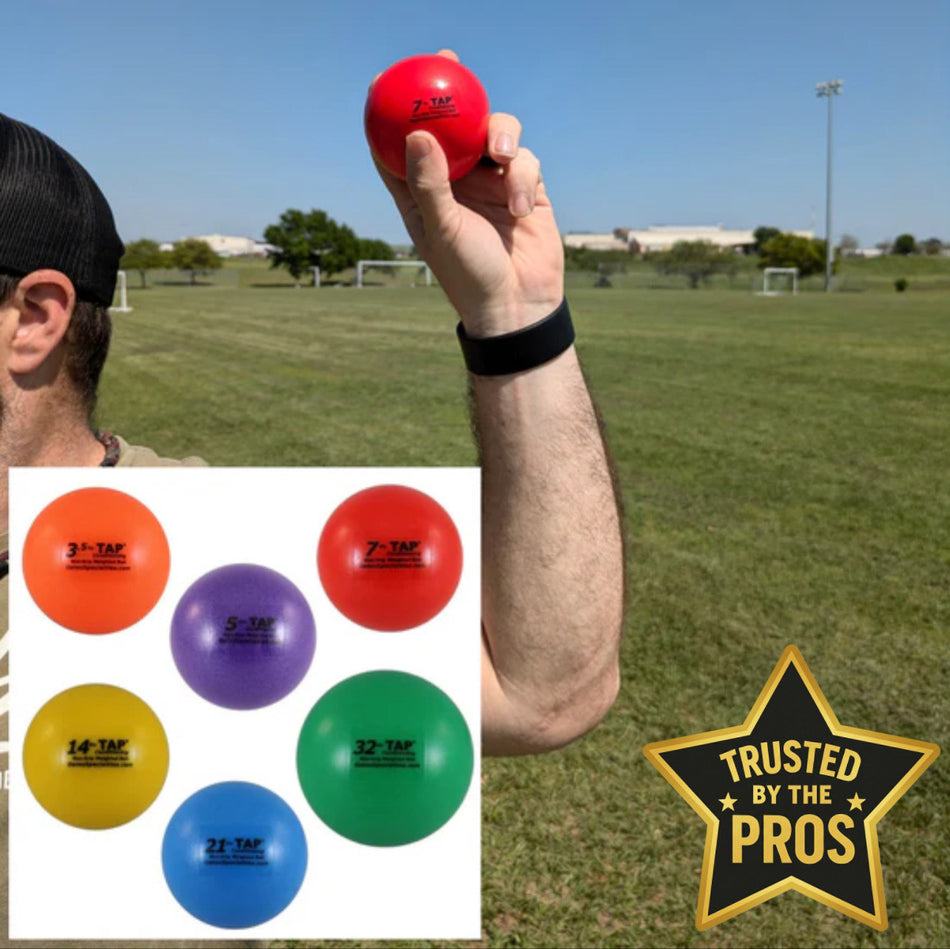
The TAP® Soft Medicine Ball fits this layer well. Rotational throws with full-body ballistic intent — driven from the hips through the trunk and released with maximal speed — train the same chain that produces a fast swing. Keep reps crisp and purposeful. The moment throws become slow and sloppy from fatigue, power training has become conditioning. Stop the set.
The KHAOS® Bulgarian Water Bag serves a different but complementary role in this layer. At light fill and maximal movement speed, ballistic patterns — swings, directional changes, and explosive rotational variations — train the hips, core, and shoulders to produce force and immediately absorb the impact of redirection. The goal is speed through the movement, not load. Fill stays well below halfway for that reason.
Loaded Swing Work and Where Unstable Tools Fit
After the foundation and bridge layers are in place, more specific swing work belongs in the plan. This means adding resistance directly into the swing pattern — but with a clear understanding of what type of adaptation that resistance is building.
The force-velocity curve describes the relationship between load and movement speed: heavier resistance reduces velocity, while lighter resistance allows higher velocity. Overload training — adding resistance to the swing pattern — builds what coaches call special strength and body awareness under resistance. That is not the same as overspeed training, which uses a lighter-than-game implement to train the nervous system to fire faster. Both approaches have value in a full development plan. Neither substitutes for the other, and using the language accurately with athletes helps them understand which adaptation they are working toward.
The SpeedChain® adds variable resistance to the swing itself. It belongs after an athlete already has the strength and rotational power to express through a loaded implement — not as a substitute for the earlier steps. A practical guideline from the weighted-implement research: keeping overload implements within roughly 10 to 12 percent of game-bat weight is enough load to challenge the pattern without distorting the timing and mechanics that need to carry over.
Two types of instability tools appear in training programs, and they are not the same thing. Bottom-up instability — BOSU balls, balance pads, wobble boards — places the athlete on an unstable surface. Research is consistent that this approach raises core muscle activation but meaningfully reduces force output and movement velocity compared with stable-ground training. A major meta-analysis found limited additional performance benefit over stable-ground training in healthy adolescents and young adults. Bottom-up tools have a place in rehabilitation and balance training. As a primary driver of swing power development, they fall short.
Top-down instability is a different mechanism entirely. Water-filled implements — carried, held, or swung by the athlete on stable ground — create perturbation from above rather than from below. The athlete’s base is stable. The load is not. Research on Bulgarian split squats comparing bottom-up surface instability against top-down unstable load conditions using a water-filled aqua bag confirmed that both increase muscle activation, but through different pathways and different force profiles. Separate research using a water-filled instability tube found significant reductions in EMG activation variability across all muscles after two weeks of training — indicating improved force steadiness and motor control, not reduced output.
That distinction defines the role of KHAOS® water implements in this program. They are top-down perturbation tools used on stable ground. Their demand is reactive stabilization and motor control under an unpredictable shifting load — not balance training on an unstable surface. They belong in warm-up circuits, activation work, and lower-intensity maintenance sessions. They support the power system. They do not lead it.
Applying the System Across the Season
The same development chain applies year-round with the emphasis shifting by where the athlete is in the calendar.
In the off-season, the priority is building. Strength work, mobility development, and general rotational work form the core. Volume is higher. The goal is raising the physical ceiling before competition demands arrive.
As competition approaches, the goal shifts from building force capacity to expressing it. Hard, sharp ballistic work, selected loaded swing training, fewer reps, and full recovery between explosive sets characterize this window. The weight room stays in but volume pulls back as practice and game volume climb.
During the competitive season, protecting intensity where it counts and managing overall volume keeps the physical foundation from eroding across a long schedule. A fast, healthy swing in the final week of the season is the outcome of managing the competitive period well — not grinding every session.
These are not rigid calendar labels. They are guides for which tools and which qualities deserve the most attention at each point in the year.
For Younger Hitters
Younger and less-trained athletes need a conservative entry point. The 2014 international youth resistance training consensus and the NSCA updated position statement both confirm that well-coached, supervised strength training is safe and beneficial for children and adolescents when it is taught and progressed correctly.
In practice, that means bodyweight strength work, simple jumps and throws, light medicine ball variations, and careful, gradual exposure to anything loaded or unstable. Technical quality and sound coaching matter more than any particular training method. The goal for a young hitter is not to collect advanced tools early. It is to build coordination, rhythm, posture, and broad athletic capacity — qualities that make every future training layer more effective.
Heavier loading and ballistic intensity follow once a solid technical foundation is established. Young athletes who skip that foundation in favor of specialty tools early typically find their development plateaus faster than it should.
All exercises and training applications described in this article are general educational examples. They are not prescriptive training programs. Consult a qualified coach or trainer for individual program guidance. Youth athletes should always train under appropriate adult supervision.
The Evidence in Summary
The research on bat speed development does not point toward a single training method. It points toward a sequence. Measurement establishes the baseline. Strength creates the force ceiling. Mobility determines whether that force can move through an efficient pattern. Rotational power trains the body to express it fast. Bat-specific tools sharpen that output in a pattern that looks like the real swing. Measurement at the end of the block confirms what transferred. Adding any development layer before the ones beneath it are established reduces how much that layer can contribute — which is why the order matters as much as the tools.
Where to Go Next
This article is the framework. It establishes the sequence, explains the mechanism behind each layer, and identifies where specific tools belong. What it cannot do is go deep on any single layer — the exercises, progressions, coaching cues, and tool applications that make each phase actionable belong in their own dedicated treatment. The articles that follow in this series do exactly that, taking one layer at a time from introduction to application.
The most useful next step depends on where the athlete or coach currently is in the development chain. An athlete who has not yet established a baseline starts with the measurement article. An athlete who needs to build a strength base starts with the strength article. A coach trying to understand why a technically sound swing is still slow starts with the mobility piece. An athlete ready to bridge the weight room to the barrel goes to the rotational power article.
The eight companion articles in this series:
Measuring Without a Lab covers how to establish a baseline before training begins and how to retest after a training block — bat speed, exit velocity, and ball-flight feedback anywhere, with the Swing Speed Radar, Pocket Radar Ball Coach, and TAP® Hitting Target.
Strength First covers how lower-body force production feeds bat speed — the research on lean body mass, grip, back strength, and what the weight room should actually look like for a developing hitter.
Mobility covers the hips, thoracic spine, and what mechanics coaching cannot fix — including the mobility-stability distinction and how to identify a physical limitation before treating it as a swing fault.
Rotational Power and Medicine Ball Work covers the bridge from the weight room to the barrel — the lead-leg braking mechanism, medicine ball application, and how to train rotational intent with purpose.
Overload, Underload, and Overspeed covers what the force-velocity curve means for hitters — the distinction between building special strength through resistance and training higher swing velocity through lighter implements, and how both fit into a full development plan.
Unstable Tools and KHAOS® Training covers when instability-based training helps and when it falls short — the research on what unstable tools can and cannot do, and how to use the KHAOS® lineup in the right role within a bat speed program.
Applying the System Across the Season covers how training emphasis shifts by phase — what to prioritize in the off-season, how to protect intensity during competition, and what a maintenance approach looks like when the schedule is compressed.
For Younger Hitters covers safe progressions and smart use of specialty tools — the research on youth resistance training, how to sequence development for athletes who are still growing, and when more advanced tools are appropriate.
For athletes and coaches who want the full product context, the Oates Specialties brand overview covers the SpeedChain®, TAP®, and KHAOS® product lines and how each fits a specific layer of the development chain.
Frequently Asked Questions
A Swing Speed Radar measures bat speed in a consistent tee-based setting. A Pocket Radar Smart Coach measures exit velocity off the bat. A TAP® Hitting Target provides visual ball-flight feedback. Together these three tools cover the input-to-output picture at a fraction of lab cost. The key is establishing a baseline before any training block begins — then running the same assessment after four to six weeks to see what actually transferred. A number without a before-and-after comparison tells a coach very little.
The most consistent approach in the research is sequential: establish a baseline measurement first, build general strength, develop the mobility to access good swing positions, train rotational power as the bridge between the weight room and the barrel, then layer in bat-specific work, and retest. Each step depends on the one before it. Reaching for bat-specific tools before the physical foundation is in place typically produces limited results because the base is not yet capable of expressing through the tool.
Research consistently associates measures of strength — lean body mass, grip strength, back strength, and explosive rotational output — with higher bat swing velocity. Those associations are correlational, not controlled cause-and-effect evidence. But they are consistent enough to act on. When athletes get stronger and connect that strength to fast rotational movement, bat speed tends to follow. Strength alone is not the finished product. It is the starting point.
Measurable gains typically require a minimum of four to six weeks of consistent, well-structured training — assuming the foundation layers are already in place. Athletes starting from a genuine strength and power deficit may need a full off-season before bat-specific work produces durable results in a game setting. Short-term acute improvements after a single ballistic session have been documented in research, but those are priming effects, not structural development. Track with a consistent before-and-after assessment each training block. Session-to-session feel is not a reliable gauge.
The more useful question is whether bat speed is improving relative to the baseline established before training began — and whether the physical qualities that drive it are being developed in the right order. A number without context tells a coach very little. A number tracked across a consistent before-and-after assessment tells a coach whether the work is transferring. The companion article on measuring without a lab covers level-based reference ranges and how to set up a repeatable assessment that makes those comparisons meaningful.
Bat speed measures how fast the barrel is moving through the hitting zone at contact. Exit velocity measures how fast the ball leaves the bat after contact. They are related but distinct. A hitter with high bat speed and poor contact quality — off-center hits, glancing contact, poor launch position — will show a meaningful gap between bat speed and exit velocity. A hitter with moderate bat speed and exceptional contact quality can produce exit velocities that exceed what bat speed alone would predict. Tracking both measurements together gives a more complete picture of what is happening at the point of contact than either number alone.
Yes, but the approach has to shift. In-season training is not the time to build the physical foundation — that work belongs in the off-season. During the competitive season the goal is to maintain and express what was already built while managing total volume carefully. Short, high-intensity ballistic sessions — rotational medicine ball work, a small number of loaded swing reps at full intent — can sustain and in some cases slightly improve bat speed during the season when recovery is managed well. The biggest in-season bat speed losses typically come from accumulated fatigue, not from reduced training. Protecting freshness is often more important than adding volume.
No — and this is one of the most persistent misunderstandings in hitting development. A heavier bat reduces swing velocity, which is why overload training is a specific adaptation strategy rather than a universal performance enhancer. The goal of overload training is to build special strength and body awareness under resistance — not to increase game bat speed directly. Research and practical guidelines both suggest keeping training implements within roughly 10 to 12 percent of game-bat weight to avoid distorting the timing and mechanics that need to carry over. A bat significantly heavier than the game bat will slow the swing down and change movement patterns in ways that do not transfer positively.
Unstable tools — water implements, perturbation devices, and balance trainers — support bat speed development without being its primary driver. Research shows they increase muscle activation and body awareness but reduce force and movement velocity output compared with stable-ground training. Their role is core organization, anti-rotation control, and lower-intensity reactive work — particularly in warm-up circuits and recovery-oriented sessions. The distinction between bottom-up instability (athlete on an unstable surface) and top-down instability (athlete on stable ground with an unstable load) is important: these are different mechanisms with different force profiles and different roles in a program. They belong in a supporting role, not as a replacement for strength and rotational power work.
Cage bat speed measured on a tee in a controlled setting is a best-case scenario: full preparation time, no deception, no count, no competitive pressure, full mechanical focus. Game bat speed is produced under a fundamentally different set of demands. Gains that show up in the cage but disappear in games typically indicate that the underlying physical quality — rotational power, front-side stability, or force delivery at contact — was developed to a level that holds under ideal conditions but not yet to a level that holds under competitive pressure. Durable development shows up in both environments. If the gap persists after a full training block, the physical foundation layer almost always needs more work before the bat-specific layer can hold.
Annotated Bibliography
Haruna, R., Doi, T., Habu, D., Yasumoto, S., & Hongu, N. (2023). Strength and conditioning programs to increase bat swing velocity for collegiate baseball players. Sports (Basel), 11(10), 202.
https://pmc.ncbi.nlm.nih.gov/articles/PMC10610610/
A 2023 review linking strength and conditioning qualities — lean body mass, grip strength, back strength, and explosive rotational output — to bat swing velocity in college players. Lower-body field tests showed less consistent associations in the reviewed data. Foundational reference for the strength-first framework in this article.
Klein, B., Cobian, D., Simmons, G., & Reinold, M. (2021). Offseason workout recommendations for baseball players. Current Reviews in Musculoskeletal Medicine, 14, 174–184.
https://pmc.ncbi.nlm.nih.gov/articles/PMC7990992/
Baseball-specific review of off-season training structure, broad physical development priorities, and periodization for the sport. Supports the seasonal emphasis framework described in the applying-the-system section.
Lorenz, D., & Morrison, S. (2015). Current concepts in periodization of strength and conditioning for the sports physical therapist. International Journal of Sports Physical Therapy, 10(6), 734–747.
https://pmc.ncbi.nlm.nih.gov/articles/PMC4637911/
Practical overview of how training emphasis should shift across phases of the year. Provides the periodization rationale for the off-season, competition, and maintenance emphasis structure used in this article.
Oates Specialties. About Our Brands. oatesspecialties.com.
https://oatesspecialties.com/pages/about-our-brands
Overview of the SpeedChain®, TAP®, and KHAOS® product lines and their intended roles in athletic development. Reference for product-specific applications described throughout this article.
Taniyama, R., et al. (2021). Rotational medicine ball throw velocity relates to NCAA Division III baseball player bat swing, batted ball, and pitching velocity. PubMed.
https://pubmed.ncbi.nlm.nih.gov/34570055/
35 NCAA Division III baseball players. Rotational medicine ball throw velocity correlated with bat swing velocity at r = 0.65, accounting for approximately 39 percent of the variance. The strongest whole-body power predictor in the study. Directly supports rotational medicine ball work as a bridge between weight-room strength and swing velocity.
Buso, S., Willardson, J. M., & Shafer, A. (2023). Effects of medicine wall ball throws with whole-body vibration on bat swing performance in collegiate baseball players. PubMed.
https://pubmed.ncbi.nlm.nih.gov/37729518/
13 collegiate players. A single session of medicine ball throws on a vibration platform produced short-term improvements in bat speed (d = 0.22) and exit velocity (d = 0.48). An acute priming result from one session, not a long-term development study. Supports rotational ballistic intent as a pre-session primer.
Behm, D. G., & Colado, J. C. (2012). The effectiveness of resistance training using unstable surfaces and devices for rehabilitation. International Journal of Sports Physical Therapy.
https://pubmed.ncbi.nlm.nih.gov/22530196/
Review showing that unstable training raises muscle activation but reduces force, power, and movement velocity output compared with stable-ground training. Supports the adjunct, not primary, role for unstable tools in bat speed development.
Behm, D. G., Muehlbauer, T., Kibele, A., & Granacher, U. (2015). Effects of strength training using unstable surfaces on strength, power, and balance performance across the lifespan: A systematic review and meta-analysis. PubMed.
https://pubmed.ncbi.nlm.nih.gov/26359066/
22 controlled trials. Unstable-surface training outperformed no training for strength, power, and balance, but showed limited additional benefit over stable-ground training in healthy adolescents and young adults. Directly supports the defined supporting role for unstable tools described in this article.
Faigenbaum, A. D., et al. (2009). Youth resistance training: Updated position statement from the NSCA. Journal of Strength and Conditioning Research.
https://pubmed.ncbi.nlm.nih.gov/19620931/
NSCA updated position statement confirming that well-coached strength training is safe and beneficial for youth athletes when appropriately scaled and supervised. Supports the youth section’s conservative, technique-first entry-point prescription.
Lloyd, R. S., et al. (2014). Position statement on youth resistance training: The 2014 international consensus. British Journal of Sports Medicine.
https://pubmed.ncbi.nlm.nih.gov/24055781/
The 2014 international consensus statement supporting supervised, technique-first, age-appropriate resistance training as safe and beneficial for children and adolescents. Reference for the youth guardrail guidance in this article.
Welch, C. M., Banks, S. A., Cook, F. F., & Draovitch, P. (1995). Hitting a baseball: A biomechanical description. Journal of Orthopaedic & Sports Physical Therapy, 22(5), 193–201.
https://www.jospt.org/doi/10.2519/jospt.1995.22.5.193
The foundational hitting mechanics study. Front-foot braking force approximately 123 percent of body weight at landing; proximal-to-distal speed sequence: hip ~714 degrees per second, shoulder ~937 degrees per second, bat ~31 meters per second. Basis for the lead-leg braking and force-transfer concepts throughout this article. Also the primary reference for the expanded lead-leg section — specifically what force leaks occur structurally and mechanically when the lead leg fails to brace at foot strike.
Kibler, W. B., Press, J., & Sciascia, A. (2006). The role of core stability in athletic function. Sports Medicine, 36(3), 189–198.
https://pubmed.ncbi.nlm.nih.gov/16526831/
Establishes the principle of proximal stability for distal mobility — the core must stabilize force for the limbs and distal segments to express it efficiently. Basis for the mobility-stability distinction and the hypermobility caution in the mobility section of this article.
Glass, S. C., & Wisneski, K. A. (2023). Effect of instability training on compensatory muscle activation during perturbation challenge in young adults. Journal of Functional Morphology and Kinesiology, 8(3), 136.
https://www.mdpi.com/2411-5142/8/3/136
Two weeks of front squat training with a water-filled instability tube produced significant reductions in EMG activation variability across all muscles compared with stable-tube training. Supports the classification of water-filled implements as top-down perturbation tools that improve force steadiness and motor control — distinct from the force-reducing effects of bottom-up surface instability training.
Moon, S., Seo, G., Lee, J., Li, W., Yu, I. Y., & Kim, T. G. (2026). Effects of unstable loads and surfaces on core and lower limb muscle activation during Bulgarian squats. Journal of Bodywork and Movement Therapies.
https://journals.sagepub.com/doi/10.1177/10538127251406954
Compared bottom-up surface instability (balance pad) against top-down unstable load conditions (water-filled aqua bag) during Bulgarian split squats in 21 physically active adults. Both conditions increased muscle activation compared to stable conditions but through different neuromuscular pathways. Directly supports the distinction between bottom-up and top-down instability tools and the separate roles they play in a bat speed development program.
Swing Speed Radar. oatesspecialties.com.
https://oatesspecialties.com/products/swing-speed-radar
Handheld radar for measuring bat speed in a consistent, controlled tee-based setting. Measures bat head speed, not ball speed. Referenced in the measurement section as the bat speed input tool.
TAP® Hitting Target. oatesspecialties.com.
https://oatesspecialties.com/products/tap%C2%AE-hitting-target-visual-feedback-training-tool-for-launch-angle-swing-efficiency-tee-work
Developed with hitting coach Mike Ryan, provides visual feedback on ball-flight direction and launch window in real time. Not a precise digital launch-angle measurement tool. Referenced in the measurement section as the ball-flight feedback component.
Pocket Radar Smart Coach. oatesspecialties.com.
https://oatesspecialties.com/products/the-ball-coachtm
Handheld Doppler radar measuring exit velocity — ball speed off the bat — during tee work or controlled batting practice. Measures ball speed, not bat speed. Referenced in the measurement section as the exit velocity output tool.
About This Analysis
Created by the Oates Specialties team led by Robert Oates, M.Ed., Founder
Editorial oversight by Gunnar Thompson, BS, CSCS, General Manager
Certified Strength & Conditioning Specialist | Biomechanics Specialist
June 2026
Complete Credentials
ROBERT OATES, M.Ed., Founder: Founded Oates Specialties in 2003. Master of Education degree. Provides strategic direction for educational content and athlete development philosophy.
GUNNAR THOMPSON, General Manager: BS Kinesiology (Clinical Exercise Science). CSCS (NSCA), PES (NASM), CPPS certifications. Technical authority on biomechanics and performance science. Conducts review of all educational content for scientific accuracy.
Questions or corrections: gunnart@oatesspecialties.com
© 2026, Oates Specialties LLC