





TAP® Connection Ball™ – 12" Training Tool for Efficient Movement
Couldn't load pickup availability
10% Discount on 10+ Units — Automatically applied at checkout. No code needed.
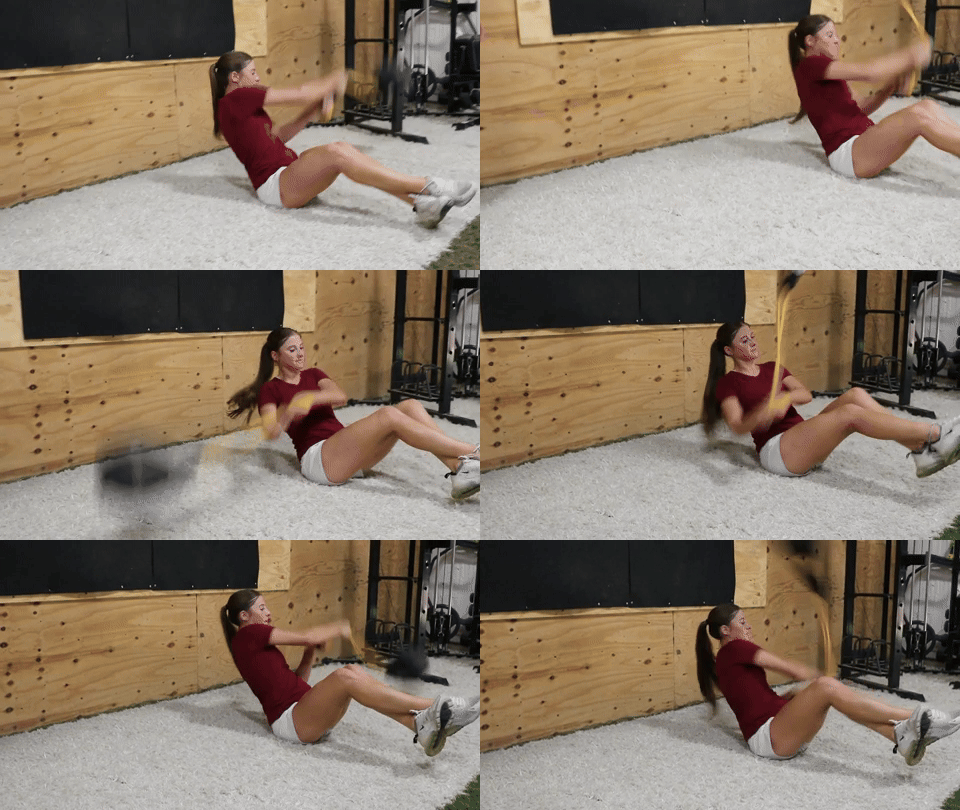
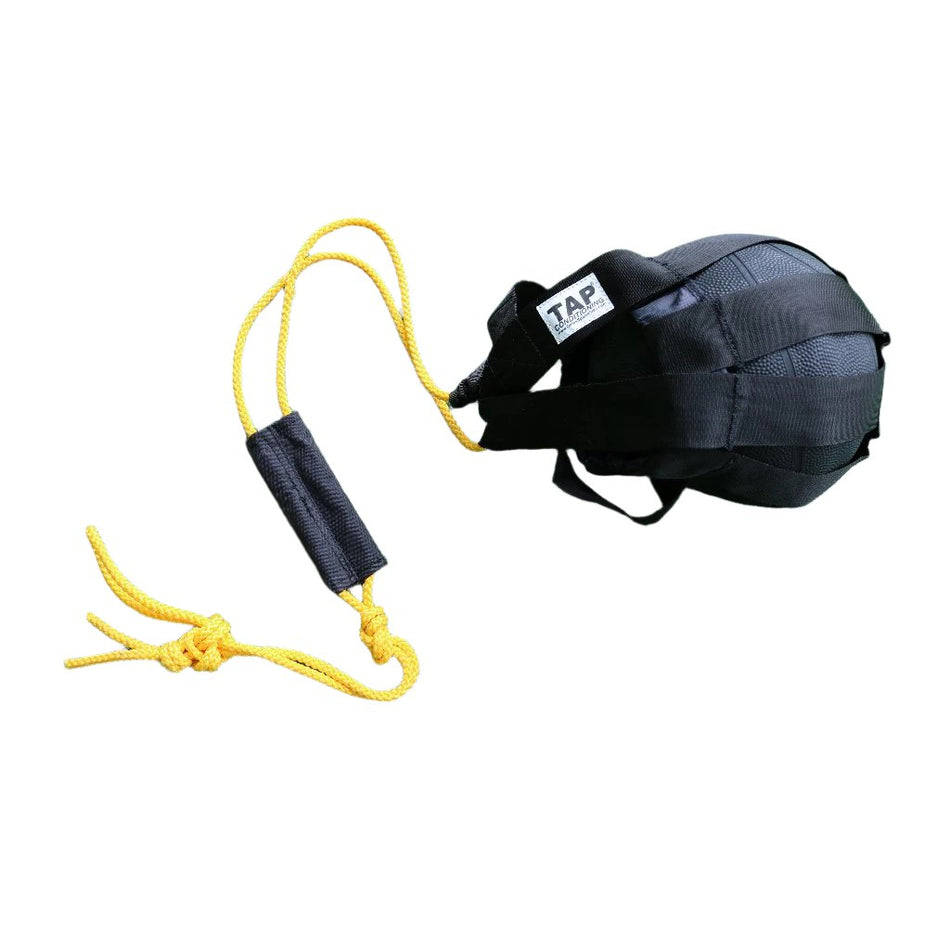
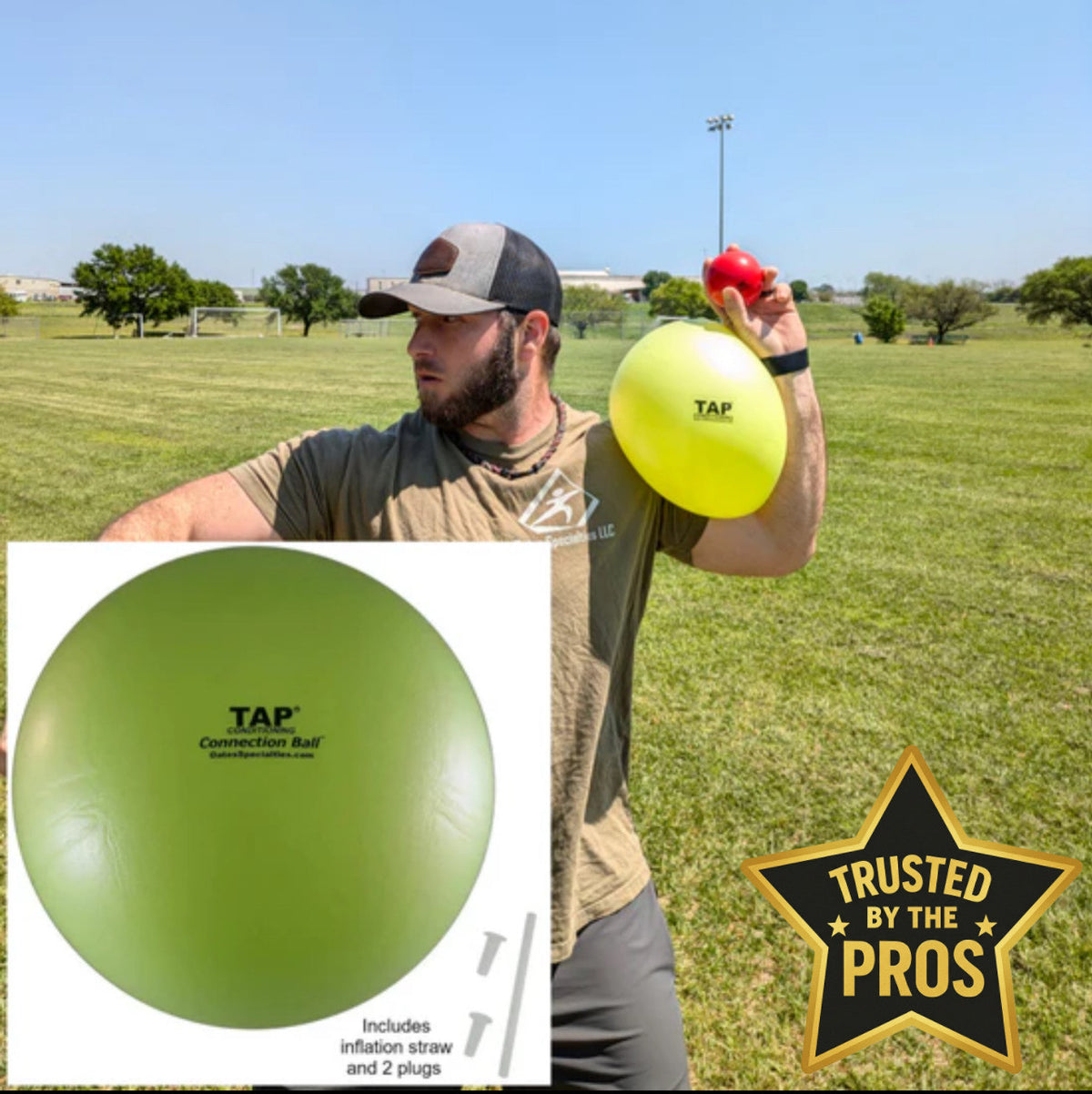
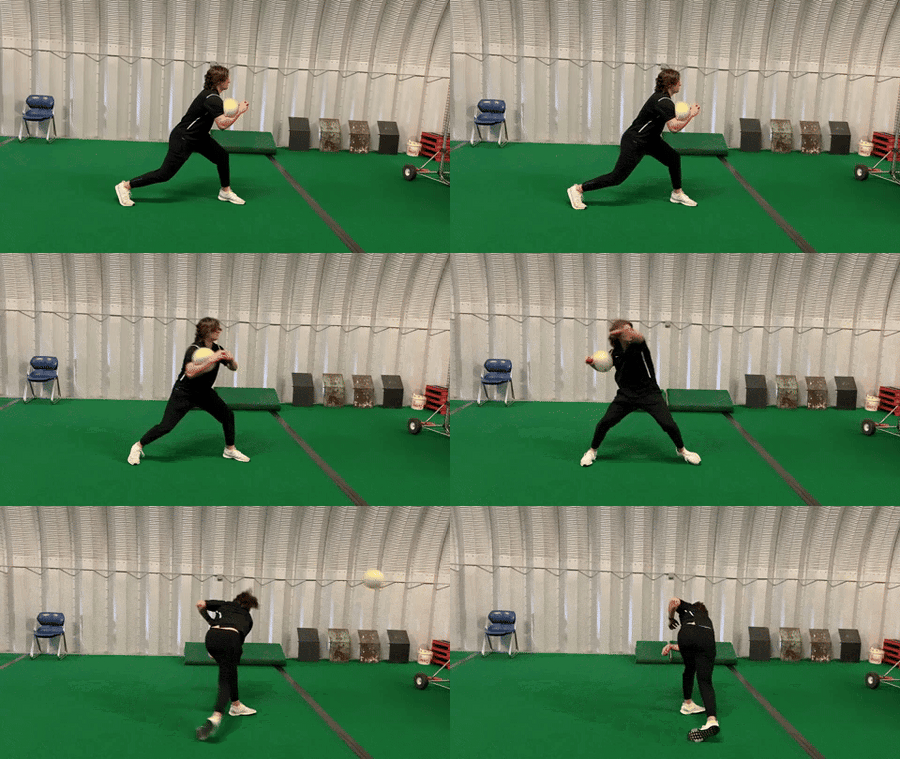
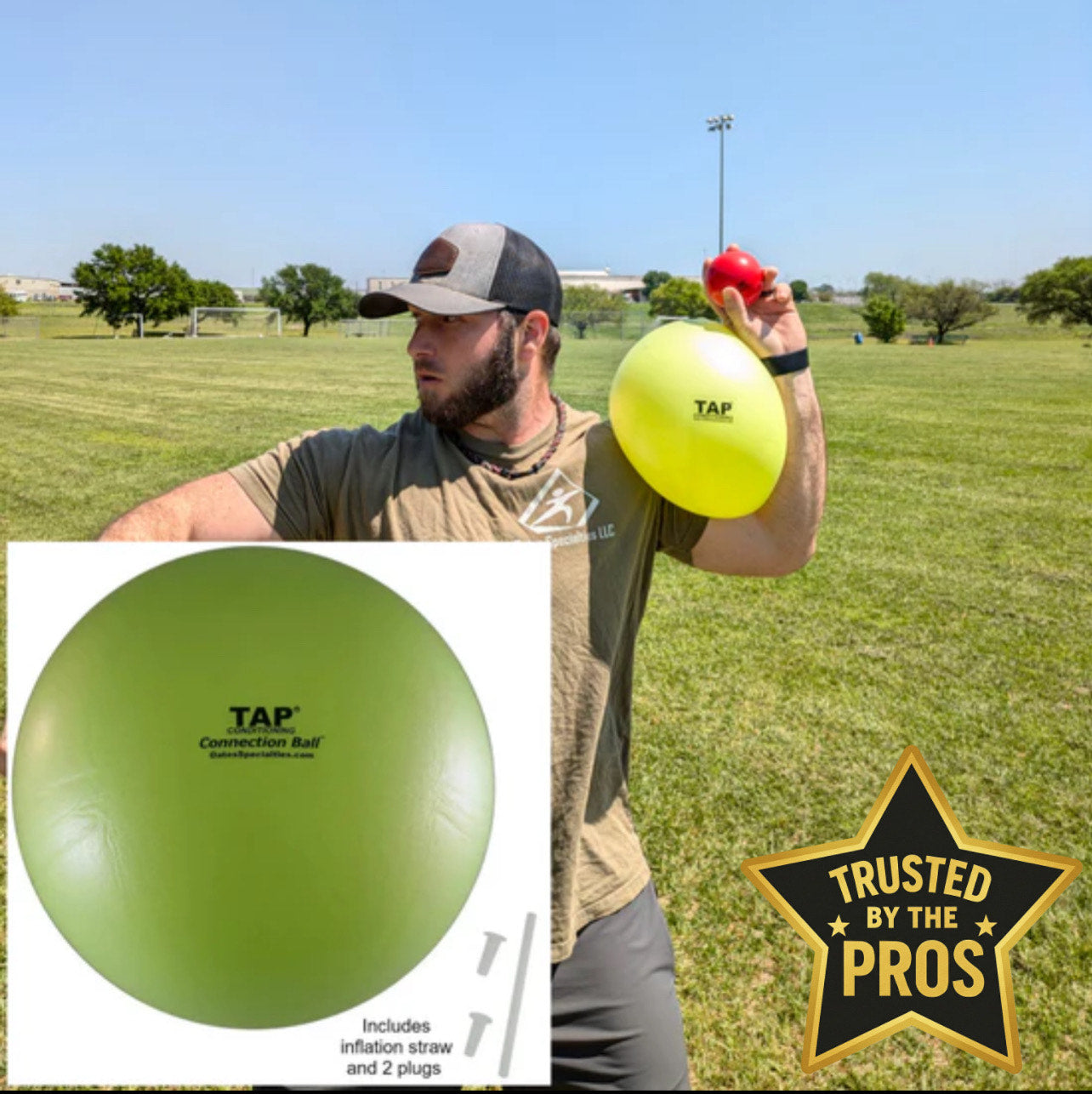
The TAP® Connection Ball™ is a 12-inch inflatable constraint-led training tool designed to develop body awareness, kinetic chain integration, and movement efficiency for overhead athletes. Used across baseball throwing arm development, hitting mechanics, tennis, volleyball, and rehabilitation contexts, it functions as a physical constraint that guides the body toward more efficient movement patterns — without verbal instruction.
Key Features & Benefits
- Kinetic Chain Awareness – Develops the felt sense of connection between the lower half, trunk, and arm complex during sport-specific movement.
- Movement Efficiency – Constraint-led feedback reduces energy leaks and reinforces more efficient mechanics in throwing, hitting, and overhead patterns.
- Motor Learning & Skill Development – Variability introduced by the constraint increases neuromuscular engagement and supports long-term skill retention.
- Overuse Risk Mitigation – Promotes anatomical alignment and movement integrity that supports long-term arm health in high-repetition throwing athletes.
- Multi-Sport Application – Suited for baseball, softball, tennis, volleyball, and any sport where kinetic chain integration and overhead mechanics matter.
- Lightweight & Portable – Ships deflated with inflation straw and two plugs; easy to inflate, deflate, and transport.
How It Works
The TAP® Connection Ball™ applies principles from Dynamic Systems Theory (DST) and the constraint-led approach to motor learning. By introducing the ball as a physical constraint during movement, the athlete's nervous system is required to self-organize more efficient solutions — without being told what to do. This exploratory process develops movement patterns that are more durable and transferable than those acquired through explicit instruction alone.
- Constraint-Led Approach – The ball limits certain movement options, directing the body toward more mechanically sound patterns through self-discovery rather than verbal cueing.
- Differential Learning – Variability introduced by the constraint increases the neuromuscular system's adaptability and supports skill acquisition across changing conditions.
- Exploration-Based Training – Athletes are encouraged to find movement solutions independently, which produces more robust motor programs than repetition-based blocked practice.
Sport-Specific Applications
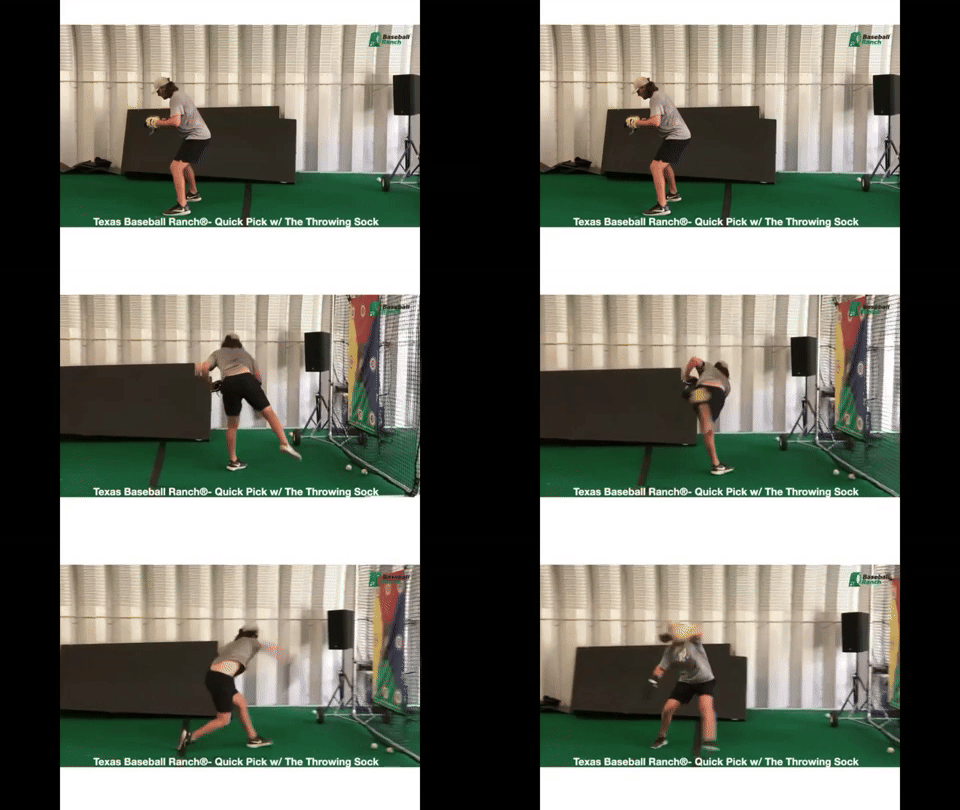
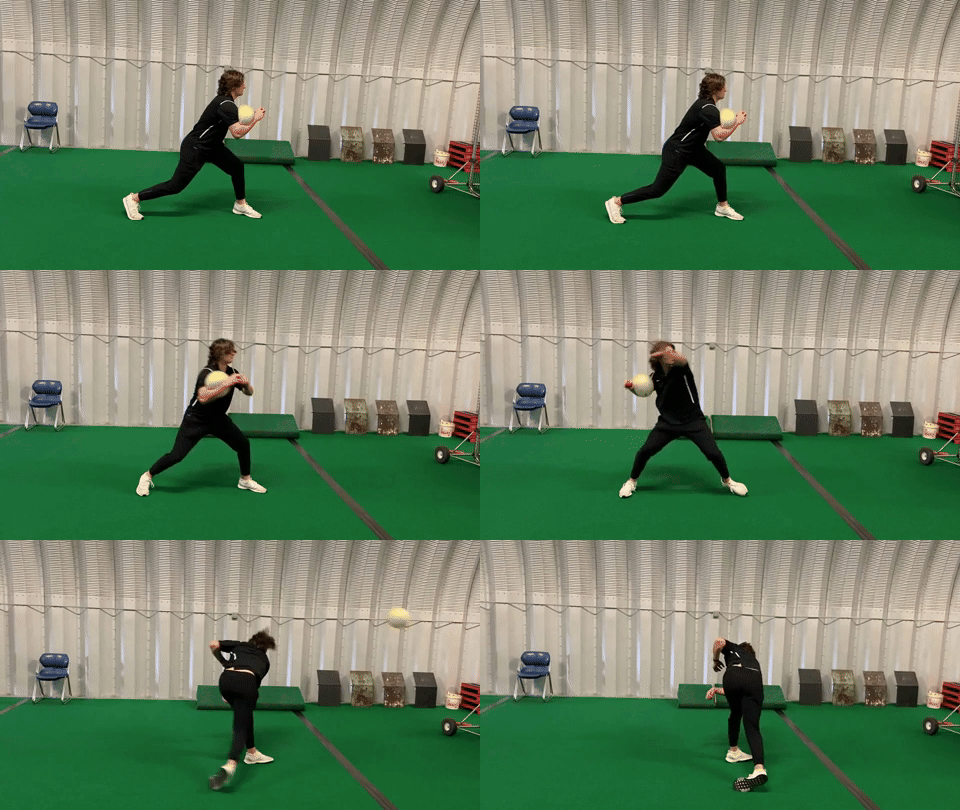
- Baseball Pitching: Develops arm action, kinetic chain sequencing, and movement efficiency in pitchers. Ron Wolforth, whose work with the Texas Baseball Ranch has shaped modern pitching development, describes connection as a critical and often overlooked element in pitching performance — see his full presentation in the video below.
- Baseball Hitting: Reinforces swing path, rotational mechanics, and lower-half-to-barrel connection for hitters at all levels.
- Catching: Supports receiving mechanics, transfer efficiency, and throwing accuracy development.
- Tennis: Optimizes kinetic chain integration through serve mechanics and groundstroke patterns.
- Volleyball: Develops coordinated mechanics for serving, spiking, and overhead contact patterns.
Technical Specifications
- Material: Pliable PVC
- Diameter: 12 inches
- Ships deflated with inflation straw and 2 plugs
- Colors may vary
The TAP® Connection Ball™ is a training tool — consistent practice and qualified coaching direction produce the best outcomes when integrating it into a training program.
Frequently Asked Questions
The Connection Ball introduces an external constraint that refines motor control and reinforces efficient movement mechanics. By requiring the body to maintain awareness of the ball during sport-specific movements, it increases kinetic chain engagement and promotes energy-efficient movement patterns that transfer to throwing, hitting, and overhead sport mechanics.
- Develops kinetic chain awareness across the lower half, trunk, and arm complex.
- Encourages consistent body alignment through self-organization rather than verbal cueing.
- Supports energy-efficient movement patterns in pitching, hitting, and overhead sport mechanics.
The ball supports a wide range of drills tailored to sport-specific demands. Coaches can integrate it into both foundational movement development and advanced skill refinement across disciplines.
- Throwing arm development — arm action, sequencing, and release point.
- Swing path and rotational mechanics for hitters.
- Serving and footwork patterns for volleyball and tennis.
Yes. The ball prompts proprioceptive feedback that encourages athletes to self-organize more efficient movement solutions during skill execution. This approach reduces reliance on external verbal cueing, builds long-term motor control, and fosters technique that transfers across training contexts.
By introducing variability and a physical constraint into the movement environment, the ball increases the demands placed on the neuromuscular system to solve movement problems. This draws from Dynamic Systems Theory and the constraint-led approach — well-established frameworks in motor learning research.
- Triggers deeper neuromuscular engagement through self-directed exploration.
- Improves adaptability and skill transfer across changing conditions.
- Supports long-term skill retention beyond what blocked, repetitive practice produces.
Yes. Many athletes use the Connection Ball to rebuild and refine movement patterns during lower-intensity training phases. It supports post-injury movement sequencing, reintroduction to sport-specific loads, and movement integrity development before high-velocity work resumes. Any return-to-sport program should be directed by a qualified coach or medical professional.
Featured Products