





TAP® Max-Grip Weighted Ball – Plyometric Training & Arm Care (3.5oz-32oz)
Couldn't load pickup availability
The TAP® Max-Grip Weighted Ball is a sand-filled plyometric training tool for pitchers and position players. Shifting internal sand fill creates variable proprioceptive input on every rep. The neuromuscular system must actively adapt to an unpredictable load. This builds stabilizer engagement that fixed-core balls cannot replicate.
Key Features
- Sand-Fill Construction: Shifting internal weight creates variable proprioceptive input. Stabilizer muscles engage continuously throughout each rep.
- Max-Grip Textured Surface: Proprietary surface increases grip demand on every throw. Reinforces consistent release mechanics under varying loads.
- Six-Weight System (3.5–32 oz): Supports underload, standard, and overload training in one system. Covers the full PCR framework from Prepare through Restore.
- Burst-Resistant Shell: Built for repeated high-impact use against walls and floors. Rated for daily collegiate and professional training volume.
- 2-Year Limited Warranty: Industry-leading coverage reflecting performance in high-demand training environments.
- Multi-Sport Application: Suited for baseball, softball, volleyball spiking mechanics, and tennis serve loading.
Applied Science: DST & CLA
The Max-Grip system is built around Dynamic Systems Theory (DST) and the Constraint-Led Approach (CLA). The shifting sand fill and textured grip act as physical constraints. These constraints direct the nervous system to self-organize more efficient movement patterns. No verbal instruction required.
- Differential Learning: Weight variation from 3.5 to 32 oz demands continuous adaptation. This reduces training plateaus and improves motor pattern durability across conditions.
- Proprioceptive Input: The Max-Grip surface and shifting sand deliver tactile feedback on every rep. Grip consistency and release mechanics are reinforced without external cueing.
- Neuromuscular Adaptation: Variable internal load demands active stabilizer engagement throughout the movement. This develops a more adaptable and robust arm over time.
Weight Identification by Color
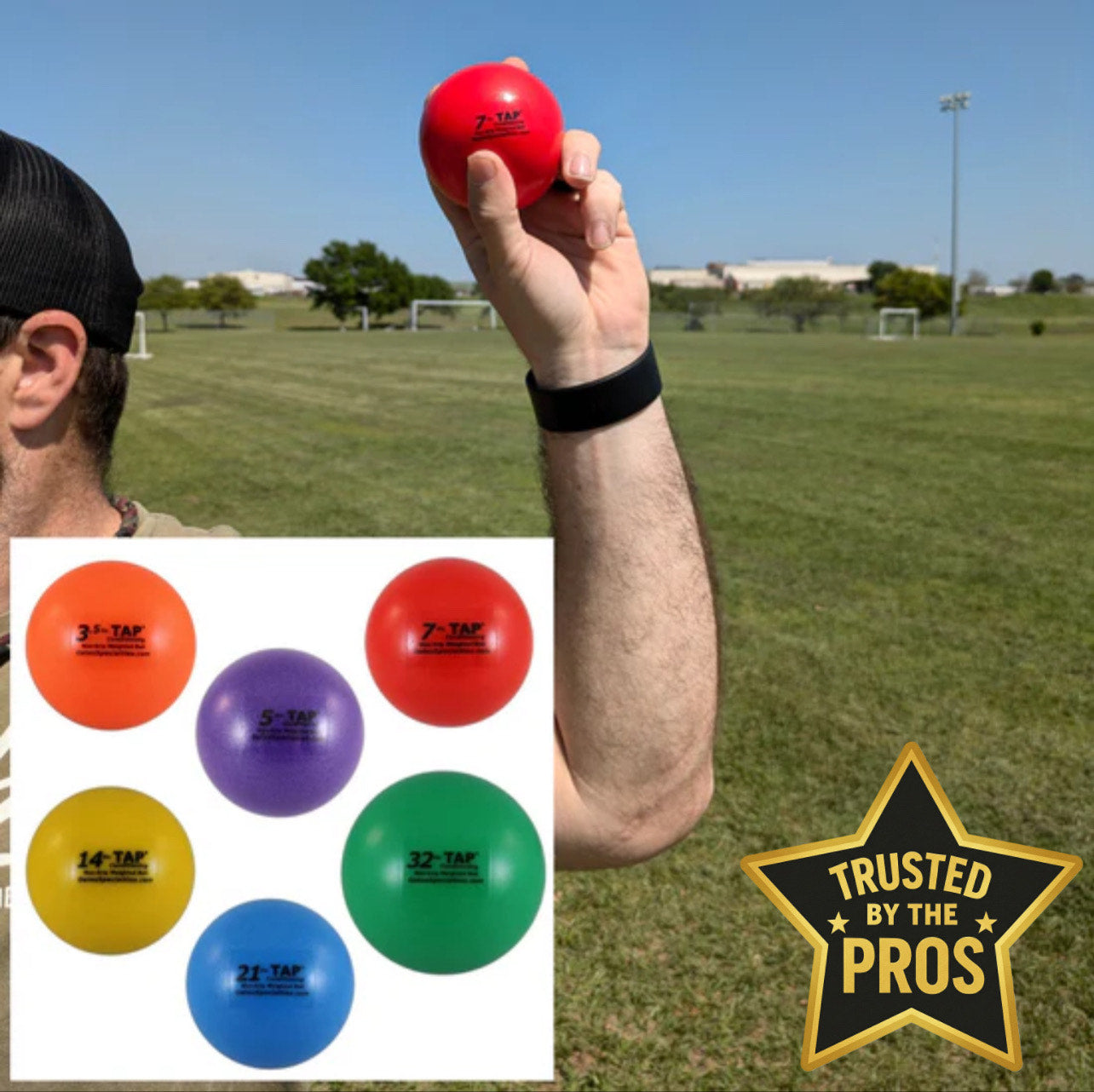
| Weight | Color | Primary Application | PCR Phase |
|---|---|---|---|
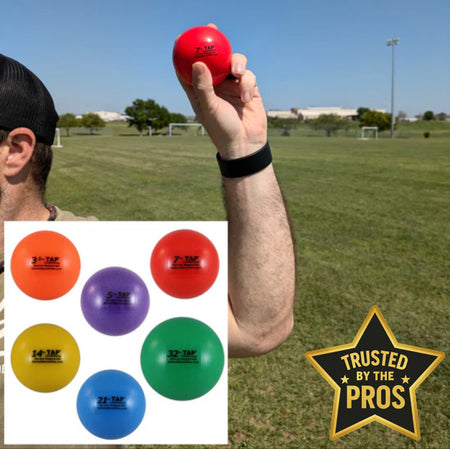
| 3.5 oz | Orange | Underload — arm speed, mechanical refinement | Prepare |
| 5 oz | Purple | Standard weight — drill-based mechanical work | Prepare / Compete |
| 7 oz | Red | Overload — strength and tissue adaptation | Prepare / Compete |
| 14 oz | Yellow | Heavy resistance — arm care and power development | Compete / Restore |
| 21 oz | Blue | High-load stabilization and deceleration training | Restore |
| 32 oz | Green | Maximum resistance — specialized strength work | Restore |
Practical Application
- Throwing Development: Integration into structured throwing programs for mechanical refinement and neuromuscular adaptation across the kinetic chain.
- Hitter Barrel Control: Used in through-the-ball hitting drills to build point-of-contact strength and bat path consistency.
- Deceleration & Arm Care: Heavier weights train the deceleration musculature. This supports long-term arm care in high-repetition throwing athletes.
- Multi-Sport Use: Applicable to volleyball spiking mechanics and tennis serve loading patterns.
Safety & Implementation
These are professional training tools. Weighted ball programs produce the best outcomes under qualified coaching supervision. Prioritize movement quality and proper sequencing over intensity. Programs referencing Texas Baseball Ranch and Florida Baseball ARMory methodologies are structured, coach-directed approaches — not self-directed volume programs.
What's Included
- (1) TAP® Max-Grip Baseball Weighted Ball — Select weight at checkout
- 2-Year Limited Warranty
- Note: This is a standalone tool. Specific training protocols are not included.
Frequently Asked Questions
The Max-Grip uses shifting internal sand fill rather than fixed-core construction. This creates variable proprioceptive input on every rep. The neuromuscular system must actively adapt to an unpredictable load. Standard fixed-core balls do not produce these stabilization demands. The Max-Grip textured surface reinforces consistent release mechanics under varying loads.
The range supports underload and overload training within a single system. Lighter weights develop arm speed and mechanical refinement. Mid-range weights build tissue adaptation and strength. Heavier weights address deceleration capacity and stabilizer engagement. Differential Learning principles hold that varied-resistance exposure produces more durable motor patterns than fixed-weight programs.
The system spans all three phases of the Prepare–Compete–Restore framework. Underload and standard weights fit the Prepare phase for drill work and mechanical development. Mid-range weights apply in-season for strength maintenance. Heavier weights serve the Restore phase for deceleration and long-term arm care work.
Weighted ball training for youth athletes requires qualified coaching supervision and age-appropriate programming. The 3.5 oz and 5 oz weights are most commonly used in structured youth programs. Heavier loads should only be introduced under the direction of a coach experienced in youth arm development.
The TAP® Max-Grip uses a thick burst-resistant thermoplastic shell built for repeated impact against walls and floors. Standard plyometric balls frequently fail under daily professional-level training volume. The 2-year limited warranty reflects the shell's durability in collegiate and professional environments.
Featured Products