Long-Lever Shoulder Oscillation in an In-Season Arm Care System
Executive Summary
Long-lever shoulder oscillation tools give coaches a way to challenge stability and neuromuscular control around the shoulder and trunk with very little external load. When layered on top of basic elastic resistance work, they can increase activation and even structural adaptation in key scapular stabilizers. That makes them a useful option in the Prepare and Restore phases of an in-season arm care plan.
This article is a specialized focus within the broader in-season arm care framework. The In-Season Arm Care Article establishes the overarching Prepare / Compete / Restore structure and workload management principles. This article expands on the research context and practical guidance for using long-lever oscillation effectively in real programs.
For foundational timing, tool awareness, and timing considerations, refer to the In-Season Arm Care Article before building oscillation into your system.
Why This Tool Matters for Throwers
In-season, most pitchers live in a high-stress, low-recovery loop. School or work, travel, quick warm-ups, and game-speed pitches accumulate before the next outing. You need tools that add value without piling on heavy workload.
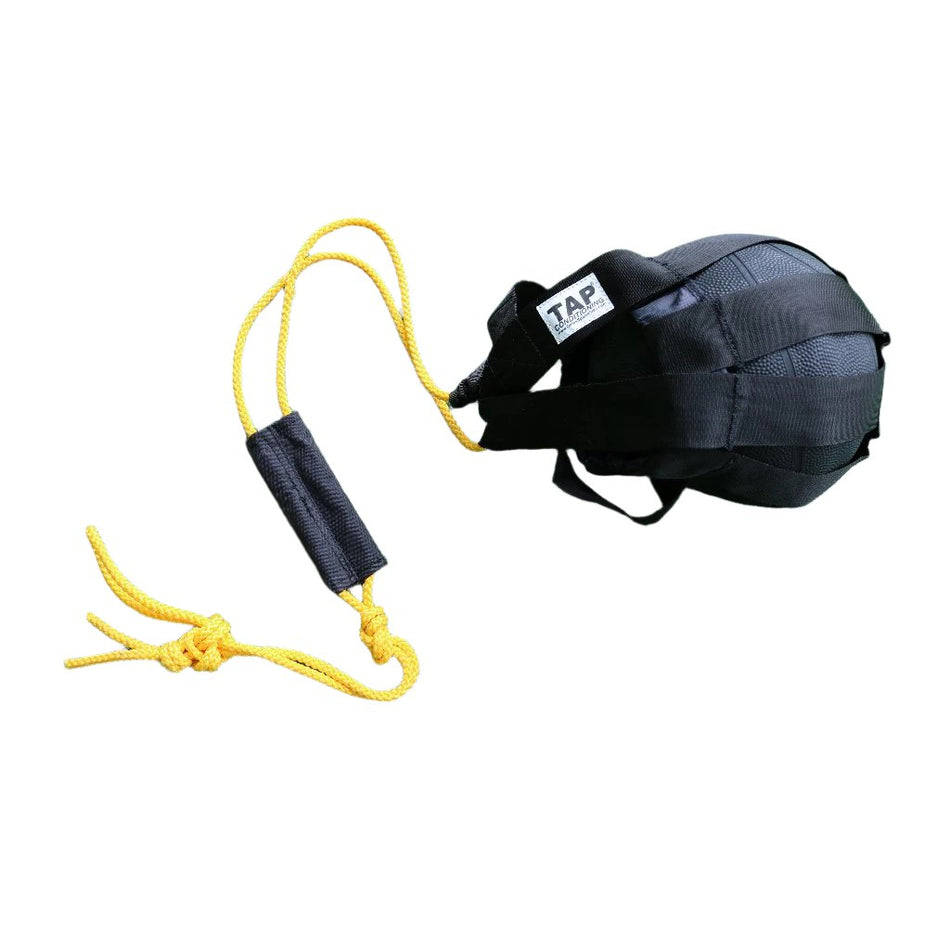
A long-lever oscillation implement—such as a TAP® Shoulder Tube—can be driven rhythmically in front of the body, in the scapular plane, or along diagonal patterns. The athlete must stiffen and organize the shoulder and trunk while the tool tries to shake them out of position. EMG work with similar devices shows that this style of oscillation recruits multiple shoulder and scapular muscles—including lower trapezius, serratus anterior, and upper back stabilizers—more than comparable movements without oscillation, even though the external load is still light.
Within a larger arm care kit, long-lever oscillation helps you:
- Reinforce shoulder and scapular control late in games.
- Give more advanced athletes a stability and timing challenge without chasing fatigue.
- Share one simple implement across a whole staff in the bullpen, cage, or indoor space.
These tools are portable enough for travel ball. They work best where there is enough clearance for full arm extension in several positions, so plan to use them where space and supervision is solid.

What the Research Says
3.1 High Activation at Low Load
Electromyography (EMG) studies on long-lever oscillation devices consistently find moderate to high activation in shoulder and trunk muscles despite light external loads.
In one comparison of an oscillating shaft versus dumbbells, EMG activity exceeded 50 percent of maximum voluntary isometric contraction in muscles such as serratus anterior and infraspinatus during shoulder flexion and abduction. Activation levels matched or exceeded those produced by dumbbells at similar arm positions.
Practically, this means a long-lever oscillation tool can deliver a meaningful stimulus to the shoulder and scapular region without heavy joint loading. That is primarily the kind of work you want in many in-season settings.
3.2 Structural Adaptations in Scapular Stabilizers
A trial comparing elastic band work alone to bands plus double-oscillation exercises found that both groups improved. The combination group showed a larger increase in lower trapezius and serratus anterior thickness on ultrasound.
The key point for coaches: oscillation does not replace tubing. Once basic band patterns are established, layering in short oscillation bouts can deepen scapular stability adaptations without overhauling your system.
3.3 Functional Outcomes and Kinetic Chain Engagement
In athletes with traumatic anterior shoulder instability, a supervised program using a long-lever oscillation device improved shoulder function, strength, and scapular positioning when added to traditional rehabilitation.
The protocol emphasized kinetic chain movement—legs, trunk, and shoulder working together to keep oscillations under control. The authors highlighted that oscillation can efficiently stimulate scapular stabilizers and core musculature at the same time, compared with more isolated drills.
This study was conducted in athletes with anterior instability, not healthy pitchers. Treat it as supporting evidence for the mechanism and kinetic chain emphasis, not as a direct prescription for all throwers. Even so, it reinforces the idea that long-lever oscillation belongs in the family of tools that teach the body to share load across hips, trunk, scapula, and arm.
3.4 Multi-Segment Coordination and Proximal Stability
Research comparing closed-chain shoulder exercises to open-chain movements has shown that tasks demanding multi-segment coordination and proximal stability recruit greater activation in infraspinatus, lower trapezius, erector spinae, and external oblique. Long-lever oscillation is not strictly a closed-chain task, but it shares similar demands. The athlete must stabilize the trunk and shoulder girdle to control rapidly changing forces. This broader principle supports using oscillation to train integrated control rather than isolating individual muscles.
Tool Variations and Distinctions
You can adjust the emphasis of a long-lever oscillation implement through three main variables.
4.1 Arm Position and Plane
- Arm out front at or below shoulder height.
- Arm slightly out to the side in the scapular plane.
- More diagonal or slot-like positions that resemble throwing.
EMG data shows that changing arm position shifts the balance of activation between deltoid, trapezius, serratus anterior, and trunk muscles. Position is a meaningful variable, not just a preference.

4.2 Oscillation Amplitude
- Small, tight motions emphasize fine control and local endurance.
- Larger oscillations increase demand across the region and pull more of the kinetic chain into the pattern.
In-season, most pitchers do well with short, moderate-amplitude bouts. Treat the tool like a stability tuner rather than a conditioning test.
4.3 Stance and Grip
- Bilateral versus split stance changes how much the hips and trunk are challenged.
- Neutral versus pronated grip subtly alters forearm and upper arm contribution.
Regardless of the variation, the core idea stays the same. The tool wants to shake the athlete. The athlete's job is to stay organized and stable.
Safety, Contraindications, and Setup
5.1 Age and Training Age
For youth athletes, keep oscillation low volume, low intensity, and high supervision. You can use it after they show consistent control with basic elastic resistance and body-weight work.
Emphasize quality over intensity. Smooth, controlled oscillations matter more than how hard they can shake the implement.
5.2 Strict Stop Signals
Avoid or delay oscillation work when any of the following apply:
- Acute irritability: sharp pain at rest, clear loss of motion, or pain with simple daily tasks.
- Recent surgery: the athlete has not been cleared by the surgeon or rehab professional for higher-speed arm motion.
- Cervical symptoms: numbness, tingling, or radiating pain that worsens with rapid arm movement.
- Symptom increase: any rapid upper-extremity motion clearly increases symptoms.
If an athlete has recent surgery, a suspected acute injury, or persistent pain that limits normal activity, oscillation work should be designed or cleared by a qualified medical professional.
5.3 Movement Quality and Regression Ladder
Apply a controlled oscillations rule: the bar should move with a smooth, consistent rhythm, not in jerky or unpredictable bursts. Watch for shrugging, neck tension, or excessive trunk swaying. If these appear, regress the drill.
Regression ladder:
- Reduce amplitude: shift to smaller, micro-movements.
- Simplify the base: return from split stance to a bilateral stance.
- Shorten bout duration: 10–15 seconds instead of 20–30 seconds.
- Return to non-oscillation stability work (band holds, simple isometrics) until control improves.
5.4 Basic Setup
- Athletic stance, soft knees, quiet trunk.
- Long arm but not a locked elbow. Position the shoulder where the athlete can control motion without shrugging.
- Short bouts—often just a few seconds per position—with ample rest, especially after throwing days.
Load, Volume, and Timing
6.1 Load and Intensity
Long-lever oscillation tools are largely self-limiting: the harder the athlete drives them, the more the shaft responds. For in-season purposes, aim for comfortable, rhythmic oscillation rather than maximum amplitude.
Think: find and hold a smooth, consistent rhythm—not: see how hard you can shake it.
Lighter oscillation tools, or lower-intent oscillations, are a better match for youth athletes, early-season periods, and anyone new to the pattern. Reserve higher-challenge variations for off-season strength phases and more experienced athletes with solid baseline control.
6.2 Volume, Upper Bounds, and Progression
Think in seconds, not minutes. Brief bouts in one to three positions are usually enough for maintenance and stability emphasis. In most in-season settings, total oscillation work rarely needs to exceed a few minutes of actual oscillation time per session.
During heavy game or showcase weeks, it is reasonable to reduce oscillation volume or use only gentle Restore-style bouts to avoid layering fatigue on top of dense throwing.
Progression:
- Start with simpler positions (arm out front), short bouts (10–20 seconds), and bilateral stance.
- Progress to scapular-plane or diagonal positions and slightly longer bouts (up to about 30 seconds) only when the athlete maintains high-quality movement.
- Save more demanding variations for the off-season or clinician-directed rehabilitation.
Across all steps, quality over volume remains the guiding principle.
Where It Fits: Simple Example Integration in Prepare / Compete / Restore
Long-lever oscillation fits best as a supporting tool in Prepare and Restore, alongside tubing, mini-bands, throwing socks, and the other low-tech tools already in your system. The sample routine below is designed for rhythmic organization. It wakes up the stabilizers without draining the gas tank.
7.1 Prepare (Pre-Throwing)
Goal: increase local tissue temperature and prime the scapular stabilizers before picking up a ball. After whole-body dynamic warm-up and a few elastic-band patterns, an athlete can perform 2–3 rounds of the following sequence before moving into progressive catch:
- Circular Stabilization: arm straight out to the side; drive the tool so the ends move in a controlled circular motion (10 sec).
- Frontal Oscillation: arm straight out in front of the chest; drive vertically or horizontally (10 sec).
- Overhead Reach: arm straight above the head; maintain trunk stiffness (10 sec).
- Throwing Motion (Split Stance): hold the tool in your delivery position while in a split stance (10 sec).
7.2 Compete (Between Innings)
Goal: maintain neuromuscular readiness during long offensive half-innings.
Most pitchers get what they need from light elastic or mini-band patterns between innings. If oscillation is used, keep it extremely light and brief—more of a feel reminder than a workout. One 10-second round of the Throwing Motion position is usually sufficient after sitting for an extended time.
7.3 Restore (Post-Outing and the Day After)
Goal: promote circulation and reinforce movement quality without adding mechanical stress.
Post-Outing (Immediately After): Perform one round of the stationary patterns—Side, Front, Overhead, Throwing Motion—to support blood flow without loading the tissue further.
The Day After (Recovery Day): Use the Dynamic Pattern. Move between positions fluidly: front to side to overhead and through the delivery arc. Allow 10 seconds moving into each position and 10 seconds moving back through it. Three to four rounds generates blood flow and reinforces shoulder control without creating a training load.
Across all three phases, oscillation is one more way to support blood flow, stability, and neuromuscular control inside a simple, sustainable plan. It does not replace thoughtful throwing schedules, elastic resistance, or sound workload management.
Next Step
Start by identifying one arm position where your pitchers tend to lose control—often arm out front or slightly in the scapular plane. Explore using a short, low-amplitude oscillation bout there on a light day.
From there, map one or two positions into your existing Prepare and Restore slots. Adjust as you see how your athletes respond. Add or remove complexity based on your schedule, staff, and level of supervision.
For the full Prepare / Compete / Restore framework and complementary elastic tubing and long-loop band guidance, return to the In-Season Arm Care Pillar.
Annotated Bibliography
1. Cho SH, Lee JH. The Effects of Double Oscillation Exercise Combined with Elastic Band Exercise on the Thickness of Shoulder Stabilizer Muscles. Journal of Physical Therapy Science. 2018;30(3):411–413.
Randomized trial comparing elastic-band exercises alone to bands plus long-lever oscillation in adults with shoulder problems. The combination group showed greater increases in lower trapezius and serratus anterior thickness on ultrasound. Supports the rationale for layering oscillation onto existing band work.
2. Pulido JP, Greenberg EM, Albright JC, et al. Bodyblade™ Training in Athletes with Traumatic Anterior Shoulder Instability. International Journal of Sports Physical Therapy. 2023;18(1):188–198.
Studied athletes with traumatic anterior shoulder instability completing a long-lever oscillation program as part of conservative rehabilitation. Reported improvements in functional measures, strength, and scapular positioning, and highlighted high EMG activation and kinetic chain engagement. Useful as supporting evidence for the mechanism, with the caveat that the population is not healthy throwers.
URL: https://ijspt.org/wp-content/uploads/2023/01/18-Pulido.pdf
3. Moreside JM, Vera-Garcia FJ. Trunk Muscle Recruitment Patterns During Isometric Contractions, Dynamic Stability Exercises, and Traditional Core Exercises. Journal of Sport Rehabilitation. 2012;21(3):212–228.
Includes EMG comparison work examining shoulder and trunk muscle activation with a long-lever oscillation device versus dumbbells. Found that the oscillation device exceeded 50% MVIC in scapular stabilizers such as serratus anterior and infraspinatus, supporting the high-signal, low-load rationale for oscillation in shoulder and arm care programs.
URL: https://digitalcommons.chapman.edu/cgi/viewcontent.cgi?article=1035&context=pt_articles
4. Pozzi F, Plummer HA, Shanley E, et al. Electromyography Activation of Shoulder and Trunk Muscles is Greater with Closed-Chain Compared with Open-Chain Exercises. Journal of Electromyography and Kinesiology. 2019;49:102352.
EMG study comparing closed- versus open-chain upper-extremity exercises. Demonstrated greater activation in infraspinatus, lower trapezius, erector spinae, and external oblique in closed-chain conditions. While oscillation is not strictly a closed-chain task, it shares similar demands for proximal stability and multi-segment coordination.
5. Mullaney MJ, Nicholas SJ. Evidence Based Arm Care: The Thrower's Ten Revisited. International Journal of Sports Physical Therapy. 2021;16(6):1585–1592.
Reviews updated elastic-resistance arm care programs in throwers. Provides context for using tubing as a foundation and positions oscillation as an add-on, not a replacement.
6. Oates Specialties. In-Season Arm Care for Pitchers: Low-Tech Tools to Stay Ready All Season.
Pillar article outlining the Prepare / Compete / Restore framework and differentiating tool categories, including elastic resistance, oscillation implements, throwing socks, and recovery adjuncts. Describes oscillation tools as providing stability under chaotic load and frames them as optional additions for more advanced or supervised contexts.
About This Analysis
Created by the Oates Specialties team led by Robert Oates, M.Ed., Founder
Editorial oversight by Gunnar Thompson, BS, CSCS, General Manager
Certified Strength & Conditioning Specialist | Biomechanics Specialist
February 2026
Complete Credentials
ROBERT OATES, M.Ed., Founder: Founded Oates Specialties in 2003. Master of Education degree. Provides strategic direction for educational content and athlete development philosophy.
GUNNAR THOMPSON, General Manager: BS Kinesiology (Clinical Exercise Science). CSCS (NSCA), PES (NASM), CPPS certifications. Technical authority on biomechanics and performance science. Conducts review of all educational content for scientific accuracy.
Questions or corrections: gunnart@oatesspecialties.com